Ghana Polio Vaccine Market Size, Share & Growth Rate
The Ghana Polio Vaccine Market was estimated at USD 988 Million in 2025 and is projected to reach USD 1435 Million by 2032, growing at a CAGR of 5.5% from 2026 to 2032. This growth trajectory is primarily fueled by ongoing national immunization campaigns, enhanced access to vaccines, and strong governmental and global support for disease eradication initiatives. As the country prioritizes child health and preventative measures against polio, investments in vaccine production and distribution are expected to further bolster this expanding market.
Ghana Polio Vaccine Market Year-wise Growth Rate and Key Drivers
This graph highlights how the Ghana Polio Vaccine Market has steadily grown over the years, supported by major growth factors.
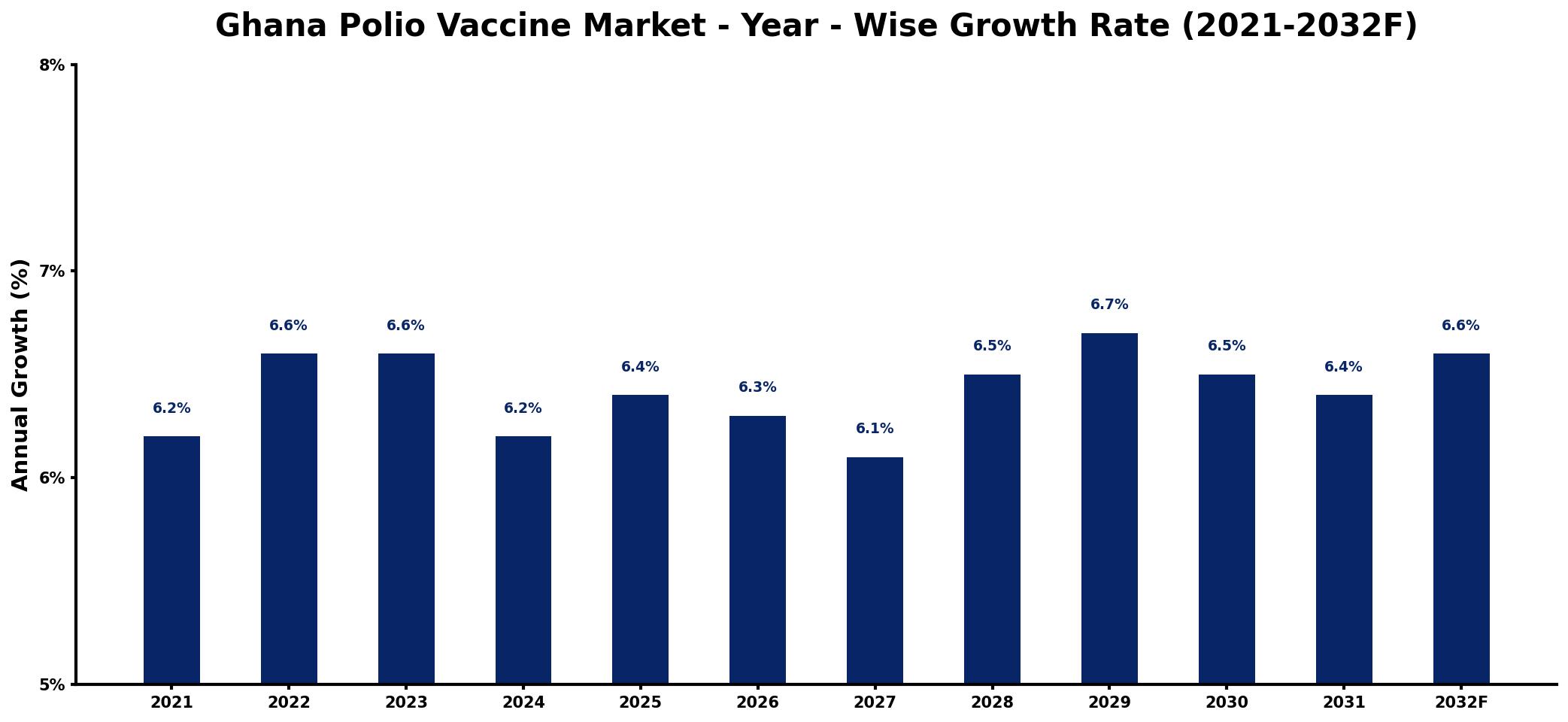
The table below presents the year‑wise growth rates along with the key drivers influencing the market
| Year | Growth Rate | Major Drivers |
| 2021 | 6.2% | Increased healthcare investments nationwide |
| 2022 | 6.6% | Rising public health awareness campaigns |
| 2023 | 6.6% | Growing demand for preventive healthcare |
| 2024 | 6.2% | Strengthened healthcare infrastructure initiatives |
| 2025 | 6.4% | Expansion of immunization programs access |
| 2026 | 6.3% | Increased collaboration with global organizations |
| 2027 | 6.1% | Emerging public-private partnership opportunities |
| 2028 | 6.5% | Growing community health outreach efforts |
| 2029 | 6.7% | Enhanced education on disease prevention |
| 2030 | 6.5% | Investment in local manufacturing capabilities |
| 2031 | 6.4% | Strengthened regulatory support for initiatives |
| 2032 | 6.6% | Growing emphasis on pediatric healthcare |
Note: Market size estimations and growth projections presented in this report are based on 6Wresearch's proprietary forecasting methodology, utilizing the latest available industry data, government publications, and primary research inputs.
Ghana Polio Vaccine Market Synopsis
Ghana is actively engaged in the battle against polio, with vaccination efforts recognized as vital for safeguarding public health and eradicating this debilitating disease. The collaborative frameworks between government bodies, healthcare providers, and international organizations underline the commitment to increasing immunization coverage across the nation.
Currently, the landscape of the Ghana Polio Vaccine Market reflects both the progress made and the challenges that remain. While substantial strides have been made in vaccine accessibility, remote areas still face hurdles that impede vaccination efforts. The dual focus on immunization campaigns and community education remains key to overcoming vaccine hesitancy and achieving widespread public compliance.
Ghana Polio Vaccine Market Key Takeaways
- The market is projected to grow steadily, supported by robust immunization campaigns and global health initiatives.
- Increased partnerships between the government and international organizations are enhancing vaccine distribution networks.
- Vaccine hesitancy remains a significant challenge, impacting overall immunization rates.
- Government policies are geared towards ensuring equitable access to vaccines for children across all demographics.
- Investment in healthcare infrastructure is critical for expanding vaccine production and improving distribution capabilities.
Evaluation of Restraints in Ghana Polio Vaccine Market
The Ghana Polio Vaccine Market faces real challenges, primarily stemming from limited access to vaccination programs in rural regions. Many communities remain underserved, making it difficult to achieve universal vaccination coverage. Additionally, concerns regarding vaccine-derived poliovirus lead to hesitancy among some parents, which further impedes progress. The distribution network also encounters obstacles, including inadequate transportation infrastructure and logistical difficulties, hindering timely delivery of vaccines. Addressing these issues is crucial for maximizing the impact of immunization efforts and sustaining market growth.
Ghana Polio Vaccine Market Trends
A notable trend influencing the Ghana Polio Vaccine Market is the increasing integration of technology in vaccination programs. Mobile health initiatives and digital platforms are being utilized to enhance outreach and track immunization progress effectively. Furthermore, community engagement strategies are evolving, focusing on education to counter vaccine hesitancy and misinformation. The commitment to rigorous surveillance systems also highlights a trend towards data-driven decision-making, ensuring targeted interventions where they are most needed.
Ghana Polio Vaccine Market Opportunities
Significant growth opportunities lie in enhancing distribution networks and expanding partnerships with private sector entities. By fostering collaboration with local manufacturers and logistic companies, the market can improve the accessibility of vaccines, especially in underserved areas. Furthermore, the burgeoning interest from international health organizations offers avenues for funding and support, aiding local initiatives aimed at achieving polio eradication. As the government continues to prioritize child health, opportunities for innovative vaccination strategies are set to rise.
Government Initiatives in the Ghana Polio Vaccine Market
In alignment with global efforts to eradicate polio, the government of Ghana has prioritized comprehensive policies aimed at ensuring that every child has access to polio vaccines. Initiatives include robust vaccination campaigns, development of surveillance systems, and regulatory measures to uphold immunization standards. By promoting cooperation among vaccine manufacturers, healthcare providers, and global health organizations, the government is making substantial progress toward achieving its polio eradication goals, thereby enhancing public health outcomes for future generations.
Future Insights of the Ghana Polio Vaccine Market
Looking ahead to 2026-2032, the Ghana Polio Vaccine Market is poised for growth, driven by sustained governmental commitment and increasing public health awareness. As immunization campaigns become more targeted and community-based, the market is expected to witness an uptick in vaccination rates, furthering the quest for polio eradication. With investments in healthcare infrastructure and strategic collaborations, the prospects for a polio-free Ghana appear increasingly optimistic.
Ghana Polio Vaccine Market Latest Developments (2025 - 2026)
Recently, the Ghana Polio Vaccine Market has seen a dynamic shift towards enhancing immunization strategies through innovative community engagement programs. Efforts are underway to leverage technology for tracking vaccination progress more effectively and addressing public concerns surrounding vaccine safety. Furthermore, international partnerships have strengthened, fostering collaboration to ensure sustained availability of vaccines in both urban and rural settings. These developments signify a proactive approach towards overcoming existing barriers and enhancing immunization outcomes.
Ghana Polio Vaccine Market - Key Attractiveness of the Report
- 10 Years of Market Numbers
- Historical Data Starting from 2022 to 2025
- Base Year: 2025
- Forecast Data until 2032
- Key Performance Indicators Impacting the Market
- Major Upcoming Developments and Projects
Key Highlights of the Report:
- Ghana Polio Vaccine Market Outlook
- Market Size of Ghana Polio Vaccine Market, 2025
- Forecast of Ghana Polio Vaccine Market, 2032
- Historical Data and Forecast of Ghana Polio Vaccine Revenues & Volume for the Period 2022-2032F
- Ghana Polio Vaccine Market Trend Evolution
- Ghana Polio Vaccine Market Drivers and Challenges
- Ghana Polio Vaccine Price Trends
- Ghana Polio Vaccine Porter's Five Forces
- Ghana Polio Vaccine Industry Life Cycle
- Historical Data and Forecast of Ghana Polio Vaccine Market Revenues & Volume By Type for the Period 2022-2032F
- Historical Data and Forecast of Ghana Polio Vaccine Market Revenues & Volume By Oral Polio Vaccine (OPV) for the Period 2022-2032F
- Historical Data and Forecast of Ghana Polio Vaccine Market Revenues & Volume By Inactivated Poliomyelitis Vaccine (IPV) for the Period 2022-2032F
- Historical Data and Forecast of Ghana Polio Vaccine Market Revenues & Volume By Application for the Period 2022-2032F
- Historical Data and Forecast of Ghana Polio Vaccine Market Revenues & Volume By Public for the Period 2022-2032F
- Historical Data and Forecast of Ghana Polio Vaccine Market Revenues & Volume By Private for the Period 2022-2032F
- Ghana Polio Vaccine Import Export Trade Statistics
- Market Opportunity Assessment By Type
- Market Opportunity Assessment By Application
- Ghana Polio Vaccine Top Companies Market Share
- Ghana Polio Vaccine Competitive Benchmarking By Technical and Operational Parameters
- Ghana Polio Vaccine Company Profiles
- Ghana Polio Vaccine Key Strategic Recommendations






































