Ghana Sports Equipment Market Size, Share & Growth Rate
The Ghana Sports Equipment Market was estimated at USD 168 Million in 2025 and is projected to reach USD 229 Million by 2032, growing at a CAGR of 4.5% from 2026 to 2032. This growth trajectory is largely driven by a burgeoning awareness among Ghanaians regarding the importance of physical fitness, coupled with increasing disposable incomes. As the population grows more health-conscious, the demand for both professional and recreational sports equipment is expected to rise significantly.
Ghana Sports Equipment Market Year-wise Growth Rate and Key Drivers
This graph highlights how the Ghana Sports Equipment Market has steadily grown over the years, supported by major growth factors.
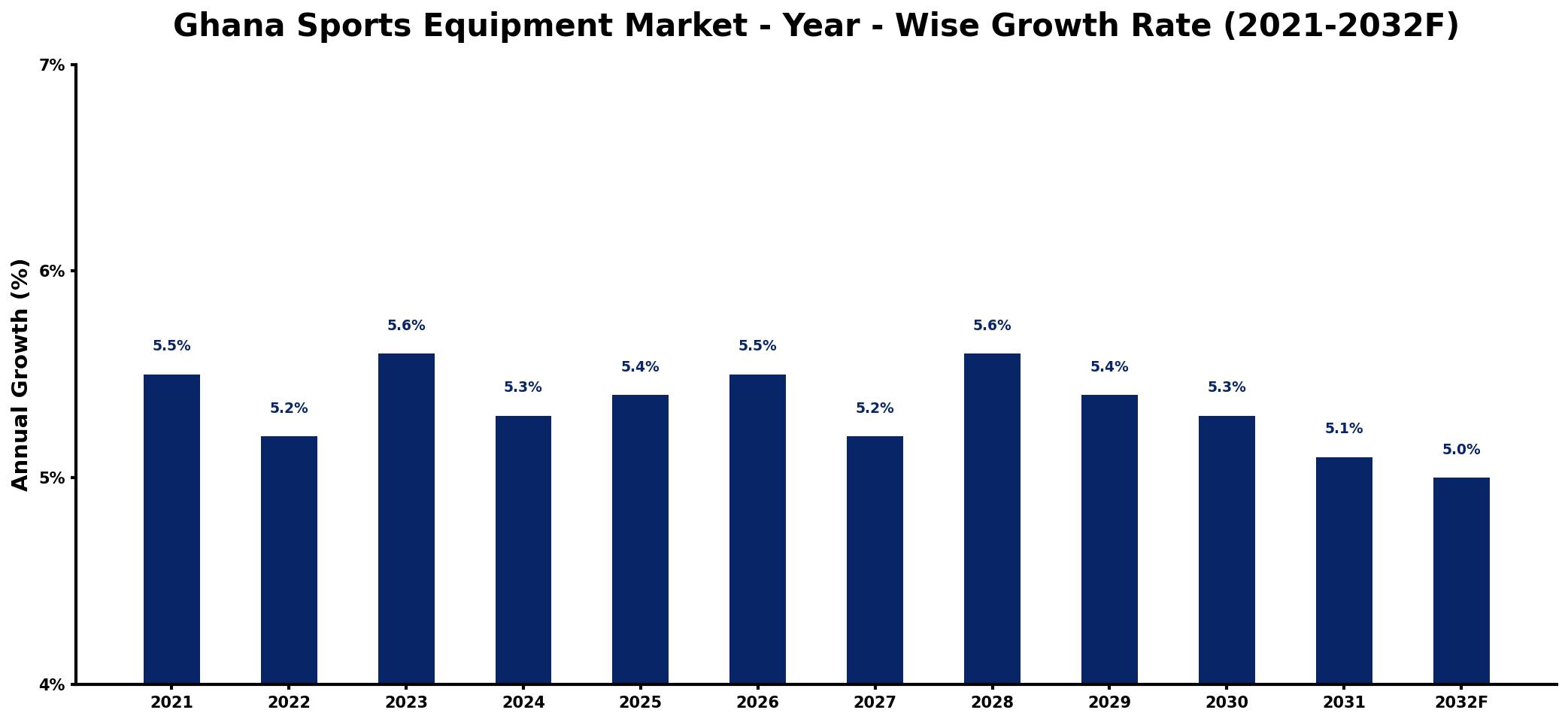
The table below presents the year‑wise growth rates along with the key drivers influencing the market
| Year | Growth Rate | Major Drivers |
| 2021 | 5.5% | Increase in youth participation rates |
| 2022 | 5.2% | Rising disposable income levels |
| 2023 | 5.6% | Expansion of fitness facilities |
| 2024 | 5.3% | Growth in online retail channels |
| 2025 | 5.4% | Increased government funding initiatives |
| 2026 | 5.5% | Surge in health awareness campaigns |
| 2027 | 5.2% | Emergence of local brands |
| 2028 | 5.6% | increased production capacity utilization |
| 2029 | 5.4% | growing regional consumption patterns |
| 2030 | 5.3% | expanding industrial usage applications |
| 2031 | 5.1% | Rising popularity of recreational activities |
| 2032 | 5.0% | rising procurement volume requirements |
Note: Market size estimations and growth projections presented in this report are based on 6Wresearch's proprietary forecasting methodology, utilizing the latest available industry data, government publications, and primary research inputs.
Ghana Sports Equipment Market Synopsis
The Ghana Sports Equipment Market is witnessing a dynamic transformation fueled by an increasing interest in sports and fitness activities. This surge in engagement has led to a vibrant landscape where local and international brands are vying for consumer attention, focusing on quality and affordability.
As consumers increasingly prioritize health and well-being, the market is adapting to a wave of innovation, sustainability, and improved access to quality products. Trends toward fitness wearables and sustainable materials are shaping consumer preferences, indicating a market that is evolving rapidly in response to the demands of a more active population.
Ghana Sports Equipment Market Key Takeaways
- Growing consumer awareness and health consciousness are key drivers of market expansion.
- A trend towards sustainability is influencing product offerings and consumer choices.
- Online retail is becoming a pivotal distribution channel, enhancing market accessibility.
- Government initiatives are fostering a favorable environment for market growth.
- The demand for quality sports equipment spans various popular sports such as football and basketball.
Evaluation of Restraints in Ghana Sports Equipment Market
While the Ghana Sports Equipment Market is on an upward trajectory, several significant barriers hinder its full potential. The pervasive issue of counterfeit products poses a serious threat, undermining consumer trust and affecting the reputation of genuine brands. Additionally, high import tariffs and taxes create financial constraints for retailers and consumers alike, limiting access to quality equipment. Operational challenges, including inadequate distribution infrastructure, further complicate the landscape, making it crucial for stakeholders to develop strategies that effectively address these issues.
Ghana Sports Equipment Market Trends
The market is currently influenced by several transformative trends. High-quality and technologically advanced products are in demand, particularly within fitness wearables and athletic footwear categories. There's a significant shift towards eco-friendly products, reflecting a growing consumer preference for sustainable materials. Furthermore, as athleisure becomes a fashion statement, the line between sports and everyday wear continues to blur, indicating a multifaceted market evolution.
Ghana Sports Equipment Market Opportunities
Ghana presents a wealth of investment opportunities within the sports equipment sector. The increasing interest in local sports, including football and basketball, creates potential for lucrative investments in quality equipment tailored to these popular activities. With a heightened focus on health and wellness, there is an expanding market for gym equipment and accessories. Engaging with local sports teams and fitness centers can enhance market presence, while innovating sustainable products can captivate environmentally conscious consumers seeking competitive advantages.
Government Initiatives in the Ghana Sports Equipment Market
The Ghanaian government has taken proactive steps to enhance the sports equipment market through various policies aimed at making sports more accessible. Efforts include reducing or eliminating import duties on sports equipment, thereby lowering costs for consumers. Partnerships with international organizations facilitate infrastructure development, while initiatives promoting domestic manufacturing are designed to invigorate the local economy and increase the availability of locally produced sports equipment.
Future Insights of the Ghana Sports Equipment Market
The outlook for the Ghana Sports Equipment Market from 2026 to 2032 is promising, buoyed by rising disposable incomes and an increasingly active population. The anticipated growth in sports infrastructure will likely support market expansion further, as more gyms and fitness centers emerge. The convergence of fitness and lifestyle trends indicates a robust demand for both functional and fashionable sports equipment, allowing manufacturers and retailers to capitalize on shifting consumer priorities.
Ghana Sports Equipment Market Latest Developments (2025 - 2026)
Recent trends in the Ghana Sports Equipment Market show a marked increase in online sales channels, as consumers seek convenience and variety in their purchasing options. Initiatives aimed at promoting local sports have gained traction, encouraging greater participation at grassroots levels. Furthermore, brands are increasingly focusing on the integration of technology into sports equipment, leading to innovative product launches that cater to tech-savvy consumers.
Ghana Sports Equipment Market - Key Attractiveness of the Report
- 10 Years of Market Numbers
- Historical Data Starting from 2022 to 2025
- Base Year: 2025
- Forecast Data until 2032
- Key Performance Indicators Impacting the Market
- Major Upcoming Developments and Projects
Key Highlights of the Report:
- Ghana Sports Equipment Market Outlook
- Market Size of Ghana Sports Equipment Market, 2025
- Forecast of Ghana Sports Equipment Market, 2032
- Historical Data and Forecast of Ghana Sports Equipment Revenues & Volume for the Period 2022-2032F
- Ghana Sports Equipment Market Trend Evolution
- Ghana Sports Equipment Market Drivers and Challenges
- Ghana Sports Equipment Price Trends
- Ghana Sports Equipment Porter's Five Forces
- Ghana Sports Equipment Industry Life Cycle
- Historical Data and Forecast of Ghana Sports Equipment Market Revenues & Volume By Product for the Period 2022-2032F
- Historical Data and Forecast of Ghana Sports Equipment Market Revenues & Volume By Ball over net games for the Period 2022-2032F
- Historical Data and Forecast of Ghana Sports Equipment Market Revenues & Volume By Ball games for the Period 2022-2032F
- Historical Data and Forecast of Ghana Sports Equipment Market Revenues & Volume By Fitness/Strength equipment for the Period 2022-2032F
- Historical Data and Forecast of Ghana Sports Equipment Market Revenues & Volume By Athletic training equipment for the Period 2022-2032F
- Historical Data and Forecast of Ghana Sports Equipment Market Revenues & Volume By Others for the Period 2022-2032F
- Historical Data and Forecast of Ghana Sports Equipment Market Revenues & Volume By Distribution Channel for the Period 2022-2032F
- Historical Data and Forecast of Ghana Sports Equipment Market Revenues & Volume By Online retail for the Period 2022-2032F
- Historical Data and Forecast of Ghana Sports Equipment Market Revenues & Volume By Specialty & sports shops for the Period 2022-2032F
- Historical Data and Forecast of Ghana Sports Equipment Market Revenues & Volume By Department & discount stores for the Period 2022-2032F
- Ghana Sports Equipment Import Export Trade Statistics
- Market Opportunity Assessment By Product
- Market Opportunity Assessment By Distribution Channel
- Ghana Sports Equipment Top Companies Market Share
- Ghana Sports Equipment Competitive Benchmarking By Technical and Operational Parameters
- Ghana Sports Equipment Company Profiles
- Ghana Sports Equipment Key Strategic Recommendations






































