Ghana Vetiver Oil Market Size, Share & Growth Rate
The Ghana Vetiver Oil Market was estimated at USD 541 Million in 2025 and is projected to reach USD 786 Million by 2032, growing at a CAGR of 5.5% from 2026 to 2032. This steady growth trajectory is primarily driven by the increasing demand for natural and sustainable fragrance options in cosmetics and personal care products. As consumers become more health-conscious and environmentally aware, the appeal of vetiver oil, with its unique earthy aroma and therapeutic benefits, continues to rise, shaping market dynamics.
Ghana Vetiver Oil Market Year-wise Growth Rate and Key Drivers
This graph highlights how the Ghana Vetiver Oil Market has steadily grown over the years, supported by major growth factors.
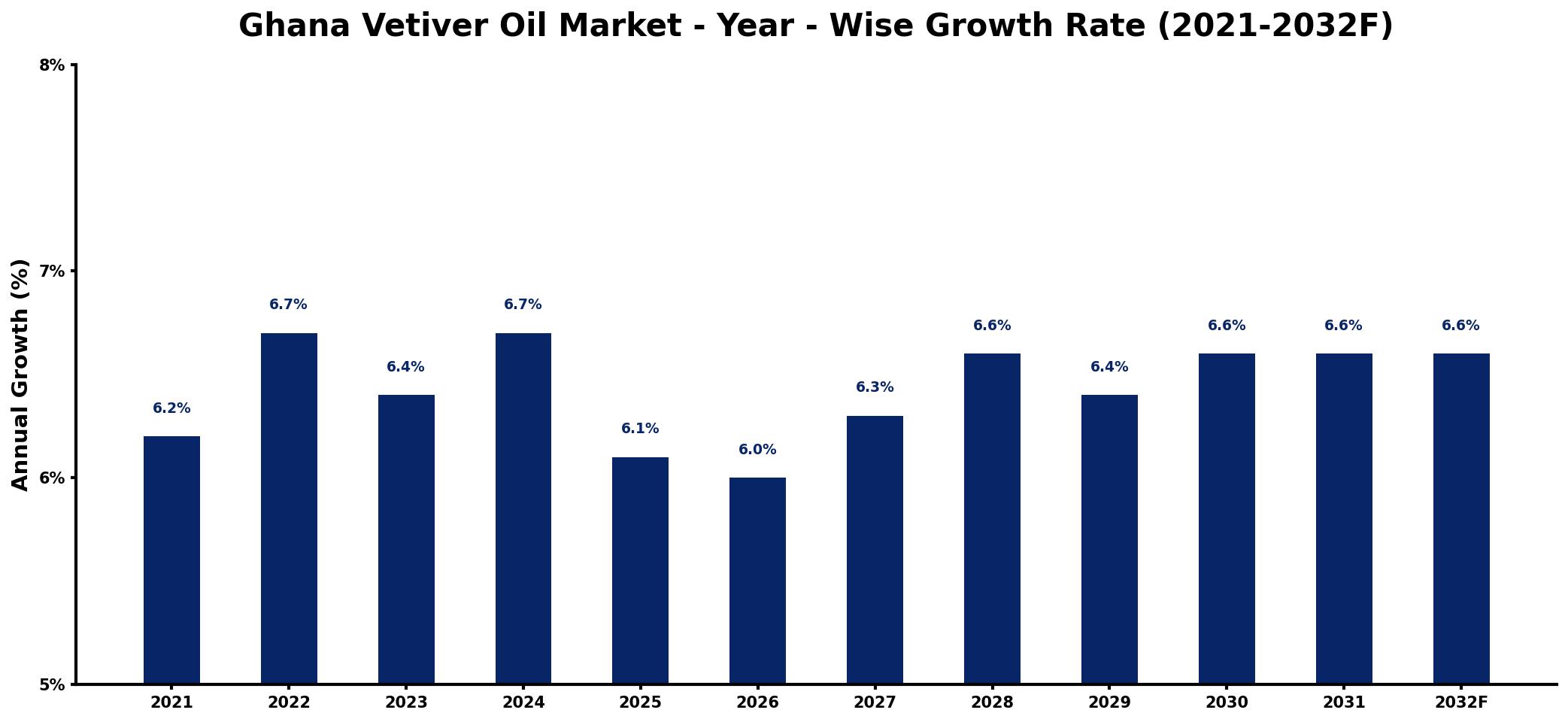
The table below presents the year‑wise growth rates along with the key drivers influencing the market
| Year | Growth Rate | Major Drivers |
| 2021 | 6.2% | Rising demand for natural fragrances |
| 2022 | 6.7% | Expansion of wellness industry products |
| 2023 | 6.4% | Increase in aromatherapy applications |
| 2024 | 6.7% | Growth in personal care formulations |
| 2025 | 6.1% | Surge in eco-friendly consumer preferences |
| 2026 | 6.0% | Investment in sustainable agricultural practices |
| 2027 | 6.3% | Development of new extraction methods |
| 2028 | 6.6% | Growing popularity of holistic therapies |
| 2029 | 6.4% | rising end-use demand growth |
| 2030 | 6.6% | Expansion into international markets |
| 2031 | 6.6% | Rising trend of DIY formulations |
| 2032 | 6.6% | Emergence of innovative product applications |
Note: Market size estimations and growth projections presented in this report are based on 6Wresearch's proprietary forecasting methodology, utilizing the latest available industry data, government publications, and primary research inputs.
Ghana Vetiver Oil Market Synopsis
In recent years, Ghana has emerged as a key player in the global vetiver oil industry. The country's favorable climate for vetiver grass cultivation not only supports robust production but also caters to the increasing global demand for high-quality essential oils. Furthermore, vetiver oil's diverse applications—from perfumery to traditional medicine—are enhancing its popularity among consumers and businesses alike.
The local farmers and cooperatives involved in vetiver production are increasingly embracing sustainable farming practices, reflecting a broader commitment to eco-friendliness. This shift is vital for maintaining product purity and attracting discerning buyers looking for authentic, ethically sourced vetiver oil.
Ghana Vetiver Oil Market Key Takeaways
- The market is positioned for strong growth, driven by rising consumer interest in natural and sustainable products.
- Ghana's unique climate and soil conditions are ideal for vetiver grass cultivation, leading to high-quality oil production.
- Government initiatives are focused on enhancing the cultivation and processing standards for vetiver oil.
- Authenticity and purity are becoming crucial benchmarks for buyers, prompting local producers to adopt best practices.
- Collaboration with international markets is increasing, expanding opportunities for Ghanaian vetiver oil exports.
Evaluation of Restraints in Ghana Vetiver Oil Market
Despite its favorable growth outlook, the Ghana vetiver oil market faces several constraints. Ensuring the purity and authenticity of vetiver oil remains a significant challenge, particularly in maintaining consistent quality standards amidst increasing demand. Additionally, there are concerns over sustainable cultivation practices, as improper farming techniques could threaten the long-term viability of vetiver production. The market also grapples with competition from alternative essential oils, which may offer lower prices and similar aromatic profiles, creating challenges for market penetration and pricing strategies.
Ghana Vetiver Oil Market Trends
Current trends indicate a shift towards eco-conscious consumerism, with an increasing emphasis on natural ingredients in skincare and perfumery. The integration of vetiver oil into aromatherapy products is gaining momentum as consumers seek holistic wellness solutions. Furthermore, advancements in extraction technologies are enhancing the efficiency and quality of vetiver oil production, allowing producers to meet rising international standards while optimizing yield.
Ghana Vetiver Oil Market Opportunities
The vetiver oil market in Ghana presents significant growth and investment opportunities, particularly for those looking to tap into the burgeoning natural cosmetics sector. The potential for developing new applications—such as in organic perfumes and wellness products—offers avenues for innovation. Additionally, increased interest from international buyers can lead to partnerships that bolster local economies while promoting the unique qualities of Ghanaian vetiver oil.
Government Initiatives in the Ghana Vetiver Oil Market
The Ghanaian government recognizes the economic and social potential of the vetiver oil sector and is enacting various policies to support its growth. These initiatives include promoting sustainable agricultural practices, establishing quality standards for oil production, and providing incentives for farmers. Collaborative efforts with international fragrance industry stakeholders aim to enhance market access, improve the value chain, and ensure fair trade practices that contribute to rural development and economic upliftment.
Future Insights of the Ghana Vetiver Oil Market
Looking ahead to the period of 2026-2032, the Ghana vetiver oil market is anticipated to experience robust expansion. As global demand for natural and sustainable fragrance options continues to rise, Ghana's position as a leading source of high-quality vetiver oil is expected to solidify. Furthermore, innovation in cultivation and extraction techniques will likely enhance product quality, making Ghanaian vetiver oil more competitive on the world stage. The ongoing support from the government and private sectors will be critical in harnessing this growth potential.
Ghana Vetiver Oil Market Latest Developments (2025 - 2026)
Recent developments in the Ghana vetiver oil market indicate a proactive approach towards sustainability and quality enhancement. There is an increasing number of training programs aimed at educating farmers on best practices for vetiver cultivation and oil extraction. Moreover, partnerships with international buyers have been established to boost the export of vetiver oil, enhancing Ghana's visibility in global markets. This direction reflects a commitment to not only improve production but also ensure equitable benefits for local communities.
Ghana Vetiver Oil Market - Key Attractiveness of the Report
- 10 Years of Market Numbers
- Historical Data Starting from 2022 to 2025
- Base Year: 2025
- Forecast Data until 2032
- Key Performance Indicators Impacting the Market
- Major Upcoming Developments and Projects
Key Highlights of the Report:
- Ghana Vetiver Oil Market Outlook
- Market Size of Ghana Vetiver Oil Market, 2025
- Forecast of Ghana Vetiver Oil Market, 2032
- Historical Data and Forecast of Ghana Vetiver Oil Revenues & Volume for the Period 2022-2032F
- Ghana Vetiver Oil Market Trend Evolution
- Ghana Vetiver Oil Market Drivers and Challenges
- Ghana Vetiver Oil Price Trends
- Ghana Vetiver Oil Porter's Five Forces
- Ghana Vetiver Oil Industry Life Cycle
- Historical Data and Forecast of Ghana Vetiver Oil Market Revenues & Volume By Application for the Period 2022-2032F
- Historical Data and Forecast of Ghana Vetiver Oil Market Revenues & Volume By Medical for the Period 2022-2032F
- Historical Data and Forecast of Ghana Vetiver Oil Market Revenues & Volume By Food & Beverage for the Period 2022-2032F
- Historical Data and Forecast of Ghana Vetiver Oil Market Revenues & Volume By Spa & Relaxation for the Period 2022-2032F
- Ghana Vetiver Oil Import Export Trade Statistics
- Market Opportunity Assessment By Application
- Ghana Vetiver Oil Top Companies Market Share
- Ghana Vetiver Oil Competitive Benchmarking By Technical and Operational Parameters
- Ghana Vetiver Oil Company Profiles
- Ghana Vetiver Oil Key Strategic Recommendations






































