Ghana Watches Market Summary
The ghana watches market was estimated at USD 383 Million in 2025 and is projected to reach USD 510 Million by 2032, growing at a CAGR of 5.1% from 2026 to 2032.
Ghana Watches Market Year-wise Growth Rate and Key Drivers
This graph highlights how the Ghana Watches Market has steadily grown over the past five years, supported by major growth factors.
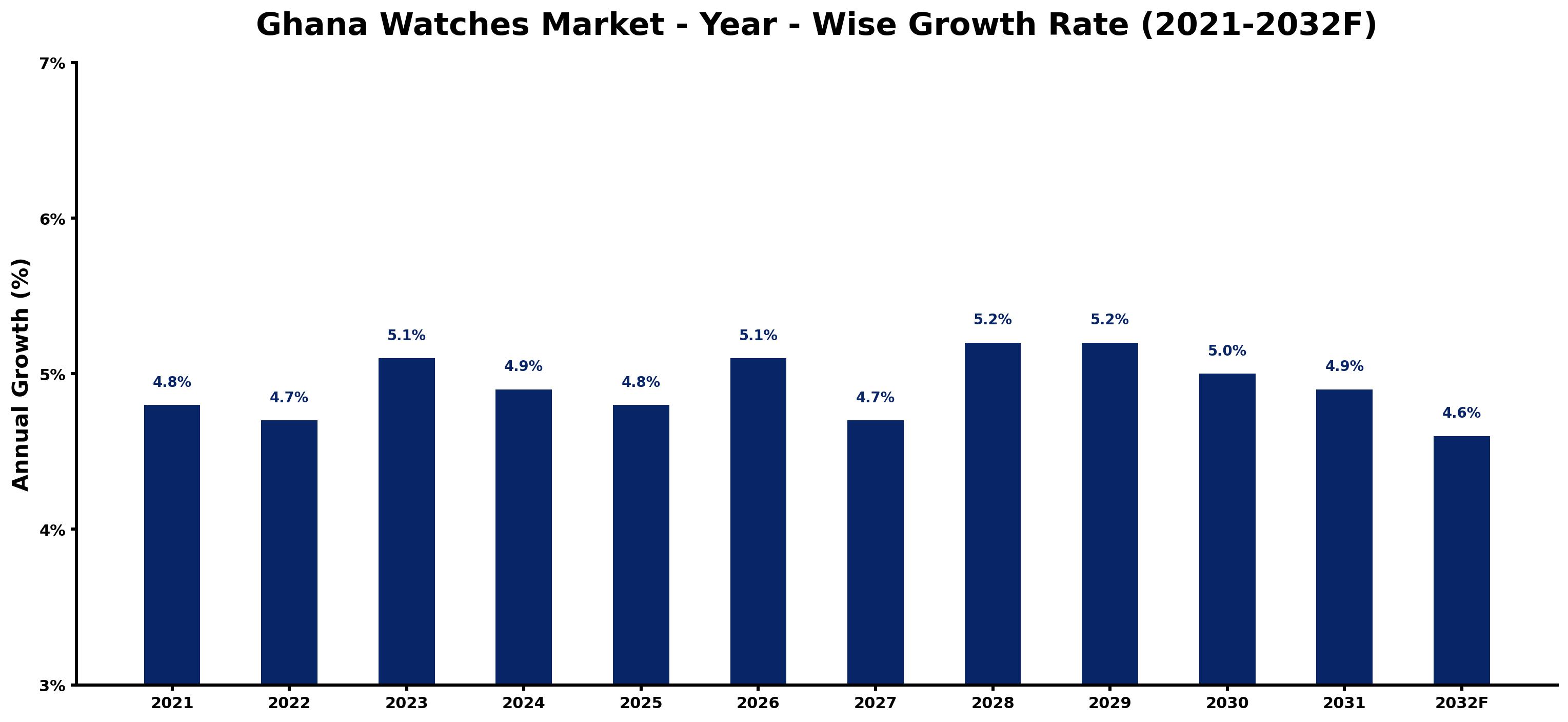
The table below presents the year wise growth rates along with the key drivers influencing the market
| Year | Growth Rate | Major Drivers |
| 2021 | 4.8% | The local craftsmanship in watchmaking showcases unique designs and cultural significance. |
| 2022 | 4.7% | Urbanization trends in Ghana escalate consumer interest in fashion and accessory markets. |
| 2023 | 5.1% | Youth engagement in entrepreneurship boosts interest in premium watch brands among millennials. |
| 2024 | 4.9% | E-commerce platforms facilitate easier access to international watch brands and styles. |
| 2025 | 4.8% | Collaborations between local artisans and international brands enhance market diversity and appeal. |
| 2026 | 5.1% | Social media campaigns effectively influence consumer preferences and drive brand visibility. |
| 2027 | 4.7% | Luxury tourism growth introduces foreign brands, sparking interest in local luxury markets. |
| 2028 | 5.2% | Increased disposable income among professionals supports luxury and mid-range watch purchases. |
| 2029 | 5.2% | Ghana's expanding middle class creates a sustainable market for stylish, affordable watches. |
| 2030 | 5.0% | The impact of global fashion trends reshapes consumer expectations for watch functionalities. |
| 2031 | 4.9% | Technological integration in watch features appeals to tech-savvy young consumers. |
| 2032 | 4.6% | Sustainability becomes a focal point as eco-friendly products gain traction in luxury goods. |
Note - Market size estimations and growth projections presented in this report are based on 6Wresearch's advanced forecasting approach, validated with industry datasets as of June 2026.
Ghana Watches Market Synopsis
The Ghana Watches Market is projected to reach 5.1% and witness significant growth during the forecast period (2026-2032). The market encompasses the wide array of watches available, including wristwatches and other timepieces that serve both functional and aesthetic purposes for consumers. With diverse styles, price points, and features, the Ghana watches market caters to various consumer segments, reflecting ongoing trends in fashion, luxury, and technological advancements.
Ghana Watches Market Growth Drivers
Several factors are driving the growth of the Ghana watches market. Firstly, changing fashion trends significantly influence consumer preferences, as wristwatches evolve from mere timekeeping devices to essential fashion accessories. Secondly, rising disposable incomes among the population enable more consumers to invest in luxury and branded watches. As economic growth continues, people are increasingly willing to spend on items that enhance their lifestyle.
- Technological advancements have led to innovative watch features such as smartwatches, appealing to tech-savvy consumers in the market.
- The accessibility of e-commerce platforms has broadened the reach of luxury watch brands, allowing consumers to browse and purchase their preferred products more conveniently.
- Marketing campaigns and celebrity endorsements have heightened the visibility of watch brands, boosting consumer interest and sales.
- The cultural significance attached to watches in Ghana adds to their desirability, as they are often seen as status symbols.
- Expansion in retail and distribution channels enhances product availability, making various options accessible to a larger audience.
Ghana Watches Market Trends and Opportunities
The Ghana watches market is observing notable trends that present various opportunities for stakeholders. One such trend is the increasing demand for smartwatches, which combine functionality with style, appealing to younger consumers. Moreover, sustainable and ethically produced watches are gaining traction, as consumers become more conscious of environmental impacts and labor practices.
- The rise of personalisation in watch design allows consumers to express their individual style, leading to a growing market for customised timepieces.
- Collaborations between fashion brands and watch manufacturers are creating unique products that attract a broader audience.
- Enhanced technology integration in watches offers features such as health monitoring, navigation, and connectivity, attracting tech-savvy consumers.
- Emerging local brands that focus on craftsmanship and cultural heritage are vying for attention by fostering national pride among consumers.
- Innovative marketing strategies, including influencer partnerships, are enhancing brand reach and improving engagement with potential buyers.
Ghana Watches Market Challenges and Restraints
Despite its growth potential, the Ghana watches market faces several challenges. Ensuring product quality and reliability remains a concern for consumers, as substandard products can damage brand reputations and trust. Additionally, the prevalence of counterfeit watches poses significant threats, as these imitations undermine legitimate businesses and consumer confidence.
- The competitive landscape is intensifying, not only from traditional watch manufacturers but also from alternative timekeeping devices such as smartphones.
- Market players must navigate fluctuations in economic conditions that can impact consumer spending habits and overall market dynamics.
- Regulatory requirements related to imports and product standards may pose hurdles for both local manufacturers and importers.
- Limited access to advanced manufacturing technologies can hinder the growth of local watch production capabilities, affecting competitiveness.
- Consumer awareness regarding brand authenticity and quality will continue to shape purchasing decisions, necessitating strategic marketing and educational efforts.
Ghana Watches Market Government Investment and Initiatives
Recognising the economic value and cultural significance of the watches market, the Ghana government is implementing various initiatives aimed at fostering growth and competitiveness within the sector. These efforts include policies designed to support local watch manufacturing, which not only enhances job creation but also bolsters national pride in homegrown brands.
- Incentives are being introduced to attract investments in watch design, assembly, and marketing, encouraging the development of a robust domestic industry.
- The establishment of quality standards for watches is a priority, ensuring that products meet safety and durability requirements.
- Collaboration between government agencies and industry stakeholders is being enhanced to promote the Ghana watches market both locally and internationally.
- Skills development programs are being initiated, targeting training for watchmakers and artisans to cultivate a knowledgeable workforce in the industry.
- Government-backed marketing campaigns aim to elevate the visibility of Ghanaian watch brands, enhancing their appeal in export markets.
Ghana Watches Market Latest Developments (May 2025 - June 2026)
In the timeframe from May 2025 to June 2026, the Ghana watches market has seen considerable developments. A surge in online retailing has transformed how consumers purchase watches, with e-commerce platforms becoming a primary distribution channel. This shift has encouraged brands to invest more heavily in digital marketing strategies to engage potential customers effectively.
- There has been an observable increase in the availability of smartwatches in the Ghana market, driven by the growing tech-savvy demographic.
- The focus on sustainability has led to a rise in brands offering eco-friendly timepieces, tapping into the global demand for environmentally responsible products.
- Increased collaboration among industry stakeholders, including workshops and exhibitions, has fostered a stronger community within the watch sector.
- Local artisans are gaining recognition for their craftsmanship, contributing to a renaissance of traditional watchmaking techniques.
- Consumer education initiatives have been launched to combat the prevalence of counterfeit goods, aiming to empower buyers to make informed choices.
Ghana Watches Market - Key Attractiveness of the Report
- 10 Years of Market Numbers
- Historical Data Starting from 2022 to 2025
- Base Year: 2025
- Forecast Data until 2032
- Key Performance Indicators Impacting the Market
- Major Upcoming Developments and Projects
Key Highlights of the Report:
- Ghana Watches Market Outlook
- Market Size of Ghana Watches Market, 2025
- Forecast of Ghana Watches Market, 2032
- Historical Data and Forecast of Ghana Watches Revenues & Volume for the Period 2022-2032F
- Ghana Watches Market Trend Evolution
- Ghana Watches Market Drivers and Challenges
- Ghana Watches Price Trends
- Ghana Watches Porter's Five Forces
- Ghana Watches Industry Life Cycle
- Historical Data and Forecast of Ghana Watches Market Revenues & Volume By Type for the Period 2022-2032F
- Historical Data and Forecast of Ghana Watches Market Revenues & Volume By Smart Watches for the Period 2022-2032F
- Historical Data and Forecast of Ghana Watches Market Revenues & Volume By Luxury Watches for the Period 2022-2032F
- Historical Data and Forecast of Ghana Watches Market Revenues & Volume By Fitness Watches for the Period 2022-2032F
- Historical Data and Forecast of Ghana Watches Market Revenues & Volume By Operations for the Period 2022-2032F
- Historical Data and Forecast of Ghana Watches Market Revenues & Volume By Mechanical for the Period 2022-2032F
- Historical Data and Forecast of Ghana Watches Market Revenues & Volume By Quartz for the Period 2022-2032F
- Historical Data and Forecast of Ghana Watches Market Revenues & Volume By Distribution Channel for the Period 2022-2032F
- Historical Data and Forecast of Ghana Watches Market Revenues & Volume By Hypermarket/ Supermarket for the Period 2022-2032F
- Historical Data and Forecast of Ghana Watches Market Revenues & Volume By Convenience Stores for the Period 2022-2032F
- Historical Data and Forecast of Ghana Watches Market Revenues & Volume By Online for the Period 2022-2032F
- Historical Data and Forecast of Ghana Watches Market Revenues & Volume By End-Users for the Period 2022-2032F
- Historical Data and Forecast of Ghana Watches Market Revenues & Volume By Women for the Period 2022-2032F
- Historical Data and Forecast of Ghana Watches Market Revenues & Volume By Unisex for the Period 2022-2032F
- Ghana Watches Import Export Trade Statistics
- Market Opportunity Assessment By Type
- Market Opportunity Assessment By Operations
- Market Opportunity Assessment By Distribution Channel
- Market Opportunity Assessment By End-Users
- Ghana Watches Top Companies Market Share
- Ghana Watches Competitive Benchmarking By Technical and Operational Parameters
- Ghana Watches Company Profiles
- Ghana Watches Key Strategic Recommendations






































