Ghana Whiskey Market Size, Share & Growth Rate
The Ghana Whiskey Market was estimated at USD 407 Million in 2025 and is projected to reach USD 582 Million by 2032, growing at a CAGR of 5.2% from 2026 to 2032. This robust growth is largely fueled by the increasing urbanization and rising disposable incomes among consumers, particularly within the middle and upper-income brackets. As Ghanaian consumers become more discerning in their drinking choices, the shift toward premium and imported whiskey brands is expected to significantly influence market dynamics.
Ghana Whiskey Market Year-wise Growth Rate and Key Drivers
This graph highlights how the Ghana Whiskey Market has steadily grown over the years, supported by major growth factors.
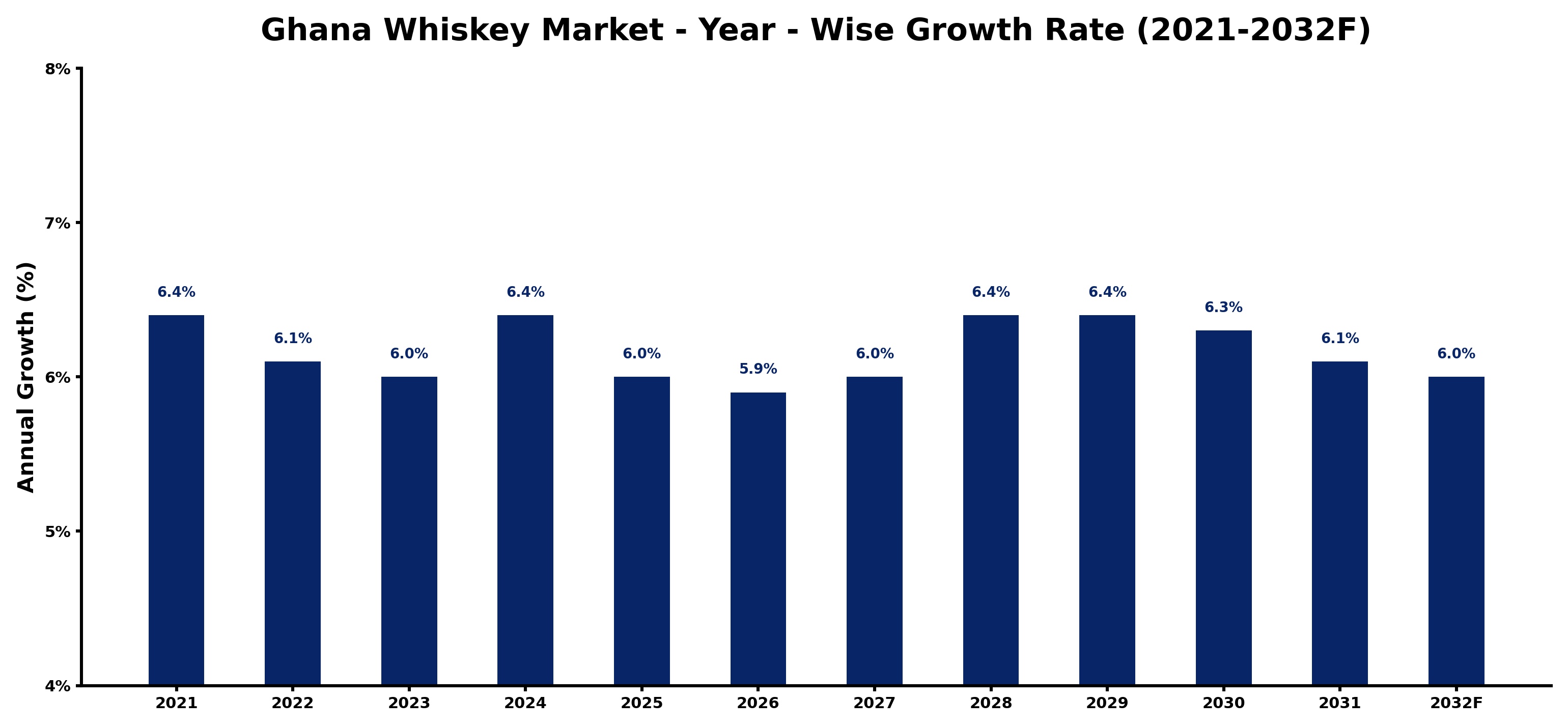
The table below presents the year‑wise growth rates along with the key drivers influencing the market
| Year | Growth Rate | Major Drivers |
| 2021 | 6.4% | Rising disposable income levels |
| 2022 | 6.1% | Growing interest in premium brands |
| 2023 | 6.0% | Increased social gatherings and events |
| 2024 | 6.4% | Expansion of local distilleries |
| 2025 | 6.0% | Emergence of craft whiskey producers |
| 2026 | 5.9% | Youth engagement in whiskey culture |
| 2027 | 6.0% | Enhanced marketing strategies implemented |
| 2028 | 6.4% | Tourism growth boosted whiskey sales |
| 2029 | 6.4% | Increased online purchasing convenience |
| 2030 | 6.3% | Collaborations with local influencers |
| 2031 | 6.1% | Whiskey tasting events gained popularity |
| 2032 | 6.0% | Sustainability initiatives attracted consumers |
Note - Market size estimations and growth projections presented in this report are based on 6Wresearch’s advanced forecasting approach, validated with industry datasets as of June 2026.
Ghana Whiskey Market Synopsis
In recent years, whiskey has emerged as a preferred choice among Ghana's evolving drinkers, particularly in urban settings. The appeal of both local and imported varieties has been bolstered by marketing strategies that resonate with a growing appetite for sophisticated drinking experiences.
Additionally, the rising popularity of whiskey has been linked to social occasions and celebrations, with consumers increasingly viewing it as a status symbol. As the sector evolves, the competition among brands intensifies, fostering innovation and variety within the market.
Ghana Whiskey Market Key Takeaways
- The market is experiencing a notable shift towards premium whiskey as urban consumers become more brand-conscious.
- Marketing initiatives and brand promotions are significantly enhancing consumer engagement and driving sales.
- Distribution networks are expanding, improving accessibility to diverse whiskey products across various regions.
- The demand for imported whiskey brands is rising, particularly among the affluent segments of the population.
- Regulatory frameworks are being strengthened to maintain product quality and consumer safety.
Evaluation of Restraints in Ghana Whiskey Market
Despite the market's promising growth trajectory, several constraints are at play. Ensuring product quality and consistency remains a challenge for producers, especially as the demand for premium offerings increases. The complexities surrounding whiskey aging and maturation processes can also create barriers to entry for new entrants looking to establish themselves in the market. Furthermore, navigating regulatory compliance regarding labeling and marketing can be cumbersome, leading to potential delays in product launch and market penetration.
Ghana Whiskey Market Trends
Current trends indicate a pronounced preference for unique flavor profiles and artisanal production methods, appealing to a niche segment of consumers who value craftsmanship. Additionally, the rise of whiskey cocktails in bars and restaurants is redefining consumption patterns, while online sales channels are becoming increasingly relevant as consumers seek convenience and variety.
Ghana Whiskey Market Opportunities
Opportunities for growth in the Ghana Whiskey Market are abundant. With urbanization continuing to reshape lifestyles, there is a clear opening for brands to introduce innovative products tailored to local tastes. Investments in sustainable production methods can also attract environmentally-conscious consumers, while enhancing brand loyalty and customer engagement. Expanding e-commerce platforms can offer avenues for reaching a wider audience, particularly among younger consumers who are more inclined to purchase online.
Government Initiatives in the Ghana Whiskey Market
The Ghanaian government has implemented various policies to regulate the whiskey market effectively. Licensing requirements and taxation policies are in place to ensure product safety and prevent counterfeit goods from entering the market. These regulations are essential for maintaining consumer trust and ensuring compliance with international quality standards. Additionally, the government is focused on generating revenue through excise duties and sales taxes, which further underscores the significance of the whiskey industry in the national economy.
Future Insights of the Ghana Whiskey Market
Looking ahead to 2026-2032, the Ghana Whiskey Market is poised for continued growth, driven by an increasingly sophisticated consumer base and robust economic conditions. Brands that capitalize on the trends toward premiumization and local production will likely gain a competitive edge. Furthermore, as the cultural perceptions of whiskey evolve, opportunities for innovative marketing strategies and product diversification are set to expand, paving the way for a dynamic and resilient market landscape.
Ghana Whiskey Market Latest Developments (May 2025 - June 2026)
Recent developments in the Ghana Whiskey Market indicate a heightened focus on premium offerings, as brands launch new products that emphasize unique flavor profiles and artisanal craftsmanship. Market players are increasingly utilizing social media platforms to engage with consumers, fostering brand loyalty and creating awareness. Additionally, several initiatives have been introduced to enhance distribution channels, ensuring that a wider range of whiskey products is accessible to consumers across urban and rural areas.
Ghana Whiskey Market - Key Attractiveness of the Report
- 10 Years of Market Numbers
- Historical Data Starting from 2022 to 2025
- Base Year: 2025
- Forecast Data until 2032
- Key Performance Indicators Impacting the Market
- Major Upcoming Developments and Projects
Key Highlights of the Report:
- Ghana Whiskey Market Outlook
- Market Size of Ghana Whiskey Market, 2025
- Forecast of Ghana Whiskey Market, 2032
- Historical Data and Forecast of Ghana Whiskey Revenues & Volume for the Period 2022-2032F
- Ghana Whiskey Market Trend Evolution
- Ghana Whiskey Market Drivers and Challenges
- Ghana Whiskey Price Trends
- Ghana Whiskey Porter's Five Forces
- Ghana Whiskey Industry Life Cycle
- Historical Data and Forecast of Ghana Whiskey Market Revenues & Volume By Product Type for the Period 2022-2032F
- Historical Data and Forecast of Ghana Whiskey Market Revenues & Volume By American Whisky for the Period 2022-2032F
- Historical Data and Forecast of Ghana Whiskey Market Revenues & Volume By Irish Whisky for the Period 2022-2032F
- Historical Data and Forecast of Ghana Whiskey Market Revenues & Volume By Scotch Whisky for the Period 2022-2032F
- Historical Data and Forecast of Ghana Whiskey Market Revenues & Volume By Canadian Whisky for the Period 2022-2032F
- Historical Data and Forecast of Ghana Whiskey Market Revenues & Volume By Others for the Period 2022-2032F
- Historical Data and Forecast of Ghana Whiskey Market Revenues & Volume By Distribution Channel for the Period 2022-2032F
- Historical Data and Forecast of Ghana Whiskey Market Revenues & Volume By On-trade for the Period 2022-2032F
- Historical Data and Forecast of Ghana Whiskey Market Revenues & Volume By Off-trade for the Period 2022-2032F
- Ghana Whiskey Import Export Trade Statistics
- Market Opportunity Assessment By Product Type
- Market Opportunity Assessment By Distribution Channel
- Ghana Whiskey Top Companies Market Share
- Ghana Whiskey Competitive Benchmarking By Technical and Operational Parameters
- Ghana Whiskey Company Profiles
- Ghana Whiskey Key Strategic Recommendations






































