Chocolate Market Highlights
| Report Name | Chocolate Market |
| Report Category / Coverage | Global |
| CAGR | 4.6% |
| Market Size | USD 180 Billion by 2032 |
| Growing Sector | Commercial |
| Forecast Period | 2026-2032 |
Topics Covered in the Chocolate Market Report
Chocolate Market report thoroughly covers the by distribution channel, by product type, by chocolate type and by region. The market report provides an unbiased and detailed analysis of the ongoing market trends, opportunities/high growth areas, and market drivers which would help the stakeholders to devise and align their market strategies according to the current and future market dynamics.
Chocolate Market Size Analysis
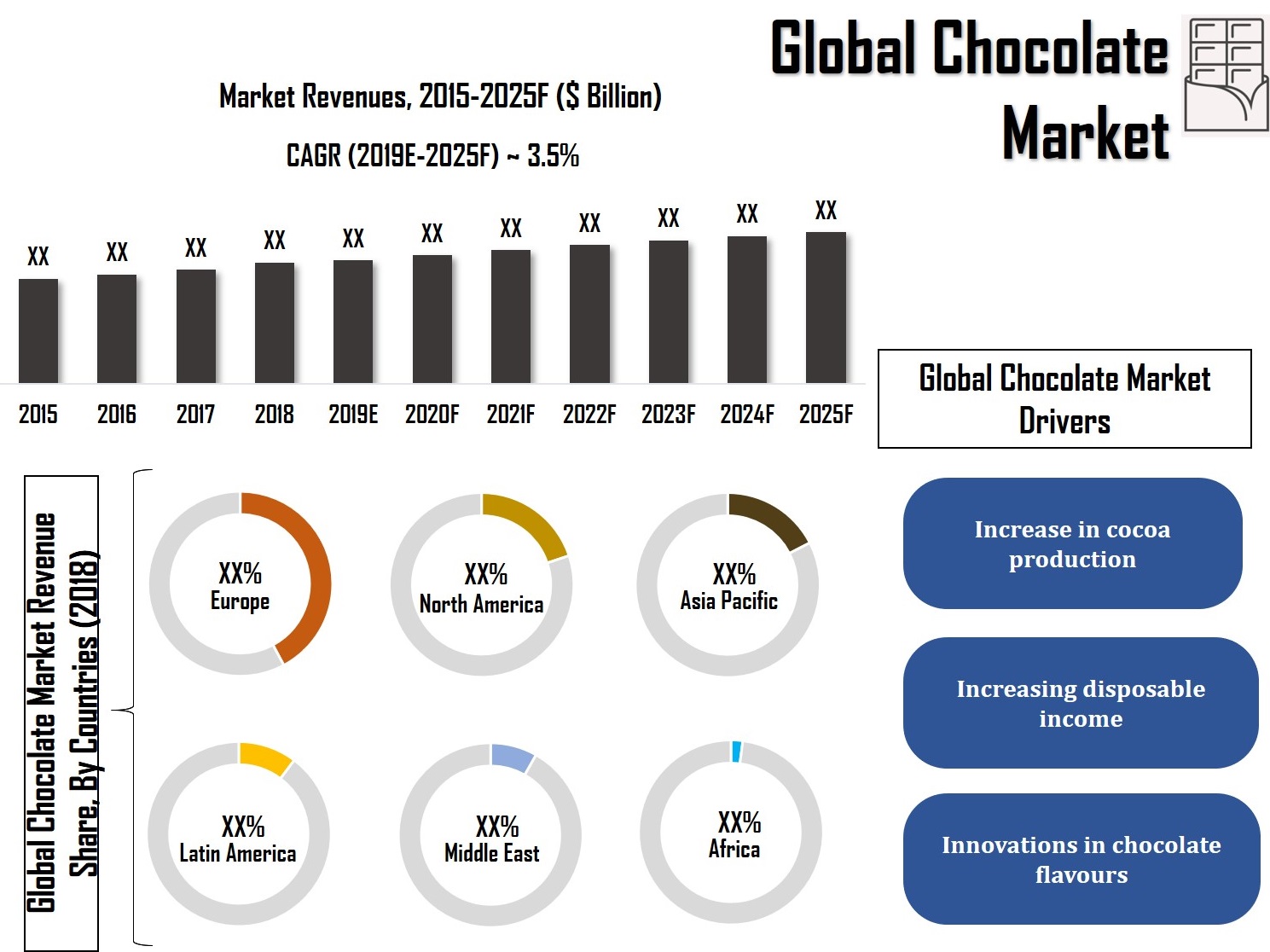
The Chocolate market has been experiencing significant growth over the past few years. As of 2025, the market is valued at approximately USD 138 billion. Further, the Global Market is projected to expand at a CAGR of 4.6% from 2026 to 2032. Additionally, by 2032, the market size is expected to reach around $180 billion.
Chocolate Market Synopsis
The chocolate market has experienced substantial growth over the past decade, driven by evolving consumer preferences and increasing demand for premium and organic products. As health-conscious trends continue to influence buying habits, there is a notable shift towards dark chocolate, which is often perceived as a healthier option due to its higher cocoa content and relative nutritional benefits. The market is also expanding into new geographical regions, with Asia-Pacific emerging as a significant player due to rising disposable incomes and changing diets. Additionally, innovations in flavors, packaging, and sustainable sourcing are further propelling market dynamics, catering to environmentally and socially conscious consumers.
According to 6Wresearch, the Chocolate Market revenue is expected to reach at a significant CAGR of 4.6% during the forecast period 2026-2032. One primary driver is the increasing demand for premium and artisanal chocolates, which cater to consumers seeking unique flavors and high-quality products. Additionally, the rising popularity of chocolate in emerging markets, due to increased disposable incomes and westernization of diets, contributes significantly to market growth. Technological advancements in production processes also enable manufacturers to enhance efficiency and product innovation.
Sustainability concerns, particularly regarding cocoa farming practices, have prompted the industry to adopt more ethical sourcing methods, which can be costly and complex to implement. Additionally, fluctuating cocoa prices due to climate change and geopolitical instability pose financial risks for producers. Health-conscious consumers represent another challenge, as they increasingly opt for healthier snack alternatives, requiring manufacturers to innovate with healthier chocolate options to maintain relevance.
Chocolate Market Trends
- Growing Demand for Premium Chocolate – Consumers are increasingly seeking high-quality, premium chocolate products, driving growth in the market. This shift is fueled by a desire for superior taste experiences and the perceived health benefits associated with dark chocolate.
- Rising Popularity of Organic and Fair-Trade Chocolate – There is a significant trend towards sustainable and ethically sourced chocolate. More consumers are opting for organic and fair-trade options, promoting environmental sustainability and fair compensation for cocoa farmers.
- Health-Conscious Choices Influence - The increasing health consciousness among consumers is leading to a demand for chocolates with reduced sugar content, added nutrients, or functional benefits. This trend encourages innovation within the industry.
Investment Opportunities in the Chocolate Market
- Premium and Artisanal Chocolate – There is a high demand for premium and artisanal chocolates, driven by consumers' preference for high-quality and unique flavors. This trend presents investment opportunities in small-batch production and specialty cocoa beans.
- Digital and E-commerce Channels – Expanding digital and e-commerce platforms can help chocolate brands reach broader audiences with reduced overheads, making this a lucrative area for investment, particularly following the rise in online shopping dynamics.
- Innovative Packaging and Marketing - Investments in creative packaging and innovative marketing strategies can differentiate products in a crowded market, appealing to consumers looking for a unique and engaging purchasing experience.
Leading Players of the Chocolate Market
Companies include Mars, M&M’s, Snickers, Milky way, nestle etc who have established a strong presence through innovation, quality products, and extensive distribution networks. These industry giants have not only capitalized on traditional chocolate products but have also embraced the growing trend of organic and fair-trade chocolates, underscoring their commitment to sustainability and ethical sourcing. Through strategic acquisitions, innovative product launches, and targeted marketing campaigns, these companies maintain their leadership positions in the competitive chocolate market.
Government Regulations Introduced in the Chocolate Market
The chocolate market has seen the introduction of several government regulations aimed at ensuring quality, sustainability, and ethical practices within the industry. One key area of regulation is the establishment of standards for sustainable sourcing, where governments require chocolate manufacturers to trace the origins of their cocoa beans and ensure they are not sourced from regions where deforestation or child labor is prevalent. Additionally, labeling requirements have been strengthened to provide consumers with more comprehensive information about the ingredients and nutritional content of chocolate products. These measures also include allergen disclosures, promoting transparency and consumer safety.
Future Insights of the Chocolate Market
The future of the chocolate market looks promising with several key trends and innovations poised to shape its trajectory. As consumers become more health-conscious, there is a growing demand for healthier chocolate options, including those with higher cacao content and reduced sugar levels. Additionally, sustainability practices are becoming imperative, with both consumers and producers emphasizing fair trade practices and ethical sourcing of cacao. The rise of plant-based and specialty dietary chocolates is also notable, catering to vegan, gluten-free, and dairy-free preferences. Technological advancements in production and packaging are expected to enhance product quality and environmental sustainability.
Market Segmentation Analysis
The report offers a comprehensive study of the subsequent market segments and their leading categories.
Milk chocolate to Dominate the Market - By product type
According to Ravi Bhandari, Research Head, 6wresearch, Milk chocolate is a prominent player in the chocolate market, beloved for its creamy texture and sweet flavors. It is made by combining chocolate liquor, cocoa butter, sugar, and milk or milk powder, which gives it a smooth consistency and a lighter color compared to dark chocolate. Milk chocolate accounts for a significant share of confectionery sales worldwide, appealing to consumers of all ages due to its balanced sweetness and mild chocolate taste. It's used in a wide range of products, from bars and truffles to coatings for candy and snacks, making it a versatile and integral component of the chocolate industry.
Bar chocolate to dominate the market - By chocolate type
Bar chocolate holds a significant position in the chocolate market, serving as both a staple product and a versatile favourite among consumers. These bars come in a diverse range of flavors and formulations, from classic milk chocolate to dark, white, and specialty-infused varieties. The appeal of bar chocolate lies in its convenient packaging, making it an easy treat to enjoy or share on the go. In recent years, there has been a growing trend towards premium and artisanal bar chocolate, with an emphasis on high-quality ingredients, ethical sourcing, and unique flavors combinations.
Supermarkets and Hypermarkets to dominate the market – By distribution channel
Supermarkets and hypermarkets play a pivotal role in the chocolate market by serving as key distribution channels for chocolate manufacturers. These retail giants offer a wide variety of chocolate products, ranging from luxury brands and artisanal chocolates to mainstream and private-label options, catering to diverse consumer preferences. The extensive shelf space and high foot traffic in these stores increase product visibility and accessibility, driving sales and brand recognition. Additionally, supermarkets and hypermarkets often engage in strategic marketing initiatives, such as promotions and discounts, which can influence purchasing decisions and boost chocolate consumption.
Europe to dominate the market – By region
Europe plays a pivotal role in the chocolate market, being home to some of the most renowned chocolate brands and producers. Countries like Switzerland, Belgium, and Germany are celebrated for their exquisite chocolate creations, contributing significantly to the region's reputation as a leader in quality chocolate production. Europe's chocolate market is characterized by a diverse range of products, from premium artisanal chocolates to popular consumer varieties, catering to a wide array of tastes and preferences. This diversity reflects the rich culinary heritage and the demand for high-quality confectionery across the continent.
Key Attractiveness of the Report
- 10 Years of Market Numbers.
- Historical Data Starting from 2022 to 2025.
- Base Year: 2025
- Forecast Data until 2032.
- Key Performance Indicators Impacting the Market.
- Major Upcoming Developments and Projects.
Key Highlights of the Report
- Chocolate Market Overview
- Chocolate Market Outlook
- Chocolate Market Forecast
- Historical Data of Chocolate Market Revenues for the Period 2022-2032
- Chocolate Market Size & Chocolate Market Forecast of Revenues, Until 2022-2032
- Historical Data of Chocolate Market, By Product Type, for the Period 2022-2032
- Chocolate Market Size & Chocolate Market Forecast of Revenues, By Product Type, Until 2022-2032
- Historical Data of Chocolate Market, By Distribution Channels, for the Period 2022-2032
- Chocolate Market Size & Chocolate Market Forecast of Revenues, By Distribution Channels, Until 2022-2032
- Historical Data of Chocolate Market, By Chocolate Type, for the Period 2022-2032
- Chocolate Market Size & Chocolate Market Forecast of Revenues, By Chocolate Type, Until 2022-2032
- Historical Data of North America Chocolate Market Revenues and Volume, for the Period 2022-2032
- Market Size & Forecast of North America Chocolate Market Revenues, Until 2022-2032
- Historical Data of Latin America Chocolate Market Revenues and Volume, for the Period 2022-2032
- Market Size & Forecast of the Latin America Chocolate Market Revenues, Until 2022-2032
- Historical Data of Europe Chocolate Market Revenues and Volume, for the Period 2022-2032
- Market Size & Forecast of the Europe Chocolate Market Revenues, Until 2022-2032
- Historical Data of the Asia Pacific Chocolate Market Revenues and Volume, for the Period 2022-2032
- Market Size & Forecast of the Asia Pacific Chocolate Market Revenues, Until 2022-2032
- Historical Data of the Middle East Chocolate Market Revenues and Volume, for the Period 2022-2032
- Market Size & Forecast of the Middle East Chocolate Market Revenues, Until 2022-2032
- Historical Data of Africa Chocolate Market Revenues and Volume, for the Period 2022-2032
- Market Size & Forecast of the Africa Chocolate Market Revenues, Until 2022-2032
- Market Drivers and Restraints
- Chocolate Market Price Trends
- Chocolate Market Trends and Industry Life Cycle
- Porter’s Five Force Analysis
- Market Opportunity Assessment
- Chocolate Market Share, By Regions
- Chocolate Market Share, By Players
- Chocolate Market Overview on Competitive Benchmarking
- Company Profiles
- Key Strategic Recommendations
Market Covered
The market report has been segmented and sub segmented into the following categories:
By Product Type
- Milk Chocolate
- White Chocolate
- Dark Chocolate
By Distribution Channels
- Supermarkets/ Hypermarkets
- Grocery/Mom-n-Pop Stores
- Convenience Stores
- Online Channel
- Others (Specialized Retailers, pharmacies, etc.)
By Chocolate Type
- Count lines & Straight lines
- Moulded or Bar Chocolates
- Choco-panned & Sugar panned
- Others (Box chocolates, novelties)
By Regions
- North America
- Latin America
- Europe
- Asia-Pacific
- Middle East
- Africa