Greece Packaged Water Market: Import Trend Analysis
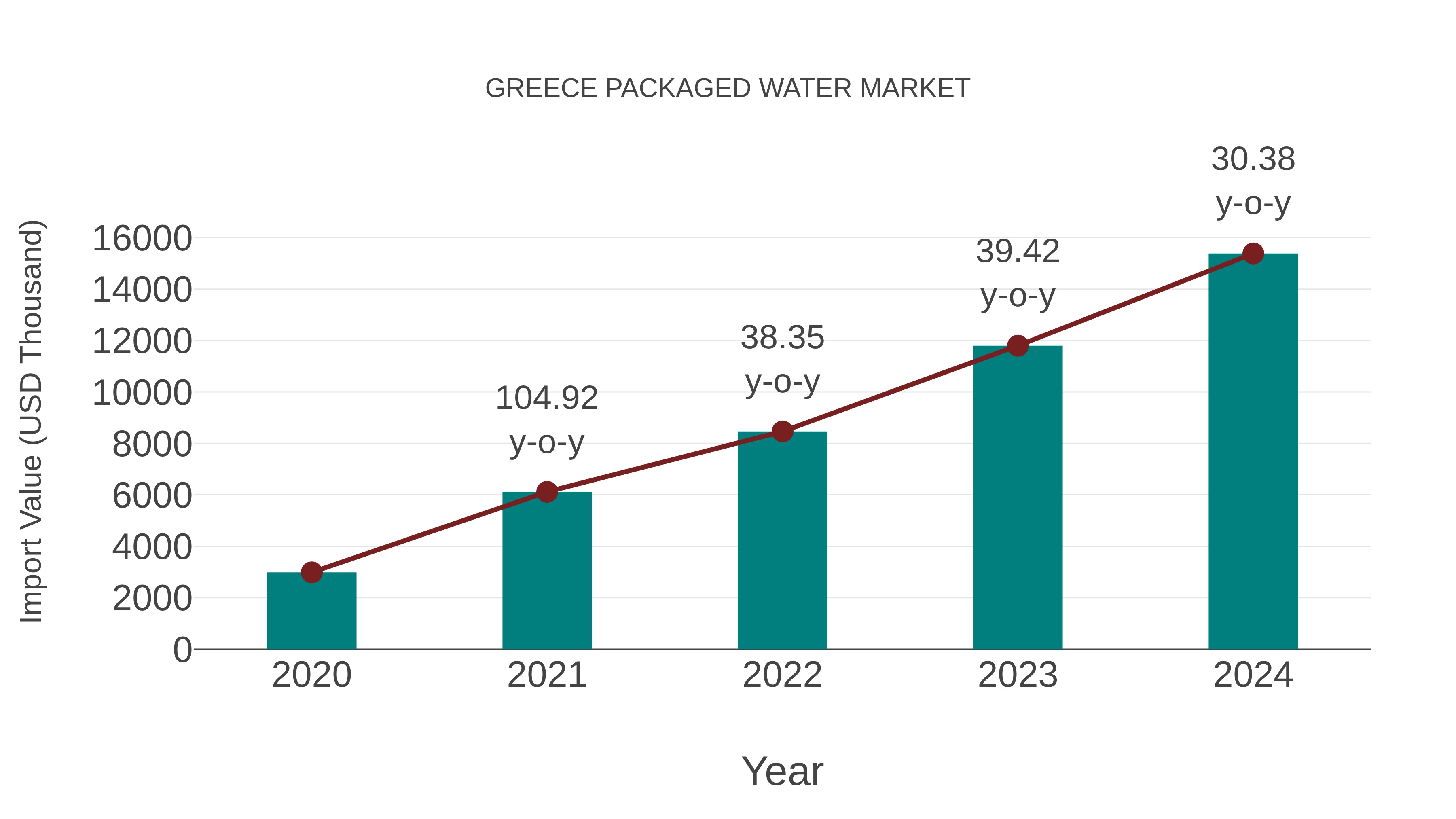
In the Greece packaged water market, the import trend showed a notable growth rate of 30.38% from 2023 to 2024, with a compound annual growth rate (CAGR) of 50.67% from 2020 to 2024. This surge in imports can be attributed to a shift in consumer preferences towards healthier beverage options, driving increased demand for packaged water in the market.
Greece Packaged water Market Overview
The Greece Packaged water market is experiencing steady growth driven by increasing consumer awareness regarding the importance of hydration and convenience. The market is characterized by a wide variety of offerings including still, sparkling, flavored, and functional waters to cater to diverse consumer preferences. The demand for packaged water is further boosted by factors such as health consciousness, concerns over water quality, and the convenience of on-the-go hydration options. Key players in the market are focusing on product innovation, sustainable packaging solutions, and strategic marketing initiatives to stay competitive. With a growing emphasis on health and wellness trends, the Greece Packaged water market is expected to continue its upward trajectory in the coming years.
Greece Packaged water Market Trends and Opportunities
In the Greece Packaged water market, there is a growing trend towards healthier lifestyle choices and increased awareness of the importance of staying hydrated. Consumers are seeking convenient and portable options for consuming water on-the-go, driving the demand for packaged water products. Additionally, there is a shift towards sustainable packaging materials and environmentally friendly practices, presenting opportunities for companies to differentiate themselves through eco-friendly initiatives. With the rising popularity of functional and flavored waters, there is potential for innovation in product offerings to cater to diverse consumer preferences. E-commerce platforms are also playing a significant role in expanding market reach and accessibility for packaged water brands in Greece. Overall, the market is poised for growth with a focus on health, sustainability, and convenience.
Greece Packaged water Market Challenges
In the Greece Packaged water market, some key challenges include intense competition among numerous brands, price sensitivity among consumers, and concerns over environmental impact due to plastic packaging. The market is saturated with various players, leading to pricing pressures and the need for constant innovation to stand out. Moreover, Greek consumers are increasingly conscious of the environmental issues related to single-use plastic bottles, which has led to calls for more sustainable packaging solutions. Companies operating in the market must navigate these challenges by focusing on differentiation, offering eco-friendly alternatives, and engaging in effective marketing strategies to capture consumer interest and loyalty in a competitive landscape.
Greece Packaged water Market Drivers
The Greece Packaged water market is primarily driven by factors such as increasing health consciousness among consumers, growing awareness about the importance of staying hydrated, and the convenience offered by packaged water for on-the-go consumption. The rise in disposable income levels, changing lifestyle patterns, and a shift towards healthier beverage options also contribute to the market growth. Additionally, concerns regarding water pollution and the availability of safe drinking water in certain regions further boost the demand for packaged water as a safe and reliable alternative. Marketing strategies focusing on product innovation, eco-friendly packaging solutions, and expanding distribution networks also play a significant role in driving the growth of the Packaged water market in Greece.
Greece Packaged water Market Government Policy
The Greek packaged water market is subject to government policies that regulate the production, distribution, and labeling of bottled water products. These policies aim to ensure the safety and quality of packaged water for consumers by setting standards for water sources, production facilities, and packaging materials. Additionally, there are regulations in place regarding the advertising and marketing of packaged water to prevent misleading claims and protect consumer interests. The government also monitors the pricing and taxation of packaged water to prevent price gouging and ensure affordability for consumers. Overall, government policies in Greece play a crucial role in maintaining the integrity and competitiveness of the packaged water market while safeguarding consumer health and rights.
Greece Packaged water Market Future Outlook
The future outlook for the Greece Packaged water market appears promising, with steady growth expected due to increasing consumer awareness about health and hydration. The market is anticipated to be driven by factors such as rising concerns over water quality, convenience, and the growing trend towards healthier beverage options. Key players are likely to focus on product innovation, including flavored and functional waters, to cater to evolving consumer preferences. Additionally, the shift towards sustainable packaging solutions and eco-friendly practices is expected to play a significant role in shaping the market landscape. Overall, the Greece Packaged water market is poised for expansion, driven by a combination of consumer demand for convenient and healthy hydration options, innovation in product offerings, and a growing emphasis on sustainability.
Key Highlights of the Report:
- Greece Packaged water Market Outlook
- Market Size of Greece Packaged water Market, 2025
- Forecast of Greece Packaged water Market, 2032
- Historical Data and Forecast of Greece Packaged water Revenues & Volume for the Period 2022 - 2032F
- Greece Packaged water Market Trend Evolution
- Greece Packaged water Market Drivers and Challenges
- Greece Packaged water Price Trends
- Greece Packaged water Porter's Five Forces
- Greece Packaged water Industry Life Cycle
- Historical Data and Forecast of Greece Packaged water Market Revenues & Volume By Product for the Period 2022 - 2032F
- Historical Data and Forecast of Greece Packaged water Market Revenues & Volume By Still for the Period 2022 - 2032F
- Historical Data and Forecast of Greece Packaged water Market Revenues & Volume By Carbonated for the Period 2022 - 2032F
- Historical Data and Forecast of Greece Packaged water Market Revenues & Volume By Flavored for the Period 2022 - 2032F
- Historical Data and Forecast of Greece Packaged water Market Revenues & Volume By Functional for the Period 2022 - 2032F
- Greece Packaged water Import Export Trade Statistics
- Market Opportunity Assessment By Product
- Greece Packaged water Top Companies Market Share
- Greece Packaged water Competitive Benchmarking By Technical and Operational Parameters
- Greece Packaged water Company Profiles
- Greece Packaged water Key Strategic Recommendations






































