Hong Kong Dog and Cat Food Market Top 5 Importing Countries and Market Competition (HHI) Analysis
Despite a decline in the CAGR and growth rate for dog and cat food imports in Hong Kong, the market remains diversified with top exporters being Thailand, USA, Germany, Japan, and Canada. The low concentration level indicates a competitive landscape, offering consumers a wide range of choices. The negative growth rate in 2024 may be attributed to various factors, such as changing consumer preferences or economic conditions. Monitoring emerging trends and adapting marketing strategies will be crucial for stakeholders in this market.
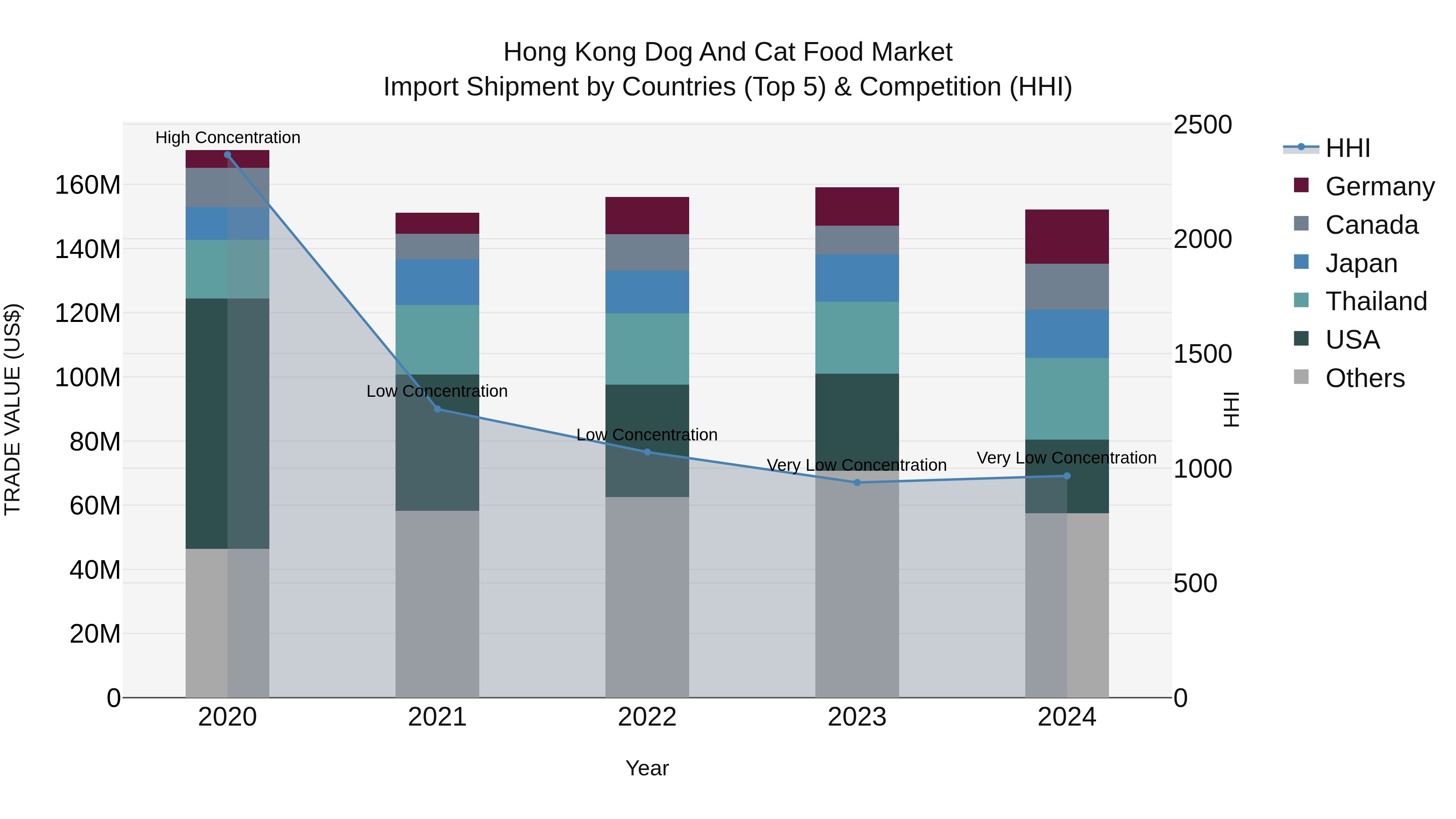
Hong Kong Dog and Cat Food Market Synopsis
The Dog and Cat Food market in Hong Kong is thriving, fueled by the growing pet ownership trend and the increasing awareness of pet health and nutrition. Pet owners are increasingly seeking high-quality, premium food options for their pets, including organic and natural ingredients. The rise of online shopping has also made it easier for consumers to access a wider range of pet food products. As pet humanization continues, brands are focusing on product innovation and marketing strategies to cater to the evolving preferences of pet owners.
Drivers of the market
The Hong Kong Dog and Cat Food Market is driven by the increasing pet ownership and growing awareness of pet health and nutrition. As more households consider pets as family members, the demand for high-quality, nutritious pet food is on the rise. Additionally, the trend toward premium and organic pet food products is shaping the market, as pet owners seek to provide the best for their furry companions.
Challenges of the market
In the Dog and Cat Food market, challenges arise from rising ingredient costs and supply chain disruptions. Manufacturers must balance quality with affordability to meet consumer expectations, which can be particularly challenging during periods of inflation. Additionally, increasing consumer demand for specialized dietssuch as organic or grain-free optionsrequires constant innovation and adaptation. Regulatory compliance related to pet food safety and labeling can also complicate market operations.
Government Policy of the market
The Hong Kong government regulates the dog and cat food market to ensure the safety and quality of pet food products. Regulatory frameworks are established to enforce labeling requirements and nutritional standards, protecting consumer interests and promoting animal health. The government encourages local manufacturers to adopt sustainable practices and source ingredients responsibly. Additionally, initiatives to raise public awareness about responsible pet ownership and nutrition contribute to the growth of a healthy and safe pet food market in Hong Kong.
Key Highlights of the Report:
- Hong Kong Dog and Cat Food Market Outlook
- Market Size of Hong Kong Dog and Cat Food Market, 2024
- Forecast of Hong Kong Dog and Cat Food Market, 2031
- Historical Data and Forecast of Hong Kong Dog and Cat Food Revenues & Volume for the Period 2021-2031
- Hong Kong Dog and Cat Food Market Trend Evolution
- Hong Kong Dog and Cat Food Market Drivers and Challenges
- Hong Kong Dog and Cat Food Price Trends
- Hong Kong Dog and Cat Food Porter`s Five Forces
- Hong Kong Dog and Cat Food Industry Life Cycle
- Historical Data and Forecast of Hong Kong Dog and Cat Food Market Revenues & Volume By Animal Type for the Period 2021-2031
- Historical Data and Forecast of Hong Kong Dog and Cat Food Market Revenues & Volume By Dog for the Period 2021-2031
- Historical Data and Forecast of Hong Kong Dog and Cat Food Market Revenues & Volume By Cat for the Period 2021-2031
- Historical Data and Forecast of Hong Kong Dog and Cat Food Market Revenues & Volume By Product Type for the Period 2021-2031
- Historical Data and Forecast of Hong Kong Dog and Cat Food Market Revenues & Volume By Dry Food for the Period 2021-2031
- Historical Data and Forecast of Hong Kong Dog and Cat Food Market Revenues & Volume By Wet/Canned Food for the Period 2021-2031
- Historical Data and Forecast of Hong Kong Dog and Cat Food Market Revenues & Volume By Nutritious Food for the Period 2021-2031
- Historical Data and Forecast of Hong Kong Dog and Cat Food Market Revenues & Volume By Snacks/Treats for the Period 2021-2031
- Historical Data and Forecast of Hong Kong Dog and Cat Food Market Revenues & Volume By Others for the Period 2021-2031
- Historical Data and Forecast of Hong Kong Dog and Cat Food Market Revenues & Volume By Distribution Channel for the Period 2021-2031
- Historical Data and Forecast of Hong Kong Dog and Cat Food Market Revenues & Volume By Specialized Pet Shops for the Period 2021-2031
- Historical Data and Forecast of Hong Kong Dog and Cat Food Market Revenues & Volume By Supermarkets/Hypermarkets for the Period 2021-2031
- Historical Data and Forecast of Hong Kong Dog and Cat Food Market Revenues & Volume By Online Channel for the Period 2021-2031
- Historical Data and Forecast of Hong Kong Dog and Cat Food Market Revenues & Volume By Other Channels for the Period 2021-2031
- Hong Kong Dog and Cat Food Import Export Trade Statistics
- Market Opportunity Assessment By Animal Type
- Market Opportunity Assessment By Product Type
- Market Opportunity Assessment By Distribution Channel
- Hong Kong Dog and Cat Food Top Companies Market Share
- Hong Kong Dog and Cat Food Competitive Benchmarking By Technical and Operational Parameters
- Hong Kong Dog and Cat Food Company Profiles
- Hong Kong Dog and Cat Food Key Strategic Recommendations






































