Hungary Cloud Applications Market Size & Growth Rate (2026-2032)
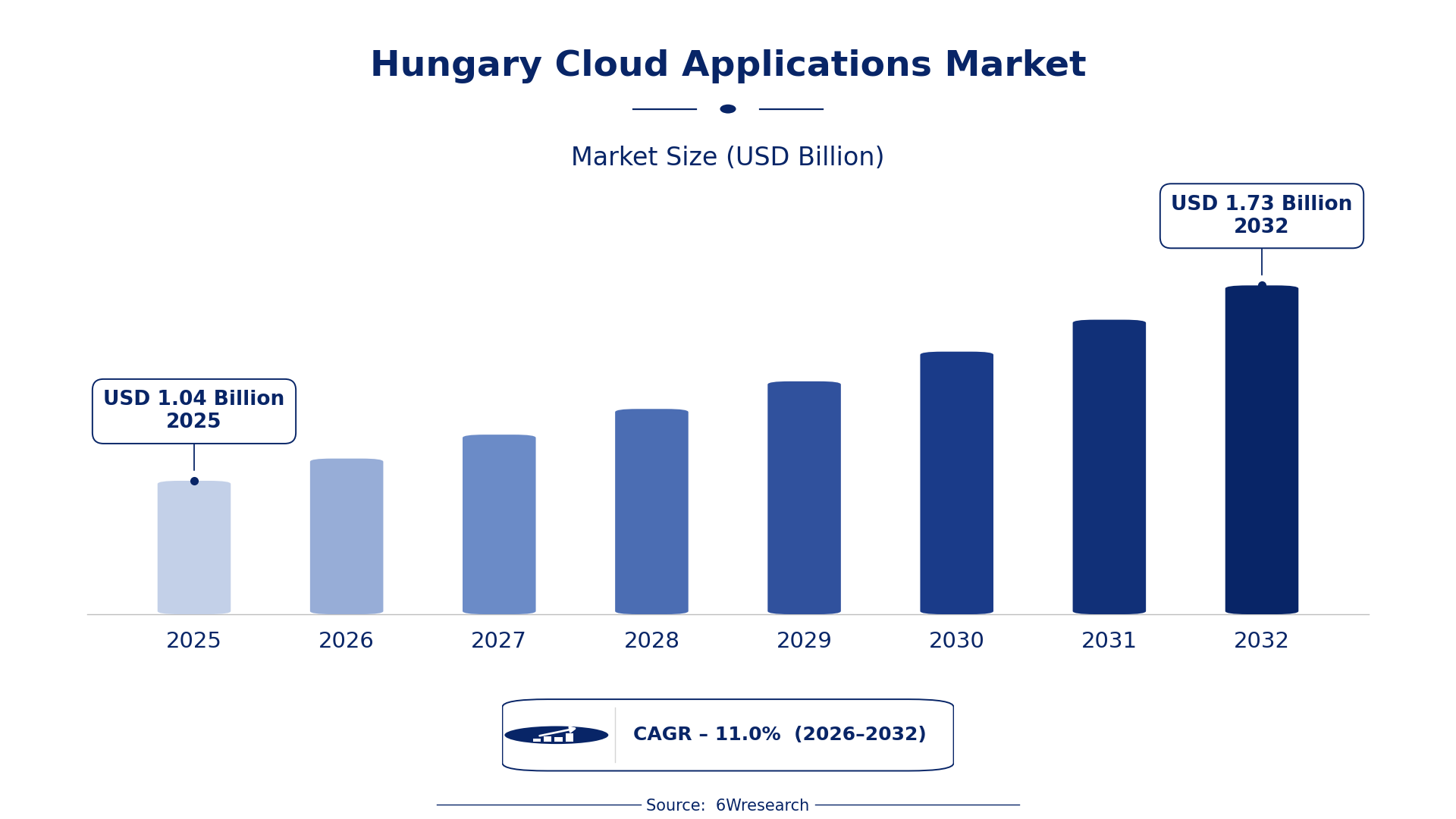
The Hungary Cloud Applications Market was estimated at USD 1043 Million in 2025 and is projected to reach USD 1730 Million by 2032, growing at a CAGR of 11.0% from 2026 to 2032.
Hungary Cloud Applications Market Synopsis
The cloud applications sector in Hungary is witnessing a transformative phase, with businesses rapidly adopting digital solutions to enhance operational efficiency. This shift is particularly pronounced in industries such as finance, healthcare, and manufacturing, where cloud solutions are becoming integral to modern workflows.
As the startup ecosystem flourishes and companies increasingly prioritize digital transformation, the demand for cloud applications is expected to surge. Flexibility and scalability are driving factors that make cloud solutions an attractive option for organizations of all sizes, marking a definitive shift in how software is utilized across the country.
Hungary Cloud Applications Market Year-wise Growth Rate and Key Drivers
This graph illustrates the annual growth rates of the Hungary Cloud Applications Market from 2021 to 2032, highlighting a steady upward trajectory and projected expansion over the forecast period.
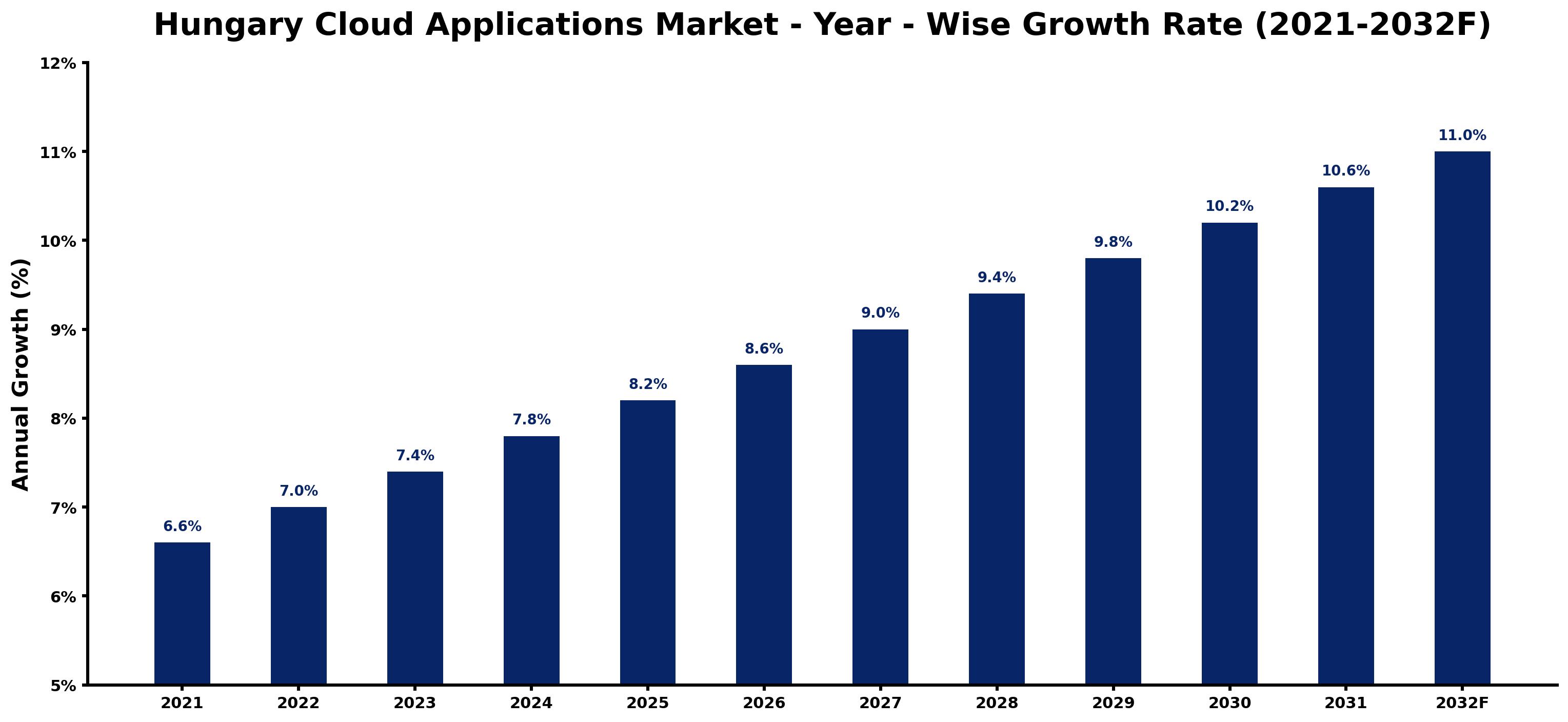
The table below presents the year‑wise growth rates along with the key drivers influencing the market
| Year | Growth Rate | Major Drivers |
| 2021 | 6.6% | Increased remote work adoption spurs cloud application usage. |
| 2022 | 7.0% | EU digital strategy funding boosts local cloud investments. |
| 2023 | 7.4% | Local startups driving innovation in cloud-based solutions. |
| 2024 | 7.8% | Regulatory push for data protection accelerates cloud adoption. |
| 2025 | 8.2% | Growing reliance on e-commerce elevates cloud service demand. |
| 2026 | 8.6% | Increased investment in AI enhances cloud application features. |
| 2027 | 9.0% | Government initiatives promote tech entrepreneurship in cloud sector. |
| 2028 | 9.4% | Growing cybersecurity concerns elevate demand for cloud security. |
| 2029 | 9.8% | Local universities launching cloud computing educational programs. |
| 2030 | 10.2% | Digitalization of government services increases cloud infrastructure needs. |
| 2031 | 10.6% | Rising mobile device penetration drives demand for cloud apps. |
| 2032 | 11.0% | Sustainable business practices encourage cloud-native solutions adoption. |
Note: Market size estimations and growth projections presented in this report are based on 6Wresearch's proprietary forecasting methodology, utilizing the latest available industry data, government publications, and primary research inputs.
Hungary Cloud Applications Market Key Takeaways
Below are some of the specific key takeaways from the market, including:
- The increasing migration to cloud solutions is reshaping operational strategies across various sectors.
- SMEs, while hesitant, are gradually recognizing the long-term benefits of cloud applications.
- Digital transformation initiatives are being bolstered by supportive government policies.
- Security and compliance remain critical concerns for businesses considering cloud adoption.
- The healthcare and finance sectors are leading the charge in cloud application deployment.
Evaluation of Restraints in Hungary Cloud Applications Market
Despite the growth trajectory, the Hungary Cloud Applications Market faces notable challenges. A significant portion of traditional businesses, particularly small and medium-sized enterprises, remain resistant to change. This reluctance stems from concerns over data security and compliance with local regulations. on top of that, the complexity of integrating cloud solutions with existing on-premises systems adds another layer of hesitation. These factors collectively hinder the speed at which cloud applications can be adopted across the market.
Hungary Cloud Applications Market Trends
Several trends are shaping the Hungary Cloud Applications Market. The rise of remote work has accelerated the demand for collaborative cloud tools that facilitate seamless communication and project management. on top of that, businesses are increasingly adopting hybrid cloud models, combining public and private cloud infrastructures to optimize performance and security. Enhanced focus on data analytics within cloud applications is also driving innovation, enabling organizations to make data-driven decisions more effectively.
Hungary Cloud Applications Market Opportunities
The market is ripe with opportunities for growth and investment. As digital transformation accelerates, there is a pressing need for cloud solutions tailored to industry-specific requirements, particularly in healthcare and finance. Additionally, the growing emphasis on cybersecurity presents avenues for companies to offer secure cloud services, which can alleviate some of the concerns businesses have about migrating to the cloud. The ongoing development of smart technologies and AI integration into cloud applications also holds promise for driving future demand.
Government Initiatives in the Hungary Cloud Applications Market
The Hungarian government is actively fostering the growth of the cloud applications market through various initiatives aimed at enhancing digital infrastructure and promoting cloud adoption across sectors. Public policy is focused on ensuring compliance with data protection regulations while encouraging businesses to embrace cloud technologies, thereby improving operational efficiency and service delivery.
- A recently completed national digital infrastructure upgrade program aims to enhance cloud service accessibility across urban and rural areas.
- Current initiatives include ongoing workshops and support programs designed to educate SMEs on the benefits and security of cloud applications.
- A planned public-private partnership is expected to launch in 2026 to develop a national cloud platform aimed at centralizing data management for government services.
- Regulatory frameworks are currently being reviewed to streamline compliance processes for businesses transitioning to cloud solutions.
- Future plans include the introduction of incentives for companies that demonstrate successful cloud adoption and innovation.
Future Insights of the Hungary Cloud Applications Market
Looking ahead to 2026-2032, the Hungary Cloud Applications Market is set for robust growth. The ongoing digital transformation across various sectors will fuel demand for innovative cloud solutions. As organizations become more comfortable with cloud technology, the focus will shift toward developing specialized applications that cater to unique industry needs. This evolution will not only enhance operational efficiencies but will also spur competition among service providers, ultimately benefiting end-users.
Hungary Cloud Applications Market Latest Developments
In the past year, the Hungary Cloud Applications Market has witnessed a flurry of activity, reflecting the growing interest in cloud solutions among businesses. Companies are increasingly launching new products and services to meet the evolving demands of their clients. This dynamic environment indicates a strong commitment to enhancing cloud service offerings and addressing market needs.
- A major technology vendor announced the launch of a new cloud-based analytics platform in early 2025, designed to help businesses leverage their data more effectively.
- An ongoing initiative by a leading regional operator focuses on expanding cloud service availability to underserved areas, currently in its rollout phase.
- A new partnership between local IT firms is planned for late 2026, aimed at developing cloud solutions tailored for the healthcare sector.
- A product upgrade was completed in mid-2025, improving the security features of a popular cloud application to address user concerns.
- Upcoming training programs for SMEs are set to begin in Q3 2026, aimed at boosting cloud application adoption rates through education and support.
Hungary Cloud Applications Market - Key Attractiveness of the Report
- 10 Years of Market Numbers
- Historical Data Starting from 2022 to 2025
- Base Year: 2025
- Forecast Data until 2032
- Key Performance Indicators Impacting the Market
- Major Upcoming Developments and Projects
Key Highlights of the Report:
- Hungary Cloud Applications Market Outlook
- Market Size of Hungary Cloud Applications Market, 2025
- Forecast of Hungary Cloud Applications Market, 2032
- Historical Data and Forecast of Hungary Cloud Applications Revenues & Volume for the Period 2022-2032F
- Hungary Cloud Applications Market Trend Evolution
- Hungary Cloud Applications Market Drivers and Challenges
- Hungary Cloud Applications Price Trends
- Hungary Cloud Applications Porter's Five Forces
- Hungary Cloud Applications Industry Life Cycle
- Historical Data and Forecast of Hungary Cloud Applications Market Revenues & Volume By Application for the Period 2022-2032F
- Historical Data and Forecast of Hungary Cloud Applications Market Revenues & Volume By ERP for the Period 2022-2032F
- Historical Data and Forecast of Hungary Cloud Applications Market Revenues & Volume By CRM for the Period 2022-2032F
- Historical Data and Forecast of Hungary Cloud Applications Market Revenues & Volume By HCM for the Period 2022-2032F
- Historical Data and Forecast of Hungary Cloud Applications Market Revenues & Volume By SCM for the Period 2022-2032F
- Historical Data and Forecast of Hungary Cloud Applications Market Revenues & Volume By Content Management for the Period 2022-2032F
- Historical Data and Forecast of Hungary Cloud Applications Market Revenues & Volume By BI for the Period 2022-2032F
- Historical Data and Forecast of Hungary Cloud Applications Market Revenues & Volume By Analytics for the Period 2022-2032F
- Historical Data and Forecast of Hungary Cloud Applications Market Revenues & Volume By Vertical for the Period 2022-2032F
- Historical Data and Forecast of Hungary Cloud Applications Market Revenues & Volume By Banking, Financial Services, and Insurance (BFSI) for the Period 2022-2032F
- Historical Data and Forecast of Hungary Cloud Applications Market Revenues & Volume By Energy and Utilities for the Period 2022-2032F
- Historical Data and Forecast of Hungary Cloud Applications Market Revenues & Volume By Government and Public Sector for the Period 2022-2032F
- Historical Data and Forecast of Hungary Cloud Applications Market Revenues & Volume By Healthcare and Life Sciences for the Period 2022-2032F
- Historical Data and Forecast of Hungary Cloud Applications Market Revenues & Volume By Manufacturing for the Period 2022-2032F
- Historical Data and Forecast of Hungary Cloud Applications Market Revenues & Volume By Retail and Consumer Goods for the Period 2022-2032F
- Historical Data and Forecast of Hungary Cloud Applications Market Revenues & Volume By Telecommunications for the Period 2022-2032F
- Historical Data and Forecast of Hungary Cloud Applications Market Revenues & Volume By Transportation and Logistics for the Period 2022-2032F
- Historical Data and Forecast of Hungary Cloud Applications Market Revenues & Volume By Organization Size for the Period 2022-2032F
- Historical Data and Forecast of Hungary Cloud Applications Market Revenues & Volume By Small and Medium-sized Enterprises (SMEs) for the Period 2022-2032F
- Historical Data and Forecast of Hungary Cloud Applications Market Revenues & Volume By Large Enterprises for the Period 2022-2032F
- Hungary Cloud Applications Import Export Trade Statistics
- Market Opportunity Assessment By Application
- Market Opportunity Assessment By Vertical
- Market Opportunity Assessment By Organization Size
- Hungary Cloud Applications Top Companies Market Share
- Hungary Cloud Applications Competitive Benchmarking By Technical and Operational Parameters
- Hungary Cloud Applications Company Profiles
- Hungary Cloud Applications Key Strategic Recommendations






































