Hungary Laboratory Equipment Market: Import Trend Analysis
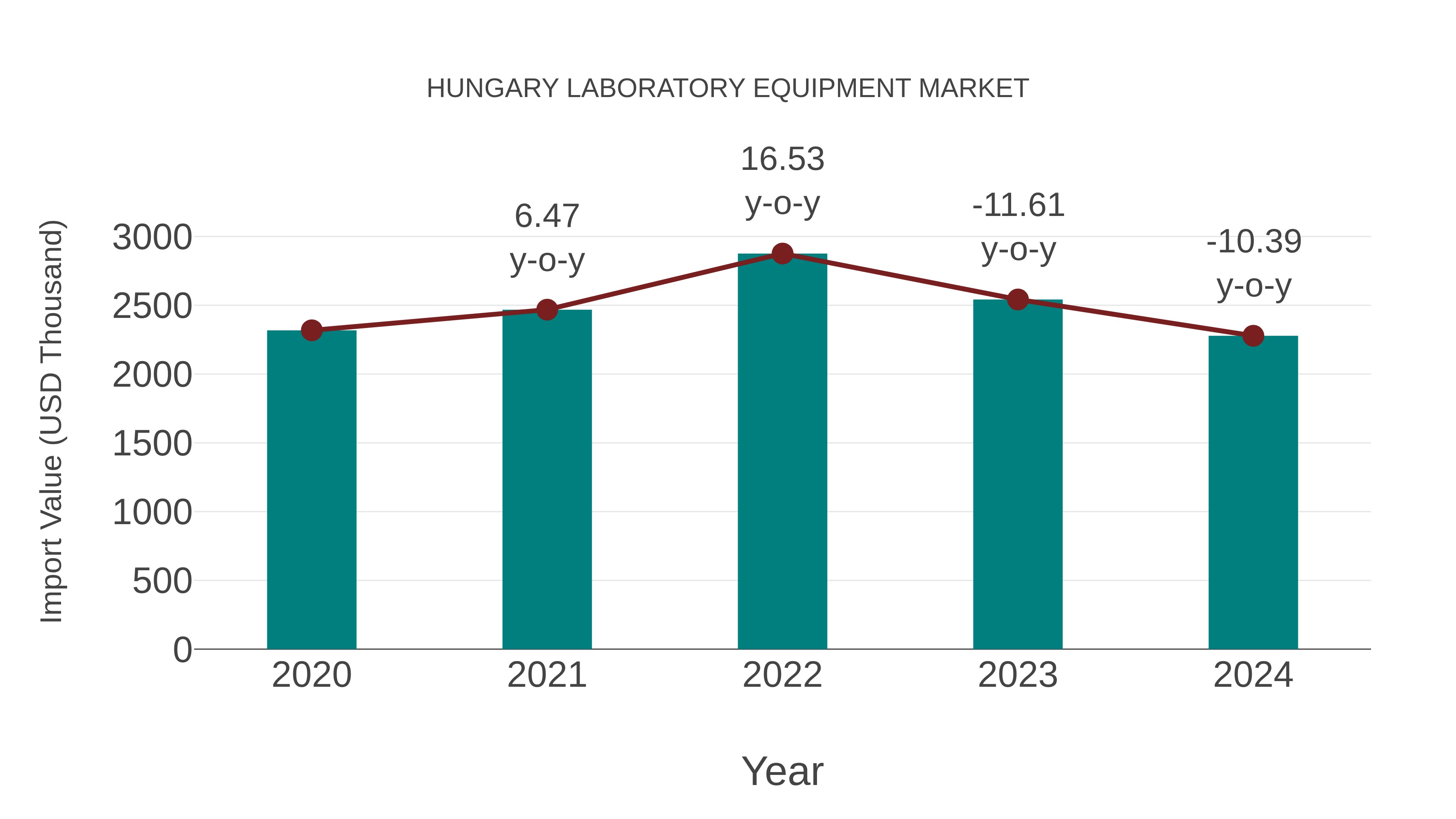
In the Hungary laboratory equipment market, the import trend experienced a decline from 2023 to 2024, with a growth rate of -10.39%. The compound annual growth rate (CAGR) for imports between 2020 and 2024 stood at -0.43%. This negative momentum could be attributed to shifts in demand patterns or changes in trade policies impacting market stability.
Laboratory Equipment Market: Hungary vs Top 5 Major Economies in 2027 (Europe)
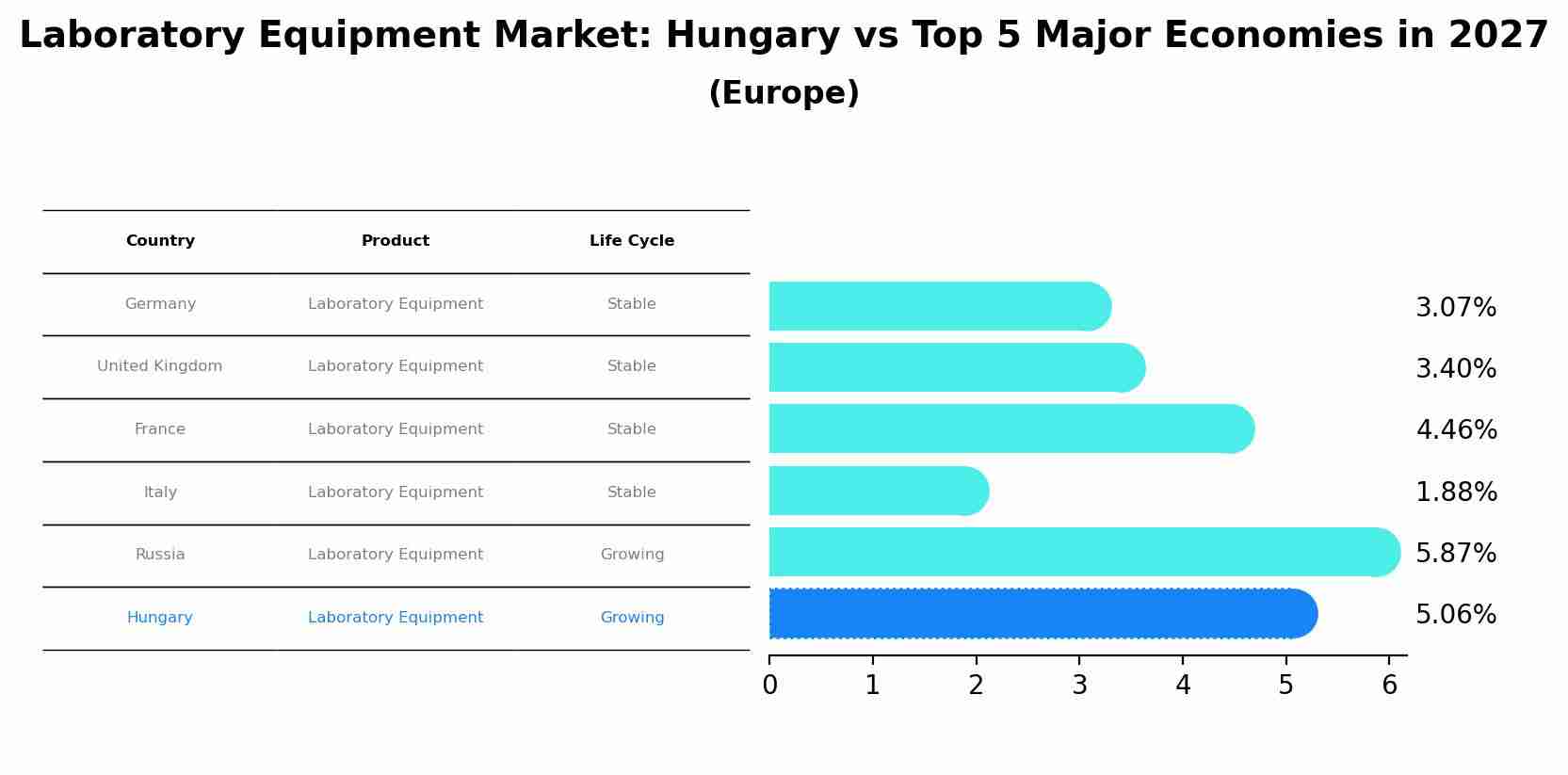
In the Europe region, the Laboratory Equipment market in Hungary is projected to expand at a growing growth rate of 5.06% by 2027. The largest economy is Germany, followed by United Kingdom, France, Italy and Russia.
Hungary Laboratory Equipment Market Overview
The laboratory equipment market in Hungary is witnessing growth with the demand for analytical, diagnostic, and research instruments. Laboratory equipment includes instruments and apparatus for scientific research, testing, and analysis, driving market demand for laboratory instruments and equipment.
Drivers of the market
The Hungary Laboratory Equipment Market is witnessing significant growth due to several key factors. Firstly, the rising demand for advanced laboratory technologies across various sectors such as pharmaceuticals, biotechnology, and healthcare is a major driver. This demand is fueled by increasing research and development activities and the need for high-precision instruments for accurate testing and analysis. Moreover, government initiatives aimed at strengthening the country`s healthcare infrastructure and promoting scientific innovation further contribute to market expansion. Additionally, the trend of outsourcing laboratory services by industries seeking cost-effective solutions adds to the market`s growth momentum.
Challenges of the market
A significant challenge in Hungary laboratory equipment market is keeping pace with technological advancements and evolving research needs. While laboratory equipment plays a crucial role in scientific discovery and innovation, there may be challenges in selecting and implementing the right equipment for specific applications, requiring continuous training and support to maximize instrument performance and utility.
Government Policy of the market
Government policies in Hungary support the development, manufacturing, and use of laboratory equipment for scientific research, healthcare, and industrial testing. Initiatives include technology standards, equipment certification programs, and research funding for innovation in laboratory instrumentation and automation.
Key Highlights of the Report:
- Hungary Laboratory Equipment Market Outlook
- Market Size of Hungary Laboratory Equipment Market, 2019
- Forecast of Hungary Laboratory Equipment Market, 2026
- Historical Data and Forecast of Hungary Laboratory Equipment Revenues & Volume for the Period 2016 - 2026
- Hungary Laboratory Equipment Market Trend Evolution
- Hungary Laboratory Equipment Market Drivers and Challenges
- Hungary Laboratory Equipment Price Trends
- Hungary Laboratory Equipment Porter's Five Forces
- Hungary Laboratory Equipment Industry Life Cycle
- Historical Data and Forecast of Hungary Laboratory Equipment Market Revenues & Volume By Product Type for the Period 2016 - 2026
- Historical Data and Forecast of Hungary Laboratory Equipment Market Revenues & Volume By Autoclaves for the Period 2016 - 2026
- Historical Data and Forecast of Hungary Laboratory Equipment Market Revenues & Volume By Incubators for the Period 2016 - 2026
- Historical Data and Forecast of Hungary Laboratory Equipment Market Revenues & Volume By Centrifuges for the Period 2016 - 2026
- Historical Data and Forecast of Hungary Laboratory Equipment Market Revenues & Volume By Spectrometers for the Period 2016 - 2026
- Historical Data and Forecast of Hungary Laboratory Equipment Market Revenues & Volume By Sonicators for the Period 2016 - 2026
- Historical Data and Forecast of Hungary Laboratory Equipment Market Revenues & Volume By Scopes for the Period 2016 - 2026
- Historical Data and Forecast of Hungary Laboratory Equipment Market Revenues & Volume By Others for the Period 2016 - 2026
- Historical Data and Forecast of Hungary Laboratory Equipment Market Revenues & Volume By Application for the Period 2016 - 2026
- Historical Data and Forecast of Hungary Laboratory Equipment Market Revenues & Volume By Genetic Testing for the Period 2016 - 2026
- Historical Data and Forecast of Hungary Laboratory Equipment Market Revenues & Volume By Endocrinology for the Period 2016 - 2026
- Historical Data and Forecast of Hungary Laboratory Equipment Market Revenues & Volume By Hematology for the Period 2016 - 2026
- Historical Data and Forecast of Hungary Laboratory Equipment Market Revenues & Volume By Microbiology for the Period 2016 - 2026
- Historical Data and Forecast of Hungary Laboratory Equipment Market Revenues & Volume By Biochemistry for the Period 2016 - 2026
- Historical Data and Forecast of Hungary Laboratory Equipment Market Revenues & Volume By Others for the Period 2016 - 2026
- Historical Data and Forecast of Hungary Laboratory Equipment Market Revenues & Volume By End-users for the Period 2016 - 2026
- Historical Data and Forecast of Hungary Laboratory Equipment Market Revenues & Volume By Diagnostic Laboratories for the Period 2016 - 2026
- Historical Data and Forecast of Hungary Laboratory Equipment Market Revenues & Volume By Hospitals and Clinics for the Period 2016 - 2026
- Historical Data and Forecast of Hungary Laboratory Equipment Market Revenues & Volume By Others for the Period 2016 - 2026
- Hungary Laboratory Equipment Import Export Trade Statistics
- Market Opportunity Assessment By Product Type
- Market Opportunity Assessment By Application
- Market Opportunity Assessment By End-users
- Hungary Laboratory Equipment Top Companies Market Share
- Hungary Laboratory Equipment Competitive Benchmarking By Technical and Operational Parameters
- Hungary Laboratory Equipment Company Profiles
- Hungary Laboratory Equipment Key Strategic Recommendations






































