Hungary Pasta And Noodles Market Size (2020-2030)
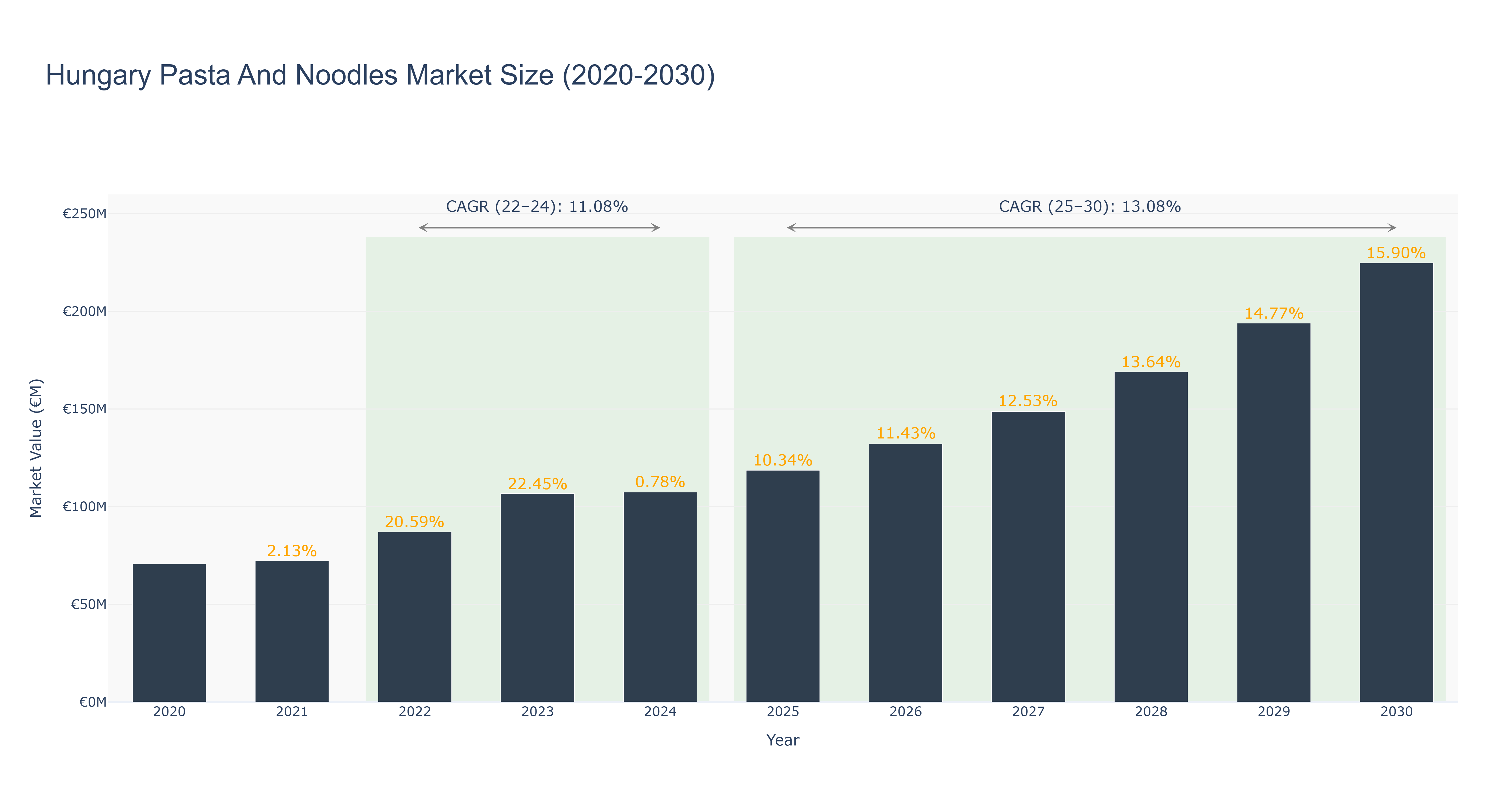
Hungary Pasta And Noodles Market has shown a positive trend over the years. The peak market size of €224.80 million is forecasted for 2030, with steady growth from €70.73 million in 2020. Notably, the market experienced a significant increase in size from 2022 to 2030, with a CAGR of 13.08%. The CAGR between 2022-24 was 11.08%, indicating a slightly lower growth rate during that period. This growth can be attributed to various factors such as changing consumer preferences towards convenience foods, increased disposable income, and the popularity of Hungarian cuisine globally. Looking ahead, the Hungary Pasta And Noodles Market is expected to witness further growth driven by innovative product offerings, expanding distribution channels, and strategic marketing initiatives. Recent developments in the market include collaborations with local farmers to source high-quality ingredients and the introduction of eco-friendly packaging solutions to attract environmentally conscious consumers. These initiatives are set to propel the market towards sustained growth in the coming years.
Hungary Pasta And Noodles Market: Production & Trade Performance (2019-2025)
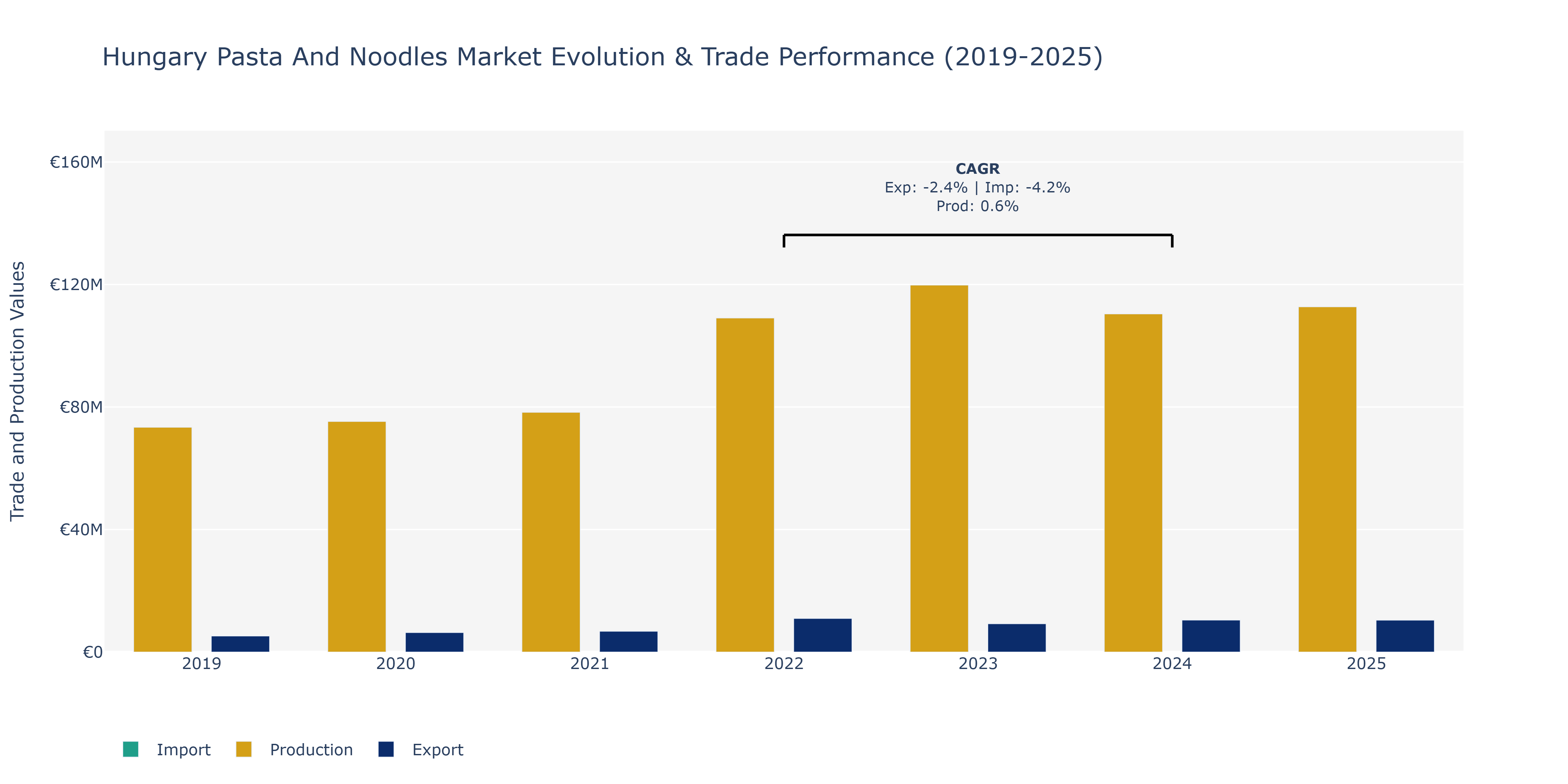
Between 2019 and 2025, the Hungary Pasta and Noodles Market exhibited notable fluctuations in Exports, Imports, and Production metrics. Exports saw a steady increase from €5.22 million in 2019 to around €10.4 million in 2024 before slightly dropping to approximately €10.4 million in 2025. This growth could be attributed to an expanding international demand for Hungarian pasta and noodle products, supported by the country's reputation for high-quality food exports. Imports, on the other hand, experienced a decline from €2.04 million in 2019 to about €1.88 million in 2025. This reduction might indicate a shift towards domestic production or sourcing from other markets. Production levels showed a consistent upward trend from €73.4 million in 2019 to around €112.7 million in 2025, reflecting increased manufacturing capabilities and efficiency in the Hungarian market. These fluctuations emphasize the market's response to changing consumer preferences, global trade dynamics, and potentially evolving production technologies in the pasta and noodles industry.
Hungary Pasta and Noodles Market Overview
The Hungary Pasta and Noodles Market is experiencing steady growth driven by increasing consumer demand for convenient and quick meal options. Traditional pasta varieties like spaghetti and penne remain popular choices, but there is also a growing interest in healthier options such as whole wheat and gluten-free pasta. The market is competitive, with both domestic and international brands vying for market share through product innovation and marketing strategies. The rise of online grocery shopping has also contributed to the market growth, providing consumers with easy access to a wide range of pasta and noodle products. Overall, the Hungary Pasta and Noodles Market is expected to continue its growth trajectory as consumers seek out diverse and convenient meal solutions.
Hungary Pasta and Noodles Market Trends
The Hungary Pasta and Noodles Market is witnessing several key trends such as the growing demand for healthier and gluten-free options, increased interest in plant-based and organic products, and a rise in innovative flavors and product varieties. Consumers are increasingly seeking pasta and noodle products that are not only convenient but also align with their health and wellness goals. Manufacturers are responding to this demand by introducing products made from alternative ingredients like quinoa, lentils, or chickpeas, as well as expanding their organic and plant-based offerings. Additionally, the market is experiencing a surge in premium and artisanal pasta and noodle products, catering to consumers looking for unique and high-quality options. Overall, these trends indicate a shift towards more diverse and health-conscious choices in the Hungary Pasta and Noodles Market.
Hungary Pasta and Noodles Market Challenges
In the Hungary Pasta and Noodles Market, some of the key challenges faced include intense competition from both domestic and international players, fluctuating raw material prices impacting production costs, changing consumer preferences towards healthier and gluten-free options, and the need to innovate and differentiate products to stand out in a crowded market. Additionally, economic uncertainties, regulatory changes, and logistical issues can also pose challenges for companies operating in this sector. To succeed in the Hungary Pasta and Noodles Market, companies need to stay agile, monitor market trends closely, invest in research and development to create innovative products, and build strong distribution networks to reach consumers effectively.
Hungary Pasta and Noodles Market Investment Opportunities
The Hungary Pasta and Noodles Market presents several investment opportunities for both domestic and foreign investors. With a growing trend towards healthier eating habits and convenience, there is a demand for innovative and high-quality pasta and noodle products in the market. Investing in product diversification, such as gluten-free options, organic varieties, and unique flavor combinations, could attract health-conscious consumers. Additionally, leveraging digital marketing strategies to reach a wider audience and establishing partnerships with local retailers or restaurants can help expand market presence. Furthermore, investing in sustainable practices and packaging solutions can appeal to environmentally conscious consumers. Overall, the Hungary Pasta and Noodles Market offers opportunities for investors to capitalize on changing consumer preferences and drive growth in the industry.
Hungary Pasta and Noodles Market Government Policy
The Hungary Pasta and Noodles Market is primarily influenced by government policies related to food safety and quality standards, as regulated by the Hungarian Food Safety Authority (NEBIH). Additionally, import and export regulations play a significant role in shaping the market, with tariffs and trade agreements impacting the prices and availability of pasta and noodles in the country. The government also provides support for domestic pasta and noodle producers through agricultural subsidies and grants, aimed at promoting local production and ensuring food security. Overall, government policies in Hungary aim to uphold high standards of food safety, support domestic producers, and facilitate fair competition in the Pasta and Noodles Market.
Hungary Pasta and Noodles Market Future Outlook
The future outlook for the Hungary Pasta and Noodles Market appears to be positive, driven by factors such as changing consumer preferences towards convenience food, increasing demand for healthy and organic pasta and noodle options, and the rising popularity of international cuisines. The market is expected to witness continued growth as manufacturers focus on product innovation, offering a variety of flavors, shapes, and ingredients to cater to diverse consumer preferences. Additionally, the growing trend of online grocery shopping and the expanding retail sector are likely to further boost market growth. However, challenges such as fluctuating raw material prices and increasing competition among market players may impact the market dynamics. Overall, the Hungary Pasta and Noodles Market is poised for expansion in the coming years.
Key Highlights of the Report:
- Hungary Pasta and Noodles Market Outlook
- Market Size of Hungary Pasta and Noodles Market, 2025
- Forecast of Hungary Pasta and Noodles Market, 2032
- Historical Data and Forecast of Hungary Pasta and Noodles Revenues & Volume for the Period 2018 - 2032
- Hungary Pasta and Noodles Market Trend Evolution
- Hungary Pasta and Noodles Market Drivers and Challenges
- Hungary Pasta and Noodles Price Trends
- Hungary Pasta and Noodles Porter's Five Forces
- Hungary Pasta and Noodles Industry Life Cycle
- Historical Data and Forecast of Hungary Pasta and Noodles Market Revenues & Volume By Product for the Period 2018 - 2032
- Historical Data and Forecast of Hungary Pasta and Noodles Market Revenues & Volume By Ambient for the Period 2018 - 2032
- Historical Data and Forecast of Hungary Pasta and Noodles Market Revenues & Volume By Dried for the Period 2018 - 2032
- Historical Data and Forecast of Hungary Pasta and Noodles Market Revenues & Volume By Chilled for the Period 2018 - 2032
- Hungary Pasta and Noodles Import Export Trade Statistics
- Market Opportunity Assessment By Product
- Hungary Pasta and Noodles Top Companies Market Share
- Hungary Pasta and Noodles Competitive Benchmarking By Technical and Operational Parameters
- Hungary Pasta and Noodles Company Profiles
- Hungary Pasta and Noodles Key Strategic Recommendations






































