Hungary Phenol Market: Import Trend Analysis
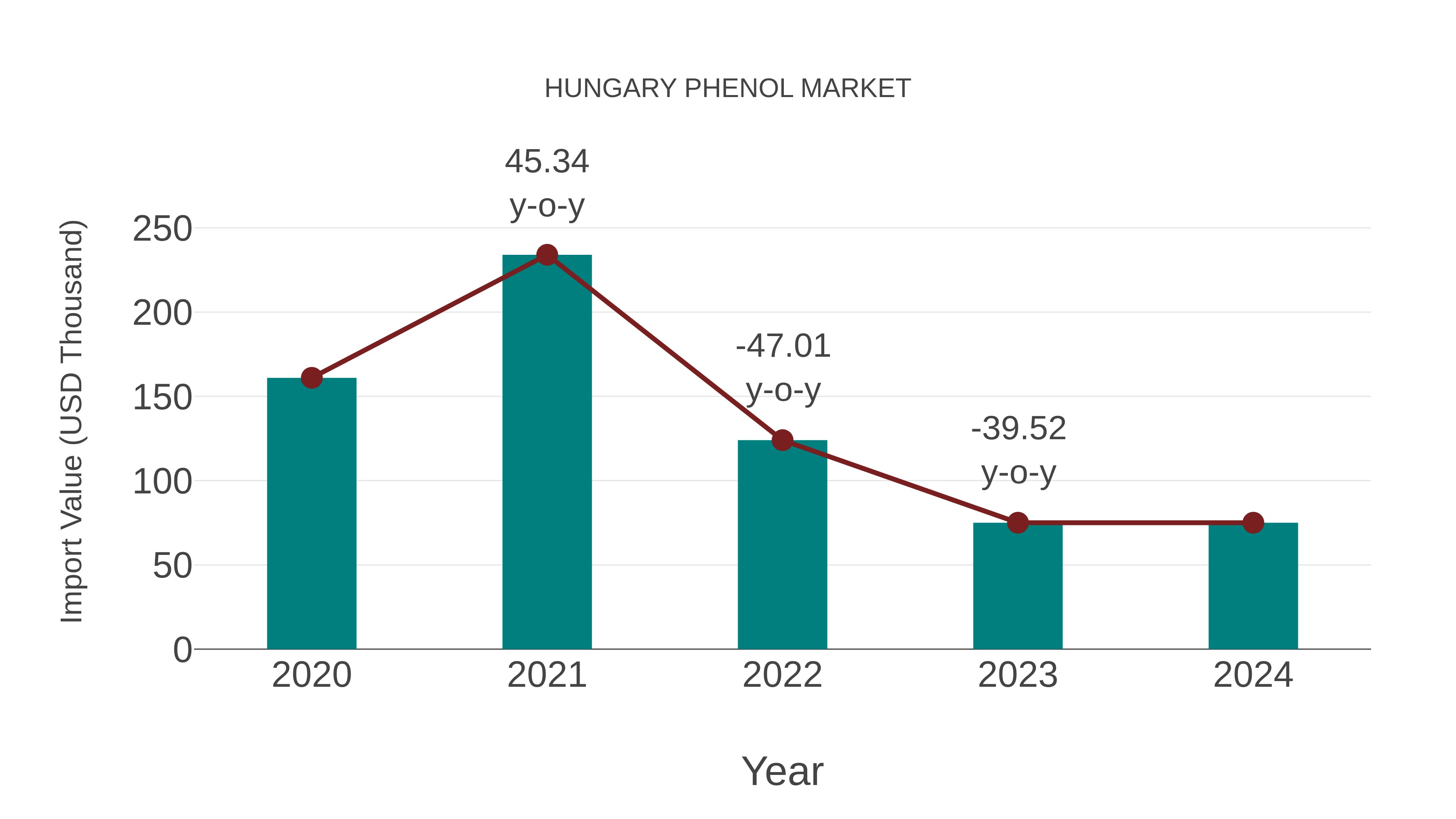
Hungary`s phenol market witnessed a declining import trend from 2020 to 2024, with a Compound Annual Growth Rate (CAGR) of -17.39%. This negative import momentum suggests a significant shift in demand or market dynamics impacting trade performance.
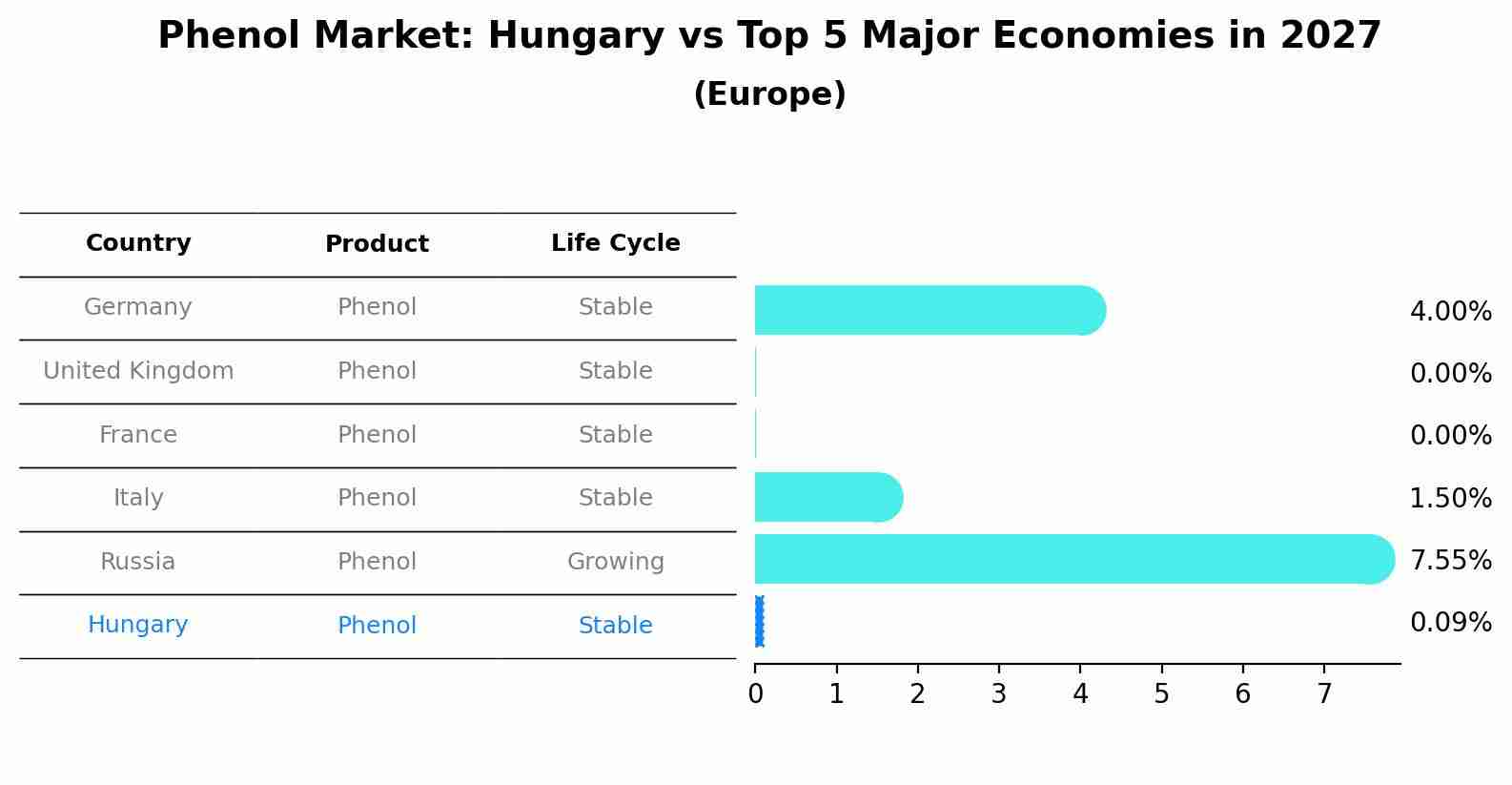
Phenol Market: Hungary vs Top 5 Major Economies in 2027 (Europe)
By 2027, Hungary's Phenol market is forecasted to achieve a stable growth rate of 0.09%, with Germany leading the Europe region, followed by United Kingdom, France, Italy and Russia.
Hungary Phenol Market Overview
The Hungary Phenol Market is experiencing steady growth driven by strong demand from various end-use industries such as automotive, construction, electronics, and pharmaceuticals. Phenol is a key chemical used in the production of plastics, resins, and pharmaceuticals, making it a crucial component in several manufacturing processes. The market is primarily driven by the increasing industrial activities and investments in the country, along with the rising demand for phenol-based products. Additionally, growing environmental concerns and regulations regarding the use of sustainable and eco-friendly chemicals are influencing market players to focus on developing bio-based phenol alternatives. Overall, the Hungary Phenol Market is expected to continue its growth trajectory in the coming years, supported by expanding industrial applications and technological advancements in the sector.
Hungary Phenol Market Trends
The Hungary Phenol Market is currently experiencing steady growth driven by the increasing demand from various end-use industries such as automotive, electronics, and construction. The market is witnessing a shift towards the production of bio-based phenol to cater to the growing preference for sustainable and eco-friendly products. Additionally, there is a rising trend of strategic partnerships and collaborations among key players in the market to enhance their production capacities and expand their market presence. The market is also being influenced by factors such as fluctuating raw material prices and increasing regulatory pressure on the use of phenol in certain applications. Overall, the Hungary Phenol Market is expected to continue its growth trajectory in the coming years, with a focus on innovation and sustainability.
Hungary Phenol Market Challenges
In the Hungary Phenol Market, some of the key challenges faced include fluctuations in raw material prices, increasing competition from imported phenol, and regulatory hurdles related to environmental concerns. The volatile nature of raw material prices, such as benzene and propylene, can impact the overall production costs for local manufacturers. Additionally, the presence of imported phenol from other countries at competitive prices puts pressure on domestic producers to maintain their market share. Moreover, stringent environmental regulations concerning waste disposal and emissions control pose challenges for companies operating in the phenol market in Hungary, requiring investments in sustainable practices and compliance measures. Overall, navigating these challenges requires strategic planning, innovation, and adaptability to ensure sustainable growth and competitiveness in the Hungary Phenol Market.
Hungary Phenol Market Investment Opportunities
Investment opportunities in the Hungary Phenol Market include the growing demand for phenol in various industries such as automotive, construction, and electronics. The market is driven by factors like increasing industrial activities and infrastructure development in Hungary, which create a need for phenol-based products. Additionally, the shift towards sustainable and eco-friendly alternatives in manufacturing processes is opening up opportunities for investments in bio-based phenol production. As the country aims to reduce its reliance on imports and boost domestic production, investing in local phenol manufacturing facilities or partnering with existing producers could be a lucrative opportunity for investors looking to capitalize on the expanding market demand in Hungary.
Hungary Phenol Market Government Policy
The Hungarian government has implemented policies related to the Phenol market to promote sustainability and environmental protection. These policies include regulations on waste management, emissions control, and product labeling to ensure safe handling and disposal of Phenol products. Additionally, the government has introduced incentives for companies to invest in cleaner production technologies and reduce their environmental impact. Furthermore, Hungary has established guidelines for the safe production and transportation of Phenol, aiming to prevent accidents and protect public health. Overall, these policies demonstrate the government`s commitment to balancing economic growth with environmental conservation in the Phenol industry.
Hungary Phenol Market Future Outlook
The Hungary Phenol Market is expected to experience steady growth over the forecast period due to increasing demand from various industries such as automotive, construction, and electronics. The market is likely to be driven by the growing use of phenol in the production of resins, adhesives, and coatings. Additionally, the rising awareness and adoption of sustainable and eco-friendly products are expected to further boost the demand for phenol in Hungary. However, challenges such as fluctuating raw material prices and environmental concerns related to phenol production might hinder market growth. Overall, the Hungary Phenol Market is anticipated to expand at a moderate pace, supported by ongoing industrial development and innovation in product applications.
Key Highlights of the Report:
- Hungary Phenol Market Outlook
- Market Size of Hungary Phenol Market, 2021
- Forecast of Hungary Phenol Market, 2027
- Historical Data and Forecast of Hungary Phenol Revenues & Volume for the Period 2018 - 2027
- Hungary Phenol Market Trend Evolution
- Hungary Phenol Market Drivers and Challenges
- Hungary Phenol Price Trends
- Hungary Phenol Porter's Five Forces
- Hungary Phenol Industry Life Cycle
- Historical Data and Forecast of Hungary Phenol Market Revenues & Volume By End-users for the Period 2018 - 2027
- Historical Data and Forecast of Hungary Phenol Market Revenues & Volume By Bisphenol A for the Period 2018 - 2027
- Historical Data and Forecast of Hungary Phenol Market Revenues & Volume By Phenolic Resins for the Period 2018 - 2027
- Historical Data and Forecast of Hungary Phenol Market Revenues & Volume By Caprolactam for the Period 2018 - 2027
- Historical Data and Forecast of Hungary Phenol Market Revenues & Volume By Alkyl Phenyls for the Period 2018 - 2027
- Historical Data and Forecast of Hungary Phenol Market Revenues & Volume By Others for the Period 2018 - 2027
- Hungary Phenol Import Export Trade Statistics
- Market Opportunity Assessment By End-users
- Hungary Phenol Top Companies Market Share
- Hungary Phenol Competitive Benchmarking By Technical and Operational Parameters
- Hungary Phenol Company Profiles
- Hungary Phenol Key Strategic Recommendations






































