Hungary Player Tracking Market Size & Growth Rate (2026-2032)
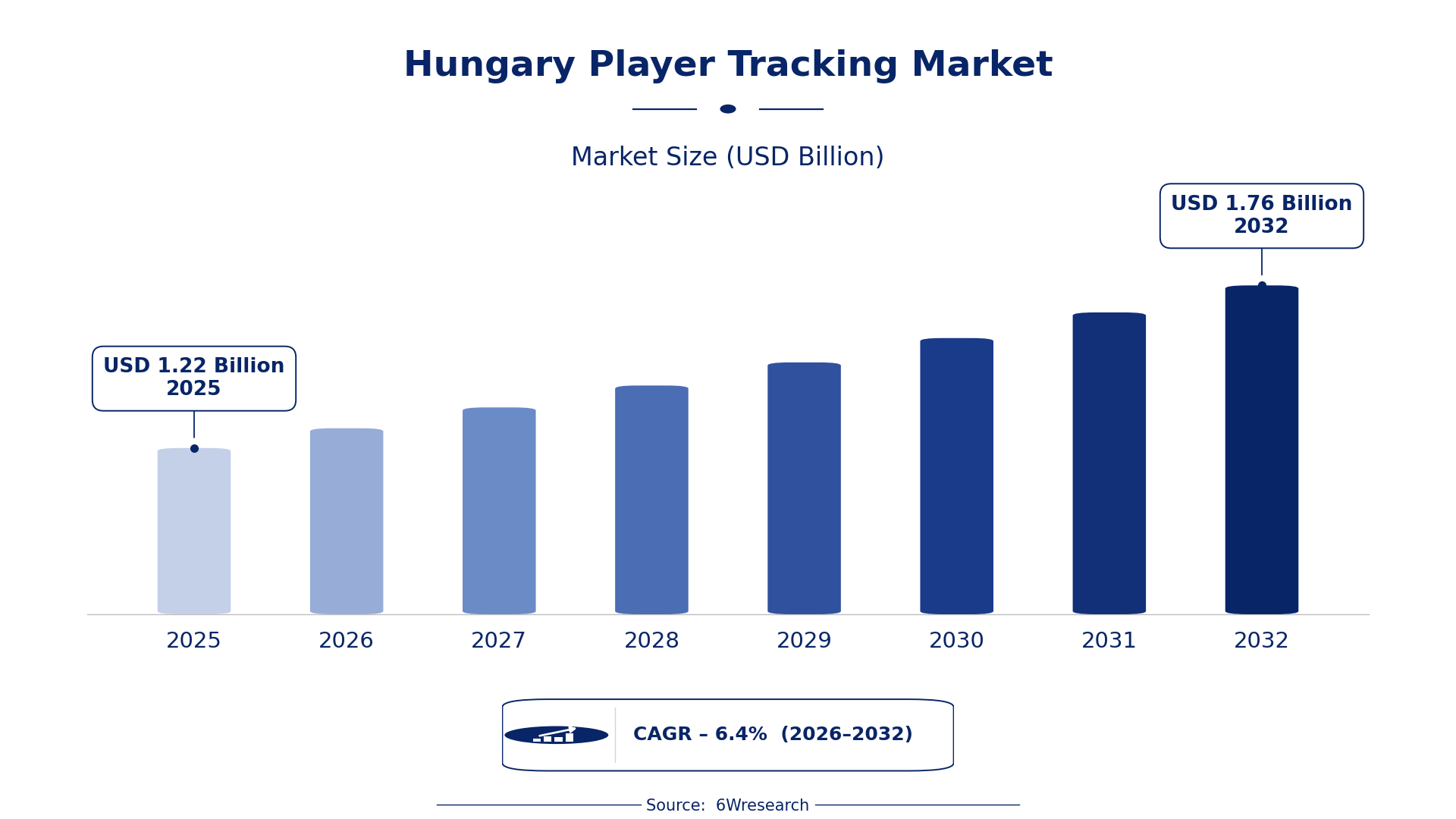
The Hungary Player Tracking Market was estimated at USD 1220 Million in 2025 and is projected to reach USD 1757 Million by 2032, growing at a CAGR of 6.4% from 2026 to 2032.
Hungary Player Tracking Market Synopsis
In Hungary, the adoption of player tracking technologies is gaining momentum as sports teams recognize the critical role of data in enhancing performance. The demand for precise analytics and real-time insights is reshaping how coaches and athletes approach training and competition.
This growth is fueled by a heightened focus on player health, with organizations prioritizing injury prevention through advanced monitoring solutions. As a result, various providers are entering the market, offering innovative products that cater to this evolving need.
Hungary Player Tracking Market Year-wise Growth Rate and Key Drivers
This graph illustrates the annual growth rates of the Hungary Player Tracking Market from 2021 to 2032, highlighting a steady upward trajectory and projected expansion over the forecast period.
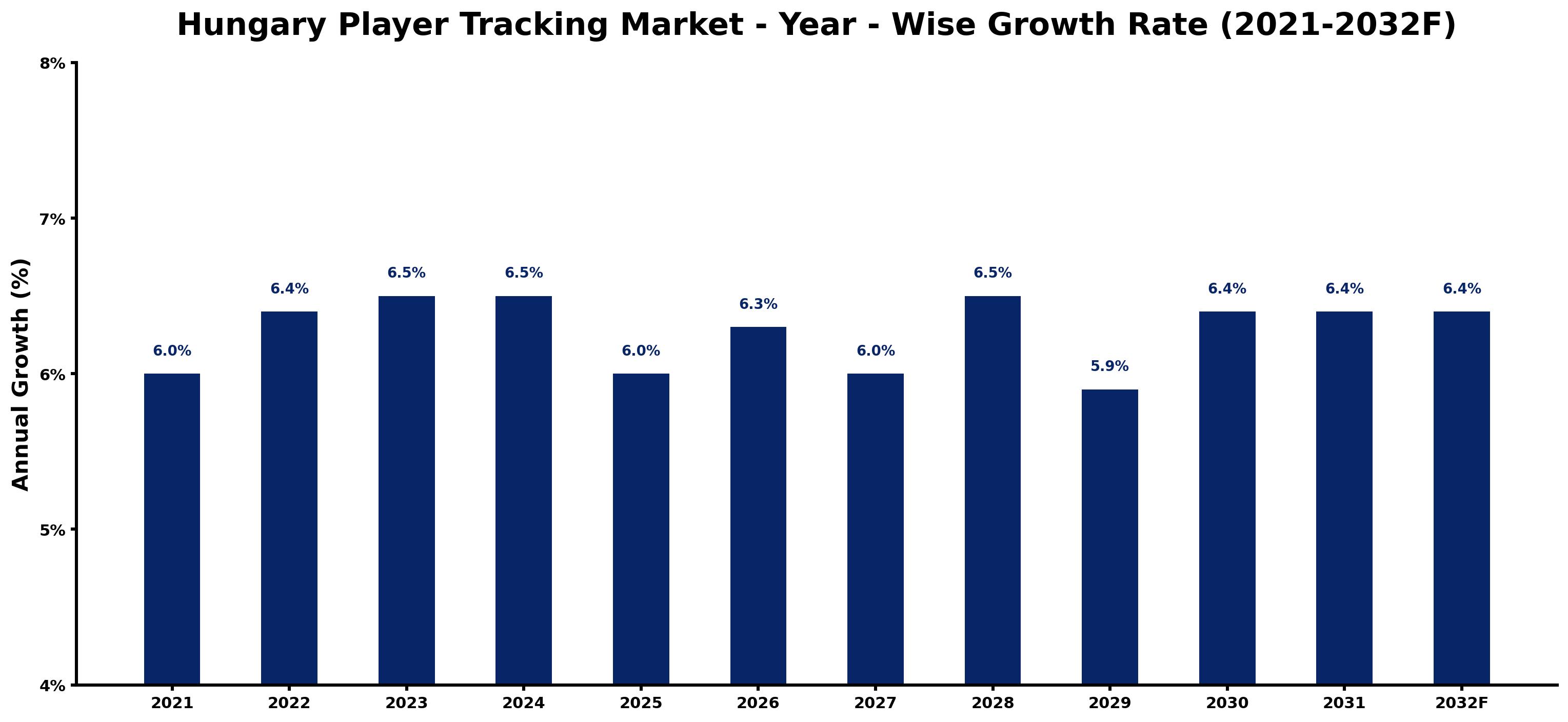
The table below presents the year‑wise growth rates along with the key drivers influencing the market
| Year | Growth Rate | Major Drivers |
| 2021 | 6.0% | Rise in video analytics adoption among Hungarian sports teams. |
| 2022 | 6.4% | Government support for smart stadium technology integration. |
| 2023 | 6.5% | Increased emphasis on player health monitoring in Hungary. |
| 2024 | 6.5% | Popularity of eSports driving tracking technology investments. |
| 2025 | 6.0% | Strengthened performance metrics in Hungarian professional sports. |
| 2026 | 6.3% | Growing interest in fan engagement through tracking insights. |
| 2027 | 6.0% | Investment in youth sports promoting player tracking development. |
| 2028 | 6.5% | Emergence of Hungarian startups in sports data analytics. |
| 2029 | 5.9% | Demand for improved team strategy analytics in football. |
| 2030 | 6.4% | Partnerships between universities and clubs for tracking research. |
| 2031 | 6.4% | Increasing competitive analysis in Hungarian basketball leagues. |
| 2032 | 6.4% | Continued integration of wearable technology in team sports. |
Note: Market size estimations and growth projections presented in this report are based on 6Wresearch's proprietary forecasting methodology, utilizing the latest available industry data, government publications, and primary research inputs.
Hungary Player Tracking Market Key Takeaways
Below are some of the specific key takeaways from the market, including:
- The market is experiencing a shift towards data-driven strategies in sports training and performance.
- Wearable technology and advanced analytics are at the forefront of player tracking solutions.
- Investment in injury prevention technologies is becoming a key focus for sports organizations.
- Regulatory frameworks are shaping the implementation of player tracking systems in Hungary.
- Collaborations between tech providers and sports teams are expected to drive innovation in the market.
Evaluation of Restraints in Hungary Player Tracking Market
Despite its growth, the Hungary Player Tracking Market faces challenges that could impede its trajectory. Data privacy concerns are a major hurdle, particularly with stringent regulations such as the General Data Protection Regulation (GDPR) influencing how data is collected and managed. Resistance from players and teams, who may view tracking as intrusive, also complicates adoption efforts.
on top of that, keeping pace with rapid technological advancements requires continuous investment in research and development. Organizations must strike a balance between innovation and compliance to ensure sustainable growth.
Hungary Player Tracking Market Trends
Several trends are currently shaping the Hungary Player Tracking Market. The integration of GPS and RFID technologies for real-time tracking has become increasingly prevalent, enabling teams to monitor player movements with precision. Data analytics is being leveraged not only for performance enhancement but also for injury prevention strategies.
Additionally, the rise of wearable devices is facilitating personalized training programs tailored to individual athlete needs. These innovations are pushing the boundaries of performance analytics, making it an exciting time for stakeholders in this sector.
Hungary Player Tracking Market Opportunities
The Hungary Player Tracking Market presents numerous opportunities for growth and investment. One key area lies in the development of cloud-based platforms that streamline data storage and analysis, offering teams a centralized solution for their analytics needs. Partnerships with sports leagues and teams can also create avenues for data-driven decision-making that enhances competitiveness.
Incorporating artificial intelligence and machine learning algorithms holds promise for delivering predictive insights, further optimizing performance and injury prevention strategies. These advancements can set organizations apart in a crowded market.
Government Initiatives in the Hungary Player Tracking Market
Government policies in Hungary are increasingly focused on creating a regulatory framework that supports the responsible use of player tracking technologies. These initiatives aim to ensure that player data is collected, stored, and utilized in a manner that prioritizes privacy and security. The emphasis on compliance is shaping how organizations approach technology investments in this space.
- A recently completed initiative involved the establishment of data protection guidelines for tracking technologies in sports, ensuring compliance with GDPR.
- Current efforts include the implementation of a regulatory oversight program by the National Tax and Customs Administration (NAV) to monitor player activity in the gambling sector.
- A planned public-private initiative aims to enhance infrastructure for data collection and analysis by 2027.
- Ongoing workshops and training sessions are being conducted to educate stakeholders on best practices for data privacy and security in player tracking.
- Future regulations are expected to further define the parameters for data usage, focusing on transparency and accountability.
Future Insights of the Hungary Player Tracking Market
Looking ahead to 2026-2032, the Hungary Player Tracking Market is set for dynamic expansion. As more sports organizations commit to data-driven strategies, demand for innovative tracking solutions will intensify. The integration of real-time analytics and health monitoring technologies will likely become standard practice, enhancing athlete performance and safety.
With a growing emphasis on performance optimization and injury prevention, stakeholders in this market are presented with unique opportunities to innovate and establish a competitive advantage. The future landscape promises to be defined by technological advancements and a stronger alignment with regulatory requirements.
Hungary Player Tracking Market Latest Developments
In the past year, the Hungary Player Tracking Market has witnessed a flurry of activity as organizations strive to integrate advanced analytics into their operations. The focus has been on enhancing athlete performance while ensuring compliance with evolving regulations. Collaboration between technology providers and sports teams is becoming increasingly common, signaling a shift towards a more data-centric approach in sports.
- A major technology vendor announced the rollout of a new wearable tracking device in early 2025, designed to monitor player health metrics alongside performance data.
- An ongoing partnership between a leading sports league and a data analytics firm aims to develop a comprehensive performance monitoring platform that is expected to launch by mid-2026.
- A service upgrade focusing on real-time data integration for coaching staff was initiated in Q4 2025 and is currently underway.
- Plans are in motion for a collaborative research project aimed at exploring the impact of player tracking on injury prevention, expected to commence in late 2026.
- An initiative to enhance cybersecurity measures for player data protection is slated for launch in early 2027.
Hungary Player Tracking Market - Key Attractiveness of the Report
- 10 Years of Market Numbers
- Historical Data Starting from 2022 to 2025
- Base Year: 2025
- Forecast Data until 2032
- Key Performance Indicators Impacting the Market
- Major Upcoming Developments and Projects
Key Highlights of the Report:
- Hungary Player Tracking Market Outlook
- Market Size of Hungary Player Tracking Market, 2025
- Forecast of Hungary Player Tracking Market, 2032
- Historical Data and Forecast of Hungary Player Tracking Revenues & Volume for the Period 2022-2032F
- Hungary Player Tracking Market Trend Evolution
- Hungary Player Tracking Market Drivers and Challenges
- Hungary Player Tracking Price Trends
- Hungary Player Tracking Porter's Five Forces
- Hungary Player Tracking Industry Life Cycle
- Historical Data and Forecast of Hungary Player Tracking Market Revenues & Volume By Solution for the Period 2022-2032F
- Historical Data and Forecast of Hungary Player Tracking Market Revenues & Volume By Wearables for the Period 2022-2032F
- Historical Data and Forecast of Hungary Player Tracking Market Revenues & Volume By Opticals for the Period 2022-2032F
- Historical Data and Forecast of Hungary Player Tracking Market Revenues & Volume By Application-Based for the Period 2022-2032F
- Historical Data and Forecast of Hungary Player Tracking Market Revenues & Volume By Application for the Period 2022-2032F
- Historical Data and Forecast of Hungary Player Tracking Market Revenues & Volume By Fitness Tracking for the Period 2022-2032F
- Historical Data and Forecast of Hungary Player Tracking Market Revenues & Volume By Performance Tracking for the Period 2022-2032F
- Historical Data and Forecast of Hungary Player Tracking Market Revenues & Volume By Fraud Detection for the Period 2022-2032F
- Historical Data and Forecast of Hungary Player Tracking Market Revenues & Volume By Player Safety for the Period 2022-2032F
- Historical Data and Forecast of Hungary Player Tracking Market Revenues & Volume By End User for the Period 2022-2032F
- Historical Data and Forecast of Hungary Player Tracking Market Revenues & Volume By Individual Sports for the Period 2022-2032F
- Historical Data and Forecast of Hungary Player Tracking Market Revenues & Volume By Team Sports for the Period 2022-2032F
- Historical Data and Forecast of Hungary Player Tracking Market Revenues & Volume By Component for the Period 2022-2032F
- Historical Data and Forecast of Hungary Player Tracking Market Revenues & Volume By Solution for the Period 2022-2032F
- Historical Data and Forecast of Hungary Player Tracking Market Revenues & Volume By Wearables for the Period 2022-2032F
- Historical Data and Forecast of Hungary Player Tracking Market Revenues & Volume By Optical for the Period 2022-2032F
- Historical Data and Forecast of Hungary Player Tracking Market Revenues & Volume By Application-Based for the Period 2022-2032F
- Historical Data and Forecast of Hungary Player Tracking Market Revenues & Volume By Services for the Period 2022-2032F
- Hungary Player Tracking Import Export Trade Statistics
- Market Opportunity Assessment By Solution
- Market Opportunity Assessment By Application
- Market Opportunity Assessment By End User
- Market Opportunity Assessment By Component
- Hungary Player Tracking Top Companies Market Share
- Hungary Player Tracking Competitive Benchmarking By Technical and Operational Parameters
- Hungary Player Tracking Company Profiles
- Hungary Player Tracking Key Strategic Recommendations






































