Hungary Vetiver Oil Market: Import Trend Analysis
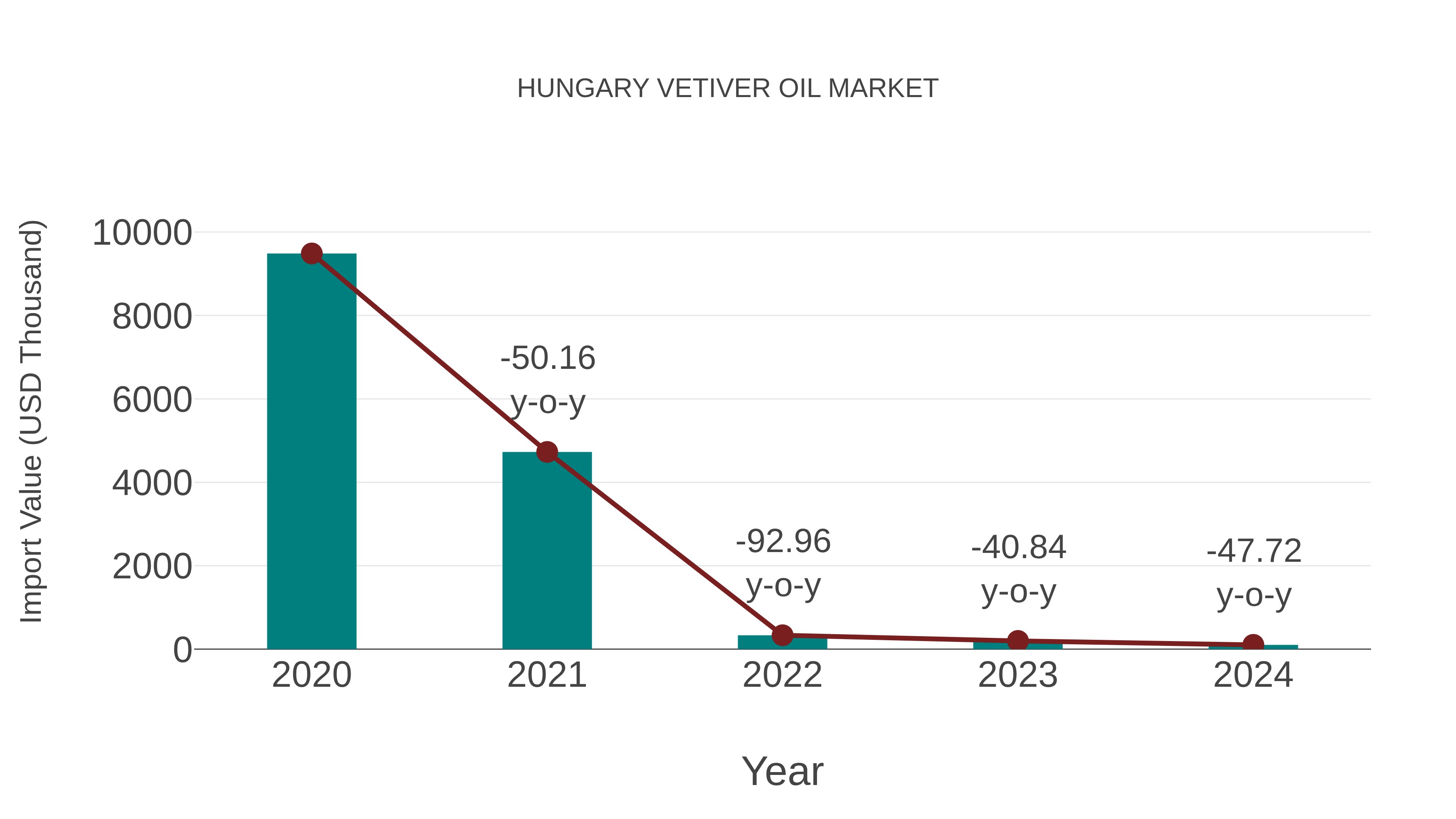
Hungary`s import trend for vetiver oil in 2024 saw a significant decline, with a growth rate of -47.72% from 2023. The compound annual growth rate (CAGR) for the period 2020-2024 stood at -67.72%. This drastic decrease in import momentum could be attributed to shifting demand patterns or changes in market dynamics impacting trade flows.
Hungary Vetiver Oil Market Overview
The Hungary Vetiver Oil Market encompasses the production, trade, and utilization of vetiver essential oil extracted from the roots of Vetiveria zizanioides, a perennial grass native to India and other tropical regions. Vetiver oil is valued for its aromatic properties, earthy fragrance, and therapeutic benefits in perfumery, aromatherapy, cosmetics, and personal care products. This market is driven by factors such as consumer demand for natural fragrances, sustainable sourcing practices, and the use of vetiver oil in fragrance blends and formulations.
Drivers of the market
The Hungary Vetiver Oil Market is experiencing growth driven by trends in aromatherapy, natural cosmetics, and fragrance applications. Vetiver oil, derived from the roots of the vetiver grass plant, is valued for its earthy, woody aroma and therapeutic properties, including stress relief, relaxation, and skincare benefits. With Hungary growing interest in holistic wellness, organic products, and sustainable sourcing, there`s a rising demand for vetiver oil in aromatherapy, skincare formulations, and natural perfumery. Moreover, the versatility of vetiver oil in fragrance compositions, home care products, and personal care items is driving further market expansion, enabling Hungary to leverage its rich agricultural resources and botanical heritage to produce high-quality vetiver oil products that resonate with consumers seeking natural and eco-friendly alternatives in the fragrance and wellness market segments.
Challenges of the market
Challenges include ensuring sustainable sourcing practices for vetiver oil production, addressing concerns related to environmental impact and land use, and meeting quality standards for essential oil extraction.
Government Policy of the market
Government policies in Hungary regarding the vetiver oil market may include regulations on essential oils, agricultural practices, and environmental conservation measures. This could involve quality standards for vetiver oil production, sustainable cultivation practices for vetiver grass, and incentives for farmers to adopt agroforestry methods that promote soil conservation and biodiversity.
Key Highlights of the Report:
- Hungary Vetiver Oil Market Outlook
- Market Size of Hungary Vetiver Oil Market, 2025
- Forecast of Hungary Vetiver Oil Market, 2032
- Historical Data and Forecast of Hungary Vetiver Oil Revenues & Volume for the Period 2022-2032F
- Hungary Vetiver Oil Market Trend Evolution
- Hungary Vetiver Oil Market Drivers and Challenges
- Hungary Vetiver Oil Price Trends
- Hungary Vetiver Oil Porter's Five Forces
- Hungary Vetiver Oil Industry Life Cycle
- Historical Data and Forecast of Hungary Vetiver Oil Market Revenues & Volume By Application for the Period 2022-2032F
- Historical Data and Forecast of Hungary Vetiver Oil Market Revenues & Volume By Medical for the Period 2022-2032F
- Historical Data and Forecast of Hungary Vetiver Oil Market Revenues & Volume By Food & Beverage for the Period 2022-2032F
- Historical Data and Forecast of Hungary Vetiver Oil Market Revenues & Volume By Spa & Relaxation for the Period 2022-2032F
- Hungary Vetiver Oil Import Export Trade Statistics
- Market Opportunity Assessment By Application
- Hungary Vetiver Oil Top Companies Market Share
- Hungary Vetiver Oil Competitive Benchmarking By Technical and Operational Parameters
- Hungary Vetiver Oil Company Profiles
- Hungary Vetiver Oil Key Strategic Recommendations






































