Iceland Cognac Market Growth Rate Analysis (2025 - 2031)
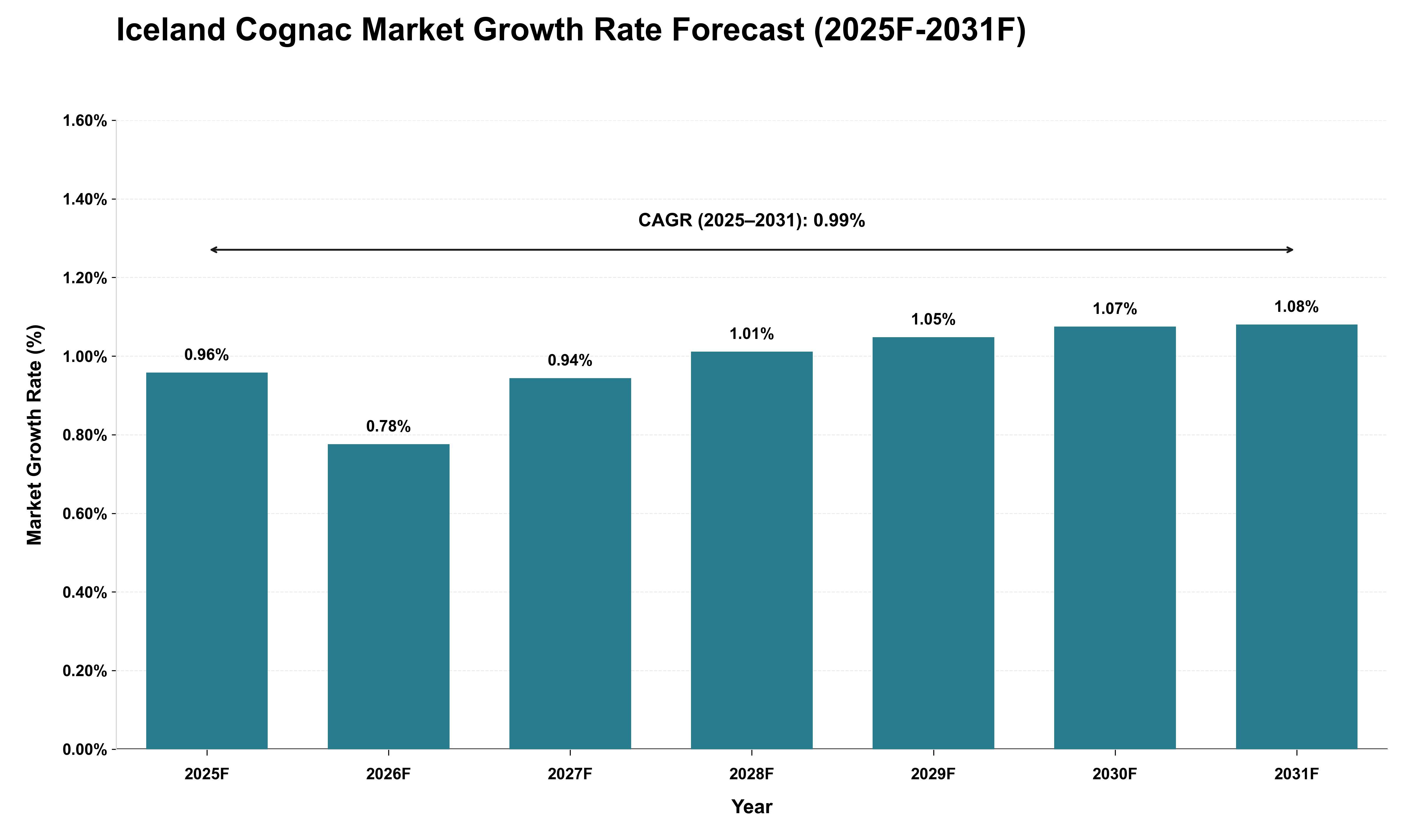
The Icelandic cognac market is projected to experience a compound annual growth rate of 0.99% from 2025 to 2031, reflecting a nuanced interplay of supply chain dynamics and input costs. As import dependencies remain significant for this product class, fluctuations in global shipping costs and tariffs will directly influence pricing strategies and availability. The anticipated annual growth rates, peaking at 1.08% in 2031, suggest that while demand may incrementally rise, it will be tempered by potential increases in production costs driven by raw material sourcing challenges and regulatory changes affecting imports. Additionally, cyclical trends in consumer preferences towards premium spirits could create sporadic spikes in demand; however, these will likely be counterbalanced by broader economic conditions impacting disposable income levels. Thus, the market's trajectory will hinge on the delicate balance between cost pressures and evolving consumer behavior within the premium beverage sector.
Key Highlights of the Report:
- Iceland Cognac Market Outlook
- Market Size of Iceland Cognac Market, 2025
- Forecast of Iceland Cognac Market, 2032
- Historical Data and Forecast of Iceland Cognac Revenues & Volume for the Period 2022-2032F
- Iceland Cognac Market Trend Evolution
- Iceland Cognac Market Drivers and Challenges
- Iceland Cognac Price Trends
- Iceland Cognac Porter's Five Forces
- Iceland Cognac Industry Life Cycle
- Historical Data and Forecast of Iceland Cognac Market Revenues & Volume By Grade for the Period 2022-2032F
- Historical Data and Forecast of Iceland Cognac Market Revenues & Volume By V.S. for the Period 2022-2032F
- Historical Data and Forecast of Iceland Cognac Market Revenues & Volume By V.S.O.P. for the Period 2022-2032F
- Historical Data and Forecast of Iceland Cognac Market Revenues & Volume By Others for the Period 2022-2032F
- Historical Data and Forecast of Iceland Cognac Market Revenues & Volume By Distribution Channel for the Period 2022-2032F
- Historical Data and Forecast of Iceland Cognac Market Revenues & Volume By On-trade for the Period 2022-2032F
- Historical Data and Forecast of Iceland Cognac Market Revenues & Volume By Off-trade for the Period 2022-2032F
- Iceland Cognac Import Export Trade Statistics
- Market Opportunity Assessment By Grade
- Market Opportunity Assessment By Distribution Channel
- Iceland Cognac Top Companies Market Share
- Iceland Cognac Competitive Benchmarking By Technical and Operational Parameters
- Iceland Cognac Company Profiles
- Iceland Cognac Key Strategic Recommendations






































