Iceland Construction Machinery Market Growth Rate Analysis (2025 - 2031)
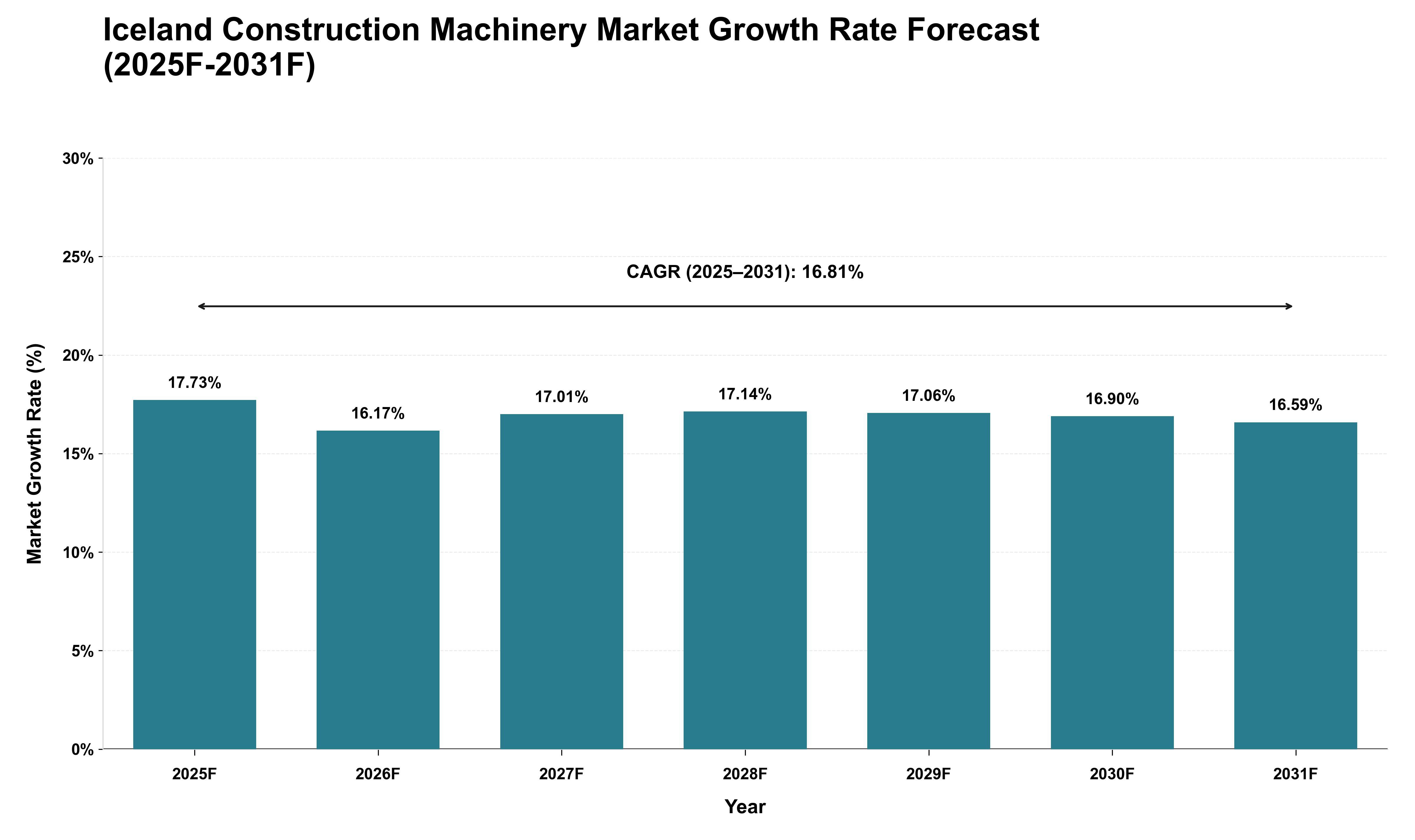
The forecasted growth trajectory for the Iceland construction machinery market will exhibit a notable deceleration from an initial 17.73% in 2025 to 16.59% by 2031, reflecting a gradual easing of demand dynamics despite a robust average CAGR of 16.81%. This pattern suggests that while the market will continue to expand, the competitive landscape may intensify as import dependencies and cyclical trends come into play. Increased investment in infrastructure and construction projects will likely drive demand, yet potential fluctuations in global supply chains could impact availability and pricing of machinery. As domestic players adapt to these changes, they may enhance their operational capacities or innovate to maintain market share, influencing overall growth rates. The interplay between these factors will shape the competitive environment, ultimately determining how effectively firms can capitalize on emerging opportunities within this evolving sector.
Key Highlights of the Report:
- Iceland Construction Machinery Market Outlook
- Market Size of Iceland Construction Machinery Market, 2024
- Forecast of Iceland Construction Machinery Market, 2031
- Historical Data and Forecast of Iceland Construction Machinery Revenues & Volume for the Period 2021- 2031
- Iceland Construction Machinery Market Trend Evolution
- Iceland Construction Machinery Market Drivers and Challenges
- Iceland Construction Machinery Price Trends
- Iceland Construction Machinery Porter's Five Forces
- Iceland Construction Machinery Industry Life Cycle
- Historical Data and Forecast of Iceland Construction Machinery Market Revenues & Volume By Machine Type for the Period 2021- 2031
- Historical Data and Forecast of Iceland Construction Machinery Market Revenues & Volume By Cranes for the Period 2021- 2031
- Historical Data and Forecast of Iceland Construction Machinery Market Revenues & Volume By Excavators for the Period 2021- 2031
- Historical Data and Forecast of Iceland Construction Machinery Market Revenues & Volume By Loaders for the Period 2021- 2031
- Historical Data and Forecast of Iceland Construction Machinery Market Revenues & Volume By Backhoe for the Period 2021- 2031
- Historical Data and Forecast of Iceland Construction Machinery Market Revenues & Volume By Motor Graders for the Period 2021- 2031
- Historical Data and Forecast of Iceland Construction Machinery Market Revenues & Volume By Other Machine Types for the Period 2021- 2031
- Historical Data and Forecast of Iceland Construction Machinery Market Revenues & Volume By Application for the Period 2021- 2031
- Historical Data and Forecast of Iceland Construction Machinery Market Revenues & Volume By Concrete and Road Construction for the Period 2021- 2031
- Historical Data and Forecast of Iceland Construction Machinery Market Revenues & Volume By Earth Moving for the Period 2021- 2031
- Historical Data and Forecast of Iceland Construction Machinery Market Revenues & Volume By Material Handling for the Period 2021- 2031
- Iceland Construction Machinery Import Export Trade Statistics
- Market Opportunity Assessment By Machine Type
- Market Opportunity Assessment By Application
- Iceland Construction Machinery Top Companies Market Share
- Iceland Construction Machinery Competitive Benchmarking By Technical and Operational Parameters
- Iceland Construction Machinery Company Profiles
- Iceland Construction Machinery Key Strategic Recommendations






































