Iceland Electric Lawn Mower Market Growth Rate Analysis (2025 - 2031)
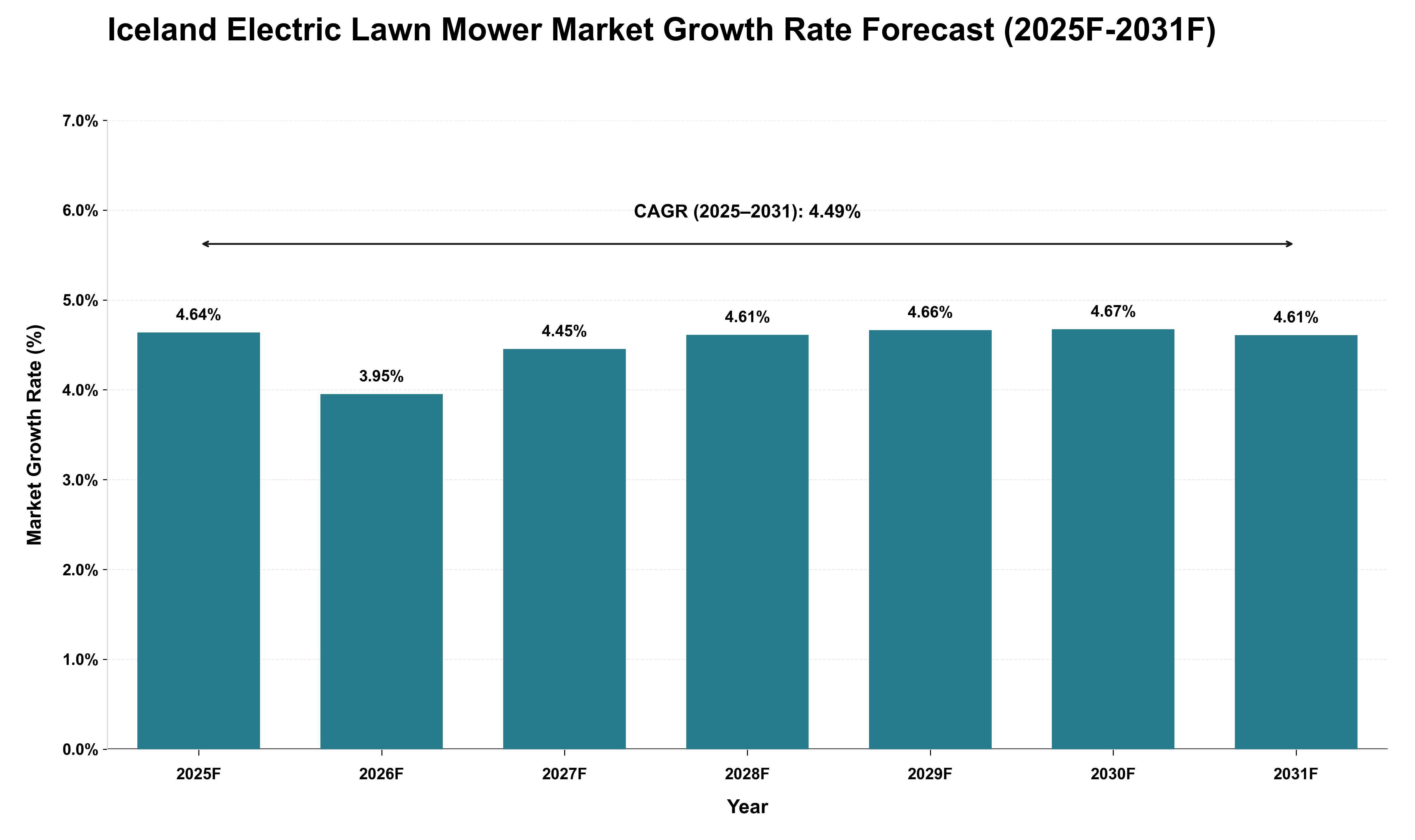
The Iceland electric lawn mower market is projected to experience a compound annual growth rate of 4.49% from 2025 to 2031, reflecting a steady demand trajectory influenced by macroeconomic cycles and evolving consumer preferences. The anticipated annual growth rates, peaking at 4.67% in 2030, suggest that economic conditions will favor increased disposable income and heightened environmental awareness, driving consumers toward sustainable gardening solutions. As import dependencies remain significant due to limited domestic manufacturing capabilities, fluctuations in global supply chains and trade policies will likely impact pricing and availability. Additionally, the cyclical nature of consumer spending on durable goods indicates that periods of economic expansion may further bolster sales, while any downturns could temper growth rates. Overall, the interplay of these macroeconomic factors will shape the market dynamics for electric lawn mowers in Iceland during this forecast period.
Key Highlights of the Report:
- Iceland Electric Lawn Mower Market Outlook
- Market Size of Iceland Electric Lawn Mower Market, 2024
- Forecast of Iceland Electric Lawn Mower Market, 2031
- Historical Data and Forecast of Iceland Electric Lawn Mower Revenues & Volume for the Period 2021- 2031
- Iceland Electric Lawn Mower Market Trend Evolution
- Iceland Electric Lawn Mower Market Drivers and Challenges
- Iceland Electric Lawn Mower Price Trends
- Iceland Electric Lawn Mower Porter's Five Forces
- Iceland Electric Lawn Mower Industry Life Cycle
- Historical Data and Forecast of Iceland Electric Lawn Mower Market Revenues & Volume By Product Type for the Period 2021- 2031
- Historical Data and Forecast of Iceland Electric Lawn Mower Market Revenues & Volume By Ride-On for the Period 2021- 2031
- Historical Data and Forecast of Iceland Electric Lawn Mower Market Revenues & Volume By Walk-behind for the Period 2021- 2031
- Historical Data and Forecast of Iceland Electric Lawn Mower Market Revenues & Volume By Cord Type for the Period 2021- 2031
- Historical Data and Forecast of Iceland Electric Lawn Mower Market Revenues & Volume By Corded for the Period 2021- 2031
- Historical Data and Forecast of Iceland Electric Lawn Mower Market Revenues & Volume By Cordless for the Period 2021- 2031
- Historical Data and Forecast of Iceland Electric Lawn Mower Market Revenues & Volume By End-user for the Period 2021- 2031
- Historical Data and Forecast of Iceland Electric Lawn Mower Market Revenues & Volume By Residential for the Period 2021- 2031
- Historical Data and Forecast of Iceland Electric Lawn Mower Market Revenues & Volume By Commercial for the Period 2021- 2031
- Iceland Electric Lawn Mower Import Export Trade Statistics
- Market Opportunity Assessment By Product Type
- Market Opportunity Assessment By Cord Type
- Market Opportunity Assessment By End-user
- Iceland Electric Lawn Mower Top Companies Market Share
- Iceland Electric Lawn Mower Competitive Benchmarking By Technical and Operational Parameters
- Iceland Electric Lawn Mower Company Profiles
- Iceland Electric Lawn Mower Key Strategic Recommendations






































