Iceland Fruit Market Growth Rate Analysis (2025 - 2031)
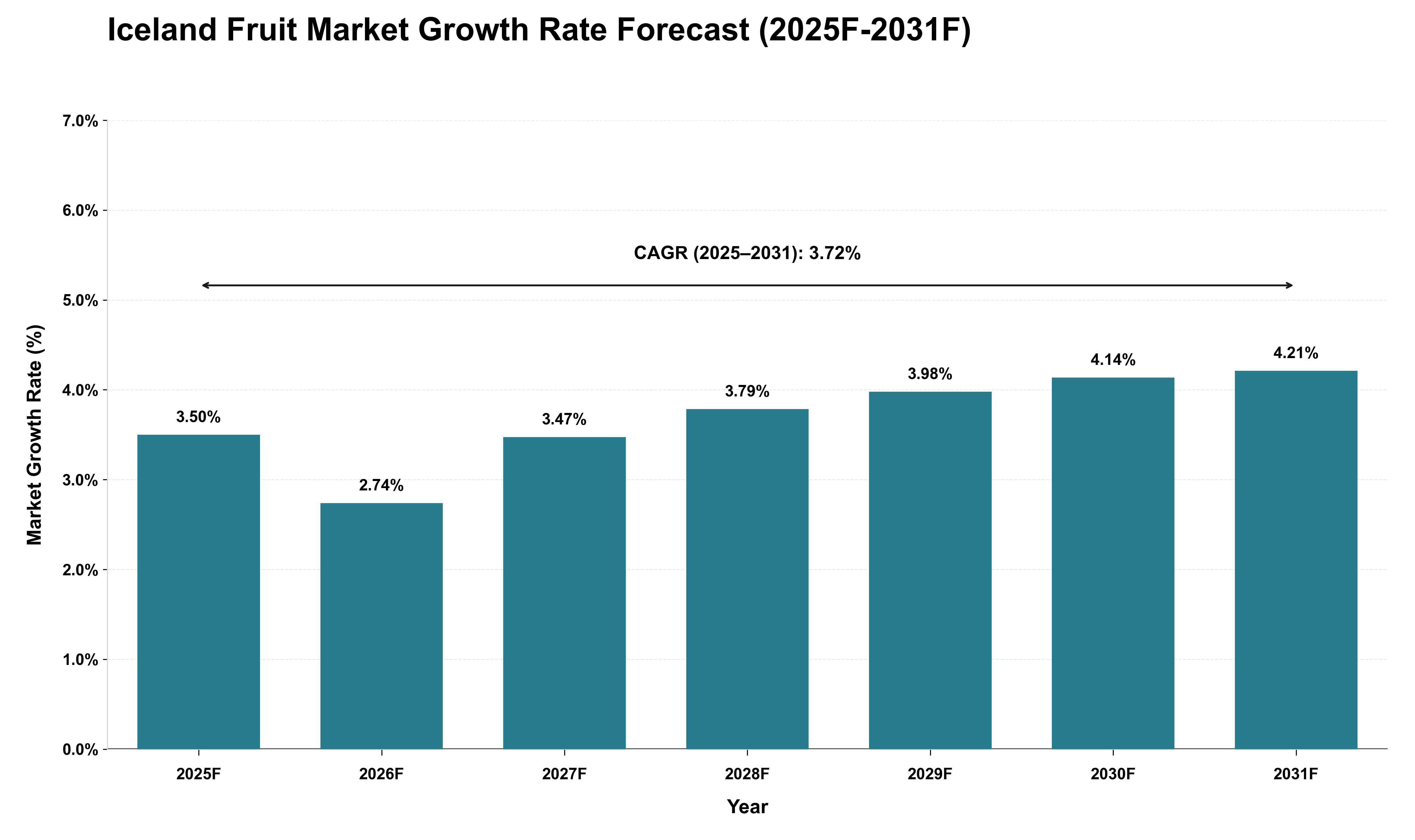
The Icelandic fruit market will experience a robust growth trajectory driven by increasing consumer demand for fresh produce and health-conscious dietary shifts. As import dependencies remain significant due to limited domestic agricultural capacity, trade flows will be influenced by global supply chain dynamics and international pricing trends. The forecasted CAGR of 3.72% reflects an anticipated acceleration in import volumes, particularly as Iceland seeks to diversify its sourcing strategies amid fluctuating climate conditions affecting traditional suppliers. Notably, the annual growth rates will exhibit variability, with peaks projected in 2029 and 2030 at 4.14% and 4.21%, respectively, suggesting a cyclical recovery in global fruit production that aligns with seasonal consumption patterns. This interplay between domestic demand and international supply chains will shape the competitive landscape, fostering opportunities for enhanced trade partnerships and logistical efficiencies within the sector.
Key Highlights of the Report:
- Iceland Fruit Market Outlook
- Market Size of Iceland Fruit Market, 2025
- Forecast of Iceland Fruit Market, 2032
- Historical Data and Forecast of Iceland Fruit Revenues & Volume for the Period 2022-2032F
- Iceland Fruit Market Trend Evolution
- Iceland Fruit Market Drivers and Challenges
- Iceland Fruit Price Trends
- Iceland Fruit Porter`s Five Forces
- Iceland Fruit Industry Life Cycle
- Historical Data and Forecast of Iceland Fruit Market Revenues & Volume By Applications for the Period 2022-2032F
- Historical Data and Forecast of Iceland Fruit Market Revenues & Volume By Supermarkets and Hypermarkets for the Period 2022-2032F
- Historical Data and Forecast of Iceland Fruit Market Revenues & Volume By Specialty Stores for the Period 2022-2032F
- Historical Data and Forecast of Iceland Fruit Market Revenues & Volume By Online for the Period 2022-2032F
- Historical Data and Forecast of Iceland Fruit Market Revenues & Volume By Type for the Period 2022-2032F
- Historical Data and Forecast of Iceland Fruit Market Revenues & Volume By Fresh for the Period 2022-2032F
- Historical Data and Forecast of Iceland Fruit Market Revenues & Volume By Dried for the Period 2022-2032F
- Historical Data and Forecast of Iceland Fruit Market Revenues & Volume By Frozen for the Period 2022-2032F
- Historical Data and Forecast of Iceland Fruit Market Revenues & Volume By Others for the Period 2022-2032F
- Iceland Fruit Import Export Trade Statistics
- Market Opportunity Assessment By Applications
- Market Opportunity Assessment By Type
- Iceland Fruit Top Companies Market Share
- Iceland Fruit Competitive Benchmarking By Technical and Operational Parameters
- Iceland Fruit Company Profiles
- Iceland Fruit Key Strategic Recommendations






































