Iceland Lawn Mower Market Growth Rate Analysis (2025 - 2031)
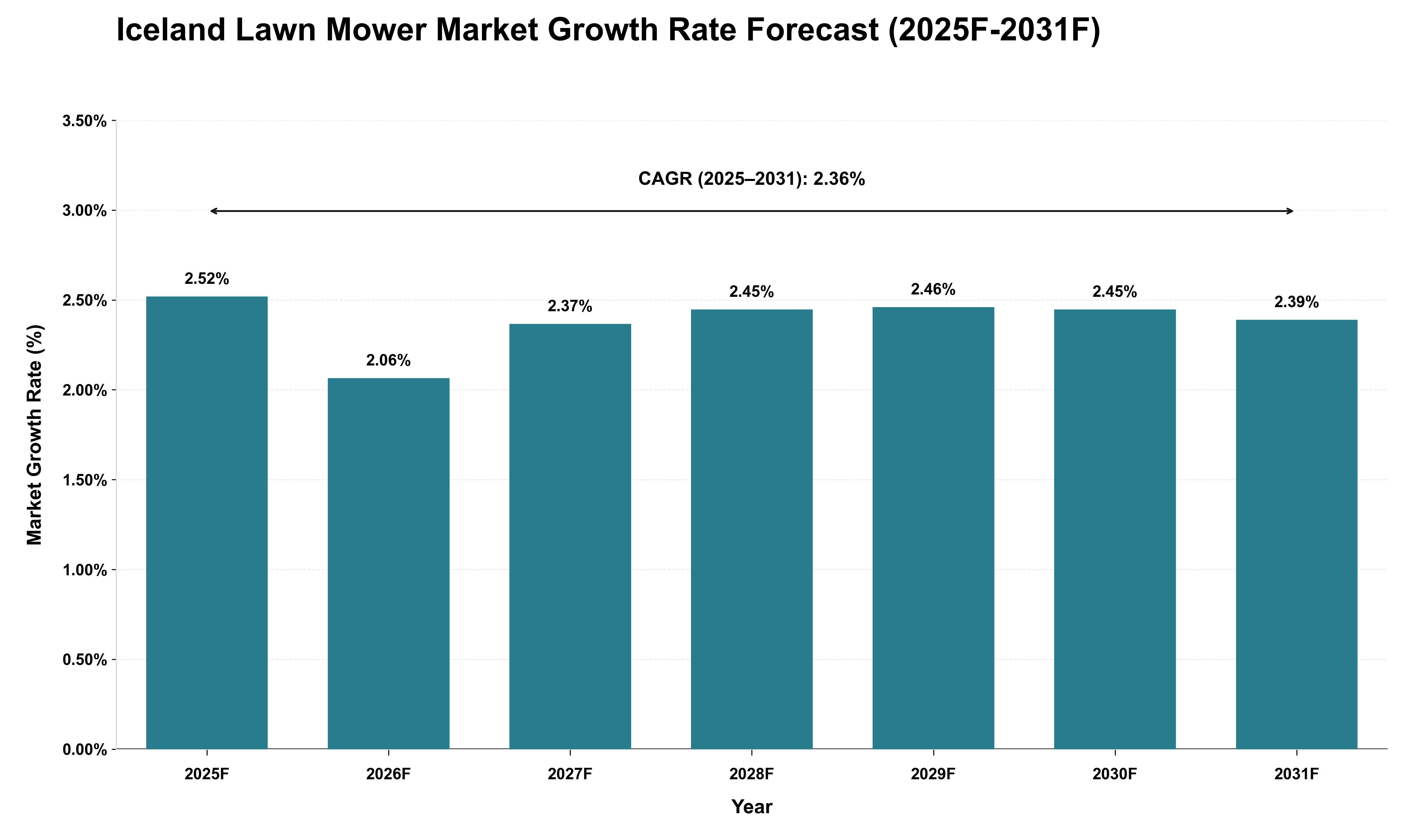
The Iceland lawn mower market will experience a steady growth trajectory driven by evolving regulatory frameworks and trade policies that prioritize sustainability and energy efficiency. As environmental regulations tighten, manufacturers will likely adapt their product offerings to comply with stricter emissions standards, fostering innovation in electric and hybrid models. This shift is expected to enhance consumer demand, particularly among environmentally conscious buyers. Additionally, the forecasted CAGR of 2.36% reflects a consistent annual growth rate ranging from 2.06% to 2.52%, indicating resilience amid potential fluctuations in import dependencies due to global supply chain dynamics. The cyclical nature of the lawn care industry will also play a role, as seasonal demand peaks during warmer months may lead to periodic spikes in sales, further supporting overall market expansion through 2031.
Key Highlights of the Report:
- Iceland Lawn Mower Market Outlook
- Market Size of Iceland Lawn Mower Market, 2024
- Forecast of Iceland Lawn Mower Market, 2031
- Historical Data and Forecast of Iceland Lawn Mower Revenues & Volume for the Period 2021-2031
- Iceland Lawn Mower Market Trend Evolution
- Iceland Lawn Mower Market Drivers and Challenges
- Iceland Lawn Mower Price Trends
- Iceland Lawn Mower Porter`s Five Forces
- Iceland Lawn Mower Industry Life Cycle
- Historical Data and Forecast of Iceland Lawn Mower Market Revenues & Volume By Product Types for the Period 2021-2031
- Historical Data and Forecast of Iceland Lawn Mower Market Revenues & Volume By Ride On Mowers for the Period 2021-2031
- Historical Data and Forecast of Iceland Lawn Mower Market Revenues & Volume By Push Mowers for the Period 2021-2031
- Historical Data and Forecast of Iceland Lawn Mower Market Revenues & Volume By Robotic Mowers for the Period 2021-2031
- Historical Data and Forecast of Iceland Lawn Mower Market Revenues & Volume By End-Users for the Period 2021-2031
- Historical Data and Forecast of Iceland Lawn Mower Market Revenues & Volume By Residential for the Period 2021-2031
- Historical Data and Forecast of Iceland Lawn Mower Market Revenues & Volume By Non-residential for the Period 2021-2031
- Historical Data and Forecast of Iceland Lawn Mower Market Revenues & Volume By Fuel Types for the Period 2021-2031
- Historical Data and Forecast of Iceland Lawn Mower Market Revenues & Volume By Electronic for the Period 2021-2031
- Historical Data and Forecast of Iceland Lawn Mower Market Revenues & Volume By Non-electronic for the Period 2021-2031
- Iceland Lawn Mower Import Export Trade Statistics
- Market Opportunity Assessment By Product Types
- Market Opportunity Assessment By End-Users
- Market Opportunity Assessment By Fuel Types
- Iceland Lawn Mower Top Companies Market Share
- Iceland Lawn Mower Competitive Benchmarking By Technical and Operational Parameters
- Iceland Lawn Mower Company Profiles
- Iceland Lawn Mower Key Strategic Recommendations






































