Iceland Soybean Oil Market Growth Rate Analysis (2025 - 2031)
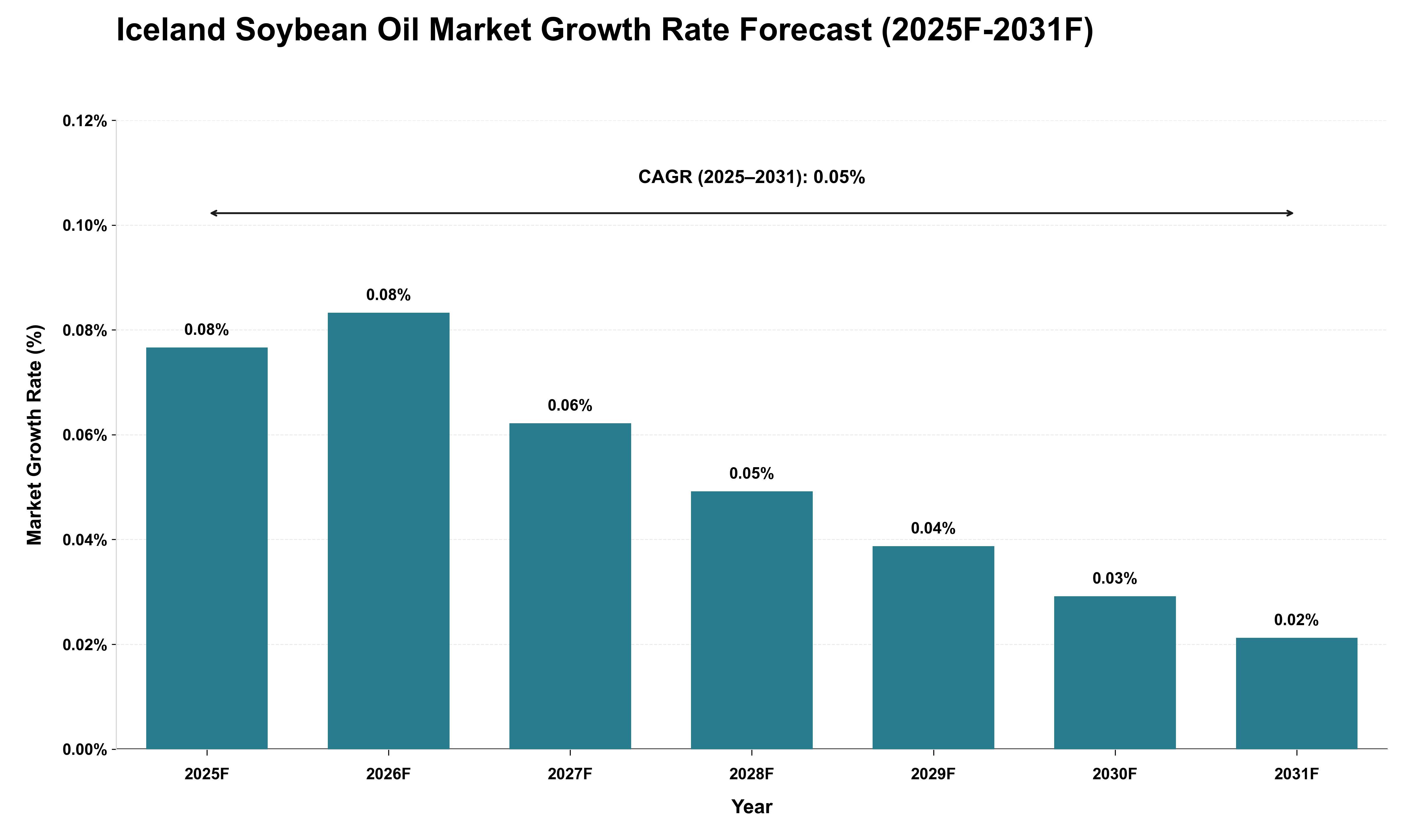
The Iceland soybean oil market is projected to experience a modest compound annual growth rate of 0.05% from 2025 to 2031, reflecting a gradual decline in annual growth rates over this period. This trend can be attributed to several macroeconomic factors, including the limited availability of raw materials and fluctuating global prices influenced by agricultural output and climate conditions. As Iceland relies heavily on imports for soybean oil, any disruptions in supply chains or shifts in international trade policies could further impact pricing dynamics. Additionally, the cyclical nature of agricultural commodities may lead to increased volatility in raw material costs, which will likely constrain growth potential. Consequently, the interplay between import dependencies and external market conditions will shape the trajectory of soybean oil consumption in Iceland during this forecast period.
Key Highlights of the Report:
- Iceland Soybean Oil Market Outlook
- Market Size of Iceland Soybean Oil Market, 2025
- Forecast of Iceland Soybean Oil Market, 2032
- Historical Data and Forecast of Iceland Soybean Oil Revenues & Volume for the Period 2022-2032F
- Iceland Soybean Oil Market Trend Evolution
- Iceland Soybean Oil Market Drivers and Challenges
- Iceland Soybean Oil Price Trends
- Iceland Soybean Oil Porter`s Five Forces
- Iceland Soybean Oil Industry Life Cycle
- Historical Data and Forecast of Iceland Soybean Oil Market Revenues & Volume By End-Use for the Period 2022-2032F
- Historical Data and Forecast of Iceland Soybean Oil Market Revenues & Volume By Food for the Period 2022-2032F
- Historical Data and Forecast of Iceland Soybean Oil Market Revenues & Volume By Feed for the Period 2022-2032F
- Historical Data and Forecast of Iceland Soybean Oil Market Revenues & Volume By Industrial for the Period 2022-2032F
- Iceland Soybean Oil Import Export Trade Statistics
- Market Opportunity Assessment By End-Use
- Iceland Soybean Oil Top Companies Market Share
- Iceland Soybean Oil Competitive Benchmarking By Technical and Operational Parameters
- Iceland Soybean Oil Company Profiles
- Iceland Soybean Oil Key Strategic Recommendations






































