Iceland Windows Market Growth Rate Analysis (2025 - 2031)
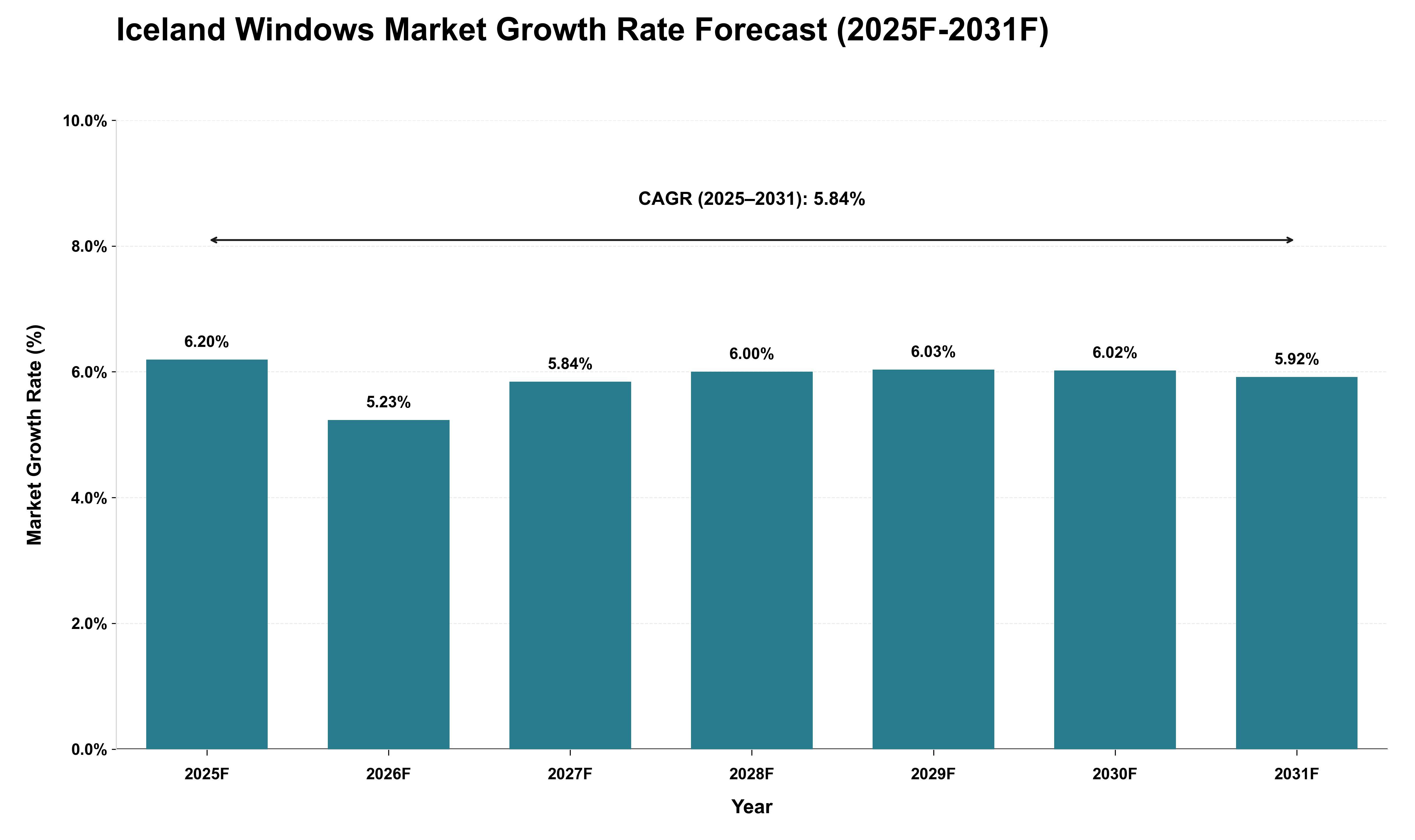
The Iceland windows market is projected to experience a compound annual growth rate of 5.84% from 2025 to 2031, reflecting a robust demand trajectory driven by anticipated increases in construction activity and renovation projects. The annual growth rates indicate fluctuations, with a peak of 6.20% in 2025, likely influenced by initial post-pandemic recovery efforts and heightened investment in energy-efficient building solutions. As input costs for raw materials such as glass and framing components are expected to stabilize after recent volatility, manufacturers will benefit from improved supply chain efficiencies. Additionally, the reliance on imports for specialized window technologies may introduce cyclical trends tied to global trade dynamics and tariffs, impacting pricing strategies. Overall, the interplay between domestic demand and external supply factors will shape the market's performance throughout this forecast period.
Key Highlights of the Report:
- Iceland Windows Market Outlook
- Market Size of Iceland Windows Market, 2025
- Forecast of Iceland Windows Market, 2032
- Historical Data and Forecast of Iceland Windows Revenues & Volume for the Period 2022-2032F
- Iceland Windows Market Trend Evolution
- Iceland Windows Market Drivers and Challenges
- Iceland Windows Price Trends
- Iceland Windows Porter`s Five Forces
- Iceland Windows Industry Life Cycle
- Historical Data and Forecast of Iceland Windows Market Revenues & Volume By Material for the Period 2022-2032F
- Historical Data and Forecast of Iceland Windows Market Revenues & Volume By uPVC for the Period 2022-2032F
- Historical Data and Forecast of Iceland Windows Market Revenues & Volume By Wood for the Period 2022-2032F
- Historical Data and Forecast of Iceland Windows Market Revenues & Volume By Metal for the Period 2022-2032F
- Historical Data and Forecast of Iceland Windows Market Revenues & Volume By Others for the Period 2022-2032F
- Historical Data and Forecast of Iceland Windows Market Revenues & Volume By Application for the Period 2022-2032F
- Historical Data and Forecast of Iceland Windows Market Revenues & Volume By Residential for the Period 2022-2032F
- Historical Data and Forecast of Iceland Windows Market Revenues & Volume By Commercial for the Period 2022-2032F
- Iceland Windows Import Export Trade Statistics
- Market Opportunity Assessment By Material
- Market Opportunity Assessment By Application
- Iceland Windows Top Companies Market Share
- Iceland Windows Competitive Benchmarking By Technical and Operational Parameters
- Iceland Windows Company Profiles
- Iceland Windows Key Strategic Recommendations






































