India Dyes and Pigments Market Growth Rate Analysis (2025 - 2031)
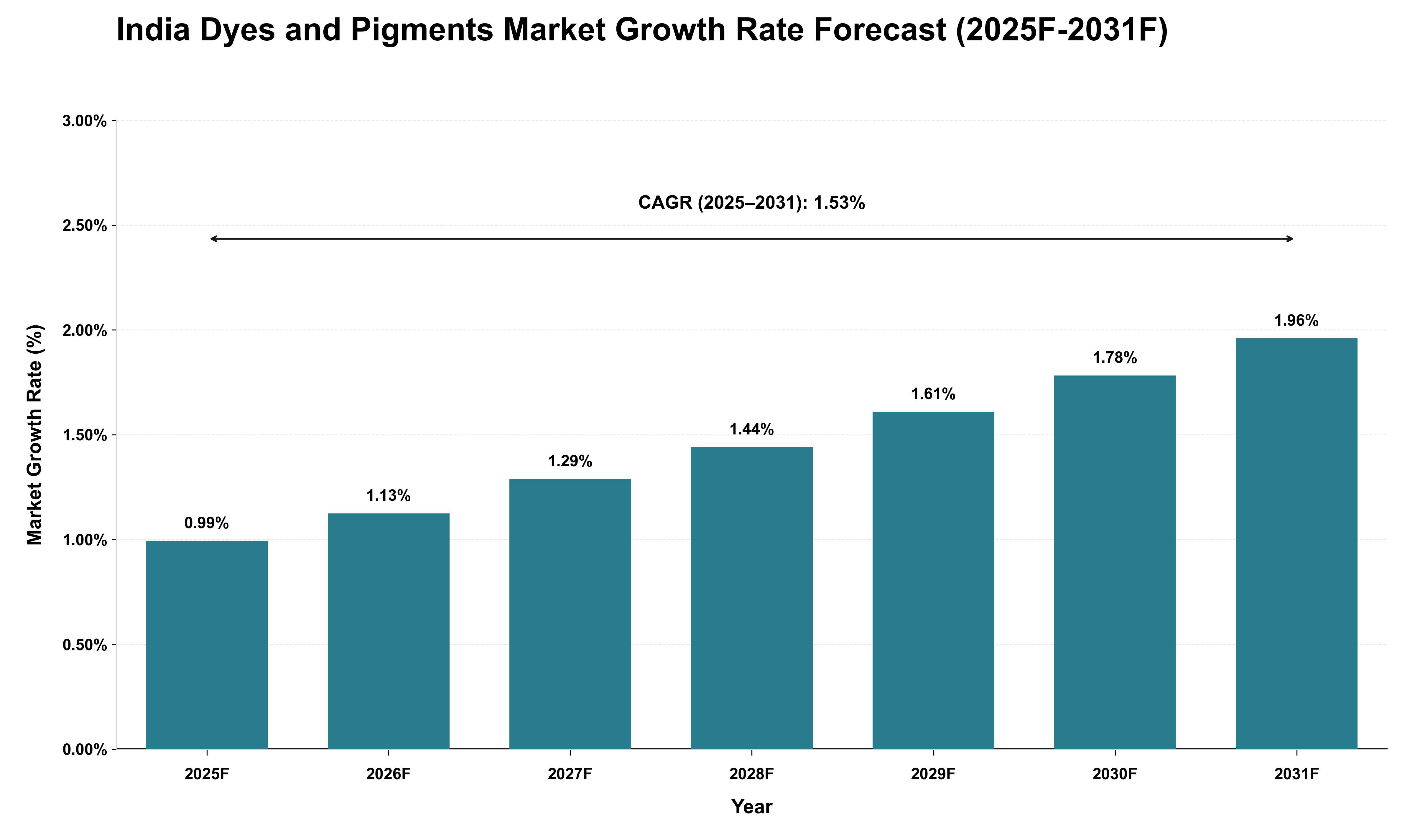
The projected growth trajectory of the India dyes and pigments market will exhibit a gradual acceleration, with annual growth rates increasing from 0.99% in 2025 to 1.96% by 2031. This upward trend reflects an anticipated improvement in supply chain efficiencies and a potential reduction in input costs, driven by advancements in production technologies and strategic sourcing of raw materials. As global demand for sustainable and high-performance pigments rises, Indian manufacturers may enhance their competitiveness through innovation and better resource management. Furthermore, fluctuations in import dependencies could influence pricing dynamics, particularly if international supply chains stabilize or diversify. The cyclical nature of the industry suggests that as economic conditions improve, there will be increased investments in infrastructure and manufacturing capabilities, further supporting this positive growth outlook within the forecast period.
Key Highlights of the Report:
- India Dyes And Pigments Market Outlook
- Market Size of India Dyes And Pigments Market, 2024
- Forecast of India Dyes And Pigments Market, 2031
- Historical Data and Forecast of India Dyes And Pigments Revenues & Volume for the Period 2021- 2031
- India Dyes And Pigments Market Trend Evolution
- India Dyes And Pigments Market Drivers and Challenges
- India Dyes And Pigments Price Trends
- India Dyes And Pigments Porter's Five Forces
- India Dyes And Pigments Industry Life Cycle
- Historical Data and Forecast of India Dyes And Pigments Market Revenues & Volume By Product for the Period 2021- 2031
- Historical Data and Forecast of India Dyes And Pigments Market Revenues & Volume By Dyes for the Period 2021- 2031
- Historical Data and Forecast of India Dyes And Pigments Market Revenues & Volume By Pigments for the Period 2021- 2031
- Historical Data and Forecast of India Dyes And Pigments Market Revenues & Volume By End-user for the Period 2021- 2031
- Historical Data and Forecast of India Dyes And Pigments Market Revenues & Volume By Paints and Coatings for the Period 2021- 2031
- Historical Data and Forecast of India Dyes And Pigments Market Revenues & Volume By Textile for the Period 2021- 2031
- Historical Data and Forecast of India Dyes And Pigments Market Revenues & Volume By Printing Inks for the Period 2021- 2031
- Historical Data and Forecast of India Dyes And Pigments Market Revenues & Volume By Plastics for the Period 2021- 2031
- Historical Data and Forecast of India Dyes And Pigments Market Revenues & Volume By Other for the Period 2021- 2031
- India Dyes And Pigments Import Export Trade Statistics
- Market Opportunity Assessment By Product
- Market Opportunity Assessment By End-user
- India Dyes And Pigments Top Companies Market Share
- India Dyes And Pigments Competitive Benchmarking By Technical and Operational Parameters
- India Dyes And Pigments Company Profiles
- India Dyes And Pigments Key Strategic Recommendations






































