India Grape Wine Market Summary
The india grape wine market was estimated at USD 975 Million in 2025 and is projected to reach USD 1414 Million by 2032, growing at a CAGR of 7.5% from 2026 to 2032.
India Grape Wine Market Year-wise Growth Rate and Key Drivers
This graph highlights how the India Grape Wine Market has steadily grown over the years, supported by major growth factors.
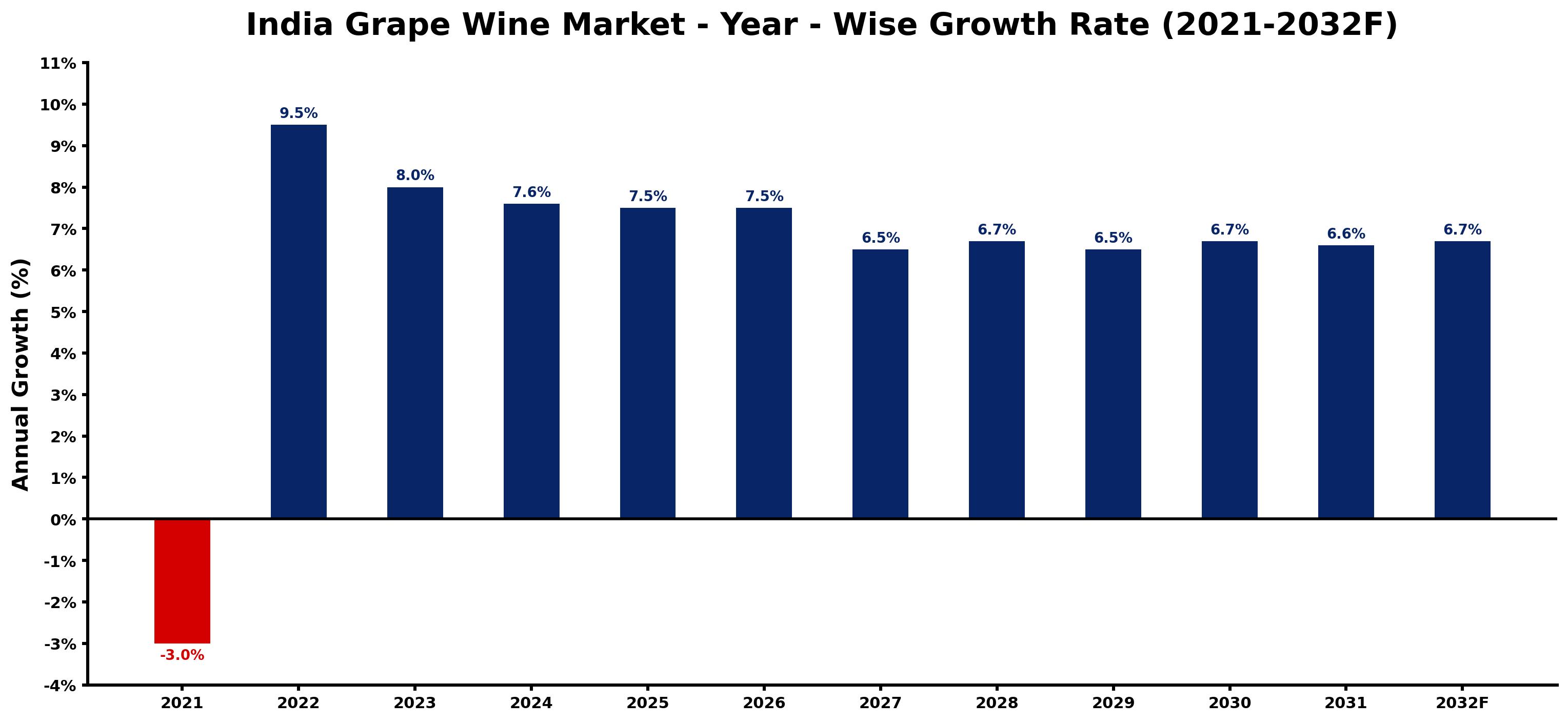
The table below presents the year wise growth rates along with the key drivers influencing the market
| Year | Growth Rate | Major Drivers |
| 2021 | -3.0% | Supply chain disruptions caused by the pandemic hindered grape availability, diminishing production capacity and sales. |
| 2022 | 9.5% | International brands collaborate with local producers to form unique Indian wine blends. |
| 2023 | 8.0% | Increased focus on organic and sustainable farming practices attracts health-conscious consumers. |
| 2024 | 7.6% | E-commerce platforms expand wine distribution, enabling access to remote markets across India. |
| 2025 | 7.5% | Wineries invest heavily in tourism, providing immersive experiences to engage consumers directly. |
| 2026 | 7.5% | Culinary festivals featuring local wines highlight India's evolving gastronomic landscape. |
| 2027 | 6.5% | Social media influencers promote wine appreciation, particularly among millennial and Gen Z audiences. |
| 2028 | 6.7% | Retail formats adapt, integrating wine kiosks into supermarkets to enhance shopping experiences. |
| 2029 | 6.5% | Awareness of wine pairings with traditional Indian cuisine encourages innovative consumption habits. |
| 2030 | 6.7% | Wine education programs in schools and communities foster a culture of appreciation and knowledge. |
| 2031 | 6.6% | Investment in vineyard technology enhances production quality, driving consumer confidence in local wines. |
| 2032 | 6.7% | Cultural events celebrate wine, solidifying its position as an integral part of social gatherings. |
Note - Market size estimations and growth projections presented in this report are based on 6Wresearch's advanced forecasting approach, validated with industry datasets as of June 2026.
India Grape Wine Market Synopsis
The India Grape Wine Market is projected to reach 7.5% and witness significant growth during the forecast period (2026-2032). With a market valuation of USD 909 Million in 2025, it is anticipated to soar to USD 1,657 Million by 2031, reflecting a robust CAGR of 8.7%. This surge is propelled by the increasing popularity of grape wines among consumers, bolstered by their health benefits such as cardiovascular disease prevention and reduced risk of chronic illnesses. Coupled with a rise in disposable incomes and evolving lifestyle choices, the demand for premium grape wines—both domestically produced and imported—has seen a marked increase throughout India.
India Grape Wine Market Growth Drivers
Several factors are significantly influencing the growth trajectory of the India Grape Wine Market. The first vital driver is the increasing disposable income of consumers, which has expanded access to luxury goods, including high-quality wines. Secondly, the rise in alcohol consumption among millennials is notable, as this demographic tends to favor premium brands, thus driving sales growth in the segment. Additionally, the enhanced availability and penetration of a variety of grape wines in rural areas is crucial, particularly due to improved distribution networks that have made these products more accessible to smaller towns and villages. Finally, changing consumer preferences and reinforced marketing efforts that highlight the elegance and social aspect of wine consumption are also contributing to market expansion.
India Grape Wine Market Trends and Opportunities
The India Grape Wine Market is witnessing several trends that present significant opportunities for growth. First and foremost, the increasing awareness of the health benefits associated with moderate wine consumption is leading consumers to explore grape wine alternatives. Furthermore, innovative marketing strategies targeting younger audiences are being employed, tapping into social media platforms to create brand visibility. Another emerging trend is the rise of boutique wineries that focus on unique offerings, providing a personalized experience that resonates with discerning consumers. Additionally, the trend towards sustainability and organic products is finding its way into the grape wine sector, with consumers increasingly drawn to wines made from organically grown grapes. Capitalizing on these trends can present lucrative opportunities for stakeholders within the market.
India Grape Wine Market Challenges and Restraints
Despite the promising growth, the India Grape Wine Market faces several challenges that could hinder its progress. A primary concern is the high excise duty imposed on alcoholic beverages, which can inflate costs for consumers and shift their preferences towards local brews, impacting sales volumes adversely. Another significant challenge is the relatively low adoption rate among female consumers, limiting the overall growth potential of the market. Despite concerted marketing efforts, women still make up a smaller portion of the consumer base for grape wines, suggesting a need for targeted outreach. Furthermore, the market must navigate regulatory complexities that sometimes inhibit the fluidity of trade and distribution. Lastly, fluctuating consumer preferences and the potential for market saturation in urban centers could create obstacles to sustained growth.
India Grape Wine Market Government Investment and Initiatives
The Indian government has begun to recognize the potential of the grape wine sector and is taking steps to foster its growth through various investment initiatives and policy frameworks. Supportive measures include simplifying regulatory processes for licensing and distribution, aimed at encouraging new entrants into the market. There are also initiatives to promote grape cultivation through subsidies and technical assistance for farmers, enhancing the quality and yield of domestic grape production. Moreover, government sponsorship of wine tourism has emerged as a strategy to boost awareness and consumption, linking it to the cultural heritage associated with winemaking regions. Overall, these investments and initiatives are designed to stimulate the market's growth and enhance its appeal to both consumers and investors alike.
India Grape Wine Market Latest Developments (May 2025 - June 2026)
From May 2025 to June 2026, the India Grape Wine Market has experienced a series of noteworthy developments. The industry has seen an uptick in investment aimed at expanding production facilities, allowing for increased output to meet rising consumer demand. Innovative distribution channels have also been established, particularly in response to the growing online sales trend spurred by the pandemic. Moreover, marketing strategies have emphasized the lifestyle aspect of wine consumption, particularly among millennial consumers. Additionally, industry stakeholders have engaged in collaborative initiatives to promote wine education and tasting events, heightening consumer engagement and brand loyalty. These developments illustrate a dynamic industry poised for continued growth.
India Grape Wine Market - Key Attractiveness of the Report
- 10 Years of Market Numbers
- Historical Data Starting from 2022 to 2025
- Base Year: 2025
- Forecast Data until 2032
- Key Performance Indicators Impacting the Market
- Major Upcoming Developments and Projects
Key Highlights of the Report:
- India Grape Wine Market Outlook
- Market Size of India Grape Wine Market, 2025
- Forecast of India Grape Wine Market, 2032
- Historical Data and Forecast of India Grape Wine Revenues & Volume for the Period 2022-2032F
- India Grape Wine Market Trend Evolution
- India Grape Wine Market Drivers and Challenges
- India Grape Wine Price Trends
- India Grape Wine Porter's Five Forces
- India Grape Wine Industry Life Cycle
- Historical Data and Forecast of India Grape Wine Market Revenues & Volume By Type for the Period 2022-2032F
- Historical Data and Forecast of India Grape Wine Market Revenues & Volume By Red Wine for the Period 2022-2032F
- Historical Data and Forecast of India Grape Wine Market Revenues & Volume By White Wine for the Period 2022-2032F
- Historical Data and Forecast of India Grape Wine Market Revenues & Volume By Rose Wine for the Period 2022-2032F
- Historical Data and Forecast of India Grape Wine Market Revenues & Volume By Other for the Period 2022-2032F
- Historical Data and Forecast of India Grape Wine Market Revenues & Volume By Applications for the Period 2022-2032F
- Historical Data and Forecast of India Grape Wine Market Revenues & Volume By Commercial Consumption for the Period 2022-2032F
- Historical Data and Forecast of India Grape Wine Market Revenues & Volume By Household Consumption for the Period 2022-2032F
- Historical Data and Forecast of India Grape Wine Market Revenues & Volume By Other for the Period 2022-2032F
- India Grape Wine Import Export Trade Statistics
- Market Opportunity Assessment By Type
- Market Opportunity Assessment By Applications
- India Grape Wine Top Companies Market Share
- India Grape Wine Competitive Benchmarking By Technical and Operational Parameters
- India Grape Wine Company Profiles
- India Grape Wine Key Strategic Recommendations






































