India Polyester Fabric Market Summary
The india polyester fabric market was estimated at USD 1212 Million in 2025 and is projected to reach USD 1753 Million by 2032, growing at a CAGR of 8.1% from 2026 to 2032.
India Polyester Fabric Market Year-wise Growth Rate and Key Drivers
This graph highlights how the India Polyester Fabric Market has steadily grown over the years, supported by major growth factors.
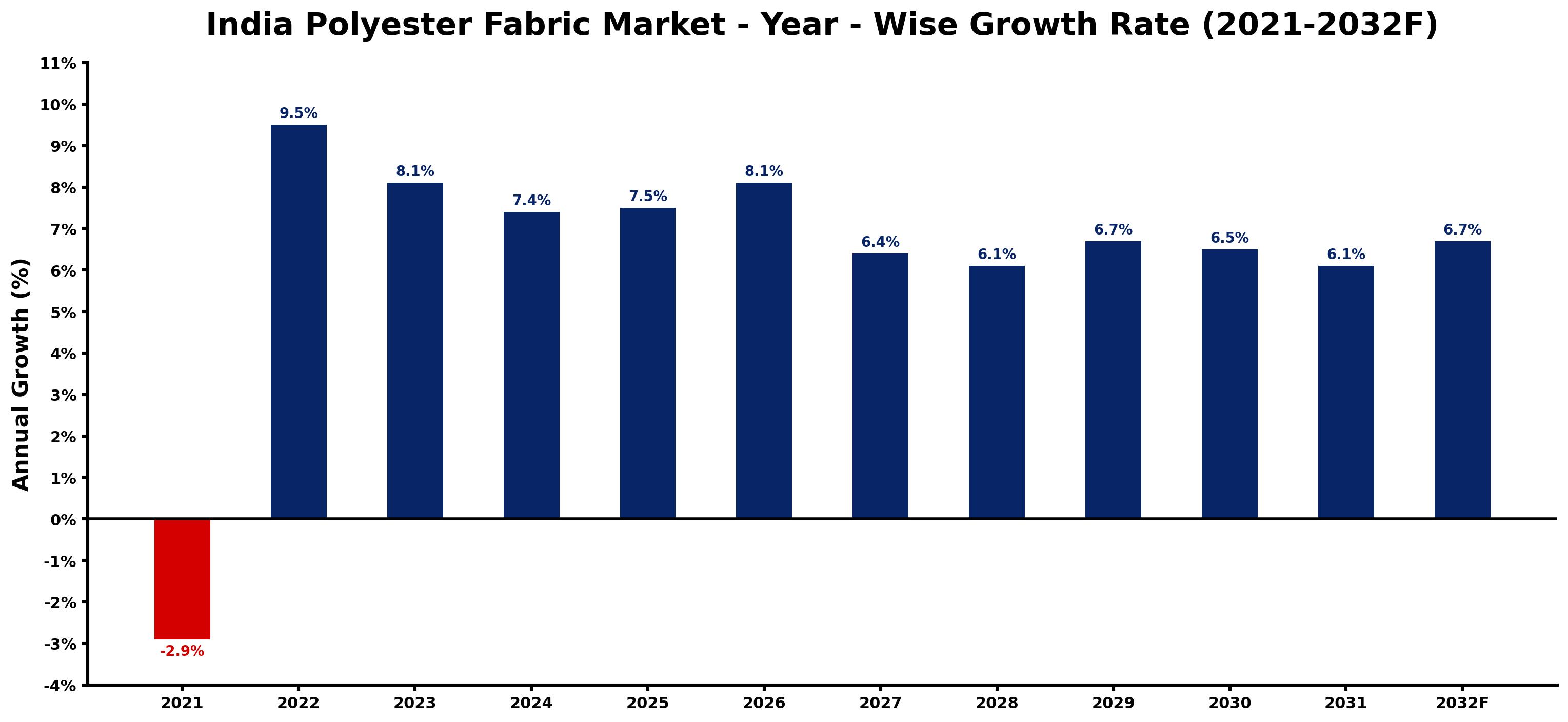
The table below presents the year wise growth rates along with the key drivers influencing the market
| Year | Growth Rate | Major Drivers |
| 2021 | -2.9% | Supply chain disruptions hindered availability of polyester fabrics, leading to decreased production and sales. |
| 2022 | 9.5% | Local manufacturers expand capabilities, catering to emerging regional design preferences. |
| 2023 | 8.1% | Textile innovation funds facilitate breakthroughs in polyester durability and functionality. |
| 2024 | 7.4% | Urbanization trends lead to higher demand for affordable, versatile textile solutions. |
| 2025 | 7.5% | E-commerce platforms enhance accessibility, transforming how consumers purchase fabric products. |
| 2026 | 8.1% | Consumer awareness of sustainable practices influences material sourcing decisions significantly. |
| 2027 | 6.4% | Collaborations between brands and local artisans create unique polyester fabric offerings. |
| 2028 | 6.1% | Regional trade agreements reduce tariffs, boosting polyester fabric import and export activities. |
| 2029 | 6.7% | Investments in automation help streamline polyester production processes, improving efficiency. |
| 2030 | 6.5% | Emerging technologies like 3D printing redefine polyester applications across various sectors. |
| 2031 | 6.1% | Sustainability certifications gain traction, compelling brands to adopt eco-friendly polyester options. |
| 2032 | 6.7% | Fashion-forward designs incorporating polyester fabrics appeal to younger, trend-conscious consumers. |
Note - Market size estimations and growth projections presented in this report are based on 6Wresearch's advanced forecasting approach, validated with industry datasets as of June 2026.
India Polyester Fabric Market Synopsis
The India Polyester Fabric Market is projected to reach 8.1% and witness significant growth during the forecast period (2026-2032). This anticipated expansion is driven by the increasing demand for cost-effective, durable, and low-maintenance fabrics suitable for various applications, including clothing, upholstery, carpets, and other home furnishing products. Over the years, the market has seen a notable rise in the manufacturing of blended fabrics, incorporating materials like cotton and wool, which offer superior quality compared to pure polyester alternatives. Additionally, enhanced product innovations from manufacturers, alongside the rise in disposable incomes amongst consumers, are contributing to this robust market growth.
India Polyester Fabric Market Growth Drivers
The growth trajectory of the India Polyester Fabric Market can be attributed to several key drivers:
- The apparel industry's demand for polyester fabrics is on the rise. Growing consumer preferences for trendy fashion have resulted in increased utilization of synthetic fibers like polyester, known for their flexibility, comfort, and lightweight properties.
- The price stability offered by polyester fabrics further encourages their adoption in garment production, making them an attractive option for manufacturers looking to balance quality and cost.
- The easy availability of raw materials required for polyester production is a pronounced advantage. Manufacturers benefit from consistently accessible petrochemicals, which are essential for producing polyester fiber.
- Technological advancements such as liquid crystalline polymerization (LCP) have significantly reduced production costs. This technology allows manufacturers to enhance efficiency while maintaining product quality, ultimately leading to lower prices for consumers.
- Increasing disposable incomes across various demographic segments in India have expanded the consumer base for polyester fabrics, allowing a greater portion of the population to access and utilize these materials in their households and wardrobes.
India Polyester Fabric Market Challenges and Restraints
Despite its promising outlook, the India Polyester Fabric Market faces various challenges that could impede growth:
- Environmental concerns related to polyester production processes are significant. The reliance on petrochemicals requires substantial energy, resulting in high carbon emissions that pose challenges for sustainability efforts endorsed by government bodies.
- The market may experience pressure from eco-conscious consumers advocating for sustainable practices. A shift towards more environmentally friendly materials could impact the demand for conventional polyester fabrics.
- Price fluctuations in raw materials can disrupt the manufacturing process, leading to unpredicted increases in fabric prices that may deter some manufacturers from engaging in polyester production.
- The competitive landscape in the textiles market is becoming increasingly complex as new players emerge. This could lead to intense competition, which may squeeze profit margins for established manufacturers.
- Admittedly, the focus on rapid fashion cycles can compromise the perceived durability of polyester fabrics, thus creating skepticism among discerning consumers who prioritize longevity in their fabric choices.
India Polyester Fabric Market Trends and Opportunities
The India Polyester Fabric Market is also characterized by compelling trends that present substantial opportunities:
- The adoption of recycled polyesters is gaining momentum as manufacturers respond to environmental concerns. Using recycled materials sourced from post-industrial waste, such as plastic bottles, not only reduces waste but also meets consumer demand for sustainable products.
- Innovation in fabric technology continues to create opportunities for enhanced product features. Manufacturers are developing polyester fabrics with improved functionalities, such as moisture-wicking properties and advanced durability.
- Crossover applications of polyester fabrics into sectors such as automotive and medical textiles are expanding. This diversification enables manufacturers to tap into new customer bases and enhance market presence.
- Increased governmental support aimed at promoting the textile industry, including initiatives for boosting manufacturing capabilities, can provide a conducive environment for market growth.
- The rise of e-commerce in India is also transforming the fabric retail landscape, making polyester fabrics more accessible to consumers through online platforms, thus broadening the market's consumer base.
India Polyester Fabric Market Government Investment and Initiatives
The Indian government has initiated several policies aimed at bolstering the polyester fabric sector as part of its broader textile industry development plans. Investments are being made towards enhancing manufacturing capabilities and infrastructure in textile parks across various states. The government is also implementing incentives for sustainable practices within the textile industry, encouraging the use of recycled materials and environmentally friendly production processes. These initiatives are expected to lead to increased foreign investment, creating jobs while promoting the growth of domestic manufacturers. Furthermore, the government's focus on "Make in India" initiatives aims to bolster local production, providing a favorable environment for the polyester fabric market to flourish.
India Polyester Fabric Market Latest Developments (May 2025 - June 2026)
Recent developments in the India Polyester Fabric Market from May 2025 to June 2026 indicate a significant shift towards sustainability practices within the industry. Manufacturers have begun investing in state-of-the-art recycling technologies to convert post-consumer plastics into high-quality polyester fabrics. Additionally, consumer demand for more sustainable and eco-friendly products has prompted major retailers to increase their offerings of recycled polyester garments. During this period, collaborations between manufacturers and environmental organizations have also emerged, focusing on reducing carbon footprints associated with production. Furthermore, innovations in fabric processing are leading to improvements in the quality and performance of polyester fabrics, helping to establish a more competitive market landscape.
India Polyester Fabric Market - Key Attractiveness of the Report
- 10 Years of Market Numbers
- Historical Data Starting from 2022 to 2025
- Base Year: 2025
- Forecast Data until 2032
- Key Performance Indicators Impacting the Market
- Major Upcoming Developments and Projects
Key Highlights of the Report:
- India Polyester Fabric Market Outlook
- Market Size of India Polyester Fabric Market, 2025
- Forecast of India Polyester Fabric Market, 2032
- Historical Data and Forecast of India Polyester Fabric Revenues & Volume for the Period 2022-2032F
- India Polyester Fabric Market Trend Evolution
- India Polyester Fabric Market Drivers and Challenges
- India Polyester Fabric Price Trends
- India Polyester Fabric Porter's Five Forces
- India Polyester Fabric Industry Life Cycle
- Historical Data and Forecast of India Polyester Fabric Market Revenues & Volume By Type for the Period 2022-2032F
- Historical Data and Forecast of India Polyester Fabric Market Revenues & Volume By PET for the Period 2022-2032F
- Historical Data and Forecast of India Polyester Fabric Market Revenues & Volume By PCDT for the Period 2022-2032F
- Historical Data and Forecast of India Polyester Fabric Market Revenues & Volume By Applications for the Period 2022-2032F
- Historical Data and Forecast of India Polyester Fabric Market Revenues & Volume By Carpets & Rugs for the Period 2022-2032F
- Historical Data and Forecast of India Polyester Fabric Market Revenues & Volume By Non-Woven Fabrics Fiberfill for the Period 2022-2032F
- Historical Data and Forecast of India Polyester Fabric Market Revenues & Volume By Apparels for the Period 2022-2032F
- Historical Data and Forecast of India Polyester Fabric Market Revenues & Volume By Home Textiles for the Period 2022-2032F
- Historical Data and Forecast of India Polyester Fabric Market Revenues & Volume By Others? for the Period 2022-2032F
- India Polyester Fabric Import Export Trade Statistics
- Market Opportunity Assessment By Type
- Market Opportunity Assessment By Applications
- India Polyester Fabric Top Companies Market Share
- India Polyester Fabric Competitive Benchmarking By Technical and Operational Parameters
- India Polyester Fabric Company Profiles
- India Polyester Fabric Key Strategic Recommendations






































