Indonesia Anti-aging Products Market Size, Share & Growth Rate
The Indonesia Anti-aging Products Market was estimated at USD 416 Million in 2025 and is projected to reach USD 549 Million by 2032, growing at a CAGR of 4.0% from 2026 to 2032. This positive trajectory is driven by a rapidly growing middle class, heightened consumer awareness of skincare, and an increasing desire for products that combat signs of aging. As urbanization progresses and lifestyles shift towards more health-conscious choices, the demand for innovative anti-aging solutions is expected to surge.
Indonesia Anti-aging Products Market Year-wise Growth Rate and Key Drivers
This graph highlights how the Indonesia Anti-aging Products Market has steadily grown over the years, supported by major growth factors.
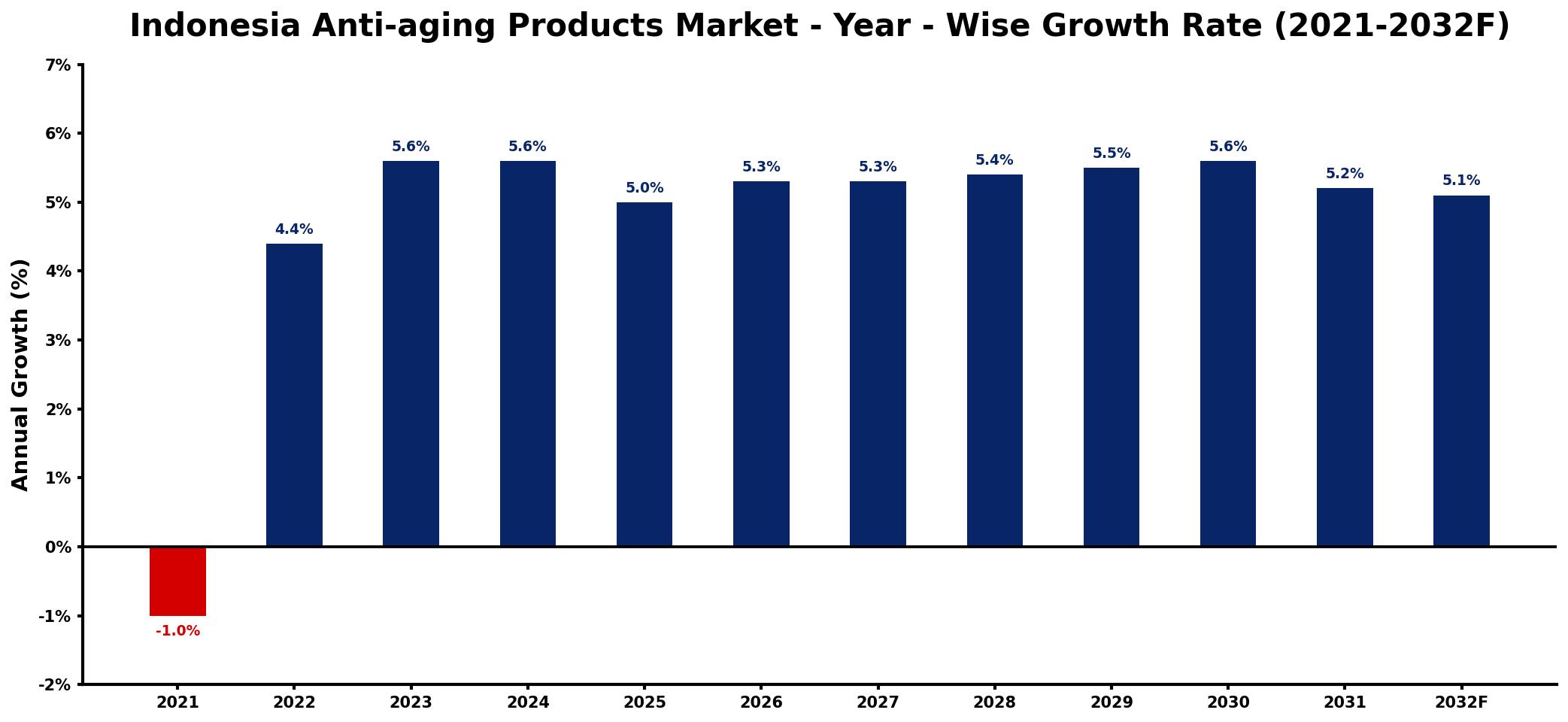
The table below presents the year‑wise growth rates along with the key drivers influencing the market
| Year | Growth Rate | Major Drivers |
| 2021 | -1.0% | decrease in consumer spending power |
| 2022 | 4.4% | rising health consciousness among consumers |
| 2023 | 5.6% | increased investment in skincare innovation |
| 2024 | 5.6% | growing demand for natural ingredients |
| 2025 | 5.0% | expansion of e-commerce distribution channels |
| 2026 | 5.3% | increased focus on holistic wellness |
| 2027 | 5.3% | surge in social media marketing |
| 2028 | 5.4% | rising popularity of premium brands |
| 2029 | 5.5% | growth in online beauty communities |
| 2030 | 5.6% | enhanced product personalization trends |
| 2031 | 5.2% | increased collaboration with influencers |
| 2032 | 5.1% | growing awareness of preventive care |
Note: Market size estimations and growth projections presented in this report are based on 6Wresearch's proprietary forecasting methodology, utilizing the latest available industry data, government publications, and primary research inputs.
Indonesia Anti-aging Products Market Synopsis
The Indonesian anti-aging products market is currently experiencing a robust phase of growth, propelled by increasing consumer engagement with skincare and wellness. With the demographic shift towards an older population and heightened focus on aesthetics, the demand for effective anti-aging solutions has reached unprecedented levels.
However, as the market expands, it faces a dynamic landscape influenced by consumer trends and regulatory challenges. The ongoing evolution in consumer preferences, particularly towards organic and natural ingredients, coupled with the growing influence of social media, is shaping the future of the Indonesia anti-aging products market.
Indonesia Anti-aging Products Market Key Takeaways
- The market is expected to benefit from increasing disposable incomes and an expanding middle-class demographic.
- Consumer preferences are shifting towards products with natural and organic formulations.
- Social media and online marketing are critical drivers in influencing purchasing decisions.
- The aging population's concerns about skin health and appearance are substantial market drivers.
- Innovation in skincare technology continues to spur product development and differentiation.
Evaluation of Restraints in Indonesia Anti-aging Products Market
Despite its promising growth, the Indonesian anti-aging products market faces several significant restraints. Regulatory compliance remains a primary challenge as brands navigate stringent guidelines to ensure product safety and efficacy. Moreover, building consumer trust through transparency in ingredient sourcing and product testing is essential, as skepticism toward new brands and unfamiliar products could hinder market penetration. Addressing these issues is crucial for fostering a sustainable growth environment in this competitive landscape.
Indonesia Anti-aging Products Market Trends
Emerging trends in the Indonesian anti-aging products market are heavily influenced by a shift towards sustainability and eco-friendly products. Consumers are increasingly seeking items with minimal environmental impact, including biodegradable packaging and cruelty-free testing. Furthermore, advancements in skincare technology, such as targeted serums and biotechnology-based formulations, are gaining traction. The role of social media influencers in shaping consumer perceptions and preferences continues to rise, driving engagement and awareness around anti-aging products.
Indonesia Anti-aging Products Market Opportunities
The anti-aging products market in Indonesia presents significant growth opportunities, especially in segments focusing on natural and organic ingredients. Brands that innovate and adapt to the demands of a more informed consumer base stand to gain a competitive edge. Additionally, targeting younger demographics with preventive anti-aging solutions and launching educational campaigns on skincare can further expand market reach. Collaboration with e-commerce platforms can enhance product accessibility, catering to the digitally savvy consumer.
Government Initiatives in the Indonesia Anti-aging Products Market
The Indonesian government is increasingly recognizing the importance of the beauty and wellness sector, including anti-aging products. Initiatives aimed at promoting local manufacturing, enhancing product safety standards, and encouraging investment in research and development are underway. These policies aim to bolster local brands, ensuring they comply with international quality standards while fostering a healthier competitive environment for both domestic and international players.
Future Insights of the Indonesia Anti-aging Products Market
Looking ahead to the 2026-2032 period, the Indonesia anti-aging products market is poised for substantial expansion. A continued emphasis on healthy aging and preventative skincare will likely drive demand for a broader range of products. As consumer preferences evolve, brands will need to adapt rapidly to changing trends, particularly in the realm of sustainability and ingredient transparency. The integration of technology in product development and marketing will further enhance consumer engagement, establishing a more connected and informed consumer base.
Indonesia Anti-aging Products Market Latest Developments (2025 - 2026)
Recent developments within the Indonesia anti-aging products market show a marked increase in brand collaborations and partnerships aimed at expanding distribution channels. Companies are increasingly investing in influencer marketing to effectively communicate product benefits and engage with a broader audience. The rise of digital platforms has spurred innovation in promotional strategies, allowing brands to reach consumers more directly while addressing their specific skincare needs.
Indonesia Anti-aging Products Market - Key Attractiveness of the Report
- 10 Years of Market Numbers
- Historical Data Starting from 2022 to 2025
- Base Year: 2025
- Forecast Data until 2032
- Key Performance Indicators Impacting the Market
- Major Upcoming Developments and Projects
Key Highlights of the Report:
- Indonesia Anti-aging Products Market Outlook
- Market Size of Indonesia Anti-aging Products Market, 2025
- Forecast of Indonesia Anti-aging Products Market, 2032
- Historical Data and Forecast of Indonesia Anti-aging Products Revenues & Volume for the Period 2022-2032F
- Indonesia Anti-aging Products Market Trend Evolution
- Indonesia Anti-aging Products Market Drivers and Challenges
- Indonesia Anti-aging Products Price Trends
- Indonesia Anti-aging Products Porter's Five Forces
- Indonesia Anti-aging Products Industry Life Cycle
- Historical Data and Forecast of Indonesia Anti-aging Products Market Revenues & Volume By Product for the Period 2022-2032F
- Historical Data and Forecast of Indonesia Anti-aging Products Market Revenues & Volume By Body Wash for the Period 2022-2032F
- Historical Data and Forecast of Indonesia Anti-aging Products Market Revenues & Volume By Body Moisturizer for the Period 2022-2032F
- Historical Data and Forecast of Indonesia Anti-aging Products Market Revenues & Volume By Eye Cream & Lotion for the Period 2022-2032F
- Historical Data and Forecast of Indonesia Anti-aging Products Market Revenues & Volume By Facial Cleanser for the Period 2022-2032F
- Historical Data and Forecast of Indonesia Anti-aging Products Market Revenues & Volume By Facial Mask for the Period 2022-2032F
- Historical Data and Forecast of Indonesia Anti-aging Products Market Revenues & Volume By Facial Serum for the Period 2022-2032F
- Historical Data and Forecast of Indonesia Anti-aging Products Market Revenues & Volume By Facial Cream & Lotion for the Period 2022-2032F
- Historical Data and Forecast of Indonesia Anti-aging Products Market Revenues & Volume By Distribution Channel for the Period 2022-2032F
- Historical Data and Forecast of Indonesia Anti-aging Products Market Revenues & Volume By Hypermarket & Supermarket for the Period 2022-2032F
- Historical Data and Forecast of Indonesia Anti-aging Products Market Revenues & Volume By Pharmacy & Drug Stores for the Period 2022-2032F
- Historical Data and Forecast of Indonesia Anti-aging Products Market Revenues & Volume By Specialty Store for the Period 2022-2032F
- Historical Data and Forecast of Indonesia Anti-aging Products Market Revenues & Volume By Online for the Period 2022-2032F
- Historical Data and Forecast of Indonesia Anti-aging Products Market Revenues & Volume By Others for the Period 2022-2032F
- Indonesia Anti-aging Products Import Export Trade Statistics
- Market Opportunity Assessment By Product
- Market Opportunity Assessment By Distribution Channel
- Indonesia Anti-aging Products Top Companies Market Share
- Indonesia Anti-aging Products Competitive Benchmarking By Technical and Operational Parameters
- Indonesia Anti-aging Products Company Profiles
- Indonesia Anti-aging Products Key Strategic Recommendations






































