Indonesia Apiculture Market: Import Trend Analysis
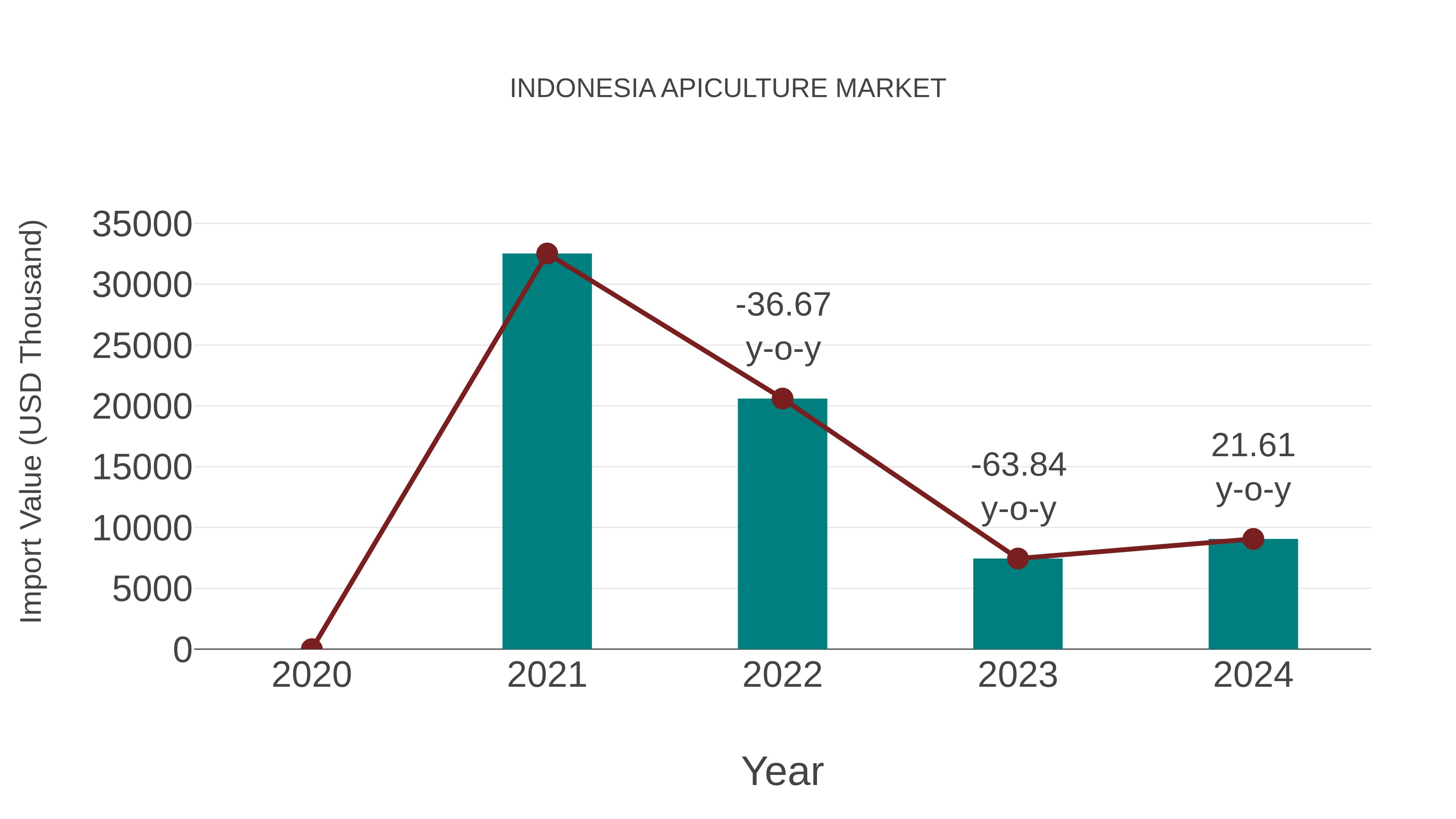
Indonesia`s import trend in the apiculture market saw a notable growth rate of 21.61% from 2023 to 2024, contrasting with a compound annual growth rate (CAGR) of -34.7% from 2020 to 2024. This substantial turnaround can be attributed to a likely shift in consumer demand towards apiculture products, reflecting a potential market recovery or strategic trade policy adjustments within the industry.
Indonesia Apiculture Market Synopsis
Apiculture, or beekeeping, is a niche market in Indonesia but is showing promise. The country`s diverse flora provides ample opportunities for honey production, and local honey is gaining popularity among health-conscious consumers. Beekeeping practices are evolving, with a focus on sustainable and organic honey production. Export opportunities for Indonesia honey are also expanding, particularly in Asian markets. The apiculture market in Indonesia is expected to grow as awareness of the health benefits of honey increases and as sustainable beekeeping practices become more widespread.
Drivers of the Market
The Indonesia Apiculture market is thriving due to several factors. Firstly, the increasing awareness of the health benefits of honey and bee products has led to a surge in demand. Honey is not only a natural sweetener but also has medicinal properties. Secondly, the growth of organic and natural food trends has driven the demand for organic honey and bee-related products. The government`s support for apiculture development and beekeeping training programs further boosts the industry. Indonesia`s diverse flora and climate make it an ideal location for beekeeping, adding to the market`s potential.
Challenges of the Market
The apiculture market in Indonesia faces several hurdles. Pesticide use in agriculture can harm bee populations, affecting honey production. Climate change can disrupt bee behavior and impact flowering seasons, leading to inconsistent honey yields. Additionally, limited awareness and education about beekeeping practices among local communities can hinder the growth of the industry. Disease outbreaks among bee colonies are another concern that beekeepers must address.
COVID-19 Impact on the Market
The Apiculture market in Indonesia, like many other agricultural sectors, faced supply chain disruptions during the pandemic. Reduced production and distribution challenges affected the honey and beekeeping industry. As the agriculture sector recovers and consumer demand for natural products increases, this market is expected to grow steadily.
Key Players in the Market
The Indonesia Apiculture market has witnessed steady growth, with leading players making substantial contributions to the industry`s development. Honey Harvesters Inc. is a prominent player that has consistently delivered high-quality honey products to the market. They have invested in modern beekeeping practices and honey processing technology, ensuring purity and taste consistency. Beekeepers United, on the other hand, has focused on supporting local beekeepers by providing them with training and access to markets, thereby contributing to the sustainable growth of the apiculture industry. As consumer interest in natural and healthy products continues to rise, these leading players are poised to maintain their market leadership by delivering top-notch honey and related apiculture products.
Key Highlights of the Report:
- Indonesia Apiculture Market Outlook
- Market Size of Indonesia Apiculture Market, 2025
- Forecast of Indonesia Apiculture Market, 2032
- Historical Data and Forecast of Indonesia Apiculture Revenues & Volume for the Period 2022-2032F
- Indonesia Apiculture Market Trend Evolution
- Indonesia Apiculture Market Drivers and Challenges
- Indonesia Apiculture Price Trends
- Indonesia Apiculture Porter's Five Forces
- Indonesia Apiculture Industry Life Cycle
- Historical Data and Forecast of Indonesia Apiculture Market Revenues & Volume By Product Type for the Period 2022-2032F
- Historical Data and Forecast of Indonesia Apiculture Market Revenues & Volume By Honey for the Period 2022-2032F
- Historical Data and Forecast of Indonesia Apiculture Market Revenues & Volume By Beeswax for the Period 2022-2032F
- Historical Data and Forecast of Indonesia Apiculture Market Revenues & Volume By Live-bees for the Period 2022-2032F
- Historical Data and Forecast of Indonesia Apiculture Market Revenues & Volume By Others for the Period 2022-2032F
- Historical Data and Forecast of Indonesia Apiculture Market Revenues & Volume By Application for the Period 2022-2032F
- Historical Data and Forecast of Indonesia Apiculture Market Revenues & Volume By Medical for the Period 2022-2032F
- Historical Data and Forecast of Indonesia Apiculture Market Revenues & Volume By Food Beverages for the Period 2022-2032F
- Historical Data and Forecast of Indonesia Apiculture Market Revenues & Volume By Cosmetics for the Period 2022-2032F
- Historical Data and Forecast of Indonesia Apiculture Market Revenues & Volume By Others for the Period 2022-2032F
- Indonesia Apiculture Import Export Trade Statistics
- Market Opportunity Assessment By Product Type
- Market Opportunity Assessment By Application
- Indonesia Apiculture Top Companies Market Share
- Indonesia Apiculture Competitive Benchmarking By Technical and Operational Parameters
- Indonesia Apiculture Company Profiles
- Indonesia Apiculture Key Strategic Recommendations






































