Indonesia Automotive Coolant Market: Import Trend Analysis
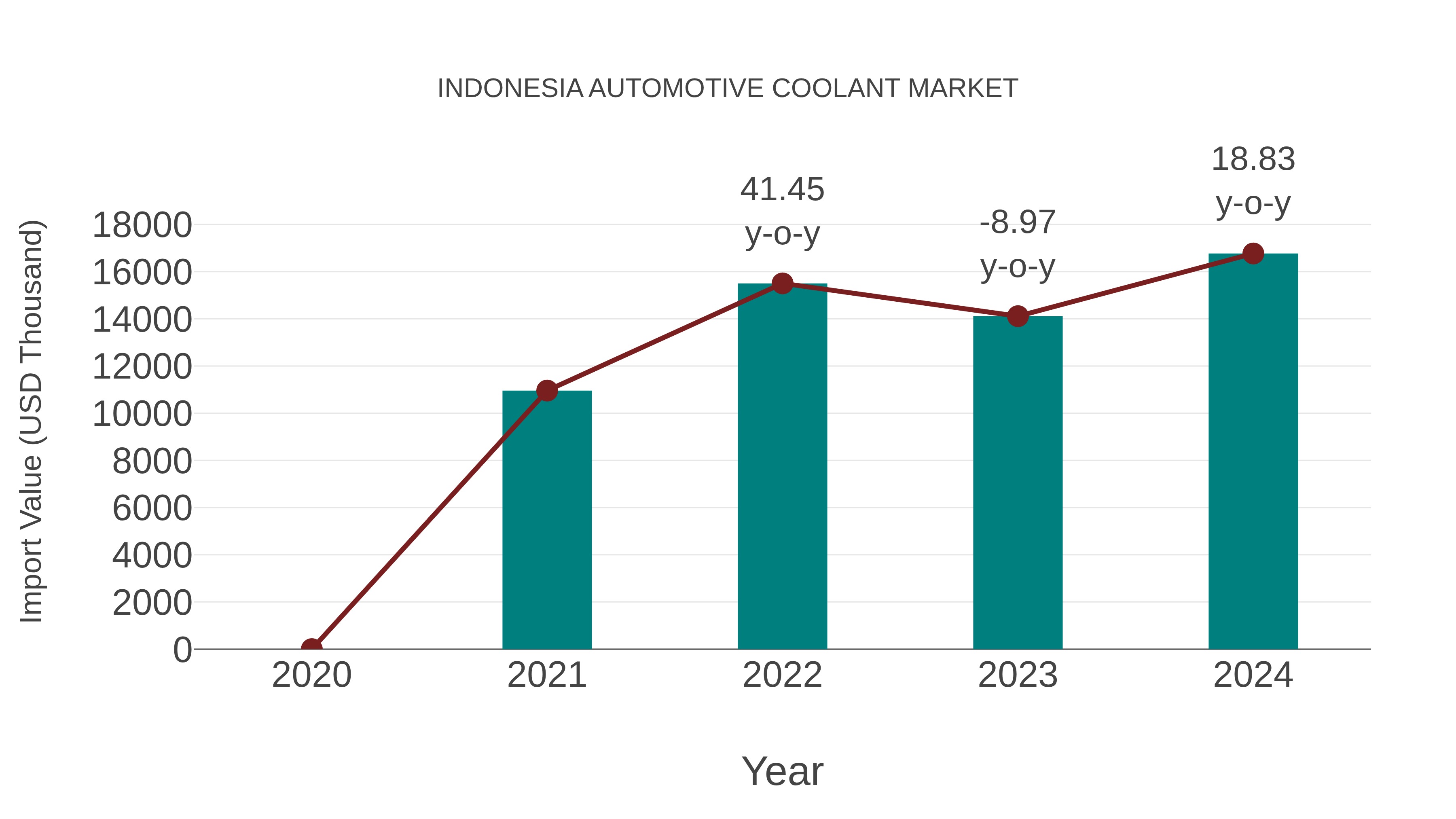
In the Indonesia automotive coolant market, the import trend exhibited significant growth from 2023 to 2024, with a growth rate of 18.83%. The compound annual growth rate (CAGR) for imports in the period of 2020 to 2024 stood at 15.23%. This surge in imports can be attributed to the increasing demand for automotive coolant products in the Indonesian market, reflecting a notable shift in consumer preferences towards higher-quality coolant solutions.
Indonesia Automotive Coolant Market Overview
The Indonesia Automotive Coolant Market is witnessing steady growth due to the increasing vehicle parc in the country. With a rising demand for passenger cars and commercial vehicles, the need for efficient engine cooling systems is driving the market for automotive coolants. Factors such as improving road infrastructure, urbanization, and disposable income levels are contributing to the market growth. Ethylene glycol-based coolants are predominantly used in Indonesia, with a shift towards environmentally friendly and long-life coolant solutions. Key players in the market are focusing on product innovations, such as extended-life coolants and organic acid technology-based formulations, to cater to the evolving needs of consumers. The market is also influenced by government regulations promoting eco-friendly automotive products, creating opportunities for sustainable coolant solutions in the automotive sector.
Trends of the Market
The Indonesia Automotive Coolant Market is experiencing an increased demand for environmentally friendly and long-lasting coolant solutions. With a growing awareness of sustainability and the need for efficient engine performance, consumers are opting for coolants that are free from harmful chemicals and provide extended protection against corrosion and overheating. There is also a shift towards the use of organic and biodegradable coolants, driven by regulations promoting eco-friendly products. Additionally, technological advancements in coolant formulations, such as the development of hybrid organic acid technology (HOAT) and extended-life coolants, are gaining popularity among consumers for their superior performance and durability. Overall, the Indonesia Automotive Coolant Market is witnessing a shift towards eco-conscious and high-performance coolant products to meet the evolving needs of consumers and regulatory requirements.
Challenges of the Market
The Indonesia Automotive Coolant Market faces several challenges, including price competition among manufacturers leading to margin pressures, counterfeit products that undermine brand reputation and consumer trust, lack of awareness among consumers regarding the importance of using quality coolant for vehicle maintenance, and the impact of fluctuating raw material prices on production costs. Additionally, the market is highly fragmented with numerous small players, making it difficult for established brands to differentiate themselves and gain market share. Moreover, the increasing trend towards electric vehicles poses a long-term challenge for the coolant market as these vehicles require different cooling systems. Overall, navigating through these challenges requires strategic pricing, effective branding and marketing strategies, quality control measures, and innovation in product development to stay competitive in the Indonesia Automotive Coolant Market.
Investment Opportunities of the market
The Indonesia Automotive Coolant Market presents lucrative investment opportunities due to the country`s growing automotive industry and increasing vehicle ownership. With a large population and rising disposable incomes, the demand for automobiles is on the rise, driving the need for automotive coolant products. Investing in this market offers the potential for high returns as manufacturers are constantly innovating to meet the demand for more efficient and environmentally-friendly coolant solutions. Additionally, the government`s focus on infrastructure development and support for the automotive sector further strengthens the market outlook. Collaborating with local distributors and investing in marketing strategies tailored to the Indonesian market can help investors capitalize on the growing demand for automotive coolant products in Indonesia.
Government Policy of the market
In Indonesia, government policies related to the automotive coolant market primarily focus on environmental regulations and consumer safety. The government has implemented regulations to ensure that coolant products meet specific quality standards and do not harm the environment upon disposal. Additionally, there are guidelines in place to regulate the labeling and packaging of coolant products to provide consumers with accurate information about the product`s composition and usage instructions. The government also encourages the use of environmentally-friendly coolants to reduce the impact on the environment. Overall, the policies aim to promote sustainable practices within the automotive coolant market and protect both consumers and the environment from potential harm.
Future Outlook of the market
The Indonesia Automotive Coolant Market is expected to witness steady growth in the coming years due to the increasing number of vehicles on the road and the growing awareness about the importance of vehicle maintenance. Factors such as rising disposable incomes, urbanization, and infrastructure development are likely to drive the demand for automotive coolant products. Additionally, the shift towards more environmentally friendly and long-lasting coolant solutions is expected to further fuel market growth. With the automotive industry in Indonesia projected to expand, the demand for automotive coolant products is anticipated to rise, presenting opportunities for market players to innovate and introduce advanced coolant technologies to cater to the evolving needs of consumers and environmental regulations.
Key Highlights of the Report:
- Indonesia Automotive Coolant Market Outlook
- Market Size of Indonesia Automotive Coolant Market, 2025
- Forecast of Indonesia Automotive Coolant Market, 2032
- Historical Data and Forecast of Indonesia Automotive Coolant Revenues & Volume for the Period 2022-2032F
- Indonesia Automotive Coolant Market Trend Evolution
- Indonesia Automotive Coolant Market Drivers and Challenges
- Indonesia Automotive Coolant Price Trends
- Indonesia Automotive Coolant Porter's Five Forces
- Indonesia Automotive Coolant Industry Life Cycle
- Historical Data and Forecast of Indonesia Automotive Coolant Market Revenues & Volume By Type for the Period 2022-2032F
- Historical Data and Forecast of Indonesia Automotive Coolant Market Revenues & Volume By Ethylene Glycol for the Period 2022-2032F
- Historical Data and Forecast of Indonesia Automotive Coolant Market Revenues & Volume By Propylene Glycol for the Period 2022-2032F
- Historical Data and Forecast of Indonesia Automotive Coolant Market Revenues & Volume By Organic Acid Technology for the Period 2022-2032F
- Historical Data and Forecast of Indonesia Automotive Coolant Market Revenues & Volume By Hybrid Organic Acid Technology for the Period 2022-2032F
- Historical Data and Forecast of Indonesia Automotive Coolant Market Revenues & Volume By Application for the Period 2022-2032F
- Historical Data and Forecast of Indonesia Automotive Coolant Market Revenues & Volume By Engine Cooling for the Period 2022-2032F
- Historical Data and Forecast of Indonesia Automotive Coolant Market Revenues & Volume By Hybrid Engines for the Period 2022-2032F
- Historical Data and Forecast of Indonesia Automotive Coolant Market Revenues & Volume By Electric Vehicles for the Period 2022-2032F
- Historical Data and Forecast of Indonesia Automotive Coolant Market Revenues & Volume By High-Performance Cars for the Period 2022-2032F
- Historical Data and Forecast of Indonesia Automotive Coolant Market Revenues & Volume By Vehicle Type for the Period 2022-2032F
- Historical Data and Forecast of Indonesia Automotive Coolant Market Revenues & Volume By Passenger Cars for the Period 2022-2032F
- Historical Data and Forecast of Indonesia Automotive Coolant Market Revenues & Volume By Commercial Vehicles for the Period 2022-2032F
- Historical Data and Forecast of Indonesia Automotive Coolant Market Revenues & Volume By Electric Vehicles for the Period 2022-2032F
- Historical Data and Forecast of Indonesia Automotive Coolant Market Revenues & Volume By Luxury Vehicles for the Period 2022-2032F
- Indonesia Automotive Coolant Import Export Trade Statistics
- Market Opportunity Assessment By Type
- Market Opportunity Assessment By Application
- Market Opportunity Assessment By Vehicle Type
- Indonesia Automotive Coolant Top Companies Market Share
- Indonesia Automotive Coolant Competitive Benchmarking By Technical and Operational Parameters
- Indonesia Automotive Coolant Company Profiles
- Indonesia Automotive Coolant Key Strategic Recommendations






































