Indonesia Engineered Wood Market Size, Share & Growth Rate
The Indonesia Engineered Wood Market was estimated at USD 392 Million in 2025 and is projected to reach USD 520 Million by 2032, growing at a CAGR of 4.1% from 2026 to 2032. This growth trajectory reflects a robust response to the country's surging construction activity and increased focus on sustainable building materials. The ongoing urbanization and rising disposable incomes are driving homeowners toward engineered wood products, which are not only more stable and durable than traditional options but also contribute to environmental sustainability.
Indonesia Engineered Wood Market Year-wise Growth Rate and Key Drivers
This graph highlights how the Indonesia Engineered Wood Market has steadily grown over the years, supported by major growth factors.
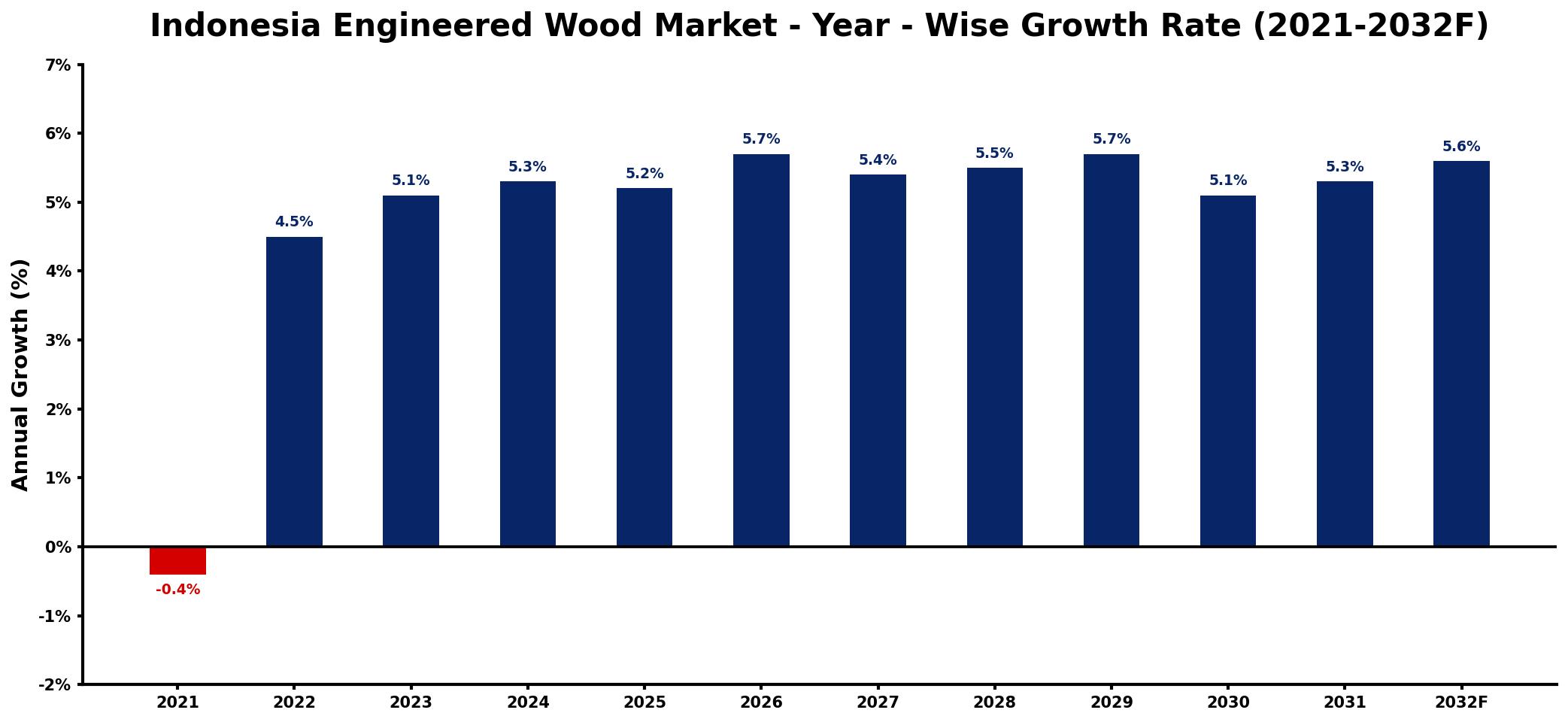
The table below presents the year‑wise growth rates along with the key drivers influencing the market
| Year | Growth Rate | Major Drivers |
| 2021 | -0.4% | decline in construction activities |
| 2022 | 4.5% | increased demand for sustainable materials |
| 2023 | 5.1% | growing popularity of home renovations |
| 2024 | 5.3% | expansion of furniture manufacturing sector |
| 2025 | 5.2% | rising investments in infrastructure projects |
| 2026 | 5.7% | enhanced product quality standards |
| 2027 | 5.4% | growth in eco-friendly building practices |
| 2028 | 5.5% | increased consumer preference for customization |
| 2029 | 5.7% | stronger distribution network expansion |
| 2030 | 5.1% | growing urbanization and housing needs |
| 2031 | 5.3% | rising adoption of innovative designs |
| 2032 | 5.6% | increased collaboration with construction firms |
Note: Market size estimations and growth projections presented in this report are based on 6Wresearch's proprietary forecasting methodology, utilizing the latest available industry data, government publications, and primary research inputs.
Indonesia Engineered Wood Market Synopsis
The engineered wood sector in Indonesia has witnessed significant momentum over the past few years, with steady growth in response to both residential and commercial construction demands. However, as we look to the future, a combination of innovative manufacturing processes and enhanced market awareness is expected to further bolster this segment.
As consumers become more educated about the advantages of engineered wood, including its cost-effectiveness and sustainability, market penetration is likely to accelerate. Furthermore, ongoing investments in research and development are expected to improve product offerings, making engineered wood an increasingly attractive choice for builders and designers alike.
Indonesia Engineered Wood Market Key Takeaways
- Significant growth anticipated, driven by construction and furniture sectors.
- Increased consumer awareness and preference for eco-friendly materials.
- Technological advancements in manufacturing processes enhancing product quality.
- Urbanization leading to heightened demand for modern housing solutions.
- Opportunities for new entrants due to evolving market dynamics.
Evaluation of Restraints in Indonesia Engineered Wood Market
Despite its promising growth, the Indonesia Engineered Wood market faces several constraints that could impede its progress. One of the primary challenges is the lingering preference for traditional wood, which can be attributed to long-standing consumer habits and perceptions regarding quality and aesthetic appeal. Additionally, market players must overcome the hurdles of educating potential customers about the benefits of engineered wood products. Complications in supply chains and production logistics can also hinder the consistent availability of these products in the market, thus limiting their potential adoption.
Indonesia Engineered Wood Market Trends
Current trends indicate a shift toward sustainable building practices, with engineered wood emerging as a favored alternative to traditional materials. This trend is bolstered by governmental initiatives promoting environmentally friendly construction practices. Moreover, the rising demand for customized and high-quality furniture is pushing manufacturers to innovate and diversify their product ranges. As consumers increasingly prioritize aesthetics alongside performance, engineered wood is well-positioned to meet these evolving demands.
Indonesia Engineered Wood Market Opportunities
The Indonesian market presents numerous growth opportunities, particularly for companies willing to invest in education and marketing. By addressing consumer misconceptions and highlighting the benefits of engineered wood, manufacturers can expand their market share. The construction boom, especially in urban areas, opens avenues for collaborations with builders and architects. Moreover, the rising popularity of DIY projects among homeowners can drive demand for engineered wood products across various applications.
Government Initiatives in the Indonesia Engineered Wood Market
The Indonesian government has been active in promoting sustainable building materials through various policies and public spending initiatives. Programs aimed at enhancing environmental awareness among consumers and construction professionals play a crucial role in fostering a favorable market environment for engineered wood. Additionally, incentives for using eco-friendly materials in government-funded construction projects are encouraging wider adoption and acceptance of engineered wood solutions.
Future Insights of the Indonesia Engineered Wood Market
Looking ahead to 2026-2032, the Indonesia Engineered Wood Market is poised for substantial growth, fueled by an ongoing transition toward modern and sustainable construction practices. As technological innovations continue to emerge, product offerings will likely expand, addressing a broader range of consumer needs. With urbanization at an all-time high and a burgeoning middle class eager for quality housing solutions, the demand for engineered wood is expected to escalate, solidifying its role as a cornerstone of Indonesias construction landscape.
Indonesia Engineered Wood Market Latest Developments (2025 - 2026)
Recent developments in the Indonesia Engineered Wood Market reflect a cautious optimism among industry players. With construction activities ramping up following pandemic-related disruptions, manufacturers are increasingly focusing on improving their supply chains and product delivery mechanisms. The emphasis on sustainable practices continues to shape discussions, with key stakeholders evaluating the integration of more environmentally friendly materials into their offerings. Additionally, there is a growing trend of collaborations between engineered wood producers and construction firms, aiming to create innovative solutions that meet modern building standards.
Indonesia Engineered Wood Market - Key Attractiveness of the Report
- 10 Years of Market Numbers
- Historical Data Starting from 2022 to 2025
- Base Year: 2025
- Forecast Data until 2032
- Key Performance Indicators Impacting the Market
- Major Upcoming Developments and Projects
Key Highlights of the Report:
- Indonesia Engineered Wood Market Outlook
- Market Size of Indonesia Engineered Wood Market, 2025
- Forecast of Indonesia Engineered Wood Market, 2032
- Historical Data and Forecast of Indonesia Engineered Wood Revenues & Volume for the Period 2022-2032F
- Indonesia Engineered Wood Market Trend Evolution
- Indonesia Engineered Wood Market Drivers and Challenges
- Indonesia Engineered Wood Price Trends
- Indonesia Engineered Wood Porter's Five Forces
- Indonesia Engineered Wood Industry Life Cycle
- Historical Data and Forecast of Indonesia Engineered Wood Market Revenues & Volume By Type for the Period 2022-2032F
- Historical Data and Forecast of Indonesia Engineered Wood Market Revenues & Volume By I-Beams for the Period 2022-2032F
- Historical Data and Forecast of Indonesia Engineered Wood Market Revenues & Volume By Plywood for the Period 2022-2032F
- Historical Data and Forecast of Indonesia Engineered Wood Market Revenues & Volume By Laminated Veneer Lumber (LVL) for the Period 2022-2032F
- Historical Data and Forecast of Indonesia Engineered Wood Market Revenues & Volume By Glulam (Glued Laminated Timber) for the Period 2022-2032F
- Historical Data and Forecast of Indonesia Engineered Wood Market Revenues & Volume By Oriented Strand Boards (OSB) for the Period 2022-2032F
- Historical Data and Forecast of Indonesia Engineered Wood Market Revenues & Volume By Cross-Laminated Timber (CLT) for the Period 2022-2032F
- Historical Data and Forecast of Indonesia Engineered Wood Market Revenues & Volume By Others for the Period 2022-2032F
- Historical Data and Forecast of Indonesia Engineered Wood Market Revenues & Volume By Application for the Period 2022-2032F
- Historical Data and Forecast of Indonesia Engineered Wood Market Revenues & Volume By Construction for the Period 2022-2032F
- Historical Data and Forecast of Indonesia Engineered Wood Market Revenues & Volume By Furniture for the Period 2022-2032F
- Historical Data and Forecast of Indonesia Engineered Wood Market Revenues & Volume By Flooring for the Period 2022-2032F
- Historical Data and Forecast of Indonesia Engineered Wood Market Revenues & Volume By Packaging for the Period 2022-2032F
- Historical Data and Forecast of Indonesia Engineered Wood Market Revenues & Volume By Others for the Period 2022-2032F
- Historical Data and Forecast of Indonesia Engineered Wood Market Revenues & Volume By End-User for the Period 2022-2032F
- Historical Data and Forecast of Indonesia Engineered Wood Market Revenues & Volume By Residential for the Period 2022-2032F
- Historical Data and Forecast of Indonesia Engineered Wood Market Revenues & Volume By Commercial & Industrial for the Period 2022-2032F
- Indonesia Engineered Wood Import Export Trade Statistics
- Market Opportunity Assessment By Type
- Market Opportunity Assessment By Application
- Market Opportunity Assessment By End-User
- Indonesia Engineered Wood Top Companies Market Share
- Indonesia Engineered Wood Competitive Benchmarking By Technical and Operational Parameters
- Indonesia Engineered Wood Company Profiles
- Indonesia Engineered Wood Key Strategic Recommendations






































