Indonesia Float Glass Market: Import Trend Analysis
In the Indonesia float glass market, the import trend experienced a notable decline from 2023 to 2024, with a growth rate of -69.66%. The compound annual growth rate (CAGR) for imports over the period 2020-2024 stood at -38.72%. This substantial decrease in import momentum could be attributed to shifting demand patterns or changes in trade policies impacting market stability.
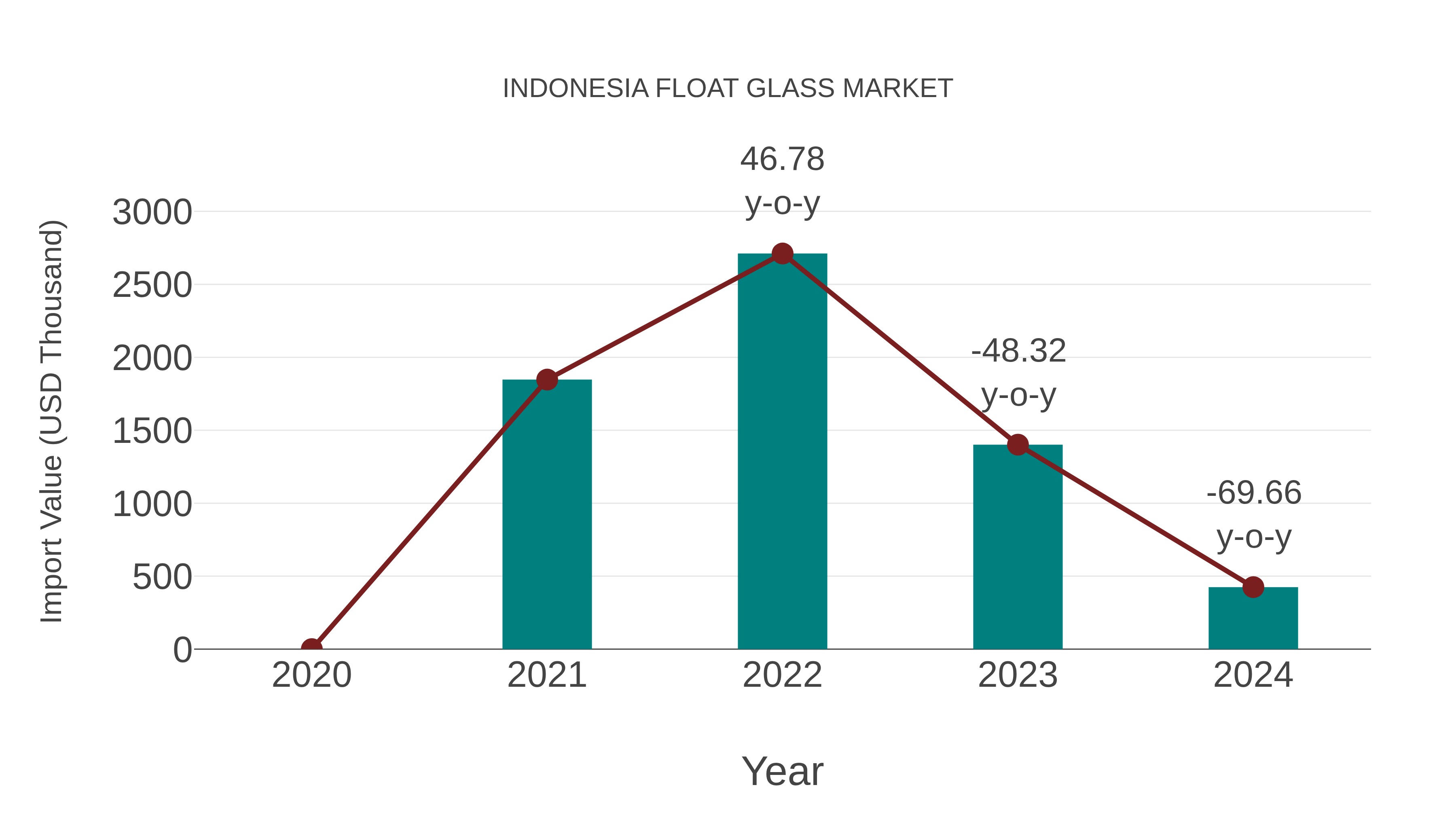
Indonesia Float Glass Market Growth Rate
According to 6Wresearch internal database and industry insights, the Indonesia Float Glass Market is projected to grow at a compound annual growth rate (CAGR) of 6.8% during the forecast period from 2026 to 2032.
Topics Covered in the Indonesia Float Glass Market Report
The Indonesia Float Glass Market report thoroughly covers the market by raw material, type, and application, providing an unbiased and detailed analysis of ongoing market trends, opportunities, challenges, and market drivers, helping stakeholders align their strategies with current and future market dynamics.
Indonesia Float Glass Market Highlights
| Report Name | Indonesia Float Glass Market |
| Forecast Period | 2026–2032 |
| CAGR | 6.8% |
| Growing Sector | Float Glass |
Indonesia Float Glass Market Synopsis
The Indonesia Float Glass Market is experiencing significant growth as building and construction projects and automotive applications are creating higher demand for float glass products. The market growth is driven by two factors which include better manufacturing technologies and rising demand for energy-saving solar glass products. The government development of infrastructure projects and its commitment to sustainable energy solutions are supporting further market expansion. Float glass has gained popularity as it offers a smooth surface, perfect visibility and long-lasting durability which makes it suitable for high-end use in buildings and automobiles.
Evaluation of Growth Drivers in the Indonesia Float Glass Market
Below mentioned are some prominent drivers and their impact on the market dynamics:
| Drivers | Primary Segments Affected | Why It Matters (Evidence) |
| Growth in Infrastructure Development | Building and Construction | Building and Construction Large-scale infrastructure projects require float glass for both aesthetic and structural purposes. |
| Automotive Sector Expansion | Automotive | The automotive industry is burgeoning and requires specialist float glass for vehicles, adding to the demand in the market. |
| Demand for Energy-Efficient Glass | Solar Glass, Building & Construction | In the renewable energy systems section, the market opportunities become evident due to the increasing requirement of the solar glass. |
| Technological Advancements | Clear, Tinted, Low Ferrous Floated | Advanced technologies have been influential in enhancing glass quality and lowering manufacturing costs, driving the market push. |
| Rising Consumer Demand for Aesthetics | Building and Construction, Automotive | Increasing consumer interest in design and aesthetic value drives the demand for higher-quality float glass products. |
The Indonesia Float Glass Market Size is projected to grow at a CAGR of 6.8% from 2026 to 2032. The growth of the Indonesian Float Glass Market is influenced by increased demand from the building, construction sector which drives growth combined with product developments within the float glass sector as well as growth within the automotive, transportation sector. Further market expansion will occur due to increased consumer interest in energy-saving construction products and renewable energy sources within Indonesia. The future potential for ongoing growth within the Indonesian Float Glass Market is high as there is continuing support from both industrial and consumer demand for float glass products.
Evaluation of Restraints in the Indonesia Float Glass Market
Below mentioned are some major restraints and their influence on the market dynamics:
| Restraints | Primary Segments Affected | What This Means (Evidence) |
| High Production Costs | Clear, Low Ferrous Floated | The high cost of raw materials and energy for manufacturing float glass can impact pricing and market adoption. |
| Environmental Concerns | All Product Segments | Tougher environmental standards in the glass-manufacturing processes are likely to increase operational costs. |
| Price Sensitivity | Building and Construction, Automotive | The cost of float glass can limit its usage in price-sensitive markets, affecting demand in lower-end segments. |
| Competition from Substitutes | Solar Glass, Automotive | Using alternatives, for example, laminated or stiffened glass, significantly reduces the demand for float glass products. |
| Limited Recycling Capabilities | All Product Segments | Challenges in recycling float glass due to contamination and technological limitations can affect sustainability goals. |
Indonesia Float Glass Market Challenges
The Indonesia Float Glass Industry manufacturers face some challenges, such as increased production costs due to environmental regulation and increased production costs that affect their ability to make a profit. Substitute products and price sensitivity in some market segments also restrict market potential. Manufacturers need to invest in energy sustainability technology to overcome barriers to entry to the market, develop alternatives to float glass that are not susceptible to fluctuations in energy prices, and educate consumers on high-quality float glass to increase the usage of this building product.
Indonesia Float Glass Market Trends
Here are some major trends changing the Indonesia Float Glass Market Growth dynamics:
- Technological Improvements in Manufacturing: Advanced float glass production technologies, such as improved furnaces and automated systems, are increasing efficiency and reducing costs, which in turn helps make the product more competitive.
- Customization of Float Glass Products: Manufacturers are responding to consumer demands for custom-sized and specially designed glass for unique applications, especially in automotive and architectural projects.
- Growth in the Solar Glass Market: The rising adoption of renewable energy solutions creates increased demand for solar glass which provides float glass manufacturers with new business opportunities.
- E-Commerce and Online Sales: The rising digital trade market compels businesses to establish their presence on online platforms which enables industrial buyers and contractors to access float glass products more easily.
Investment Opportunities in the Indonesia Float Glass Market
The Indonesia Float Glass Market presents several investment opportunities, including:
- Manufacturing Technologies Innovation - By investing in the latest technology, companies can lower their float glass production costs and improve production quality through developments like automated manufacturing processes or the latest type of glass when producing for the automotive industry as we know.
- Solar Glass Solutions - The growing demand for solar panels presents a major investment opportunity for solar glass producers, as the renewable energy market is projected to expand significantly.
- Building and Construction Focus - Indonesian urbanization together with infrastructure development projects will provide building and construction industries with growth opportunities particularly in high-end decorative glass and energy-efficient glass markets.
- Expanding Uses within the Automotive Industry - As the automotive industry continues to expand and grow, manufacturers should focus on developing float glass products that are designed specifically for automobiles to meet today's ever-increasing need for improved vehicle safety and vehicle aesthetics.
Top 5 Leading Players in the Indonesia Float Glass Market
Below is the list of prominent companies leading the Indonesia Float Glass Market Share:
1. Asahi Glass Co., Ltd.
| Company Name | Asahi Glass Co., Ltd. |
|---|---|
| Established Year | 1907 |
| Headquarters | Tokyo, Japan |
| Official Website | Click Here |
Asahi Glass is a global leader in float glass manufacturing, with products ranging from construction materials to automotive and solar glass.
2. Saint-Gobain S.A.
| Company Name | Saint-Gobain S.A. |
|---|---|
| Established Year | 1665 |
| Headquarters | Courbevoie, France |
| Official Website | Click Here |
Saint-Gobain manufactures float glass used in construction, automotive, and other industries, offering energy-efficient and high-performance glass solutions.
3. PT. Asahimas Flat Glass Tbk
| Company Name | PT. Asahimas Flat Glass Tbk |
|---|---|
| Established Year | 1973 |
| Headquarters | Jakarta, Indonesia |
| Official Website | - |
Asahimas is one of Indonesia’s leading float glass manufacturers, producing a wide variety of glass for building, automotive, and industrial applications.
4. NSG Group
| Company Name | NSG Group |
|---|---|
| Established Year | 1918 |
| Headquarters | Tokyo, Japan |
| Official Website | Click Here |
NSG Group is a major manufacturer of float glass, known for its advanced glass technologies and products for architecture and automotive applications.
5. Guardian Industries
| Company Name | Guardian Industries |
|---|---|
| Established Year | 1932 |
| Headquarters | Auburn Hills, Michigan, USA |
| Official Website | Click Here |
Guardian Industries is a major global producer of float glass, specializing in glass for the construction, automotive, and solar industries.
Government Regulations Introduced in the Indonesia Float Glass Market
According to Indonesian government data, the Indonesian Government has established many rules and regulations that must be followed by manufacturers of glass products in order to provide quality and safety to those products. Through the policies in place by the Ministry of Industry, Indonesia has developed a program which encourages the use of domestic materials in the manufacture of float glass, thereby lessening its reliance on imported products. In addition, environmental regulations have been enacted regarding the design and construction of float glass production facilities, as well as energy efficiency and emissions control during the production of float glass to limit its impact on the environment.
Future Insights of the Indonesia Float Glass Market
The Indonesia Float Glass Market shows positive market prospects as building construction, automotive manufacturing and solar power systems show increasing demand for its products. Market growth will be driven by the combination of energy-efficient material adoption and renewable energy use together with government backing for infrastructure projects. The market will experience growth through technological progress and new developments in float glass production methods. The market will continue to grow throughout the forecast period as more sectors will start using the product.
Market Segmentation Analysis
The report offers a comprehensive study of the following market segments and their leading categories:
By Raw Material - Sand to Dominate the Market
According to Ritika Kalra, Senior Research Analyst, 6Wresearch, Float glass production in Indonesia relies on sand as its primary raw material which accounts for the highest market share. Sand serves as the primary raw material for glass production as it exists in abundant supply and low-cost availability.
By Type - Clear Float Glass to Dominate the Market
The market leading segment of clear float glass exists as the material gets used in various applications, which include building construction, automotive production, and window manufacturing. The material's transparent properties together with its flexible usage make it extremely valuable for people who want both design and practical functions.
By Application - Building and Construction to Dominate the Market
The building and construction sector is the largest consumer of float glass in Indonesia. With ongoing urbanization, infrastructure development, and increasing demand for energy-efficient buildings, float glass is extensively used for windows, facades, and structural components.
Key Attractiveness of the Report
- 10 Years of Market Numbers
- Historical Data Starting from 2022 to 2025
- Base Year: 2025
- Forecast Data until 2032
- Key Performance Indicators Impacting the Market
- Major Upcoming Developments and Projects
Key Highlights of the Report:
- Indonesia FLOAT GLASS Market Outlook
- Market Size of Indonesia FLOAT GLASS Market, 2025
- Forecast of Indonesia FLOAT GLASS Market, 2032
- Historical Data and Forecast of Indonesia FLOAT GLASS Revenues & Volume for the Period 2022-2032F
- Indonesia FLOAT GLASS Market Trend Evolution
- Indonesia FLOAT GLASS Market Drivers and Challenges
- Indonesia FLOAT GLASS Price Trends
- Indonesia FLOAT GLASS Porter's Five Forces
- Indonesia FLOAT GLASS Industry Life Cycle
- Historical Data and Forecast of Indonesia FLOAT GLASS Market Revenues & Volume By Raw Material for the Period 2022-2032F
- Historical Data and Forecast of Indonesia FLOAT GLASS Market Revenues & Volume By Sand for the Period 2022-2032F
- Historical Data and Forecast of Indonesia FLOAT GLASS Market Revenues & Volume By Limestone for the Period 2022-2032F
- Historical Data and Forecast of Indonesia FLOAT GLASS Market Revenues & Volume By Soda Ash for the Period 2022-2032F
- Historical Data and Forecast of Indonesia FLOAT GLASS Market Revenues & Volume By Dolomite for the Period 2022-2032F
- Historical Data and Forecast of Indonesia FLOAT GLASS Market Revenues & Volume By Type for the Period 2022-2032F
- Historical Data and Forecast of Indonesia FLOAT GLASS Market Revenues & Volume By Clear for the Period 2022-2032F
- Historical Data and Forecast of Indonesia FLOAT GLASS Market Revenues & Volume By Tinted for the Period 2022-2032F
- Historical Data and Forecast of Indonesia FLOAT GLASS Market Revenues & Volume By Patterned for the Period 2022-2032F
- Historical Data and Forecast of Indonesia FLOAT GLASS Market Revenues & Volume By Wired for the Period 2022-2032F
- Historical Data and Forecast of Indonesia FLOAT GLASS Market Revenues & Volume By Extra Clear/Low Ferrous Floated for the Period 2022-2032F
- Historical Data and Forecast of Indonesia FLOAT GLASS Market Revenues & Volume By Application for the Period 2022-2032F
- Historical Data and Forecast of Indonesia FLOAT GLASS Market Revenues & Volume By Building and Construction for the Period 2022-2032F
- Historical Data and Forecast of Indonesia FLOAT GLASS Market Revenues & Volume By Automotive for the Period 2022-2032F
- Historical Data and Forecast of Indonesia FLOAT GLASS Market Revenues & Volume By Solar Glass for the Period 2022-2032F
- Indonesia FLOAT GLASS Import Export Trade Statistics
- Market Opportunity Assessment By Raw Material
- Market Opportunity Assessment By Type
- Market Opportunity Assessment By Application
- Indonesia FLOAT GLASS Top Companies Market Share
- Indonesia FLOAT GLASS Competitive Benchmarking By Technical and Operational Parameters
- Indonesia FLOAT GLASS Company Profiles
- Indonesia FLOAT GLASS Key Strategic Recommendations
Market Covered
The report offers a comprehensive study of the subsequent market segments:
By Raw Material
- Sand
- Limestone
- Soda Ash
- Dolomite
By Type
- Clear
- Tinted
- Patterned
- Wired
- Extra Clear/Low Ferrous Floated
By Application
- Building and Construction
- Automotive
- Solar Glass






































