Indonesia Flour Market: Import Trend Analysis
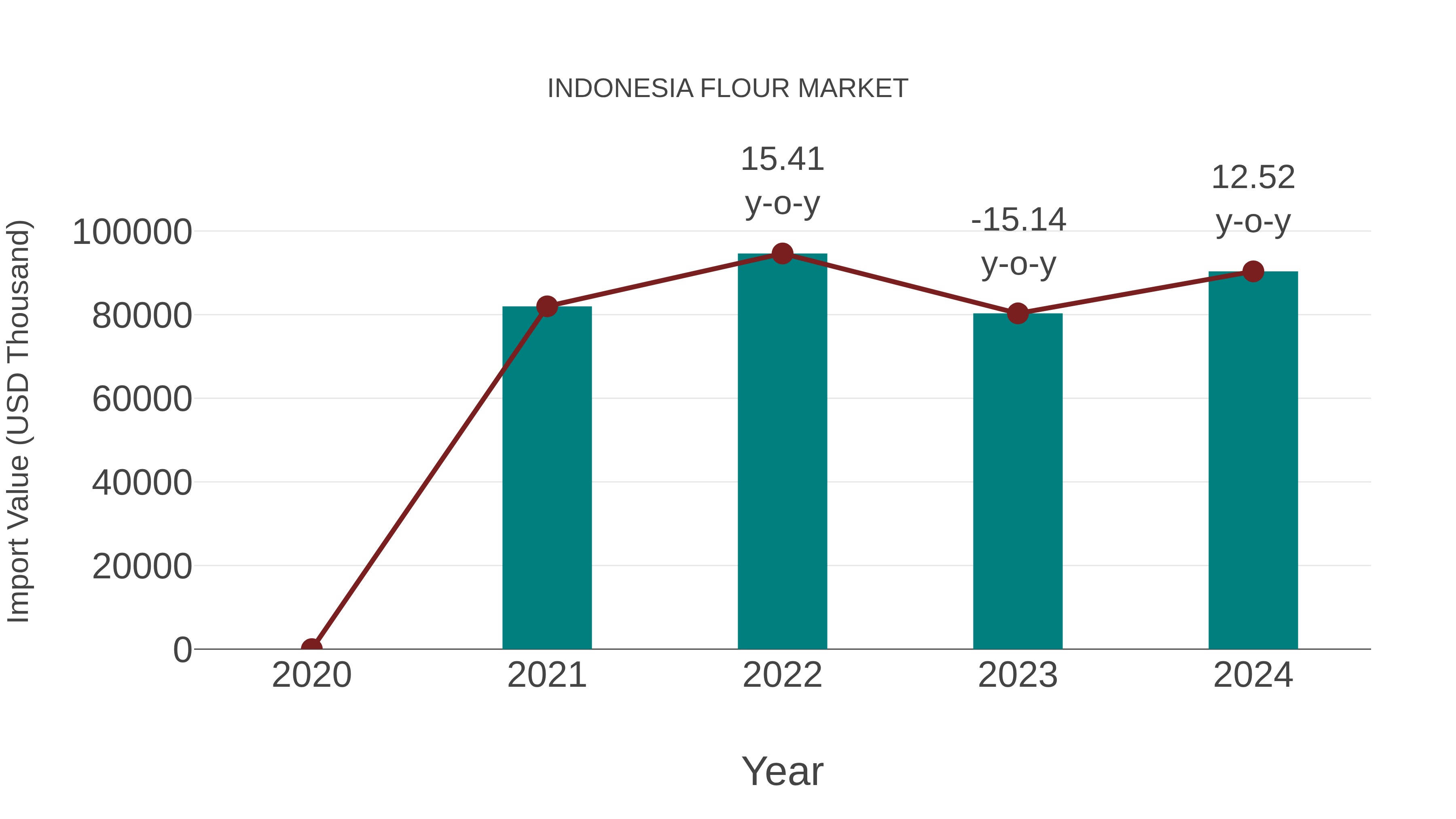
In the Indonesia flour market, the import trend showed a notable growth rate of 12.52% from 2023 to 2024, with a compound annual growth rate (CAGR) of 3.29% from 2020 to 2024. This import momentum can be attributed to a steady increase in demand for flour-based products, indicating a stable market with sustained growth potential.
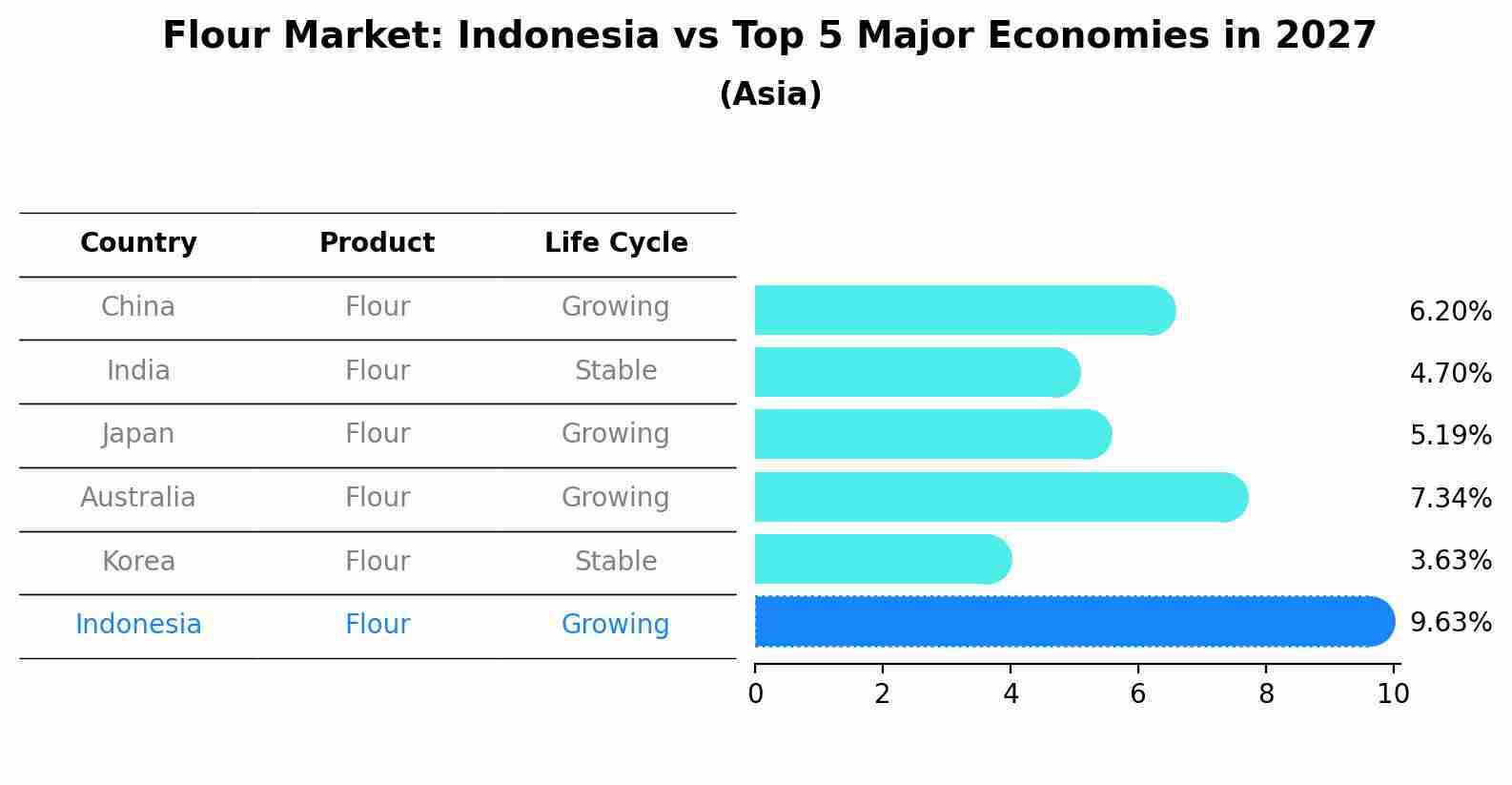
Flour Market: Indonesia vs Top 5 Major Economies in 2027 (Asia)
The Flour market in Indonesia is projected to grow at a growing growth rate of 9.63% by 2027, within the Asia region led by China, along with other countries like India, Japan, Australia and South Korea, collectively shaping a dynamic and evolving market environment driven by innovation and increasing adoption of emerging technologies.
Indonesia Flour Market Synopsis
The Indonesia flour market is estimated to witness a significant CAGR of 4.3% during theperiod 2020-2026. Indonesia populationand rising consumer demand for bakery products are factors driving the marketin this region. The rapid advancement in food processing technology has resulted in increasing penetration of automated machines which process flour from grains like wheat maize rice etc. and thus improving production volume and diversity thereby fueling the market demand for flour across various end-use industries such as bakeries confectionaries snacks manufacturers etc. Furthermore government initiatives like tax exemptions on raw materials used while manufacturing flour are further expected to drive its consumption over theperiod.
Key Factors Driving the Market
Rising investments towards automation technologies adopted by food processinghave enabled smooth operations along with ensuring higher volumes of production at lower costs which have led to enhanced efficiency within thecreating huge opportunities for flour producers over upcoming years.
Challenges Facing the Market
The unorganized sector selling low quality/ unhygienic flours poses a major challenge due to their availability at cheaper prices compared to organized ones affecting sales s generated by organized players operating within this region thus hampering overall marketrate upscaling. Increasing popularity amongst consumers regarding health benefits associated with soya-based products acts as major restraint towards adoption /consumption of traditional wheat or other cereals-based meals leading toward a shift towards healthier options posing a threat to the entire.
Key Market Players
Major players present within Indonesia Flour Market include Charoen Pokphand Group (CP Group) PT Panganmas Persada TbkAsia Maluku International Co Ltd (AMIL) PT CentralSawit Abadi among others.
Key Highlights of the Report:
- Indonesia Flour Market Outlook
- Market Size of Indonesia Flour Market, 2023
- Forecast of Indonesia Flour Market, 2030
- Historical Data and Forecast of Indonesia Flour Revenues & Volume for the Period 2020-2030
- Indonesia Flour Market Trend Evolution
- Indonesia Flour Market Drivers and Challenges
- Indonesia Flour Price Trends
- Indonesia Flour Porter's Five Forces
- Indonesia Flour Industry Life Cycle
- Historical Data and Forecast of Indonesia Flour Market Revenues & Volume By Raw Material for the Period 2020-2030
- Historical Data and Forecast of Indonesia Flour Market Revenues & Volume By Wheat for the Period 2020-2030
- Historical Data and Forecast of Indonesia Flour Market Revenues & Volume By Rice for the Period 2020-2030
- Historical Data and Forecast of Indonesia Flour Market Revenues & Volume By Maize for the Period 2020-2030
- Historical Data and Forecast of Indonesia Flour Market Revenues & Volume By Others for the Period 2020-2030
- Historical Data and Forecast of Indonesia Flour Market Revenues & Volume By Applications for the Period 2020-2030
- Historical Data and Forecast of Indonesia Flour Market Revenues & Volume By Bread & Bakery Products for the Period 2020-2030
- Historical Data and Forecast of Indonesia Flour Market Revenues & Volume By Noodles & Pasta for the Period 2020-2030
- Historical Data and Forecast of Indonesia Flour Market Revenues & Volume By Animal Feed for the Period 2020-2030
- Historical Data and Forecast of Indonesia Flour Market Revenues & Volume By Wafers, Crackers, & Biscuits for the Period 2020-2030
- Historical Data and Forecast of Indonesia Flour Market Revenues & Volume By Non-Food Application for the Period 2020-2030
- Historical Data and Forecast of Indonesia Flour Market Revenues & Volume By Others for the Period 2020-2030
- Historical Data and Forecast of Indonesia Flour Market Revenues & Volume By Technology for the Period 2020-2030
- Historical Data and Forecast of Indonesia Flour Market Revenues & Volume By Dry Technology for the Period 2020-2030
- Historical Data and Forecast of Indonesia Flour Market Revenues & Volume By Wet Technology for the Period 2020-2030
- Indonesia Flour Import Export Trade Statistics
- Market Opportunity Assessment By Raw Material
- Market Opportunity Assessment By Applications
- Market Opportunity Assessment By Technology
- Indonesia Flour Top Companies Market Share
- Indonesia Flour Competitive Benchmarking By Technical and Operational Parameters
- Indonesia Flour Company Profiles
- Indonesia Flour Key Strategic Recommendations






































