Indonesia Makeup Market: Import Trend Analysis
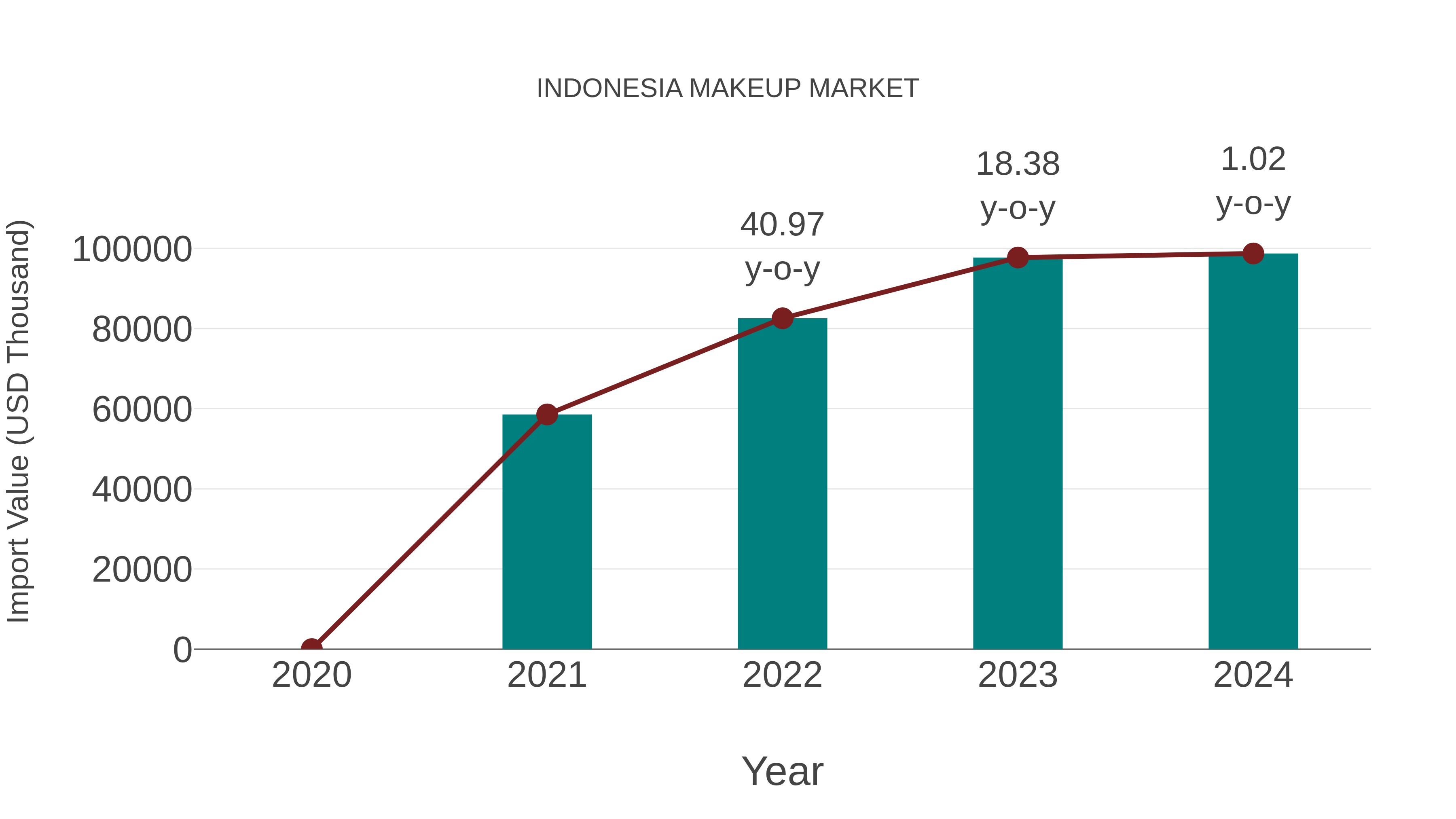
In the Indonesia makeup market, the import trend showed a growth rate of 1.02% from 2023 to 2024, with a compound annual growth rate (CAGR) of 19.02% for the period 2020-2024. This import momentum indicates a sustained demand shift towards imported makeup products, likely driven by evolving consumer preferences and increased market stability.
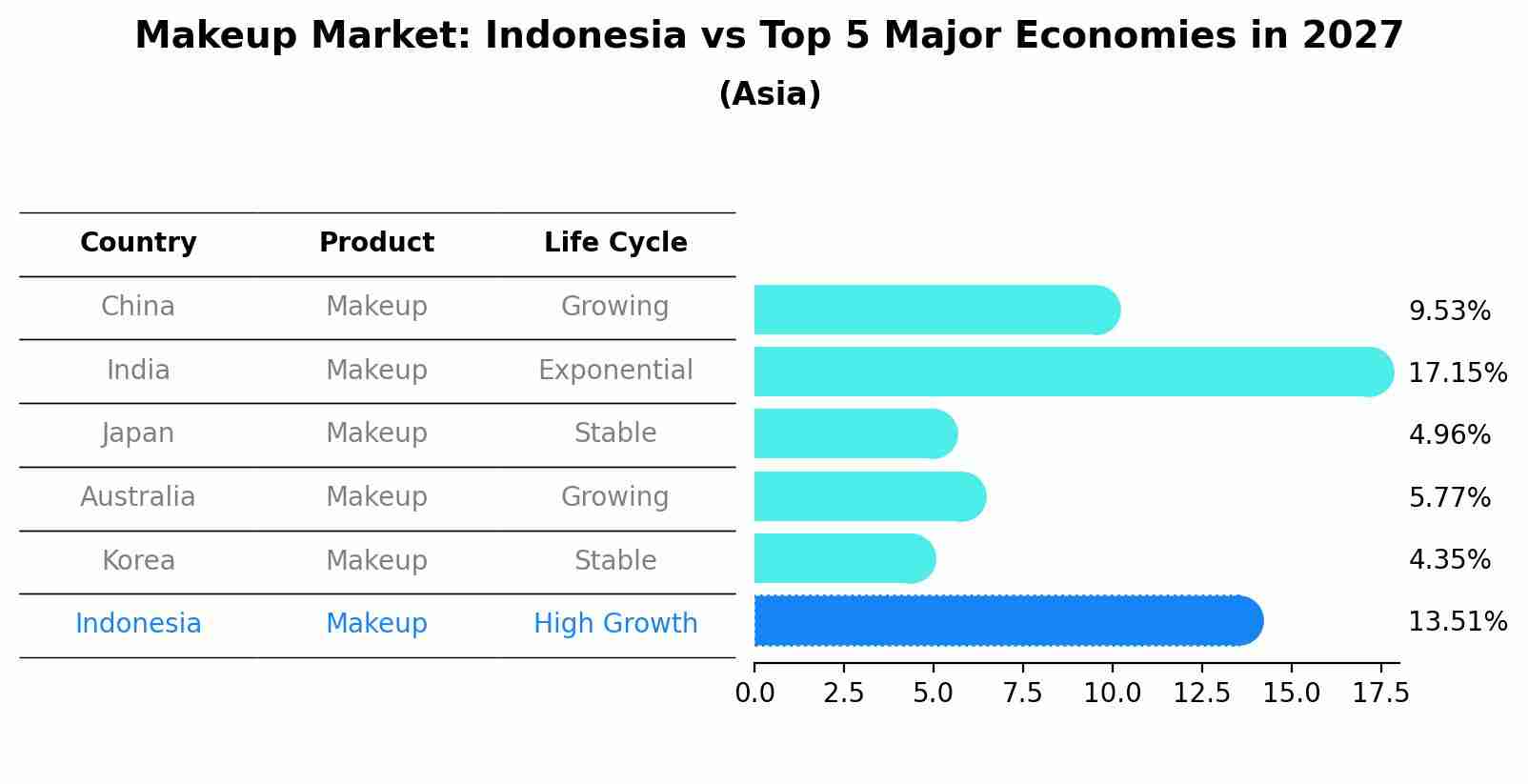
Makeup Market: Indonesia vs Top 5 Major Economies in 2027 (Asia)
Indonesia's Makeup market is anticipated to experience a high growth rate of 13.51% by 2027, reflecting trends observed in the largest economy China, followed by India, Japan, Australia and South Korea.
Indonesia Makeup Market Growth Rate
According to 6Wresearch internal database and industry insights, the Indonesia Makeup Market is projected to grow at a compound annual growth rate (CAGR) of 6.5% during the forecast period 2026–2032.
Topics Covered in the Indonesia Makeup Market Report
The Indonesia Makeup Market report thoroughly covers the market by product, application, and distribution channel. The report provides a detailed analysis of ongoing market trends, opportunities/high-growth areas, and market drivers, helping stakeholders devise and align their market strategies according to current and future market dynamics.
Indonesia Makeup Market Highlights
| Report Name | Indonesia Makeup Market |
| Forecast Period | 2026–2032 |
| CAGR | 6.5% |
| Growing Sector | Beauty and Personal Care |
Indonesia Makeup Market Synopsis
The Indonesia Makeup Industry is experiencing strong growth driven by increasing Due to the growing demand for beauty and grooming products, the Indonesia Makeup Industry is experiencing significant growth. Furthermore, the rise of consumer disposable income and rising preference for organic and eco-friendly products are other factors proliferating market growth. Moreover, the growing shift toward e-commerce and online retail segment has facilitated wider accessibility of makeup products. In metropolitan areas, this demand is additionally supported by rising popularity of makeup for professional and personal use.
Evaluation of Growth Drivers in the Indonesia Makeup Market
Below are some prominent drivers and their influence on the market dynamics:
| Drivers | Primary Segments Affected | Why It Matters |
| Growing Middle-Class Income | By Application (Face, Lips) | Higher disposable income leads to increased spending on makeup products. |
| E-Commerce Growth | By Distribution Channel (Online/E-Commerce) | Online shopping platforms make makeup products more accessible and affordable. |
| Preference for Organic Products | By Product (Powders, Gels, Lotions) | Consumers are shifting towards eco-friendly and organic makeup products. |
| Rising Beauty Consciousness | By Application (Face, Lips, Eyes) | The awareness about personal grooming and beauty is growing, fueling product demand. |
| Professional Makeup Usage | By Application (Lips, Face) | Demand for professional makeup products in salons and beauty services is rising. |
The Indonesia Makeup Market Size is projected to grow at a CAGR of 6.5% from 2026 to 2032. There are several factors contributing to the steady growth of market. This includes rising consumer spending on beauty products, growth of online shopping, and the transition towards organic makeup alternatives. In addition to this, the rising popularity of makeup used for both daily and professional look is generating demand, along with the surging requirement for personalized makeup products. Moreover, there is rising influence of social media and beauty influencers making this another key factor in generating demand for innovative and customized makeup solutions, propelling market's continued development.
Evaluation of Restraints in the Indonesia Makeup Market
Below are some prominent restraints and their influence on the market dynamics:
| Restraints | Primary Segments Affected | What This Means |
| High Product Prices | By Product (Powders, Gels, Lotions) | Premium pricing may restrict access for budget-conscious consumers. |
| Limited Product Awareness | By Application (Face, Eyes) | Limited awareness about high-quality brands could limit growth. |
| Stringent Regulations on Cosmetics | By Product (All Types) | Regulatory restrictions on cosmetics ingredients can slow market introduction. |
| Competition from Unregulated Brands | By Product (Powders, Gels) | Unregulated or counterfeit products may undermine market trust. |
Indonesia Makeup Market Challenges
There are myriads of obstacles that the Indonesia Makeup Market comes across. This includes high prices of products, unawareness in rural areas, and the presence of unregulated cosmetic products. To add to this, there are stringent regulations on the cosmetic ingredients, which makes their adoption in other segments more difficult. Moreover, there are counterfeit products present in the market fueling issues regarding product safety, further adding to the complexity.
Indonesia Makeup Market Trends
Some major trends contributing to the Indonesia Makeup Market Growth are:
- Rise of Organic and Eco-Friendly Makeup: People now choose to purchase organic makeup products that do not test on animals and use sustainable materials, as they have become more cognizant of environmentally friendly practices.
- Technological Integration in Makeup Products: The beauty industry now adopts advanced technological solutions such as augmented reality (AR), which enables users to test virtual makeup products.
- Customized Makeup Products: The beauty industry currently experiences a major trend that involves customers needing customized makeup solutions that include unique shades and specific product formulations.
- Growth of Online Beauty Platforms: The beauty industry now sees e-commerce platforms as its most important distribution channels as they provide customers with access to numerous makeup products and efficient product delivery services.
Investment Opportunities in the Indonesia Makeup Market
Some investment opportunities that will shape the dynamics of the Indonesia Makeup Industry are:
- Expansion of Organic and Eco-Friendly Products: Companies should expand their organic and sustainable makeup products, as consumer demand for these products continues to increase.
- Investment in Online Retail Platforms: E-commerce infrastructure development will make a seamless shopping experience, which enables businesses to attract more customers.
- Product Innovation and Customization: Companies can develop unique makeup products that meet specific skin tones and customer needs through their investment in research and development.
Top 5 Leading Players in the Indonesia Makeup Market
Below is the list of prominent companies leading the Indonesia Makeup Market Share:
1. L'Oréal Indonesia
| Company Name | L'Oréal Indonesia |
|---|---|
| Established Year | 1909 |
| Headquarters | Jakarta, Indonesia |
| Official Website | Click Here |
L'Oréal is a global leader in the beauty and cosmetics industry, offering a wide range of makeup products that cater to various skin tones and preferences.
2. Revlon Indonesia
| Company Name | Revlon Indonesia |
|---|---|
| Established Year | 1932 |
| Headquarters | Jakarta, Indonesia |
| Official Website | Click Here |
Revlon offers a wide range of high-quality makeup products, including foundations, lipsticks, and mascaras, widely recognized for their innovation and variety.
3. Maybelline Indonesia
| Company Name | Maybelline Indonesia |
|---|---|
| Established Year | 1915 |
| Headquarters | Jakarta, Indonesia |
| Official Website | Click Here |
Maybelline is known for its affordable and high-performance makeup products and is a popular choice among Indonesian consumers for everyday makeup.
4. Shiseido Indonesia
| Company Name | Shiseido Indonesia |
|---|---|
| Established Year | 1872 |
| Headquarters | Jakarta, Indonesia |
| Official Website | Click Here |
Shiseido offers a premium line of skincare and makeup products, focusing on advanced technology and high-quality ingredients.
5. The Body Shop Indonesia
| Company Name | The Body Shop Indonesia |
|---|---|
| Established Year | 1976 |
| Headquarters | Jakarta, Indonesia |
| Official Website | Click Here |
The Body Shop is known for its sustainable, cruelty-free makeup products that cater to environmentally conscious consumers.
Government Regulations in the Indonesia Makeup Market
As per Indonesian government data, the country shows its commitment towards cosmetic industry via regulations that focus on product safety and quality. The National Agency of Drug and Food Control (BPOM) is one such provision, ensuring that all cosmetics, including makeup products, meet established standards before coming into the market. The government also encourages domestic production of beauty products, particularly those that are organic and environmentally friendly, through incentives for local manufacturers.
Future Insights of the Indonesia Makeup Market
The future of the Indonesia Makeup Market is promising, with surging requirement for organic products, technological advancements, and the expansion of online retail platforms. The surging trend of customized makeup solutions and the growing awareness of sustainability will further drive market growth. With government support and a rising consumer base, the makeup market in Indonesia will continue to expand in the coming years.
Market Segmentation Analysis
The report offers a comprehensive study of the following market segments and their leading categories:
By Product – Powders to Lead the Market
According to Adammya, Senior Research Analyst at 6Wresearch, Powders will become the market leader as compact powders and foundations serve multiple purposes in different makeup applications.
By Application – Face Makeup to Lead the Market
The market will be dominated by face makeup products which include foundations and concealers as consumers prefer products that deliver skin coverage and create smooth textures.
By Distribution Channel – Supermarkets/Hypermarkets to Lead the Market
Supermarkets and hypermarkets will lead the market as they provide extensive product selections at competitive prices while giving convenient shopping options for customers.
Key Attractiveness of the Report
- 10 Years of Market Numbers
- Historical Data Starting from 2022 to 2025
- Base Year: 2025
- Forecast Data until 2032
- Key Performance Indicators Impacting the Market
- Major Upcoming Developments and Projects
Key Highlights of the Report:
- · Indonesia Makeup Market Outlook
- Market Size of Indonesia Makeup Market, 2025
- Forecast of Indonesia Makeup Market, 2032
- Historical Data and Forecast of Indonesia Makeup Revenues & Volume for the Period 2022 - 2032
- Indonesia Makeup Market Trend Evolution
- Indonesia Makeup Market Drivers and Challenges
- Indonesia Makeup Price Trends
- Indonesia Makeup Porter's Five Forces
- Indonesia Makeup Industry Life Cycle
- Historical Data and Forecast of Indonesia Makeup Market Revenues & Volume By Product for the Period 2022 - 2032
- Historical Data and Forecast of Indonesia Makeup Market Revenues & Volume By Powders for the Period 2022 - 2032
- Historical Data and Forecast of Indonesia Makeup Market Revenues & Volume By Gels for the Period 2022 - 2032
- Historical Data and Forecast of Indonesia Makeup Market Revenues & Volume By Lotions for the Period 2022 - 2032
- Historical Data and Forecast of Indonesia Makeup Market Revenues & Volume By Others for the Period 2022 - 2032
- Historical Data and Forecast of Indonesia Makeup Market Revenues & Volume By Application for the Period 2022 - 2032
- Historical Data and Forecast of Indonesia Makeup Market Revenues & Volume By Lips for the Period 2022 - 2032
- Historical Data and Forecast of Indonesia Makeup Market Revenues & Volume By Eyes for the Period 2022 - 2032
- Historical Data and Forecast of Indonesia Makeup Market Revenues & Volume By Face for the Period 2022 - 2032
- Historical Data and Forecast of Indonesia Makeup Market Revenues & Volume By Others for the Period 2022 - 2032
- Historical Data and Forecast of Indonesia Makeup Market Revenues & Volume By Distribution Channel for the Period 2022 - 2032
- Historical Data and Forecast of Indonesia Makeup Market Revenues & Volume By Supermarkets/hypermarkets for the Period 2022 - 2032
- Historical Data and Forecast of Indonesia Makeup Market Revenues & Volume By Exclusive Brand Stores for the Period 2022 - 2032
- Historical Data and Forecast of Indonesia Makeup Market Revenues & Volume By Online/e-commerce Channels for the Period 2022 - 2032
- Historical Data and Forecast of Indonesia Makeup Market Revenues & Volume By Others for the Period 2022 - 2032
- Indonesia Makeup Import Export Trade Statistics
- Market Opportunity Assessment By Product
- Market Opportunity Assessment By Application
- Market Opportunity Assessment By Distribution Channel
- Indonesia Makeup Top Companies Market Share
- Indonesia Makeup Competitive Benchmarking By Technical and Operational Parameters
- Indonesia Makeup Company Profiles
- Indonesia Makeup Key Strategic Recommendations
Market Segmentations
The Market report covers a detailed analysis of the following market segments:
By Product
- Powders
- Gels
- Lotions
- Others
By Application
- Lips
- Eyes
- Face
- Others
By Distribution Channel
- Supermarkets/Hypermarkets
- Exclusive Brand Stores
- Online/E-commerce Channels
- Others






































