Indonesia Perfumes and Perfumery Products Market: Import Trend Analysis
Indonesia`s import trend for perfumes and perfumery products in 2024 experienced a decline of -23.59% compared to the previous year, with a compound annual growth rate (CAGR) of -10.68% from 2020 to 2024. This negative import momentum could be attributed to shifting consumer preferences, economic conditions, or changes in trade policies impacting market stability.
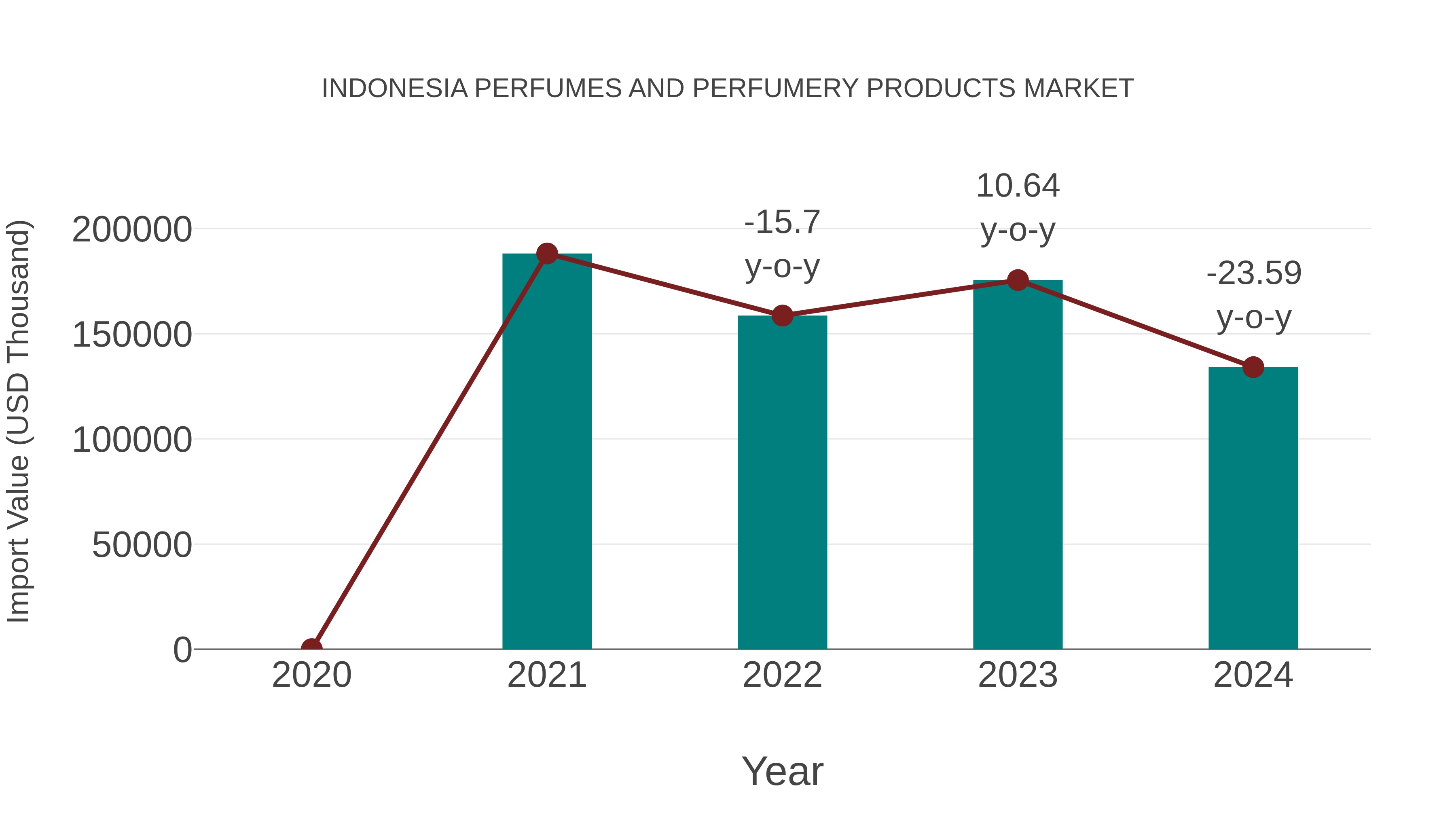
Indonesia Perfumes and Perfumery Products Market Synopsis
The Indonesia Perfumes and Perfumery Products Market is expected to grow at a CAGR of 6.7% from 2020 to 2026 due to rising disposable incomes and increasing brand consciousness in the country. The increasing demand for high-end perfumes among the affluent class has also driven theof thisin recent years. Furthermore growing consumer preference towards natural fragrances has been attracting a number ofto produce organic range products which will likely bolster marketover theperiod.
Key Factors Driving the Market
1) Increasing awareness about personal grooming among consumers: In recent times there has been an increase in awareness about personal grooming amongst Indonesia consumers as they have become more conscious about their looks and appearances. This factor is expected to propel demand for various types of premium grade perfumers available in markets across Jakarta other parts of Indonesia. 2) Growing influence on social media platforms: Social media platforms such as Instagram have played a crucial role in popularizing brands related with cosmetics beauty care products including fragrances or perfumery items like colognes deodorants amongst Indonesia people especially young adults who are keen followers of fashionworldwide.Going forward it is anticipated that this trend would drive sales volumes within this segment significantly during coming years. 3) Expansion by leading global players into untapped rural segments: Many leading multinationals such as LVMH Group (Dior) Coty Inc. Estee LauderIncorporated etc. have started extending their retail presence into untapped rural regions across Indonesia thereby enabling local customers access these items conveniently from nearby stores . This activity coupled with frequent promotional campaigns conducted by vendors through mass media channels could further stimulateexpansion overtimeframe.
Key Highlights of the Report:
- Indonesia Perfumes and Perfumery Products Market Outlook
- Market Size of Indonesia Perfumes and Perfumery Products Market, 2023
- Forecast of Indonesia Perfumes and Perfumery Products Market, 2030
- Historical Data and Forecast of Indonesia Perfumes and Perfumery Products Revenues & Volume for the Period 2020-2030
- Indonesia Perfumes and Perfumery Products Market Trend Evolution
- Indonesia Perfumes and Perfumery Products Market Drivers and Challenges
- Indonesia Perfumes and Perfumery Products Price Trends
- Indonesia Perfumes and Perfumery Products Porter's Five Forces
- Indonesia Perfumes and Perfumery Products Industry Life Cycle
- Historical Data and Forecast of Indonesia Perfumes and Perfumery Products Market Revenues & Volume By Product for the Period 2020-2030
- Historical Data and Forecast of Indonesia Perfumes and Perfumery Products Market Revenues & Volume By Premium for the Period 2020-2030
- Historical Data and Forecast of Indonesia Perfumes and Perfumery Products Market Revenues & Volume By Mass for the Period 2020-2030
- Historical Data and Forecast of Indonesia Perfumes and Perfumery Products Market Revenues & Volume By End-User for the Period 2020-2030
- Historical Data and Forecast of Indonesia Perfumes and Perfumery Products Market Revenues & Volume By Men for the Period 2020-2030
- Historical Data and Forecast of Indonesia Perfumes and Perfumery Products Market Revenues & Volume By Women for the Period 2020-2030
- Historical Data and Forecast of Indonesia Perfumes and Perfumery Products Market Revenues & Volume By Unisex for the Period 2020-2030
- Historical Data and Forecast of Indonesia Perfumes and Perfumery Products Market Revenues & Volume By Distribution Channel for the Period 2020-2030
- Historical Data and Forecast of Indonesia Perfumes and Perfumery Products Market Revenues & Volume By Online for the Period 2020-2030
- Historical Data and Forecast of Indonesia Perfumes and Perfumery Products Market Revenues & Volume By Offline for the Period 2020-2030
- Indonesia Perfumes and Perfumery Products Import Export Trade Statistics
- Market Opportunity Assessment By Product
- Market Opportunity Assessment By End-User
- Market Opportunity Assessment By Distribution Channel
- Indonesia Perfumes and Perfumery Products Top Companies Market Share
- Indonesia Perfumes and Perfumery Products Competitive Benchmarking By Technical and Operational Parameters
- Indonesia Perfumes and Perfumery Products Company Profiles
- Indonesia Perfumes and Perfumery Products Key Strategic Recommendations






































