Indonesia Pressed & Blown Glass Market: Import Trend Analysis
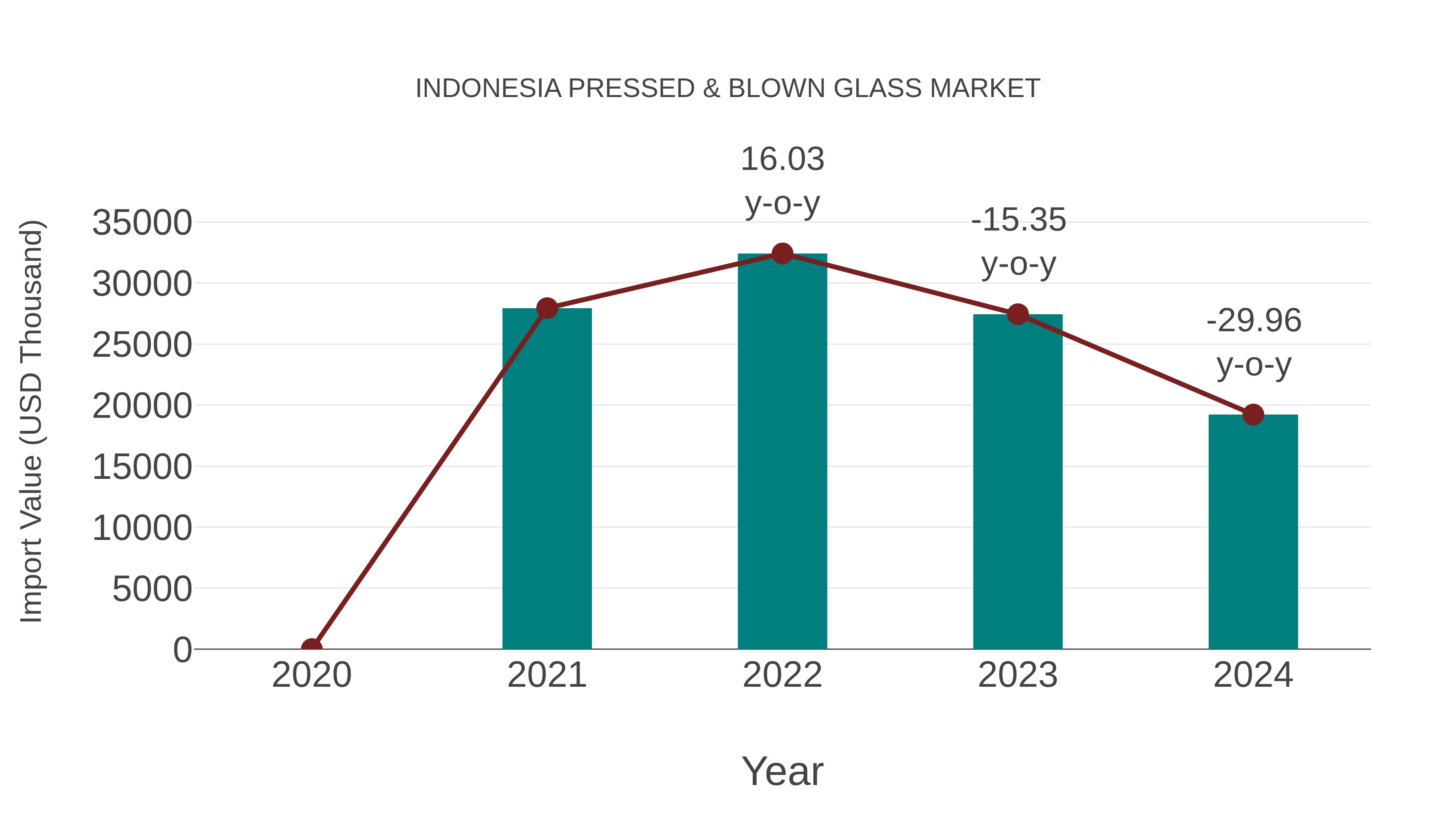
In the Indonesia pressed & blown glass market, the import trend experienced a decline from 2023 to 2024, with a growth rate of -29.96%. The compound annual growth rate (CAGR) for the period of 2020-2024 stood at -11.72%. This negative momentum can be attributed to shifting demand patterns or changes in trade policies affecting market stability.
Indonesia Pressed Blown Glass Market Synopsis
The Indonesia pressed blown glass market is a niche segment within the broader glass industry, characterized by the production of decorative and functional glassware. This market caters to various consumer preferences, offering a wide array of glass products such as vases, bowls, ornaments, and lighting fixtures. Indonesia artisans and manufacturers employ traditional techniques alongside modern production methods to create unique and visually appealing glass pieces. The demand for pressed blown glass products has been influenced by changing interior design trends and a growing appreciation for handcrafted items. Additionally, the export market plays a significant role in this industry, with Indonesia glassware finding its way to international markets. Sustainability and eco-friendly practices are becoming increasingly important in this market, as consumers seek environmentally conscious products. The Indonesia pressed blown glass market holds potential for growth, with opportunities for artisans and manufacturers to tap into both domestic and international demand for aesthetically pleasing glassware.
Drivers of the Market
The Indonesia Pressed Blown Glass Market is seeing growth due to several key factors. The construction and interior design industries are major drivers as they demand decorative glass products. Additionally, the growing trend of sustainable and eco-friendly materials is promoting the use of glass in architecture. The tourism sector also plays a role, with hotels and resorts requiring glass products for aesthetic appeal. Furthermore, technological advancements in glass manufacturing are driving innovation and market growth.
Challenges of the Market
The Indonesia Pressed Blown Glass market faces several challenges. Intense competition from low-cost manufacturers in other countries can lead to pricing pressures. Environmental regulations and concerns about energy consumption may require investments in sustainable production processes. Moreover, the need for skilled artisans and craftsmen can pose challenges in terms of labor availability.
COVID-19 Impact on the Market
The pressed blown glass market witnessed a decline in demand during the pandemic, as the hospitality and construction sectors were severely impacted. Reduced demand for glassware and decorative items led to production cuts and decreased revenues. As these sectors rebound, the market for pressed blown glass is expected to recover.
Key Players in the Market
In the Indonesia pressed blown glass market, glass manufacturers like PT Tanjung Kreasi Parawood produce pressed and blown glass products used in various applications, including glassware and decorative items.
Key Highlights of the Report:
- Indonesia Pressed & Blown Glass Market Outlook
- Market Size of Indonesia Pressed & Blown Glass Market, 2025
- Forecast of Indonesia Pressed & Blown Glass Market, 2032
- Historical Data and Forecast of Indonesia Pressed & Blown Glass Revenues & Volume for the Period 2022-2032F
- Indonesia Pressed & Blown Glass Market Trend Evolution
- Indonesia Pressed & Blown Glass Market Drivers and Challenges
- Indonesia Pressed & Blown Glass Price Trends
- Indonesia Pressed & Blown Glass Porter's Five Forces
- Indonesia Pressed & Blown Glass Industry Life Cycle
- Historical Data and Forecast of Indonesia Pressed & Blown Glass Market Revenues & Volume By Type for the Period 2022-2032F
- Historical Data and Forecast of Indonesia Pressed & Blown Glass Market Revenues & Volume By Mold-blown for the Period 2022-2032F
- Historical Data and Forecast of Indonesia Pressed & Blown Glass Market Revenues & Volume By Pressed for the Period 2022-2032F
- Historical Data and Forecast of Indonesia Pressed & Blown Glass Market Revenues & Volume By Glass for the Period 2022-2032F
- Historical Data and Forecast of Indonesia Pressed & Blown Glass Market Revenues & Volume By Glassblowing for the Period 2022-2032F
- Historical Data and Forecast of Indonesia Pressed & Blown Glass Market Revenues & Volume By Molten for the Period 2022-2032F
- Indonesia Pressed & Blown Glass Import Export Trade Statistics
- Market Opportunity Assessment By Type
- Indonesia Pressed & Blown Glass Top Companies Market Share
- Indonesia Pressed & Blown Glass Competitive Benchmarking By Technical and Operational Parameters
- Indonesia Pressed & Blown Glass Company Profiles
- Indonesia Pressed & Blown Glass Key Strategic Recommendations






































