Indonesia Refrigeration and Heating Equipment Market Summary
The indonesia refrigeration and heating equipment market was estimated at USD 335 Million in 2025 and is projected to reach USD 442 Million by 2032, growing at a CAGR of 5.6% from 2026 to 2032.
Indonesia Refrigeration and Heating Equipment Market Year-wise Growth Rate and Key Drivers
This graph highlights how the Indonesia Refrigeration and Heating Equipment Market has steadily grown over the past five years, supported by major growth factors.
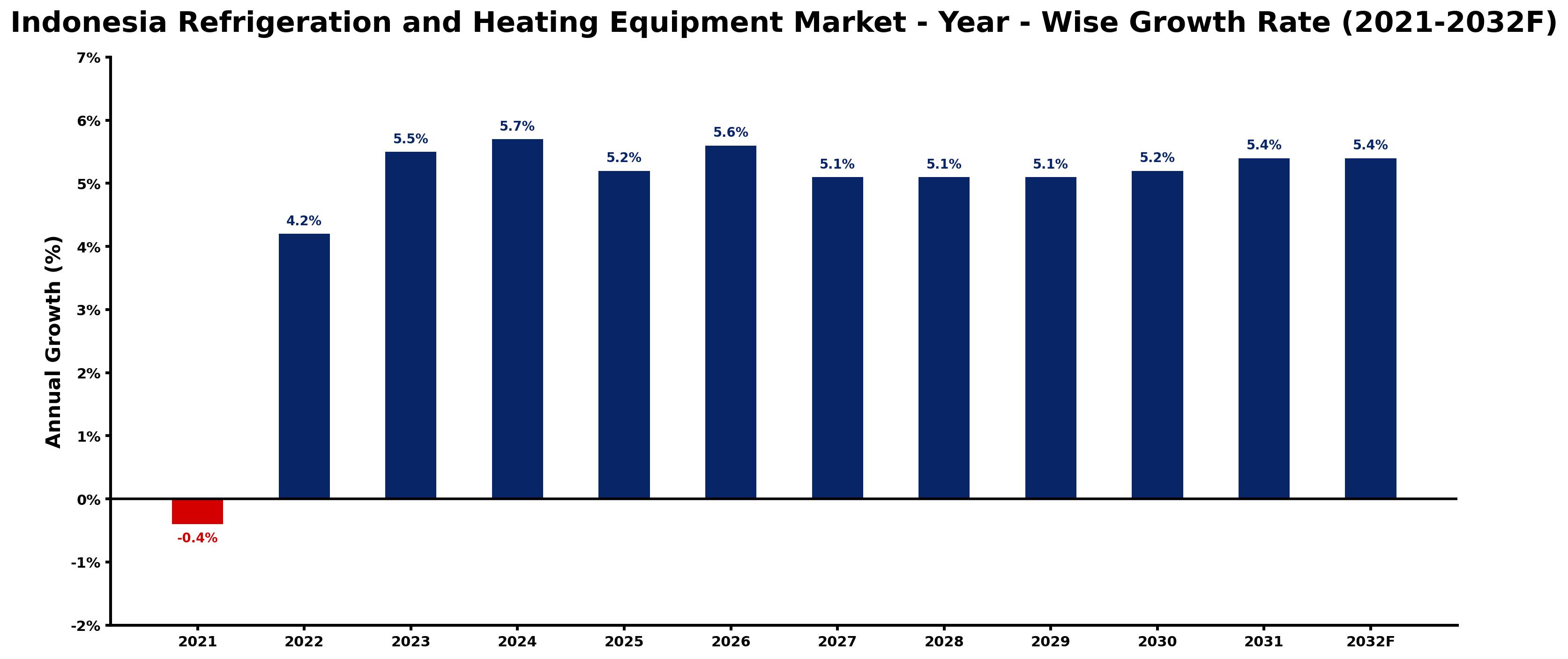
The table below presents the year wise growth rates along with the key drivers influencing the market
| Year | Growth Rate | Major Drivers |
| 2021 | -0.4% | Supply chain disruptions triggered by the pandemic hampered equipment availability, leading to decreased sales in the industry. |
| 2022 | 4.2% | Rising urbanization in Indonesia boosts the need for residential heating systems. |
| 2023 | 5.5% | Supply chain disruptions highlight the importance of local manufacturing capabilities. |
| 2024 | 5.7% | Emerging trends in eco-friendly technologies attract investment in sustainable equipment. |
| 2025 | 5.2% | Commercial sectors increasingly prioritize temperature-controlled storage for food safety compliance. |
| 2026 | 5.6% | Technological innovations enable smart HVAC systems, enhancing user experience and efficiency. |
| 2027 | 5.1% | Consumer awareness regarding energy conservation strengthens market competition among brands. |
| 2028 | 5.1% | Infrastructure development initiatives focus on expanding refrigeration networks in rural areas. |
| 2029 | 5.1% | Advancements in IoT integration allow real-time monitoring of HVAC performance. |
| 2030 | 5.2% | Increased disposable incomes lead to higher spending on home comfort and climate control. |
| 2031 | 5.4% | Collaborations between local manufacturers and global players foster innovation in design. |
| 2032 | 5.4% | Sustainability trends in construction influence the integration of advanced heating solutions. |
Note - Market size estimations and growth projections presented in this report are based on 6Wresearch's advanced forecasting approach, validated with industry datasets as of June 2026.
Indonesia Refrigeration and Heating Equipment Market Synopsis
The Indonesia Refrigeration and Heating Equipment Market is projected to reach 5.6% and witness significant growth during the forecast period (2026-2032). The market is primarily driven by the increasing demand for cooling, freezing, and drying solutions, particularly within the food processing industry. Additionally, an expanding awareness among consumers regarding energy efficiency has led to a rise in the sales of advanced products such as inverter-based air conditioners and heat pumps.
Indonesia Refrigeration and Heating Equipment Market Growth Drivers
Several factors are propelling the growth of the Indonesia refrigeration and heating equipment market. Key drivers include:
- The rise in disposable incomes among the populace has enabled more consumers to invest in quality refrigeration and heating solutions, facilitating higher demand across various sectors.
- Rapid urbanization is leading to increased construction of residential and commercial buildings, driving the demand for efficient heating and cooling systems to ensure comfort in urban living conditions.
- There is a noticeable increase in the need for proper storage and preservation of food products by industrial users, such as hotels and restaurants, which require reliable refrigeration systems to maintain food safety and quality.
- The rising adoption of residential air conditioning units, particularly in regions experiencing hot weather year-round, significantly contributes to the overall market expansion.
- Prominent government initiatives aimed at promoting green technology and energy-efficient products underscore a broader trend towards sustainable living, stimulating growth across all product categories.
Indonesia Refrigeration and Heating Equipment Market Challenges and Restraints
Despite a positive outlook, several challenges may hinder the growth of the Indonesia refrigeration and heating equipment market:
- High-quality raw materials required for production processes can suffer from availability and affordability issues, potentially increasing the overall cost of equipment.
- The limited coverage or absence of extended warranty schemes offered by manufacturers poses a risk to consumers, discouraging potential buyers from investing in new technologies.
- There is often a lack of information available regarding the introduction of new technologies, which can impede market players' ability to capitalize on advancements in the refrigeration and heating sector.
- The prevalence of counterfeit products poses a serious threat to established brands, negatively impacting customer loyalty and trust in the market.
- Concerns related to the environmental impact of pollutants released from refrigeration and heating systems during operations could result in health hazards if left unaddressed.
Indonesia Refrigeration and Heating Equipment Market Government Investment and Initiatives
The government's approach to enhancing the Indonesia refrigeration and heating equipment market is marked by various investments and initiatives focused on sustainable practices. Efforts to encourage the adoption of energy-efficient technologies are evident through financial incentives for manufacturers and consumers alike. Furthermore, programs aimed at supporting research and development in refrigeration technology have been initiated to promote innovation within the sector. The government is also actively engaging with industry stakeholders to develop standards that align with global environmental mandates. These initiatives are instrumental in fostering a competitive and sustainable market landscape.
Indonesia Refrigeration and Heating Equipment Market Latest Developments (May 2025 - June 2026)
Recent developments in the Indonesia refrigeration and heating equipment market have emphasized the drive towards technological innovation and energy efficiency. Manufacturers have been increasingly focusing on the integration of smart technologies in their products to cater to a tech-savvy consumer base. Additionally, a shift towards environmentally friendly refrigerants and systems has gained traction in response to growing regulatory pressures and consumer preferences for sustainable solutions. Collaborative efforts among industry players have been seen, aiming to improve product quality and address challenges such as counterfeit products in the market. Overall, the period has been marked by heightened awareness and activity towards establishing a more robust and eco-friendly refrigeration and heating framework.
Indonesia Refrigeration and Heating Equipment Market - Key Attractiveness of the Report
- 10 Years of Market Numbers
- Historical Data Starting from 2022 to 2025
- Base Year: 2025
- Forecast Data until 2032
- Key Performance Indicators Impacting the Market
- Major Upcoming Developments and Projects
Key Highlights of the Report:
- Indonesia Refrigeration and Heating Equipment Market Outlook
- Market Size of Indonesia Refrigeration and Heating Equipment Market, 2025
- Forecast of Indonesia Refrigeration and Heating Equipment Market, 2032F
- Historical Data and Forecast of Indonesia Refrigeration and Heating Equipment Revenues & Volume for the Period 2022-2032F
- Indonesia Refrigeration and Heating Equipment Market Trend Evolution
- Indonesia Refrigeration and Heating Equipment Market Drivers and Challenges
- Indonesia Refrigeration and Heating Equipment Price Trends
- Indonesia Refrigeration and Heating Equipment Porter's Five Forces
- Indonesia Refrigeration and Heating Equipment Industry Life Cycle
- Historical Data and Forecast of Indonesia Refrigeration and Heating Equipment Market Revenues & Volume By Heating equipments for the Period 2022-2032F
- Historical Data and Forecast of Indonesia Refrigeration and Heating Equipment Market Revenues & Volume By Heating Pumps for the Period 2022-2032F
- Historical Data and Forecast of Indonesia Refrigeration and Heating Equipment Market Revenues & Volume By Furnaces for the Period 2022-2032F
- Historical Data and Forecast of Indonesia Refrigeration and Heating Equipment Market Revenues & Volume By Boilers for the Period 2022-2032F
- Historical Data and Forecast of Indonesia Refrigeration and Heating Equipment Market Revenues & Volume By Space heaters for the Period 2022-2032F
- Historical Data and Forecast of Indonesia Refrigeration and Heating Equipment Market Revenues & Volume By Unitary heaters for the Period 2022-2032F
- Historical Data and Forecast of Indonesia Refrigeration and Heating Equipment Market Revenues & Volume By Others for the Period 2022-2032F
- Historical Data and Forecast of Indonesia Refrigeration and Heating Equipment Market Revenues & Volume By Cooling Equipments for the Period 2022-2032F
- Historical Data and Forecast of Indonesia Refrigeration and Heating Equipment Market Revenues & Volume By Cooling towers for the Period 2022-2032F
- Historical Data and Forecast of Indonesia Refrigeration and Heating Equipment Market Revenues & Volume By Chillers for the Period 2022-2032F
- Historical Data and Forecast of Indonesia Refrigeration and Heating Equipment Market Revenues & Volume By Coolers for the Period 2022-2032F
- Historical Data and Forecast of Indonesia Refrigeration and Heating Equipment Market Revenues & Volume By Air conditioners for the Period 2022-2032F
- Historical Data and Forecast of Indonesia Refrigeration and Heating Equipment Market Revenues & Volume By Others for the Period 2022-2032F
- Historical Data and Forecast of Indonesia Refrigeration and Heating Equipment Market Revenues & Volume By General Components for the Period 2022-2032F
- Historical Data and Forecast of Indonesia Refrigeration and Heating Equipment Market Revenues & Volume By Condensers for the Period 2022-2032F
- Historical Data and Forecast of Indonesia Refrigeration and Heating Equipment Market Revenues & Volume By Compressors for the Period 2022-2032F
- Historical Data and Forecast of Indonesia Refrigeration and Heating Equipment Market Revenues & Volume By Radiators for the Period 2022-2032F
- Historical Data and Forecast of Indonesia Refrigeration and Heating Equipment Market Revenues & Volume By Sensors for the Period 2022-2032F
- Historical Data and Forecast of Indonesia Refrigeration and Heating Equipment Market Revenues & Volume By Transducers for the Period 2022-2032F
- Historical Data and Forecast of Indonesia Refrigeration and Heating Equipment Market Revenues & Volume By Others for the Period 2022-2032F
- Historical Data and Forecast of Indonesia Refrigeration and Heating Equipment Market Revenues & Volume By End-User Industries for the Period 2022-2032F
- Historical Data and Forecast of Indonesia Refrigeration and Heating Equipment Market Revenues & Volume By Residential for the Period 2022-2032F
- Historical Data and Forecast of Indonesia Refrigeration and Heating Equipment Market Revenues & Volume By Commercial for the Period 2022-2032F
- Historical Data and Forecast of Indonesia Refrigeration and Heating Equipment Market Revenues & Volume By Healthcare Industry for the Period 2022-2032F
- Historical Data and Forecast of Indonesia Refrigeration and Heating Equipment Market Revenues & Volume By Educational and government institutions for the Period 2022-2032F
- Historical Data and Forecast of Indonesia Refrigeration and Heating Equipment Market Revenues & Volume By Others for the Period 2022-2032F
- Indonesia Refrigeration and Heating Equipment Import Export Trade Statistics
- Market Opportunity Assessment By Heating equipments
- Market Opportunity Assessment By Cooling Equipments
- Market Opportunity Assessment By General Components
- Market Opportunity Assessment By End-User Industries
- Indonesia Refrigeration and Heating Equipment Top Companies Market Share
- Indonesia Refrigeration and Heating Equipment Competitive Benchmarking By Technical and Operational Parameters
- Indonesia Refrigeration and Heating Equipment Company Profiles
- Indonesia Refrigeration and Heating Equipment Key Strategic Recommendations






































