Indonesia Sea Bass Market Size, Share & Growth Rate
The Indonesia Sea Bass Market was estimated at USD 417 Million in 2025 and is projected to reach USD 549 Million by 2032, growing at a CAGR of 4.0% from 2026 to 2032. This growth trajectory is primarily driven by the rising consumer preference for fresh and sustainably sourced seafood, particularly in the foodservice sector. Increasing urbanization and changing dietary habits also contribute significantly to the market's expansion, as consumers seek premium fish options for their meals.
Indonesia Sea Bass Market Year-wise Growth Rate and Key Drivers
This graph highlights how the Indonesia Sea Bass Market has steadily grown over the years, supported by major growth factors.
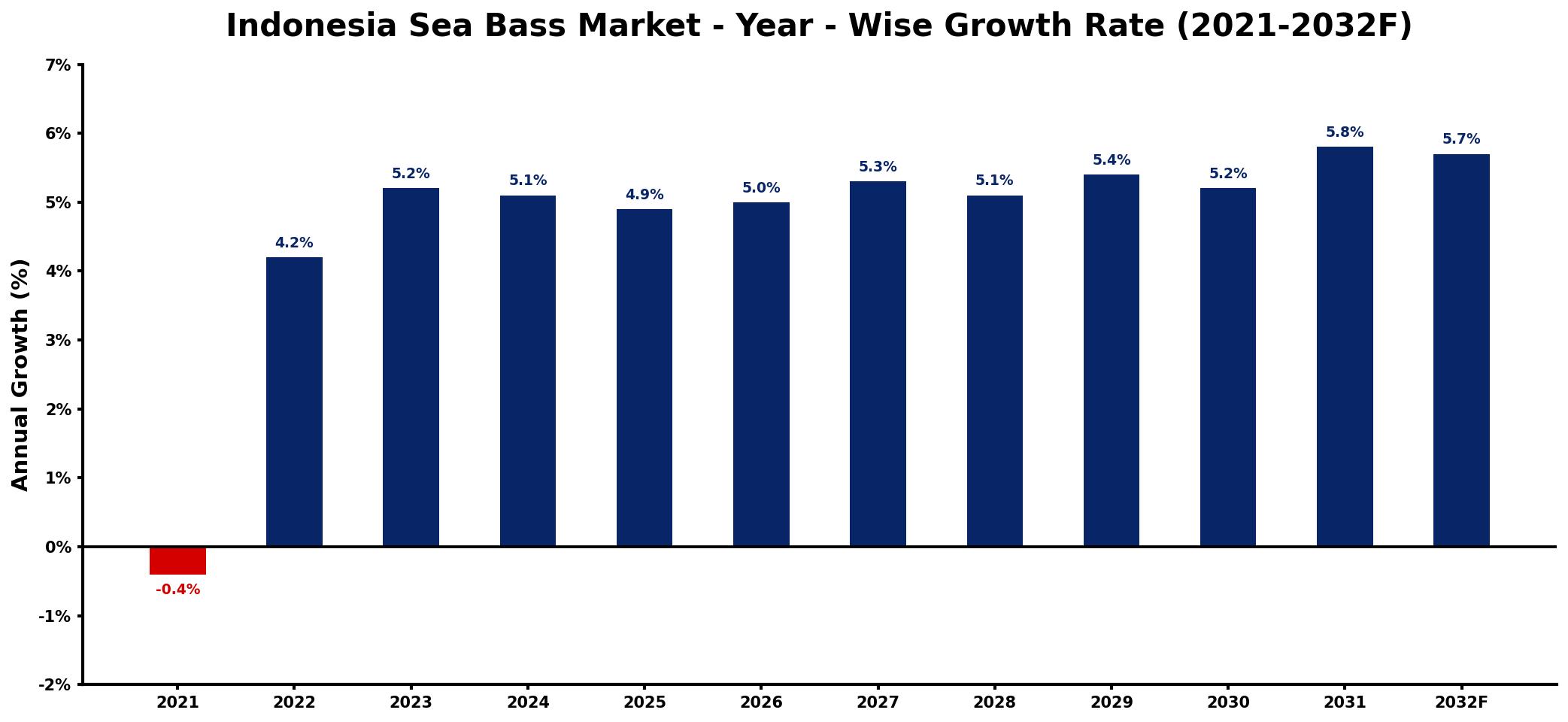
The table below presents the year‑wise growth rates along with the key drivers influencing the market
| Year | Growth Rate | Major Drivers |
| 2021 | -0.4% | decline in consumer spending habits |
| 2022 | 4.2% | rise in export opportunities |
| 2023 | 5.2% | increased domestic consumption trends |
| 2024 | 5.1% | expansion of aquaculture facilities |
| 2025 | 4.9% | growing interest in sustainability |
| 2026 | 5.0% | development of new processing technologies |
| 2027 | 5.3% | enhanced supply chain efficiencies |
| 2028 | 5.1% | increased investment in fisheries |
| 2029 | 5.4% | rising export shipment volumes |
| 2030 | 5.2% | expansion into new markets |
| 2031 | 5.8% | increased capital investment inflows |
| 2032 | 5.7% | increased collaboration among stakeholders |
Note: Market size estimations and growth projections presented in this report are based on 6Wresearch's proprietary forecasting methodology, utilizing the latest available industry data, government publications, and primary research inputs.
Indonesia Sea Bass Market Synopsis
Indonesia is emerging as a key player in the global sea bass market, with its abundant natural resources supporting both wild capture and aquaculture. The country's favorable climate and coastal geography facilitate optimal conditions for sea bass farming, making it a favored choice for local and international markets.
The culinary versatility of sea bass has made it a staple ingredient in various traditional Indonesian dishes, further driving its demand. As consumers become more health-conscious, the preference for lean, protein-rich options like sea bass continues to gain momentum, bolstering the market outlook.
Indonesia Sea Bass Market Key Takeaways
- The increasing demand for seafood in upscale dining is propelling sea bass sales.
- Sustainable aquaculture practices are becoming crucial for maintaining market growth.
- Domestic consumption is being complemented by a rise in export opportunities.
- Quality assurance and adherence to international standards remain critical for market players.
- Technological advancements in farming practices are enhancing production efficiency.
Evaluation of Restraints in Indonesia Sea Bass Market
Despite the positive growth prospects, the Indonesia Sea Bass market faces significant challenges. Overfishing and habitat degradation pose serious threats to sustainable practices, jeopardizing sea bass populations and ecological balance. Additionally, ensuring the quality and safety of sea bass products to meet stringent international standards is a constant struggle for market participants. The commitment to conservation efforts and responsible sourcing is essential to mitigate these issues and secure the future of the market.
Indonesia Sea Bass Market Trends
Emerging trends in the Indonesia Sea Bass market include an increasing focus on sustainability and traceability in seafood sourcing. Consumers are more aware of their food choices, prompting a demand for certifications that assure responsible fishing and farming practices. Moreover, innovative cooking techniques and health-focused promotions in the foodservice industry are further elevating sea bass's profile as a premium fish option. The incorporation of technology in aquaculture, such as automated feeding systems and water quality monitoring, is transforming production methods to ensure consistency and quality.
Indonesia Sea Bass Market Opportunities
The Indonesia Sea Bass market presents numerous opportunities for growth and investment. As global seafood consumption rises, the demand for high-quality, sustainably farmed sea bass is projected to increase significantly. Expanding the export market, particularly to regions with high seafood consumption like Asia and Europe, represents a lucrative avenue for producers. Furthermore, investments in aquaculture technology and practices can lead to enhanced productivity and environmental sustainability, positioning market players for long-term success.
Government Initiatives in the Indonesia Sea Bass Market
The Indonesian government is actively promoting initiatives to bolster the seafood industry, including the sea bass sector. Programs aimed at encouraging sustainable fishing practices and aquaculture development are underway, designed to enhance productivity while preserving marine ecosystems. Financial incentives and support for research into innovative farming techniques are also part of the government's strategy to elevate Indonesia's position in the global seafood market.
Future Insights of the Indonesia Sea Bass Market
Looking ahead, the Indonesia Sea Bass market is poised for robust growth through 2026-2032, driven by ongoing shifts in consumer preferences towards healthier and sustainably sourced protein options. Continued investment in aquaculture technology and infrastructure will play a vital role in meeting rising demand. As awareness of sustainable practices grows, the market is likely to see increased support from both consumers and regulatory bodies, ensuring that Indonesia remains a key player in the global sea bass landscape.
Indonesia Sea Bass Market Latest Developments (2025 - 2026)
Recent developments in the Indonesia Sea Bass market indicate a shift towards innovative aquaculture practices. Companies are increasingly adopting advanced farming techniques aimed at improving yield while ensuring environmental sustainability. Additionally, collaboration between local producers and international seafood distributors is enhancing market access and visibility, fostering growth opportunities for Indonesian sea bass on the global stage. Efforts to enhance traceability and quality assurance standards have also gained traction, reflecting the changing expectations of consumers.
Indonesia Sea Bass Market - Key Attractiveness of the Report
- 10 Years of Market Numbers
- Historical Data Starting from 2022 to 2025
- Base Year: 2025
- Forecast Data until 2032
- Key Performance Indicators Impacting the Market
- Major Upcoming Developments and Projects
Key Highlights of the Report:
- Indonesia Sea Bass Market Outlook
- Market Size of Indonesia Sea Bass Market, 2025
- Forecast of Indonesia Sea Bass Market, 2032
- Historical Data and Forecast of Indonesia Sea Bass Revenues & Volume for the Period 2022-2032F
- Indonesia Sea Bass Market Trend Evolution
- Indonesia Sea Bass Market Drivers and Challenges
- Indonesia Sea Bass Price Trends
- Indonesia Sea Bass Porter's Five Forces
- Indonesia Sea Bass Industry Life Cycle
- Historical Data and Forecast of Indonesia Sea Bass Market Revenues & Volume By Nature for the Period 2022-2032F
- Historical Data and Forecast of Indonesia Sea Bass Market Revenues & Volume By Wild for the Period 2022-2032F
- Historical Data and Forecast of Indonesia Sea Bass Market Revenues & Volume By Farmed for the Period 2022-2032F
- Historical Data and Forecast of Indonesia Sea Bass Market Revenues & Volume By Type for the Period 2022-2032F
- Historical Data and Forecast of Indonesia Sea Bass Market Revenues & Volume By Fresh for the Period 2022-2032F
- Historical Data and Forecast of Indonesia Sea Bass Market Revenues & Volume By Processed for the Period 2022-2032F
- Historical Data and Forecast of Indonesia Sea Bass Market Revenues & Volume By Sales Channel for the Period 2022-2032F
- Historical Data and Forecast of Indonesia Sea Bass Market Revenues & Volume By Food Service for the Period 2022-2032F
- Historical Data and Forecast of Indonesia Sea Bass Market Revenues & Volume By Hypermarket/Supermarket for the Period 2022-2032F
- Historical Data and Forecast of Indonesia Sea Bass Market Revenues & Volume By Specialty Stores for the Period 2022-2032F
- Historical Data and Forecast of Indonesia Sea Bass Market Revenues & Volume By Online Channels for the Period 2022-2032F
- Indonesia Sea Bass Import Export Trade Statistics
- Market Opportunity Assessment By Nature
- Market Opportunity Assessment By Type
- Market Opportunity Assessment By Sales Channel
- Indonesia Sea Bass Top Companies Market Share
- Indonesia Sea Bass Competitive Benchmarking By Technical and Operational Parameters
- Indonesia Sea Bass Company Profiles
- Indonesia Sea Bass Key Strategic Recommendations






































