Indonesia Semiconductor Silicon Wafer Market: Import Trend Analysis
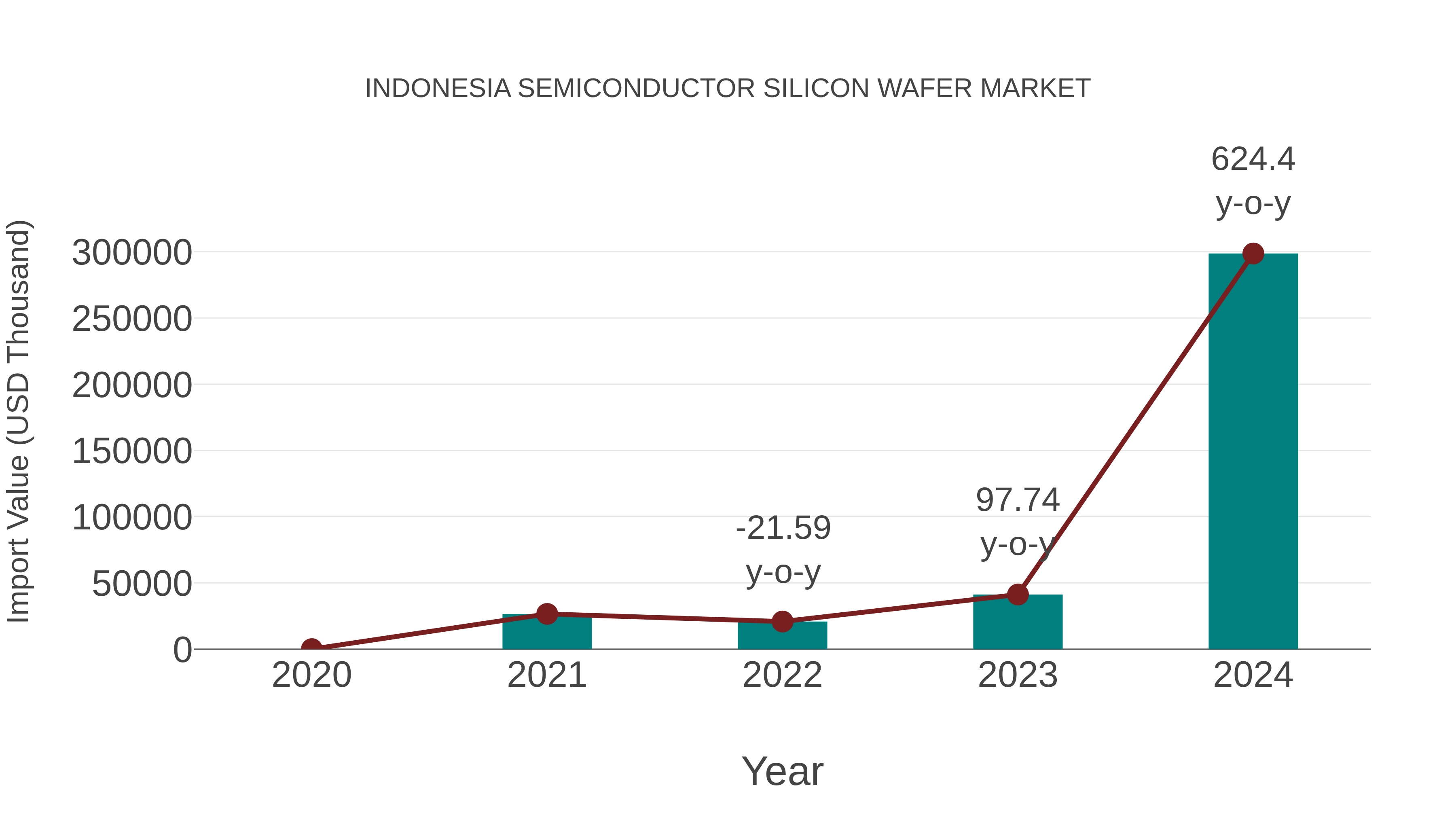
Indonesia`s semiconductor silicon wafer market witnessed a substantial import trend from 2023 to 2024, with a remarkable growth rate of 624.4%. The compound annual growth rate (CAGR) for the period spanning 2020 to 2024 stood at an impressive 123.94%. This surge in imports can be attributed to a significant shift in demand for semiconductor products within the region, reflecting a robust import momentum driven by technological advancements and increasing market stability.
Indonesia Semiconductor Silicon Wafer Market Overview
The Indonesia Semiconductor Silicon Wafer Market is poised for steady growth due to increasing demand from various industries such as electronics, automotive, and telecommunications. The market is driven by factors like the growing adoption of advanced technologies, expansion of the semiconductor industry, and the rise in consumer electronics consumption. Key players in the market are focusing on developing innovative products to meet the evolving needs of customers. Additionally, the government`s initiatives to promote the semiconductor industry and attract foreign investments are expected to further boost market growth. With a favorable business environment and increasing investments in research and development activities, the Indonesia Semiconductor Silicon Wafer Market is projected to experience significant growth in the coming years.
Indonesia Semiconductor Silicon Wafer Market Trends and Opportunities
The Indonesia Semiconductor Silicon Wafer Market is experiencing growth due to the increasing demand for electronic devices such as smartphones, tablets, and automotive electronics. The market is driven by the expansion of the automotive industry, the growing adoption of IoT devices, and the rising demand for energy-efficient electronic products. Additionally, the government`s initiatives to promote the manufacturing sector and attract foreign investments are creating new opportunities for semiconductor silicon wafer manufacturers in Indonesia. With the country`s focus on developing a strong semiconductor industry to reduce its reliance on imports, there is a promising outlook for the market. Companies can capitalize on these trends by investing in research and development to enhance product offerings and forming strategic partnerships to expand their market presence in Indonesia.
Indonesia Semiconductor Silicon Wafer Market Challenges
In the Indonesia Semiconductor Silicon Wafer Market, several challenges are faced, including the lack of domestic production capabilities leading to heavy reliance on imports, which can be affected by supply chain disruptions and fluctuating global demand. Additionally, the market faces increasing competition from other semiconductor manufacturing hubs in the region, such as Taiwan and South Korea, which offer more established infrastructure and technological advancements. The limited availability of skilled labor and the need for significant investments in research and development to keep pace with rapidly evolving technologies further compound the challenges faced by players in the Indonesia Semiconductor Silicon Wafer Market. Overcoming these obstacles will require strategic partnerships, government support, and a focus on enhancing domestic manufacturing capabilities and innovation.
Indonesia Semiconductor Silicon Wafer Market Drivers
The Indonesia Semiconductor Silicon Wafer Market is mainly driven by increasing demand for consumer electronics and electronic components in the country. With a growing population and rising disposable incomes, there is a higher adoption of smartphones, laptops, and other electronic devices, which in turn fuels the demand for semiconductor silicon wafers used in the manufacturing of these products. Additionally, the expanding automotive sector in Indonesia also contributes to the market growth, as modern vehicles incorporate a wide range of semiconductor components that require silicon wafers. Furthermore, advancements in technology such as the Internet of Things (IoT) and artificial intelligence (AI) are driving the demand for more sophisticated semiconductor devices, further boosting the demand for silicon wafers in the Indonesian market.
Indonesia Semiconductor Silicon Wafer Market Government Policies
The Indonesian government has implemented various policies to support the growth of the semiconductor silicon wafer market in the country. These policies include incentives for companies investing in semiconductor manufacturing facilities, such as tax breaks and subsidies for research and development activities. Additionally, the government has focused on improving infrastructure and providing a conducive business environment to attract foreign direct investment in the semiconductor industry. In line with Indonesia`s industrial development goals, there are also initiatives to enhance the local semiconductor ecosystem through partnerships with educational institutions and industry players to develop a skilled workforce. Overall, these policies aim to drive innovation, enhance competitiveness, and strengthen the domestic semiconductor silicon wafer market in Indonesia.
Indonesia Semiconductor Silicon Wafer Market Future Outlook
The Indonesia Semiconductor Silicon Wafer Market is expected to witness steady growth in the coming years due to increasing demand for electronic devices, particularly in sectors such as consumer electronics, automotive, and telecommunications. The rapid digital transformation and adoption of advanced technologies in Indonesia are driving the demand for semiconductor silicon wafers used in the manufacturing of integrated circuits. Additionally, the government`s initiatives to promote the semiconductor industry and attract foreign investments are likely to further boost market growth. With the ongoing advancements in semiconductor technology and the growing trend of IoT and AI applications, the Indonesia Semiconductor Silicon Wafer Market is poised for expansion in the foreseeable future.
Key Highlights of the Report:
- Indonesia Semiconductor Silicon Wafer Market Outlook
- Market Size of Indonesia Semiconductor Silicon Wafer Market, 2025
- Forecast of Indonesia Semiconductor Silicon Wafer Market, 2032
- Historical Data and Forecast of Indonesia Semiconductor Silicon Wafer Revenues & Volume for the Period 2022 - 2032F
- Indonesia Semiconductor Silicon Wafer Market Trend Evolution
- Indonesia Semiconductor Silicon Wafer Market Drivers and Challenges
- Indonesia Semiconductor Silicon Wafer Price Trends
- Indonesia Semiconductor Silicon Wafer Porter's Five Forces
- Indonesia Semiconductor Silicon Wafer Industry Life Cycle
- Historical Data and Forecast of Indonesia Semiconductor Silicon Wafer Market Revenues & Volume By Diameter for the Period 2022 - 2032F
- Historical Data and Forecast of Indonesia Semiconductor Silicon Wafer Market Revenues & Volume By Less Than 150 Mm for the Period 2022 - 2032F
- Historical Data and Forecast of Indonesia Semiconductor Silicon Wafer Market Revenues & Volume By 200 Mm for the Period 2022 - 2032F
- Historical Data and Forecast of Indonesia Semiconductor Silicon Wafer Market Revenues & Volume By 300 Mm and Above for the Period 2022 - 2032F
- Historical Data and Forecast of Indonesia Semiconductor Silicon Wafer Market Revenues & Volume By Product for the Period 2022 - 2032F
- Historical Data and Forecast of Indonesia Semiconductor Silicon Wafer Market Revenues & Volume By Logic for the Period 2022 - 2032F
- Historical Data and Forecast of Indonesia Semiconductor Silicon Wafer Market Revenues & Volume By Memory for the Period 2022 - 2032F
- Historical Data and Forecast of Indonesia Semiconductor Silicon Wafer Market Revenues & Volume By Analog for the Period 2022 - 2032F
- Historical Data and Forecast of Indonesia Semiconductor Silicon Wafer Market Revenues & Volume By Application for the Period 2022 - 2032F
- Historical Data and Forecast of Indonesia Semiconductor Silicon Wafer Market Revenues & Volume By Consumer Electronics for the Period 2022 - 2032F
- Historical Data and Forecast of Indonesia Semiconductor Silicon Wafer Market Revenues & Volume By Industrial for the Period 2022 - 2032F
- Historical Data and Forecast of Indonesia Semiconductor Silicon Wafer Market Revenues & Volume By Telecommunication for the Period 2022 - 2032F
- Historical Data and Forecast of Indonesia Semiconductor Silicon Wafer Market Revenues & Volume By Automotive for the Period 2022 - 2032F
- Indonesia Semiconductor Silicon Wafer Import Export Trade Statistics
- Market Opportunity Assessment By Diameter
- Market Opportunity Assessment By Product
- Market Opportunity Assessment By Application
- Indonesia Semiconductor Silicon Wafer Top Companies Market Share
- Indonesia Semiconductor Silicon Wafer Competitive Benchmarking By Technical and Operational Parameters
- Indonesia Semiconductor Silicon Wafer Company Profiles
- Indonesia Semiconductor Silicon Wafer Key Strategic Recommendations






































