Indonesia Steel Tubes Market: Import Trend Analysis
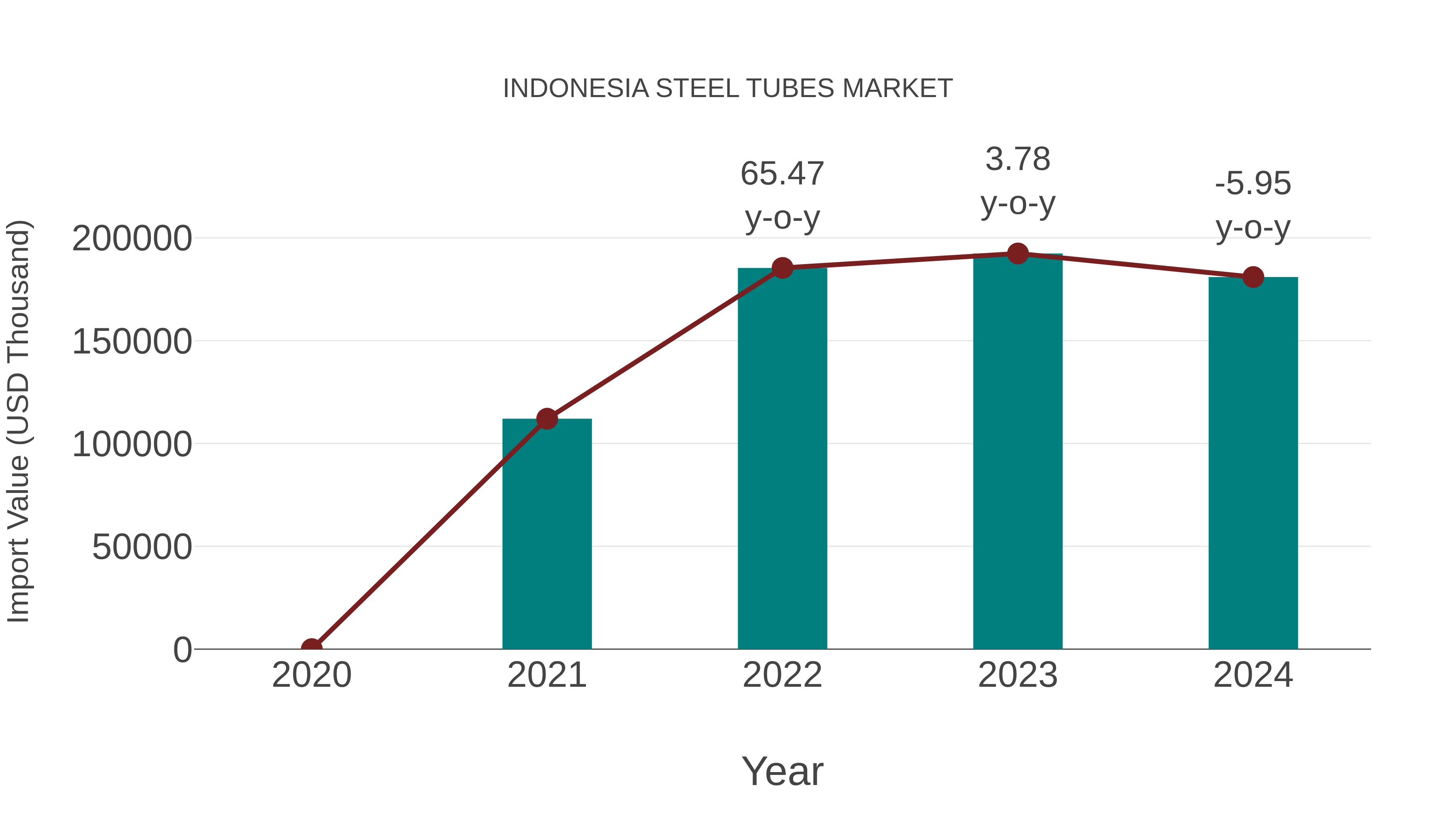
In the Indonesia steel tubes market, the import trend exhibited a decline from 2023 to 2024, with a growth rate of -5.95%. However, the compound annual growth rate (CAGR) for imports between 2020 and 2024 stood at a robust 17.33%. This decline in import momentum in 2024 could be attributed to shifts in domestic demand or changes in trade policies impacting the market`s stability.
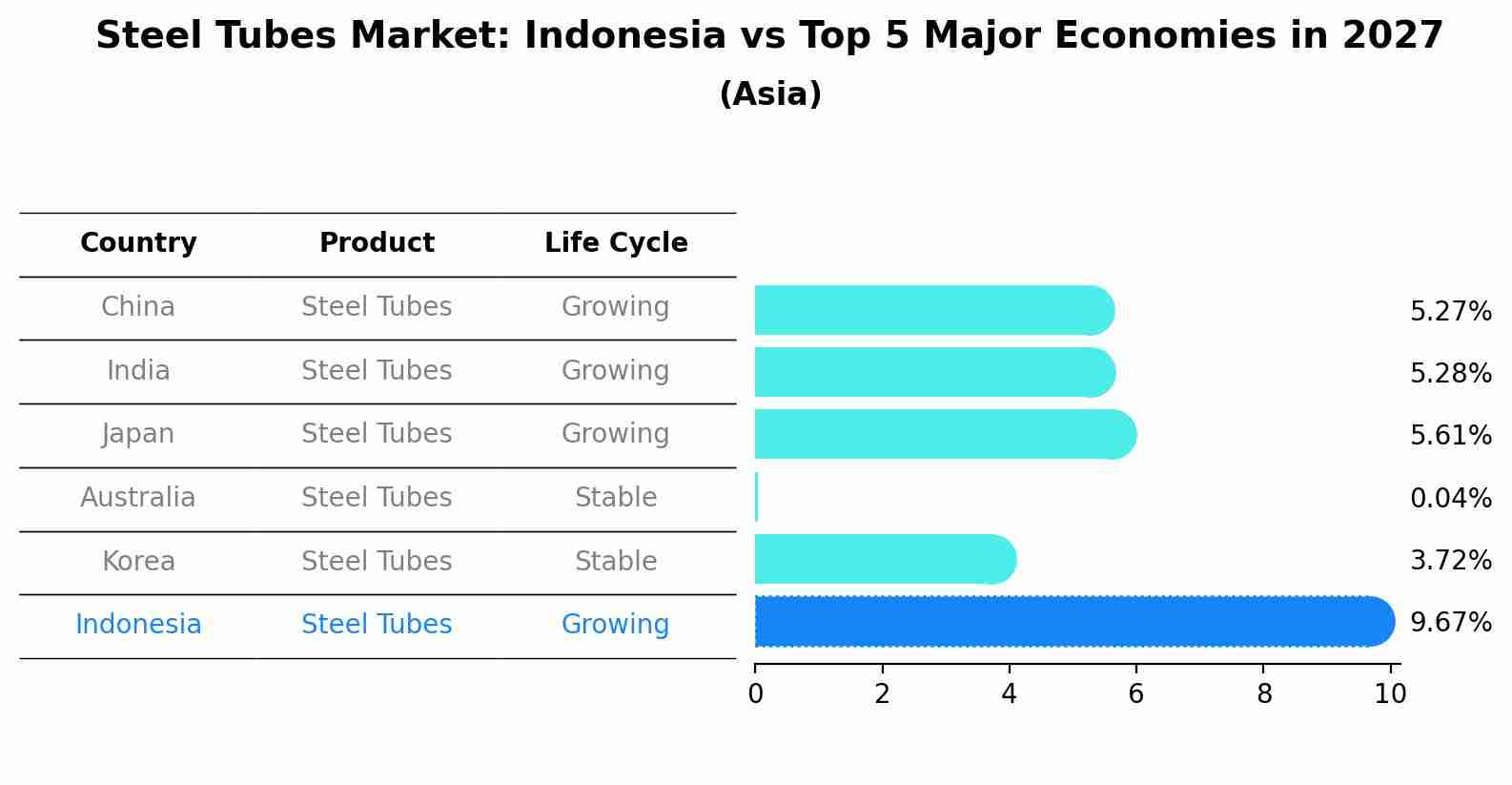
Steel Tubes Market: Indonesia vs Top 5 Major Economies in 2027 (Asia)
In the Asia region, the Steel Tubes market in Indonesia is projected to expand at a growing growth rate of 9.67% by 2027. The largest economy is China, followed by India, Japan, Australia and South Korea.
Indonesia Steel Tubes Market Synopsis
The Steel Tubes market in Indonesia is closely tied to the construction and infrastructure sectors. With numerous development projects, including roads, bridges, and buildings, the demand for steel tubes remains robust. The industry is also witnessing innovation in materials and production methods to meet the growing need for sustainable and high-quality products.
Drivers of the Market
The steel tubes market in Indonesia is witnessing growth primarily driven by the country`s infrastructure development projects. The government`s focus on improving transportation networks, energy infrastructure, and construction projects has led to a substantial demand for steel tubes. The versatility, durability, and strength of steel tubes make them a preferred choice for various applications in the construction and industrial sectors. Additionally, Indonesia`s growing manufacturing sector and the need for efficient material handling systems have further propelled the demand for steel tubes.
Challenges of the Market
The steel tubes market in Indonesia faces several challenges. One of the primary issues is the fluctuation in raw material prices, which affects production costs and, in turn, pricing for consumers. Additionally, the industry must contend with competition from alternative materials such as PVC and HDPE pipes. Quality control and adherence to safety standards are also concerns, especially in regions with less stringent regulations.
COVID-19 Impact on the Market
The steel tubes market faced volatility during the pandemic, primarily due to disruptions in the global steel supply chain. Lockdowns and reduced industrial activity affected both production and demand. The market has gradually recovered as industrial operations resumed, but ongoing supply chain challenges have led to fluctuations in prices.
Key Players in the Market
The Indonesia Steel Tubes market is expected to grow due to demand from various industries including construction and manufacturing. Major players in this market include PT. Bakrie Pipe Industries, PT. Steel Pipe Industry of Indonesia, and PT. Citra Abadi Tehnik.
Key Highlights of the Report:
- Indonesia Steel Tubes Market Outlook
- Market Size of Indonesia Steel Tubes Market, 2025
- Forecast of Indonesia Steel Tubes Market, 2032
- Historical Data and Forecast of Indonesia Steel Tubes Revenues & Volume for the Period 2022-2032F
- Indonesia Steel Tubes Market Trend Evolution
- Indonesia Steel Tubes Market Drivers and Challenges
- Indonesia Steel Tubes Price Trends
- Indonesia Steel Tubes Porter's Five Forces
- Indonesia Steel Tubes Industry Life Cycle
- Historical Data and Forecast of Indonesia Steel Tubes Market Revenues & Volume By Product Type for the Period 2022-2032F
- Historical Data and Forecast of Indonesia Steel Tubes Market Revenues & Volume By Seamless Steel Tubes for the Period 2022-2032F
- Historical Data and Forecast of Indonesia Steel Tubes Market Revenues & Volume By Welded Steel Tubes for the Period 2022-2032F
- Historical Data and Forecast of Indonesia Steel Tubes Market Revenues & Volume By Material Type for the Period 2022-2032F
- Historical Data and Forecast of Indonesia Steel Tubes Market Revenues & Volume By Carbon Steel for the Period 2022-2032F
- Historical Data and Forecast of Indonesia Steel Tubes Market Revenues & Volume By Stainless Steel for the Period 2022-2032F
- Historical Data and Forecast of Indonesia Steel Tubes Market Revenues & Volume By Alloy Steel for the Period 2022-2032F
- Historical Data and Forecast of Indonesia Steel Tubes Market Revenues & Volume By Others for the Period 2022-2032F
- Historical Data and Forecast of Indonesia Steel Tubes Market Revenues & Volume By End Use for the Period 2022-2032F
- Historical Data and Forecast of Indonesia Steel Tubes Market Revenues & Volume By Oil and Gas for the Period 2022-2032F
- Historical Data and Forecast of Indonesia Steel Tubes Market Revenues & Volume By Petrochemicals for the Period 2022-2032F
- Historical Data and Forecast of Indonesia Steel Tubes Market Revenues & Volume By Infrastructure and Construction for the Period 2022-2032F
- Historical Data and Forecast of Indonesia Steel Tubes Market Revenues & Volume By Automotive for the Period 2022-2032F
- Historical Data and Forecast of Indonesia Steel Tubes Market Revenues & Volume By Water Treatment and Sewage for the Period 2022-2032F
- Historical Data and Forecast of Indonesia Steel Tubes Market Revenues & Volume By Others for the Period 2022-2032F
- Indonesia Steel Tubes Import Export Trade Statistics
- Market Opportunity Assessment By Product Type
- Market Opportunity Assessment By Material Type
- Market Opportunity Assessment By End Use
- Indonesia Steel Tubes Top Companies Market Share
- Indonesia Steel Tubes Competitive Benchmarking By Technical and Operational Parameters
- Indonesia Steel Tubes Company Profiles
- Indonesia Steel Tubes Key Strategic Recommendations






































