Indonesia Synthetic Fiber Market: Import Trend Analysis
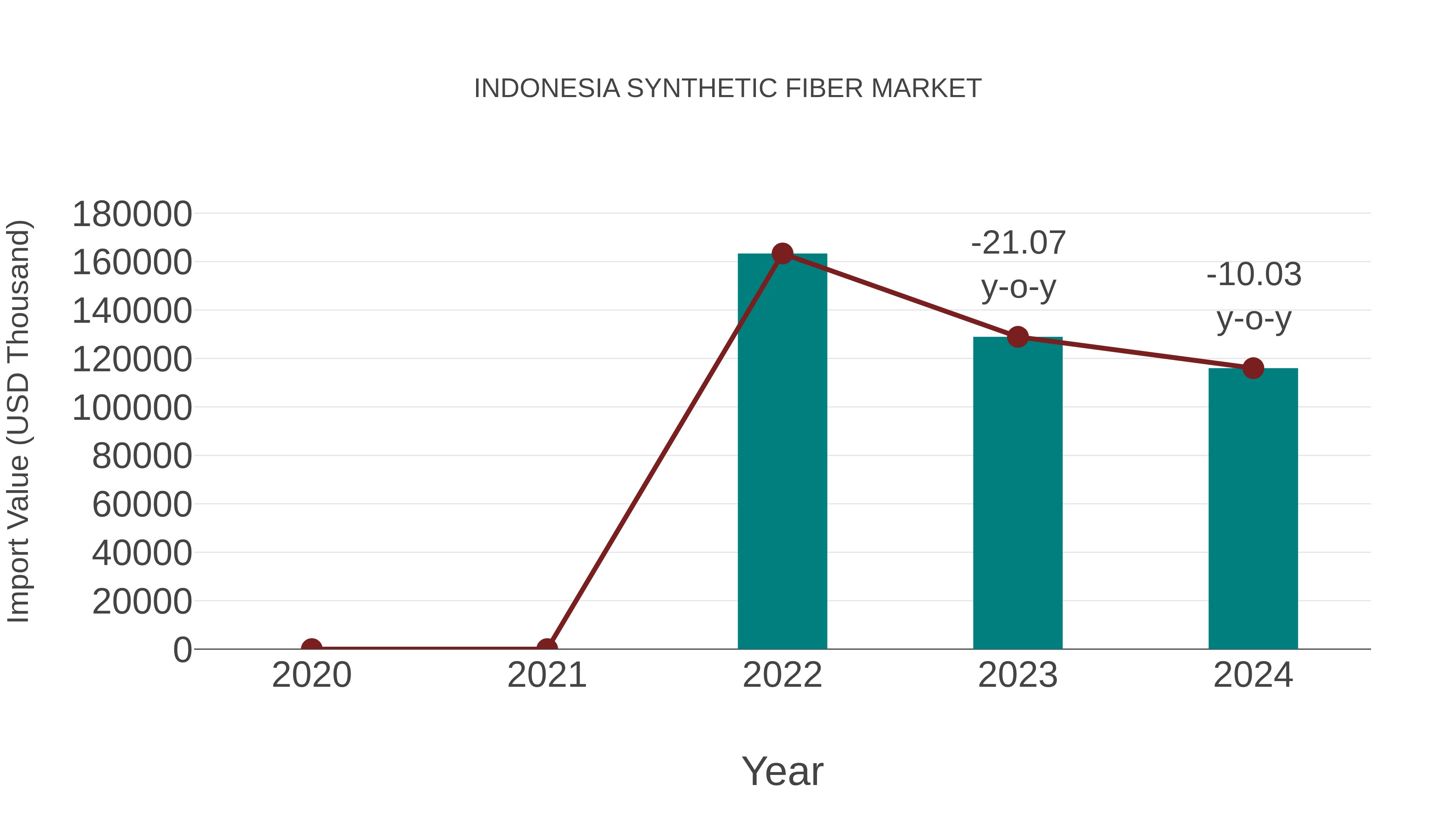
In the Indonesia synthetic fiber market, the import trend exhibited a decline from 2023 to 2024, with a growth rate of -10.03%. The compound annual growth rate (CAGR) for imports between 2020 and 2024 stood at -15.73%. This negative momentum may have been influenced by shifts in domestic demand or changes in trade policies impacting the market`s stability.
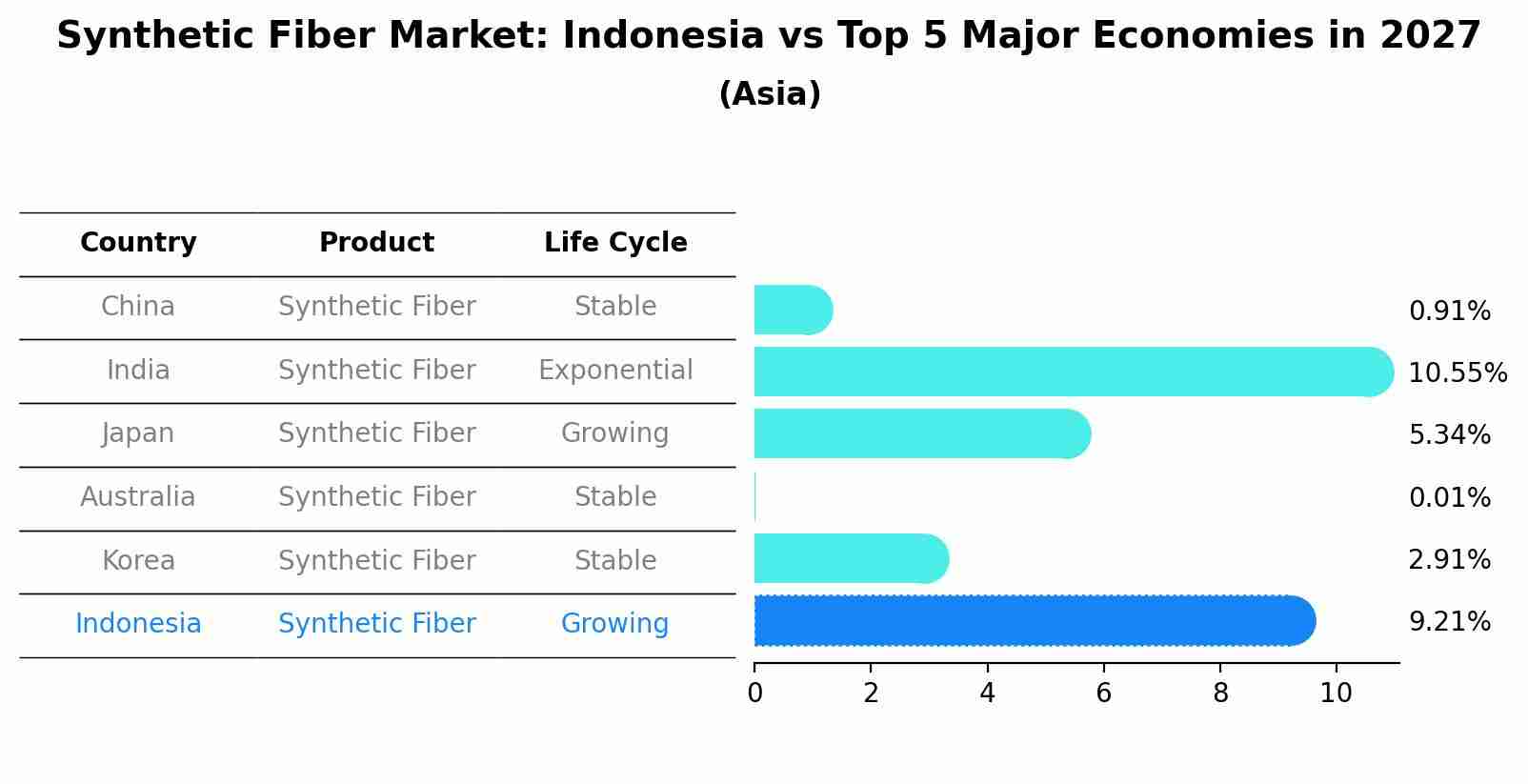
Synthetic Fiber Market: Indonesia vs Top 5 Major Economies in 2027 (Asia)
In the Asia region, the Synthetic Fiber market in Indonesia is projected to expand at a growing growth rate of 9.21% by 2027. The largest economy is China, followed by India, Japan, Australia and South Korea.
Indonesia Synthetic Fiber Market Synopsis
The Indonesia synthetic fiber market is on the rise as it finds applications in various industries, including textiles, automotive, and packaging. The demand for synthetic fibers is driven by their durability, versatility, and cost-effectiveness. Moreover, as the fashion industry continues to evolve, there is an increased demand for synthetic fabrics due to their ability to mimic natural materials while offering better performance and affordability. This market is poised for further growth as manufacturing sectors expand and technological advancements continue to enhance synthetic fiber properties.
Drivers of the Market
The Indonesia Synthetic Fiber Market is poised for growth driven by various factors. Firstly, the textile and apparel industry`s expansion is a significant contributor to the demand for synthetic fibers. These fibers offer versatility, durability, and affordability, making them suitable for various applications. Additionally, the increasing awareness of sustainability is leading to the development of eco-friendly synthetic fibers, further driving market growth. Furthermore, technological advancements in synthetic fiber production are improving their quality and performance, making them a preferred choice for manufacturers.
Challenges of the Market
The Indonesia Synthetic Fiber market encounters challenges in terms of raw material costs and sourcing, as well as fluctuations in global demand. Sustainability issues and the need for eco-friendly production methods are becoming increasingly important. Competition from alternative materials and the requirement for consistent quality standards are other significant challenges.
COVID-19 Impact on the Market
The synthetic fiber market faced supply chain disruptions and decreased demand for textiles during the pandemic. With changes in fashion trends and consumer preferences, the market may need to adapt to a more sustainable and eco-friendly approach to regain momentum.
Key Players in the Market
Prominent companies in the Indonesia synthetic fiber market, like PT Indorama Synthetics Tbk, are major producers of synthetic fibers used in textiles, automotive components, and industrial applications. They contribute to the development of versatile and durable synthetic materials.
Key Highlights of the Report:
- Indonesia Synthetic Fiber Market Outlook
- Market Size of Indonesia Synthetic Fiber Market, 2025
- Forecast of Indonesia Synthetic Fiber Market, 2032
- Historical Data and Forecast of Indonesia Synthetic Fiber Revenues & Volume for the Period 2022-2032F
- Indonesia Synthetic Fiber Market Trend Evolution
- Indonesia Synthetic Fiber Market Drivers and Challenges
- Indonesia Synthetic Fiber Price Trends
- Indonesia Synthetic Fiber Porter's Five Forces
- Indonesia Synthetic Fiber Industry Life Cycle
- Historical Data and Forecast of Indonesia Synthetic Fiber Market Revenues & Volume By Type for the Period 2022-2032F
- Historical Data and Forecast of Indonesia Synthetic Fiber Market Revenues & Volume By Polyester for the Period 2022-2032F
- Historical Data and Forecast of Indonesia Synthetic Fiber Market Revenues & Volume By Nylon for the Period 2022-2032F
- Historical Data and Forecast of Indonesia Synthetic Fiber Market Revenues & Volume By Acrylics for the Period 2022-2032F
- Historical Data and Forecast of Indonesia Synthetic Fiber Market Revenues & Volume By Polyolefin for the Period 2022-2032F
- Historical Data and Forecast of Indonesia Synthetic Fiber Market Revenues & Volume By Others for the Period 2022-2032F
- Historical Data and Forecast of Indonesia Synthetic Fiber Market Revenues & Volume By Application for the Period 2022-2032F
- Historical Data and Forecast of Indonesia Synthetic Fiber Market Revenues & Volume By Clothing for the Period 2022-2032F
- Historical Data and Forecast of Indonesia Synthetic Fiber Market Revenues & Volume By Home Furnishing for the Period 2022-2032F
- Historical Data and Forecast of Indonesia Synthetic Fiber Market Revenues & Volume By Automotive for the Period 2022-2032F
- Historical Data and Forecast of Indonesia Synthetic Fiber Market Revenues & Volume By Filtration for the Period 2022-2032F
- Historical Data and Forecast of Indonesia Synthetic Fiber Market Revenues & Volume By Others for the Period 2022-2032F
- Indonesia Synthetic Fiber Import Export Trade Statistics
- Market Opportunity Assessment By Type
- Market Opportunity Assessment By Application
- Indonesia Synthetic Fiber Top Companies Market Share
- Indonesia Synthetic Fiber Competitive Benchmarking By Technical and Operational Parameters
- Indonesia Synthetic Fiber Company Profiles
- Indonesia Synthetic Fiber Key Strategic Recommendations






































