Iraq Bamboos Market Size, Share & Growth Rate
The Iraq Bamboos Market was estimated at USD 348 Million in 2025 and is projected to reach USD 483 Million by 2032, growing at a CAGR of 4.8% from 2026 to 2032. This growth trajectory is largely driven by increasing consumer awareness regarding sustainability and the environmental benefits of bamboo. As the global trend shifts towards eco-friendly materials, the demand for bamboo products in sectors like construction and furniture is steadily rising, positioning Iraq as a future leader in the bamboo market.
Iraq Bamboos Market Year-wise Growth Rate and Key Drivers
This graph highlights how the Iraq Bamboos Market has steadily grown over the years, supported by major growth factors.
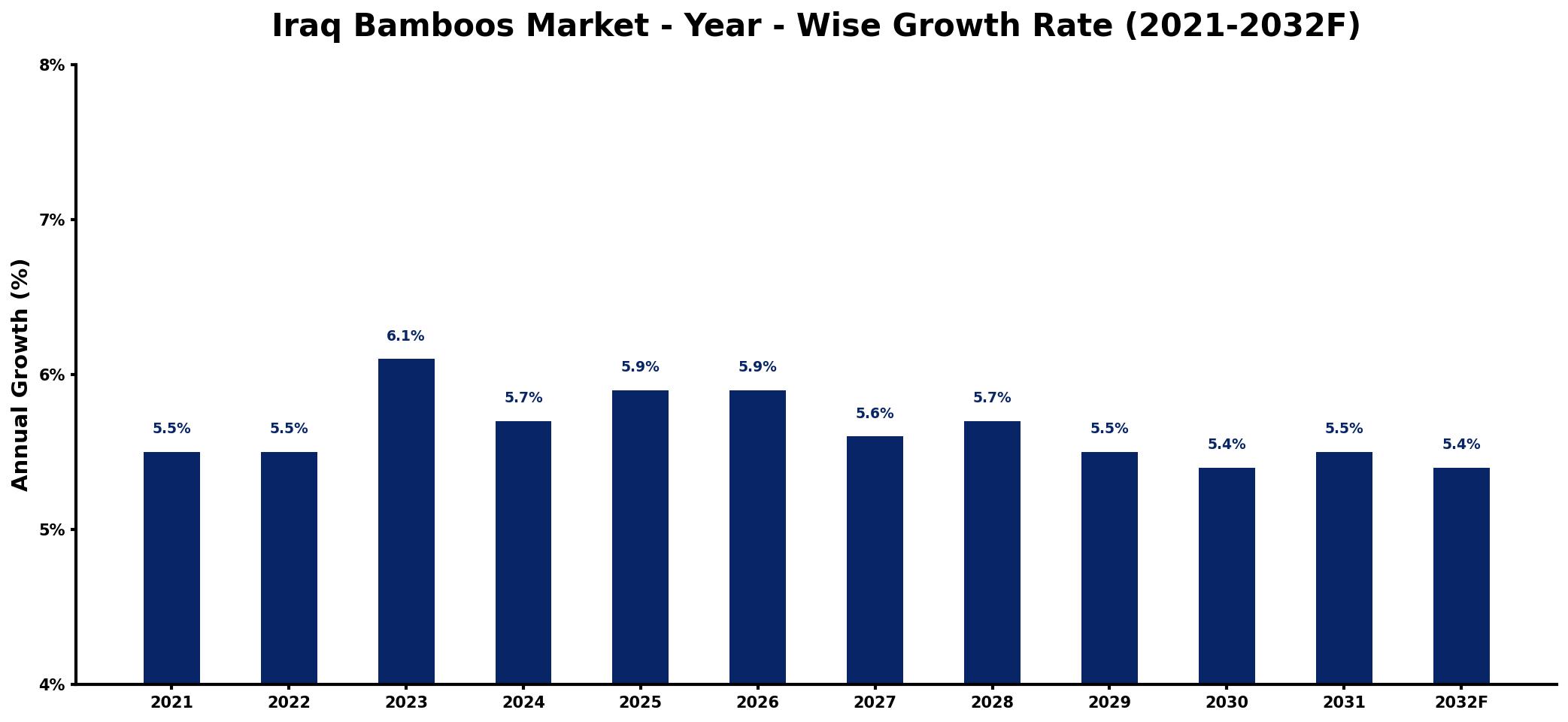
The table below presents the year‑wise growth rates along with the key drivers influencing the market
| Year | Growth Rate | Major Drivers |
| 2021 | 5.5% | increased construction sector investments |
| 2022 | 5.5% | growing demand for eco-friendly materials |
| 2023 | 6.1% | expansion in furniture manufacturing industry |
| 2024 | 5.7% | rising interest in sustainable architecture |
| 2025 | 5.9% | boost in home renovation projects |
| 2026 | 5.9% | increased exports to neighboring markets |
| 2027 | 5.6% | growing awareness of environmental benefits |
| 2028 | 5.7% | rising demand from electronics |
| 2029 | 5.5% | growing regional consumption patterns |
| 2030 | 5.4% | increased government support for sustainability |
| 2031 | 5.5% | rising infrastructure development spending |
| 2032 | 5.4% | expansion of renewable resource initiatives |
Note: Market size estimations and growth projections presented in this report are based on 6Wresearch's proprietary forecasting methodology, utilizing the latest available industry data, government publications, and primary research inputs.
Iraq Bamboos Market Synopsis
While the Iraq bamboos market is currently in a nascent stage, the momentum is shifting towards a more sustainable future. Increased interest from both consumers and industries highlights a growing recognition of bamboo's versatility as a construction and decorative material.
Looking ahead, the market is set to experience robust expansion as government policies align with global sustainability trends. This alignment not only enhances the local bamboo industry's prospects but also invites significant investment opportunities, potentially transforming the landscape of eco-friendly materials in Iraq.
Iraq Bamboos Market Key Takeaways
- The market is projected to grow from USD 348 Million in 2025 to USD 483 Million by 2032, indicating strong investment opportunities.
- Consumer preferences are increasingly leaning towards sustainable materials, propelling the demand for bamboo products.
- Government initiatives aim to promote bamboo cultivation and ensure the sustainable management of bamboo resources.
- Investors have opportunities in bamboo cultivation, processing, and the production of value-added bamboo products.
- Challenges such as lack of awareness and inadequate infrastructure continue to limit market growth, but strategic investments can address these issues.
Evaluation of Restraints in Iraq Bamboos Market
Despite the positive outlook, several key restraints hinder the Iraq bamboos market. A significant barrier is the limited awareness regarding bamboo's potential benefits, which creates hesitancy among both consumers and businesses. Moreover, the absence of standardized quality control measures and certification processes undermines consumer confidence in bamboo products. Infrastructure limitations, including inadequate transportation and storage facilities, also challenge the distribution of bamboo goods across the country. These factors collectively impede the market's ability to reach its full potential without concerted efforts to enhance education, build infrastructure, and establish quality standards.
Iraq Bamboos Market Trends
Current trends in the Iraq bamboos market indicate a rising preference for eco-friendly construction materials. Bamboo's recognized versatility and durability are leading to its increased use in flooring, furniture, and even structural components of buildings. The trend is largely fueled by a global emphasis on sustainable building practices, with consumers and businesses alike advocating for greener options. As the market matures, innovations in bamboo processing techniques may also emerge, enhancing product quality and expanding applications across various sectors.
Iraq Bamboos Market Opportunities
The opportunities for investment in the Iraq bamboos market are substantial, driven by the versatility and rapid growth of bamboo. Investors can tap into bamboo cultivation, processing, and the manufacturing of diverse products, including furniture, textiles, and eco-friendly packaging solutions. Additionally, the increasing awareness surrounding environmental sustainability further boosts the market potential for bamboo-based products. By leveraging Iraq's natural resources and strategic location, investors can position themselves advantageously in the burgeoning market for sustainable materials.
Government Initiatives in the Iraq Bamboos Market
Government policies in Iraq are focusing on the promotion of sustainable harvesting practices and the development of the local bamboo industry. These initiatives include regulations that manage bamboo forest resources effectively, along with training and financial support for local farmers interested in bamboo cultivation. Furthermore, the government is emphasizing the need for quality control and standardization in bamboo products to enhance the competitiveness of Iraq's bamboo offerings in both domestic and international markets.
Future Insights of the Iraq Bamboos Market
The future outlook for the Iraq bamboos market is optimistic, driven by a combination of increasing environmental consciousness and supportive government policies. With bamboo's rapid growth and versatility, it is poised to become a significant resource in multiple industries, such as construction, furniture, and textiles. This trend will likely be bolstered by an overarching shift towards eco-friendly products among consumers and businesses. However, market growth may require further advancements in technology and infrastructure to fully realize its potential.
Iraq Bamboos Market Latest Developments (2025 - 2026)
In recent months, there has been a notable push in Iraq towards the establishment of bamboo plantations, supported by government initiatives. These efforts aim to enhance local production capacity and improve the availability of bamboo products in various sectors. Additionally, collaborations between private sectors and agricultural organizations are emerging, aimed at facilitating the education of farmers on sustainable bamboo cultivation practices. This industry direction reflects a growing commitment to harnessing the environmental and economic potential of bamboo in Iraq.
Iraq Bamboos Market - Key Attractiveness of the Report
- 10 Years of Market Numbers
- Historical Data Starting from 2022 to 2025
- Base Year: 2025
- Forecast Data until 2032
- Key Performance Indicators Impacting the Market
- Major Upcoming Developments and Projects
Key Highlights of the Report:
- Iraq Bamboos Market Outlook
- Market Size of Iraq Bamboos Market, 2025
- Forecast of Iraq Bamboos Market, 2032
- Historical Data and Forecast of Iraq Bamboos Revenues & Volume for the Period 2022-2032F
- Iraq Bamboos Market Trend Evolution
- Iraq Bamboos Market Drivers and Challenges
- Iraq Bamboos Price Trends
- Iraq Bamboos Porter's Five Forces
- Iraq Bamboos Industry Life Cycle
- Historical Data and Forecast of Iraq Bamboos Market Revenues & Volume By Application for the Period 2022-2032F
- Historical Data and Forecast of Iraq Bamboos Market Revenues & Volume By Raw Materials for the Period 2022-2032F
- Historical Data and Forecast of Iraq Bamboos Market Revenues & Volume By Industrial Products for the Period 2022-2032F
- Historical Data and Forecast of Iraq Bamboos Market Revenues & Volume By Furniture for the Period 2022-2032F
- Historical Data and Forecast of Iraq Bamboos Market Revenues & Volume By Shoots for the Period 2022-2032F
- Historical Data and Forecast of Iraq Bamboos Market Revenues & Volume By Others for the Period 2022-2032F
- Iraq Bamboos Import Export Trade Statistics
- Market Opportunity Assessment By Application
- Iraq Bamboos Top Companies Market Share
- Iraq Bamboos Competitive Benchmarking By Technical and Operational Parameters
- Iraq Bamboos Company Profiles
- Iraq Bamboos Key Strategic Recommendations






































