Iraq Construction Glass Market Size, Share & Growth Rate
The Iraq Construction Glass Market was estimated at USD 418 Million in 2025 and is projected to reach USD 584 Million by 2032, growing at a CAGR of 4.9% from 2026 to 2032. This growth trajectory is underpinned by a surge in urbanization, significant infrastructure projects, and a growing preference for energy-efficient building materials. As Iraq continues to modernize its urban landscape, the demand for high-quality construction glass products—such as float glass and insulated glass—is expected to rise substantially.
Iraq Construction Glass Market Year-wise Growth Rate and Key Drivers
This graph highlights how the Iraq Construction Glass Market has steadily grown over the years, supported by major growth factors.
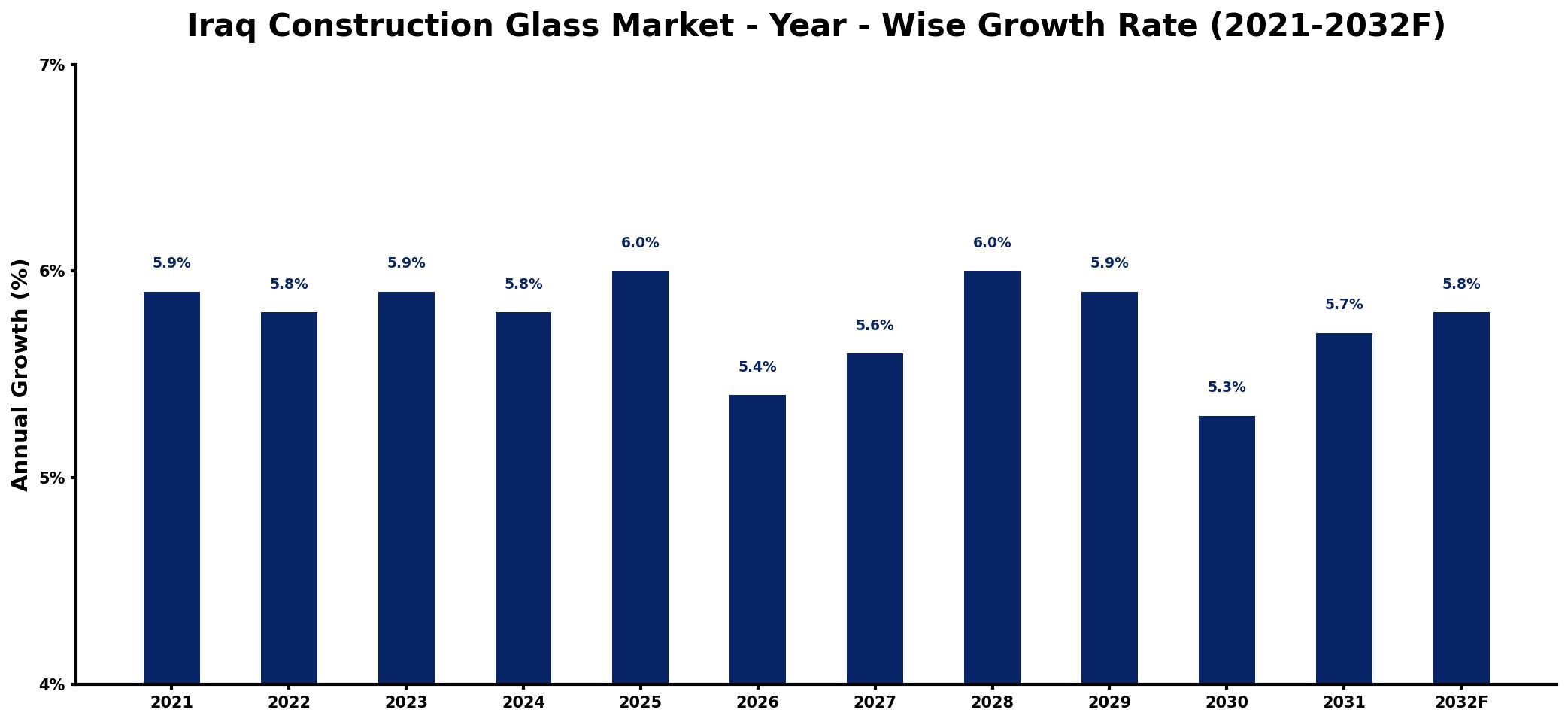
The table below presents the year‑wise growth rates along with the key drivers influencing the market
| Year | Growth Rate | Major Drivers |
| 2021 | 5.9% | Rising infrastructure development projects |
| 2022 | 5.8% | Increased residential building activities |
| 2023 | 5.9% | Growing commercial sector investments |
| 2024 | 5.8% | Surge in urbanization initiatives |
| 2025 | 6.0% | Expansion of renewable energy facilities |
| 2026 | 5.4% | Boost in tourism sector growth |
| 2027 | 5.6% | Enhancement of public transportation systems |
| 2028 | 6.0% | Growth in architectural innovations |
| 2029 | 5.9% | Increased foreign direct investments |
| 2030 | 5.3% | Development of smart city projects |
| 2031 | 5.7% | Strengthening of local manufacturing capabilities |
| 2032 | 5.8% | Rise in eco-friendly initiatives |
Note: Market size estimations and growth projections presented in this report are based on 6Wresearch's proprietary forecasting methodology, utilizing the latest available industry data, government publications, and primary research inputs.
Iraq Construction Glass Market Synopsis
The Iraqi construction glass market is currently experiencing a transformative phase, driven by rising construction activities across residential and commercial sectors. A renewed focus on building aesthetics and energy efficiency is steering architects and developers towards incorporating advanced glass products into their designs.
This shift is not merely a trend; it reflects broader changes in consumer preferences, as well as regulatory pressures aimed at improving energy efficiency in buildings. Consequently, products like tempered glass and insulated units are gaining traction, becoming essential elements of modern architectural practices.
Iraq Construction Glass Market Key Takeaways
- The market is poised for steady growth, influenced by ongoing urban development and construction projects.
- Investment in energy-efficient glass solutions is driving product innovation and market expansion.
- Government initiatives are encouraging the establishment of local manufacturing, aiding in price competitiveness.
- Urbanization trends are expected to create new opportunities for advanced glass applications in various sectors.
- Challenges related to import costs and infrastructure need addressing to unlock full market potential.
Evaluation of Restraints in Iraq Construction Glass Market
Despite the positive outlook, several key restraints challenge the growth of the Iraq construction glass market. High import costs for premium glass products continue to pose significant financial burdens on local construction firms, impacting project viability. Moreover, the market faces a skills gap, with a lack of trained professionals proficient in the installation of complex glass materials, which can compromise the safety and quality of construction projects. Furthermore, ongoing economic fluctuations and political uncertainties complicate the investment landscape, deterring potential stakeholders from engaging in large-scale developments. These factors, alongside supply chain disruptions and unclear regulatory standards, hinder the sector's growth and efficiency.
Iraq Construction Glass Market Trends
Several trends are reshaping the Iraq construction glass market landscape. A notable shift towards energy-efficient solutions is compelling manufacturers to innovate and adopt advanced technologies, resulting in products that offer better thermal insulation and soundproofing capabilities. Additionally, an increasing emphasis on eco-friendly construction practices is steering demand towards sustainable glass materials. Architects are also focusing on design aesthetics, leading to a rise in custom glass products that enhance building façades and interiors.
Iraq Construction Glass Market Opportunities
Significant growth opportunities exist in the Iraq construction glass market, particularly as urban development accelerates. The government's initiatives to bolster local manufacturing and reduce import dependency create a favorable environment for investment. Moreover, as energy efficiency regulations become more stringent, there is potential for companies that provide innovative glass solutions tailored to meet these standards. The rise of smart buildings also presents an opportunity to integrate high-tech glass solutions that enhance functionality and energy performance.
Government Initiatives in the Iraq Construction Glass Market
The Iraqi government is actively working to stimulate the local construction glass industry through various initiatives. Policies designed to attract investment in modern manufacturing technologies are being implemented, which include tax incentives for establishing new production facilities. Additionally, there are subsidies available for research into advanced glass materials aimed at promoting energy efficiency. Adjustments to import regulations further seek to protect and empower local manufacturers, enhancing their competitive edge in the marketplace.
Future Insights of the Iraq Construction Glass Market
Looking ahead to the period from 2026 to 2032, the Iraq construction glass market is expected to continue its upward trajectory, driven by infrastructural demands and evolving consumer preferences. As the urban population expands, and with ongoing support from government initiatives, market participants are likely to witness increased demand for innovative glass solutions that meet contemporary architectural needs. The transition towards more sustainable and energy-efficient construction practices will further propel market growth, solidifying the sector's importance in Iraq's overall economic development.
Iraq Construction Glass Market Latest Developments (2025 - 2026)
In recent months, the Iraq construction glass market has been characterized by a growing focus on sustainable building materials and energy-efficient solutions. Several companies are exploring partnerships with international firms to bring advanced glass technologies into the local market. Additionally, discussions around updating safety regulations and building codes are underway, aimed at establishing clearer guidelines for quality and compliance in construction glass products. This evolving landscape indicates a proactive approach to addressing current challenges and enhancing the overall market environment.
Iraq Construction Glass Market - Key Attractiveness of the Report
- 10 Years of Market Numbers
- Historical Data Starting from 2022 to 2025
- Base Year: 2025
- Forecast Data until 2032
- Key Performance Indicators Impacting the Market
- Major Upcoming Developments and Projects
Key Highlights of the Report:
- Iraq Construction Glass Market Outlook
- Market Size of Iraq Construction Glass Market, 2025
- Forecast of Iraq Construction Glass Market, 2032
- Historical Data and Forecast of Iraq Construction Glass Revenues & Volume for the Period 2022-2032F
- Iraq Construction Glass Market Trend Evolution
- Iraq Construction Glass Market Drivers and Challenges
- Iraq Construction Glass Price Trends
- Iraq Construction Glass Porter's Five Forces
- Iraq Construction Glass Industry Life Cycle
- Historical Data and Forecast of Iraq Construction Glass Market Revenues & Volume By Chemical Composition for the Period 2022-2032F
- Historical Data and Forecast of Iraq Construction Glass Market Revenues & Volume By Soda-lime for the Period 2022-2032F
- Historical Data and Forecast of Iraq Construction Glass Market Revenues & Volume By Potash-lime for the Period 2022-2032F
- Historical Data and Forecast of Iraq Construction Glass Market Revenues & Volume By Potash-lead for the Period 2022-2032F
- Historical Data and Forecast of Iraq Construction Glass Market Revenues & Volume By Type for the Period 2022-2032F
- Historical Data and Forecast of Iraq Construction Glass Market Revenues & Volume By Low-e Glass for the Period 2022-2032F
- Historical Data and Forecast of Iraq Construction Glass Market Revenues & Volume By Special Glass for the Period 2022-2032F
- Historical Data and Forecast of Iraq Construction Glass Market Revenues & Volume By Manufacturing Process for the Period 2022-2032F
- Historical Data and Forecast of Iraq Construction Glass Market Revenues & Volume By Float Process for the Period 2022-2032F
- Historical Data and Forecast of Iraq Construction Glass Market Revenues & Volume By Rolled/sheet Process for the Period 2022-2032F
- Historical Data and Forecast of Iraq Construction Glass Market Revenues & Volume By Application for the Period 2022-2032F
- Historical Data and Forecast of Iraq Construction Glass Market Revenues & Volume By Residential for the Period 2022-2032F
- Historical Data and Forecast of Iraq Construction Glass Market Revenues & Volume By Commercial for the Period 2022-2032F
- Historical Data and Forecast of Iraq Construction Glass Market Revenues & Volume By Others for the Period 2022-2032F
- Iraq Construction Glass Import Export Trade Statistics
- Market Opportunity Assessment By Chemical Composition
- Market Opportunity Assessment By Type
- Market Opportunity Assessment By Manufacturing Process
- Market Opportunity Assessment By Application
- Iraq Construction Glass Top Companies Market Share
- Iraq Construction Glass Competitive Benchmarking By Technical and Operational Parameters
- Iraq Construction Glass Company Profiles
- Iraq Construction Glass Key Strategic Recommendations






































