Iraq Data Classification Market Size & Growth Rate (2026-2032)
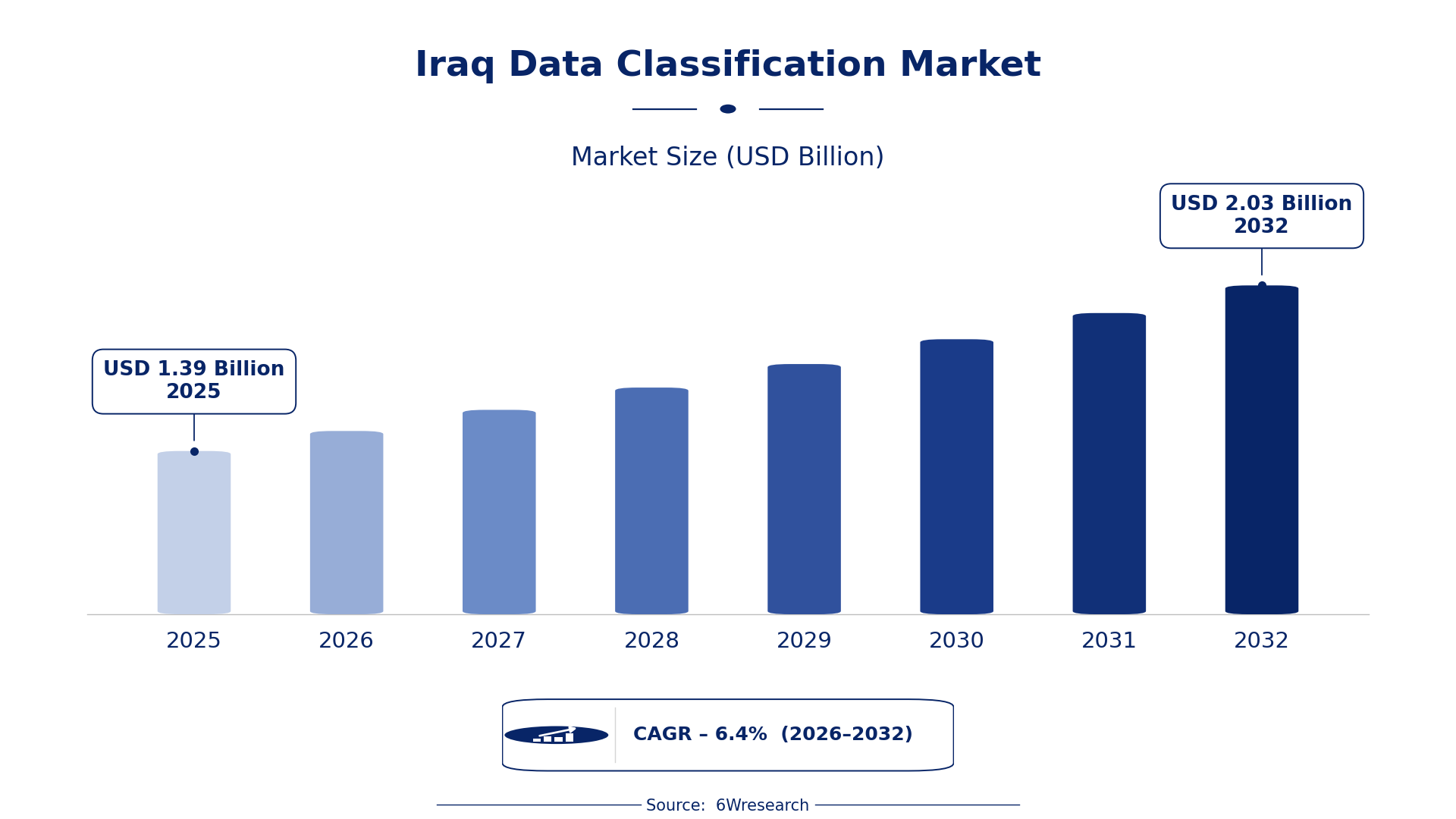
The Iraq Data Classification Market was estimated at USD 1391 Million in 2025 and is projected to reach USD 2026 Million by 2032, growing at a CAGR of 6.4% from 2026 to 2032.
Iraq Data Classification Market Synopsis
The urgency for effective data management in Iraq is becoming undeniable as organizations grapple with escalating amounts of information. The drive towards data classification is more than just a compliance effort; it reflects a strategic response to the risks posed by data breaches and regulatory challenges in various sectors.
Iraqi businesses are increasingly prioritizing data governance frameworks that allow for the categorization of sensitive information. As the country’s digital infrastructure matures, the need for robust data classification solutions will only amplify, influencing investment patterns and technological adoption.
Iraq Data Classification Market Year-wise Growth Rate and Key Drivers
This graph illustrates the annual growth rates of the Iraq Data Classification Market from 2021 to 2032, highlighting a steady upward trajectory and projected expansion over the forecast period.
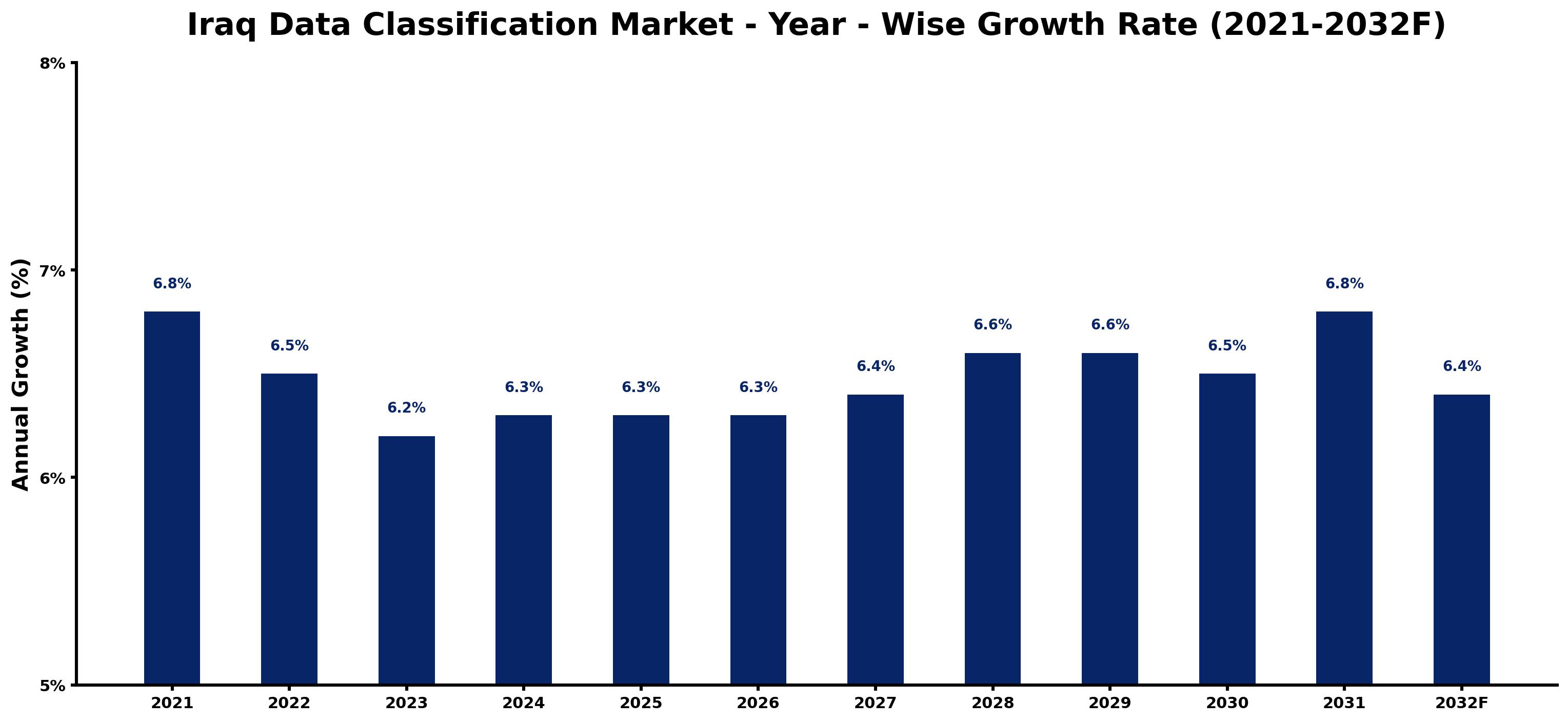
The table below presents the year‑wise growth rates along with the key drivers influencing the market
| Year | Growth Rate | Major Drivers |
| 2021 | 6.8% | Emerging digital economy boosts demand for data management. |
| 2022 | 6.5% | Government cybersecurity initiative drives data classification uptake. |
| 2023 | 6.2% | Growing e-commerce sector necessitates improved data protection measures. |
| 2024 | 6.3% | Increased foreign investments require compliance with data regulations. |
| 2025 | 6.3% | Local enterprises adopt digital solutions enhancing data governance. |
| 2026 | 6.3% | Rising awareness of data privacy fuels market growth. |
| 2027 | 6.4% | Telecommunications improvements enable better data classification systems. |
| 2028 | 6.6% | New regulations mandate strict data handling for businesses. |
| 2029 | 6.6% | Increased cloud adoption stimulates need for data categorization. |
| 2030 | 6.5% | Public sector digitization bolsters data categorization requirements. |
| 2031 | 6.8% | International partnerships enhance local data classification capabilities. |
| 2032 | 6.4% | Ongoing infrastructure projects necessitate upgraded data management solutions. |
Note: Market size estimations and growth projections presented in this report are based on 6Wresearch's proprietary forecasting methodology, utilizing the latest available industry data, government publications, and primary research inputs.
Iraq Data Classification Market Key Takeaways
Below are some of the specific key takeaways from the market, including:
- Growing focus on regulatory compliance and data protection is driving the market.
- Awareness around data classification is gradually improving, leading to better investment in solutions.
- Cloud adoption and big data technologies are generating new data classification demands.
- Persistent skills gaps in the workforce are challenging implementation efforts.
- Government initiatives are shaping standards and frameworks for data classification practices.
Evaluation of Restraints in Iraq Data Classification Market
The growth of the Iraq Data Classification Market is curtailed by several significant constraints. A prevailing issue is the lack of awareness among businesses regarding the critical benefits of data classification. Many organizations are still hesitant to invest in necessary technologies, resulting in inadequate data protection measures. Additionally, the regional skills gap presents a stark challenge, as there is a shortage of trained professionals skilled in data classification techniques. Coupled with economic instability and regulatory ambiguities, these factors form a tough barrier that businesses must navigate to enhance their data governance strategies.
Iraq Data Classification Market Trends
The momentum in the Iraq Data Classification Market is influenced by current trends in technology and regulatory frameworks. Increasing instances of data breaches are pressuring organizations to adopt stringent data classification and governance policies. on top of that, the rise in cloud computing and IoT solutions is leading to a surge in data generation, making the need for automated classification tools even more pressing. The move towards artificial intelligence and machine learning in data analytics is also promising, potentially transforming how data classification processes are conducted.
Iraq Data Classification Market Opportunities
Opportunities abound for growth and investment in the Iraq Data Classification Market. As businesses enhance their focus on data governance, there will be a growing demand for comprehensive classification solutions. Companies that offer scalable and automated classification technologies stand to gain significantly as organizations strive to protect sensitive information. Additionally, public-private partnerships could facilitate the development of skilled labor pools, fostering a more competent workforce in data management practices.
Government Initiatives in the Iraq Data Classification Market
Government actions are playing a crucial role in shaping the framework of the Iraq Data Classification Market. With an increasing emphasis on data security, the government is focused on establishing regulations that guide proper data handling and classification practices. These policies not only aim to safeguard sensitive information but also promote industry-wide compliance that supports market growth.
- A national data protection framework was introduced recently, mandating organizations to implement classification standards.
- Current initiatives are underway to enhance public-sector data management practices through comprehensive training programs.
- A planned regulatory body is set to be established by 2026 to oversee compliance with data classification requirements across sectors.
- Ongoing efforts include workshops to raise awareness about data classification benefits and best practices among private businesses.
- Upcoming regulations expected in 2027 will focus on data transparency and management, influencing both public and private sectors.
Future Insights of the Iraq Data Classification Market
From 2026 to 2032, the Iraq Data Classification Market is expected to witness transformative changes. As organizations increasingly prioritize data governance, the integration of advanced technologies will facilitate improved classification processes. The interplay between regulatory developments and technological advancements will likely foster a more resilient data classification framework, positioning businesses for better compliance and security outcomes. As awareness spreads, investments in data classification technologies will surge, driving substantial market growth.
Iraq Data Classification Market Latest Developments
In the past year, the Iraq Data Classification Market has seen notable developments that reflect a keen shift towards better data governance and security. Organizations are recognizing the urgent need to implement effective data classification strategies, prompting significant investments in technologies and training initiatives.
- A new data classification tool was launched in early 2023, designed specifically for local industries to streamline compliance.
- An initiative that began in mid-2023 focuses on fostering partnerships with educational institutions to build a skilled workforce in data management.
- Plans for a regulatory audit framework are expected to be revealed by the end of 2023, aimed at enhancing compliance across sectors.
- A series of industry seminars on data classification best practices is currently ongoing and will continue throughout 2024.
- By 2025, there are expected enhancements to national cybersecurity policies that will further impact data classification requirements.
Iraq Data Classification Market - Key Attractiveness of the Report
- 10 Years of Market Numbers
- Historical Data Starting from 2022 to 2025
- Base Year: 2025
- Forecast Data until 2032
- Key Performance Indicators Impacting the Market
- Major Upcoming Developments and Projects
Key Highlights of the Report:
- Iraq Data Classification Market Outlook
- Market Size of Iraq Data Classification Market, 2025
- Forecast of Iraq Data Classification Market, 2032
- Historical Data and Forecast of Iraq Data Classification Revenues & Volume for the Period 2022-2032F
- Iraq Data Classification Market Trend Evolution
- Iraq Data Classification Market Drivers and Challenges
- Iraq Data Classification Price Trends
- Iraq Data Classification Porter's Five Forces
- Iraq Data Classification Industry Life Cycle
- Historical Data and Forecast of Iraq Data Classification Market Revenues & Volume By Component for the Period 2022-2032F
- Historical Data and Forecast of Iraq Data Classification Market Revenues & Volume By Solutions (Standalone and Integrated) for the Period 2022-2032F
- Historical Data and Forecast of Iraq Data Classification Market Revenues & Volume By Services for the Period 2022-2032F
- Historical Data and Forecast of Iraq Data Classification Market Revenues & Volume By Application for the Period 2022-2032F
- Historical Data and Forecast of Iraq Data Classification Market Revenues & Volume By Access Control for the Period 2022-2032F
- Historical Data and Forecast of Iraq Data Classification Market Revenues & Volume By GRC for the Period 2022-2032F
- Historical Data and Forecast of Iraq Data Classification Market Revenues & Volume By Web for the Period 2022-2032F
- Historical Data and Forecast of Iraq Data Classification Market Revenues & Volume By Mobile & Email Protection for the Period 2022-2032F
- Historical Data and Forecast of Iraq Data Classification Market Revenues & Volume By Centralized Management for the Period 2022-2032F
- Historical Data and Forecast of Iraq Data Classification Market Revenues & Volume By Methodology for the Period 2022-2032F
- Historical Data and Forecast of Iraq Data Classification Market Revenues & Volume By Content-based Classification for the Period 2022-2032F
- Historical Data and Forecast of Iraq Data Classification Market Revenues & Volume By Context-based Classification for the Period 2022-2032F
- Historical Data and Forecast of Iraq Data Classification Market Revenues & Volume By User-based Classification for the Period 2022-2032F
- Historical Data and Forecast of Iraq Data Classification Market Revenues & Volume By Vertical for the Period 2022-2032F
- Historical Data and Forecast of Iraq Data Classification Market Revenues & Volume By BFSI for the Period 2022-2032F
- Historical Data and Forecast of Iraq Data Classification Market Revenues & Volume By Healthcare and Lifesciences for the Period 2022-2032F
- Historical Data and Forecast of Iraq Data Classification Market Revenues & Volume By Government and Defense for the Period 2022-2032F
- Historical Data and Forecast of Iraq Data Classification Market Revenues & Volume By Education for the Period 2022-2032F
- Historical Data and Forecast of Iraq Data Classification Market Revenues & Volume By Telecom for the Period 2022-2032F
- Historical Data and Forecast of Iraq Data Classification Market Revenues & Volume By Media and Entertainment for the Period 2022-2032F
- Historical Data and Forecast of Iraq Data Classification Market Revenues & Volume By Others (Retail and Ecommerce, Manufacturing, and Energy and Utilities) for the Period 2022-2032F
- Iraq Data Classification Import Export Trade Statistics
- Market Opportunity Assessment By Component
- Market Opportunity Assessment By Application
- Market Opportunity Assessment By Methodology
- Market Opportunity Assessment By Vertical
- Iraq Data Classification Top Companies Market Share
- Iraq Data Classification Competitive Benchmarking By Technical and Operational Parameters
- Iraq Data Classification Company Profiles
- Iraq Data Classification Key Strategic Recommendations






































