Iraq Electrical and electronics Market Summary
The iraq electrical and electronics market was estimated at USD 171 Million in 2025 and is projected to reach USD 231 Million by 2032, growing at a CAGR of 5.3% from 2026 to 2032.
Iraq Electrical and electronics Market Year-wise Growth Rate and Key Drivers
This graph highlights how the Iraq Electrical and electronics Market has steadily grown over the past five years, supported by major growth factors.
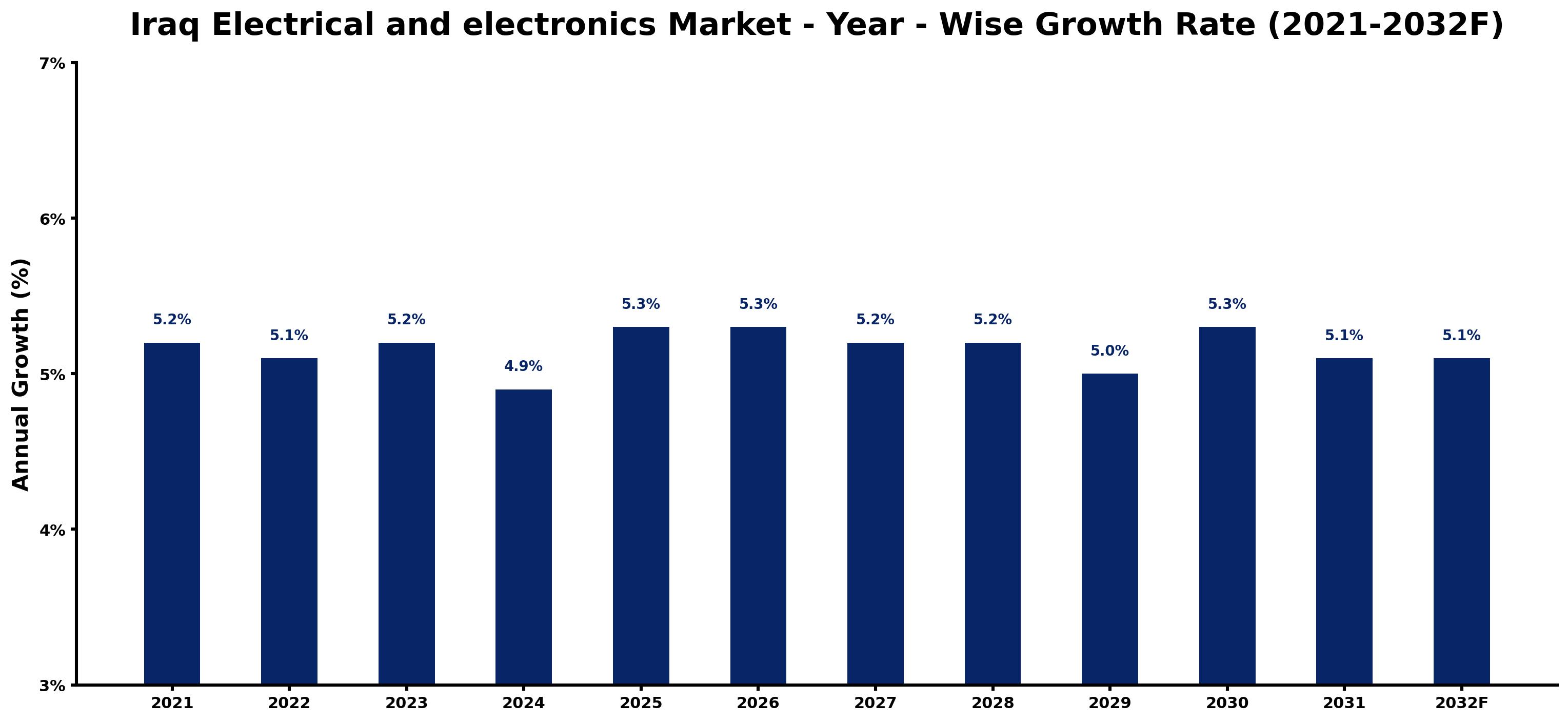
The table below presents the year wise growth rates along with the key drivers influencing the market
| Year | Growth Rate | Major Drivers |
| 2021 | 5.2% | Post-lockdown retail projects are revitalizing the electrical and electronics sectors. |
| 2022 | 5.1% | Legacy copper grid failures highlighted the need for modern infrastructure upgrades. |
| 2023 | 5.2% | Enterprise budgets prioritizing energy efficiency are reshaping consumer electronics purchasing habits. |
| 2024 | 4.9% | Increased urbanization leads to higher demand for residential electrical installations. |
| 2025 | 5.3% | Investment in renewable energy projects is driving growth in solar electronics. |
| 2026 | 5.3% | Technological innovation in smart home devices captures consumer attention and investment. |
| 2027 | 5.2% | The local manufacturing sector benefits from a growing demand for assembly services. |
| 2028 | 5.2% | Construction pipelines for new commercial buildings boost demand for electrical installations. |
| 2029 | 5.0% | Partnerships with international firms enhance access to advanced electronic technologies. |
| 2030 | 5.3% | Improved supply chains reduce costs in delivering electrical components and systems. |
| 2031 | 5.1% | Rising disposable incomes enable consumers to invest in high-end electronics. |
| 2032 | 5.1% | Increased focus on sustainability pushes companies to innovate in energy-efficient solutions. |
Note - Market size estimations and growth projections presented in this report are based on 6Wresearch's advanced forecasting approach, validated with industry datasets as of June 2026.
Iraq Electrical and electronics Market Synopsis
The Iraq Electrical and electronics Market is projected to reach 5.3% and witness significant growth during the forecast period (2026-2032). This growth is underpinned by a range of factors including increased urban development, consumer demand for advanced electronic products, and substantial investment in infrastructure. The market comprises crucial segments such as power generation, transmission and distribution equipment, consumer electronics, and home appliances. The Iraqi government's initiatives aimed at enhancing electricity accessibility and reliability are further propelling the demand for electrical equipment and systems, while the expanding middle-class demographic drives the consumption of consumer electronics.
Iraq Electrical and electronics Market Growth Drivers
Several factors are contributing to the growth of the Iraq Electrical and electronics Market. Key drivers include:
- Increased Investment in Infrastructure: Significant public and private investments are being made to upgrade the country's electrical infrastructure, which is pivotal for market expansion.
- Urbanization Trends: A rapid increase in urban populations is creating higher demand for electrical and electronic products, including appliances and consumer electronics.
- Government Support: Policy initiatives encouraging local manufacturing and investment bolster market growth. These initiatives are aimed at reducing import dependency.
- Consumer Demand: The expanding middle class is increasingly inclined towards adopting modern electronic goods, encouraging the influx of various electrical appliances and smart technologies.
- Renewable Energy Adoption: A growing awareness and governmental push for renewable energy solutions, including solar energy, are driving investments and innovations in the electrical sector.
Iraq Electrical and electronics Market Trends and Opportunities
The Iraq Electrical and electronics Market is witnessing notable trends that indicate a shift towards more advanced and sustainable technologies. Major trends include:
- Smart Home Technology: There is a notable increase in the adoption of smart home devices, including automation technologies such as smart lighting and security systems, as consumers seek enhanced convenience and energy efficiency.
- Focus on Energy Efficiency: With rising energy costs, consumers and businesses are leaning towards energy-efficient appliances that reduce overall utility expenses.
- Growth in Renewable Energy Technologies: Government initiatives are promoting the use of solar panels and other renewable energy solutions, offering new market opportunities for manufacturers and suppliers.
- Enhanced Connectivity Solutions: The demand for connected devices and Internet of Things (IoT) applications is increasing, driving the need for reliable electrical and electronic infrastructure.
- Sustainability Trends: Consumer preferences are shifting towards products that emphasize sustainability and environmental conservation, presenting opportunities for innovative solutions in the electrical sector.
Iraq Electrical and electronics Market Challenges and Restraints
Despite the positive outlook, the Iraq Electrical and electronics Market is not without challenges. Among the significant obstacles are:
- Political Instability: Ongoing political uncertainties contribute to a volatile business environment, affecting investments and operational performance in the electrical sector.
- Inadequate Infrastructure: Insufficient infrastructure, such as transportation networks and storage facilities, complicates the distribution of electrical and electronic products.
- Unreliable Power Supply: Frequent power outages and unreliable electricity access hinder production and operational efficiency for companies in the sector.
- Regulatory Barriers: Complex regulatory frameworks can pose hurdles, limiting market entry and operational capabilities for international suppliers.
- Security Concerns: Ongoing security issues in certain regions inhibit investment and can lead to disruptions in operational activities.
Iraq Electrical and electronics Market Investment Opportunities
The investment landscape in the Iraq Electrical and electronics Market is promising, fueled by various growth factors. Key investment opportunities include:
- Urban Infrastructure Development: Ongoing urbanization provides opportunities for investments in electrical and electronic systems tailored to modern urban needs.
- Renewable Energy Projects: The push for renewable energy technologies presents a variety of investment avenues for entities looking to enter the sustainable energy market.
- Consumer Electronics Expansion: The growing demand for consumer electronics and home appliances opens pathways for new product offerings and market penetration.
- Smart Technology Development: Innovations in smart technologies and automation systems create demand for new product lines, attracting investors in cutting-edge solutions.
- Local Manufacturing Initiatives: Investment in local production facilities promotes self-sufficiency, supported by government policies aimed at reducing import reliance.
Iraq Electrical and electronics Market Government Investment and Initiatives
The Iraqi government has implemented several investment initiatives targeted at encouraging growth in the electrical and electronics sector. Key initiatives include policies aimed at boosting local production capabilities, which reduce the country's dependence on imports and strengthen the domestic manufacturing landscape.
Public spending on infrastructure development remains a priority, with efforts focused on enhancing the electricity supply network and improving access to reliable power. The government is also keen on establishing quality and safety standards for electrical products to align with international norms, thereby elevating competitiveness.
Investment incentives offered by the government are designed to attract foreign investors, thus facilitating technology transfer and knowledge sharing. These initiatives aim to create a more resilient and self-sufficient electrical and electronics industry in Iraq.
Iraq Electrical and electronics Market Latest Developments (May 2025 - June 2026)
In the period between May 2025 and June 2026, the Iraq Electrical and electronics Market has seen several noteworthy developments. The government has intensified its focus on improving energy infrastructure, including upgrading transmission lines and enhancing the reliability of electricity supply.
Additionally, there has been an observable increase in the introduction of smart home technologies as consumers seek more efficient and automated solutions in their households. The demand for renewable energy sources has also surged, with various initiatives aimed at increasing solar panel adoption and integrating renewable solutions into the national energy mix.
The marketplace is responding to these trends with innovative product offerings focused on energy efficiency and sustainable solutions, reflecting the overarching consumer demand for modern electrical and electronic goods.
Iraq Electrical and electronics Market - Key Attractiveness of the Report
- 10 Years of Market Numbers
- Historical Data Starting from 2022 to 2025
- Base Year: 2025
- Forecast Data until 2032
- Key Performance Indicators Impacting the Market
- Major Upcoming Developments and Projects
Key Highlights of the Report:
- Iraq Electrical and electronics Market Outlook
- Market Size of Iraq Electrical and electronics Market, 2025
- Forecast of Iraq Electrical and electronics Market, 2032F
- Historical Data and Forecast of Iraq Electrical and electronics Revenues & Volume for the Period 2022-2032F
- Iraq Electrical and electronics Market Trend Evolution
- Iraq Electrical and electronics Market Drivers and Challenges
- Iraq Electrical and electronics Price Trends
- Iraq Electrical and electronics Porter's Five Forces
- Iraq Electrical and electronics Industry Life Cycle
- Historical Data and Forecast of Iraq Electrical and electronics Market Revenues & Volume By Type for the Period 2022-2032F
- Historical Data and Forecast of Iraq Electrical and electronics Market Revenues & Volume By Electric Motors for the Period 2022-2032F
- Historical Data and Forecast of Iraq Electrical and electronics Market Revenues & Volume By Primary And Storage Batteries for the Period 2022-2032F
- Historical Data and Forecast of Iraq Electrical and electronics Market Revenues & Volume By Generators for the Period 2022-2032F
- Historical Data and Forecast of Iraq Electrical and electronics Market Revenues & Volume By Semiconductors for the Period 2022-2032F
- Historical Data and Forecast of Iraq Electrical and electronics Market Revenues & Volume By Household Appliances for the Period 2022-2032F
- Historical Data and Forecast of Iraq Electrical and electronics Market Revenues & Volume By Applications for the Period 2022-2032F
- Historical Data and Forecast of Iraq Electrical and electronics Market Revenues & Volume By Online for the Period 2022-2032F
- Historical Data and Forecast of Iraq Electrical and electronics Market Revenues & Volume By Offline for the Period 2022-2032F
- Iraq Electrical and electronics Import Export Trade Statistics
- Market Opportunity Assessment By Type
- Market Opportunity Assessment By Applications
- Iraq Electrical and electronics Top Companies Market Share
- Iraq Electrical and electronics Competitive Benchmarking By Technical and Operational Parameters
- Iraq Electrical and electronics Company Profiles
- Iraq Electrical and electronics Key Strategic Recommendations






































