Iraq Tobacco Market Size, Share & Growth Rate
The Iraq Tobacco Market was estimated at USD 344 Million in 2025 and is projected to reach USD 464 Million by 2032, growing at a CAGR of 4.4% from 2026 to 2032. This growth trajectory is being fueled by the country's youthful demographics and increasing urbanization, which are resulting in rising disposable incomes and a broader acceptance of various tobacco products. Additionally, the ongoing demand for innovative and flavored tobacco options is providing an extra push towards market expansion.
Iraq Tobacco Market Year-wise Growth Rate and Key Drivers
This graph highlights how the Iraq Tobacco Market has steadily grown over the years, supported by major growth factors.
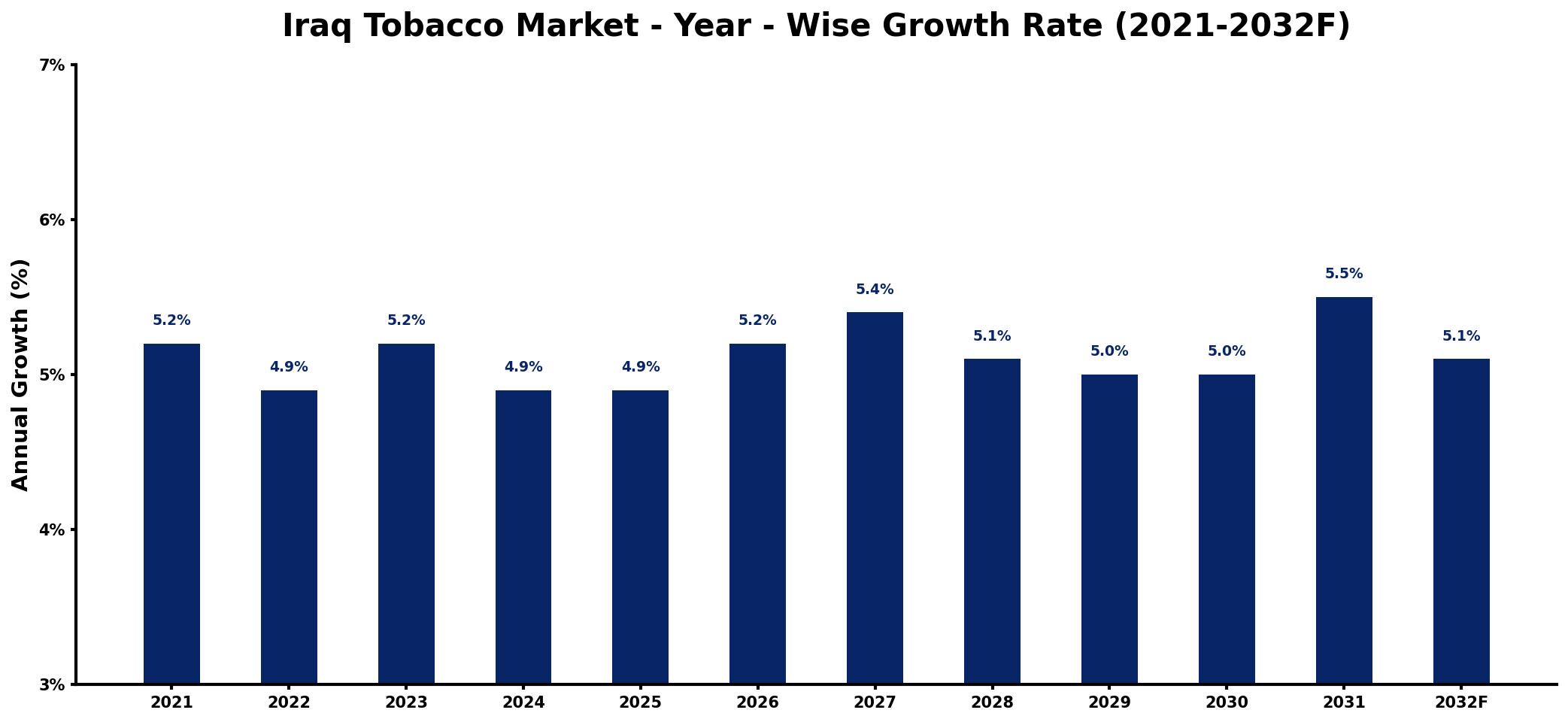
The table below presents the year‑wise growth rates along with the key drivers influencing the market
| Year | Growth Rate | Major Drivers |
| 2021 | 5.2% | Rising consumer disposable income |
| 2022 | 4.9% | Increased urban population density |
| 2023 | 5.2% | Growth in retail distribution channels |
| 2024 | 4.9% | Expanding online shopping platforms |
| 2025 | 4.9% | Higher youth engagement in leisure |
| 2026 | 5.2% | Increased marketing and promotions |
| 2027 | 5.4% | Strong brand loyalty development |
| 2028 | 5.1% | Emerging trends in social gatherings |
| 2029 | 5.0% | Enhanced product variety offerings |
| 2030 | 5.0% | Growing influence of social media |
| 2031 | 5.5% | Expansion of regional supply networks |
| 2032 | 5.1% | Rising interest in premium brands |
Note: Market size estimations and growth projections presented in this report are based on 6Wresearch's proprietary forecasting methodology, utilizing the latest available industry data, government publications, and primary research inputs.
Iraq Tobacco Market Synopsis
The most significant force currently shaping the Iraq Tobacco Market is the strong inclination towards alternative tobacco products, such as e-cigarettes and heated tobacco. This shift is primarily driven by health-conscious consumers who are increasingly aware of traditional smokings associated health risks.
Coupled with this trend is the growing demand for flavored tobacco, particularly among the younger population. As local and international brands adapt to these evolving preferences, they face an environment where stringent regulations and taxation policies create both challenges and opportunities for innovation.
Iraq Tobacco Market Key Takeaways
- The market is projected to grow steadily due to rising urbanization and disposable income levels.
- Health awareness is driving consumer interest in electronic cigarettes and flavored products.
- Government regulations are tightening, impacting traditional cigarette consumption rates.
- The illicit trade of counterfeit tobacco products remains a significant challenge for market players.
- Investment opportunities are burgeoning as local brands and new entrants seek to capture untapped segments.
Evaluation of Restraints in Iraq Tobacco Market
Despite its growth potential, the Iraq Tobacco Market is constrained by several key factors. Government regulations aimed at reducing tobacco consumption have led to higher taxation rates, which can deter consumers. This regulatory landscape is further complicated by the rising public awareness of health risks associated with smoking. Additionally, economic instability and political challenges can affect consumer purchasing power, leading to fluctuations in demand. The presence of counterfeit products not only threatens legitimate brands but also creates a general mistrust among consumers, hindering overall market growth.
Iraq Tobacco Market Trends
The landscape of the Iraq Tobacco Market is being reshaped by several notable trends. A marked shift toward healthier alternatives, such as e-cigarettes and heated tobacco products, is becoming increasingly prevalent. This transition reflects a growing health consciousness among consumers, particularly the younger demographic, who are looking for less harmful ways to consume tobacco. Additionally, theres an upward trend in demand for flavored tobacco, driven largely by younger consumers seeking unique experiences. These trends indicate a significant transformation in consumer preferences, positioning the market for potential growth in less traditional tobacco sectors.
Iraq Tobacco Market Opportunities
The Iraq Tobacco Market is ripe with investment opportunities, particularly given its large population of over 10 million tobacco consumers. With an economic landscape gradually improving, increased disposable income levels are likely to lead to higher demand for various tobacco products, including shisha and smokeless options. The relative absence of robust competition in specific segments provides a favorable environment for new entrants to establish themselves. Companies that focus on innovation and adapting to consumer preferences, especially towards flavored and alternative tobacco products, stand to benefit significantly.
Government Initiatives in the Iraq Tobacco Market
Government policies play a crucial role in shaping the Iraq Tobacco Market. The Ministry of Health has enacted stringent tobacco control measures to reduce smoking rates, including bans on smoking in public spaces and advertising restrictions. These regulations are designed to protect public health while attempting to curb the prevalence of tobacco use. In addition, there are high excise taxes on tobacco products aimed at both discouraging consumption and funding public health initiatives. Enforcement actions against illicit trade continue to be a government priority, showcasing a commitment to maintaining a regulated market environment.
Future Insights of the Iraq Tobacco Market
Looking ahead to 2026-2032, the Iraq Tobacco Market is expected to maintain a steady growth trajectory. Urbanization and a burgeoning young adult population will likely contribute to sustained demand. The anticipated trend towards premium and flavored products will further cater to evolving consumer preferences. However, challenges posed by political instability and economic uncertainties could impact market dynamics. Nonetheless, as consumer habits continue to shift towards alternative products, the market is set to present opportunities for innovative companies willing to adapt to these changing tides.
Iraq Tobacco Market Latest Developments (2025 - 2026)
Recent developments within the Iraq Tobacco Market indicate a growing focus on innovation, particularly in the realm of flavored and alternative tobacco products. With consumer preferences shifting, brands are increasingly looking to diversify their offerings. Simultaneously, regulatory actions are becoming more pronounced as the government intensifies efforts to combat illicit trade and enhance public health measures. As a result, companies are adjusting their marketing strategies to align with these new regulations while navigating a competitive landscape characterized by a burgeoning consumer interest in alternative smoking experiences.
Iraq Tobacco Market - Key Attractiveness of the Report
- 10 Years of Market Numbers
- Historical Data Starting from 2022 to 2025
- Base Year: 2025
- Forecast Data until 2032
- Key Performance Indicators Impacting the Market
- Major Upcoming Developments and Projects
Key Highlights of the Report:
- Iraq Tobacco Market Outlook
- Market Size of Iraq Tobacco Market, 2025
- Forecast of Iraq Tobacco Market, 2032
- Historical Data and Forecast of Iraq Tobacco Revenues & Volume for the Period 2022-2032F
- Iraq Tobacco Market Trend Evolution
- Iraq Tobacco Market Drivers and Challenges
- Iraq Tobacco Price Trends
- Iraq Tobacco Porter's Five Forces
- Iraq Tobacco Industry Life Cycle
- Historical Data and Forecast of Iraq Tobacco Market Revenues & Volume By Product for the Period 2022-2032F
- Historical Data and Forecast of Iraq Tobacco Market Revenues & Volume By Smokeless for the Period 2022-2032F
- Historical Data and Forecast of Iraq Tobacco Market Revenues & Volume By Cigarettes for the Period 2022-2032F
- Historical Data and Forecast of Iraq Tobacco Market Revenues & Volume By Cigar & Cigarillos for the Period 2022-2032F
- Historical Data and Forecast of Iraq Tobacco Market Revenues & Volume By Next Generation Products for the Period 2022-2032F
- Historical Data and Forecast of Iraq Tobacco Market Revenues & Volume By Waterpipes for the Period 2022-2032F
- Historical Data and Forecast of Iraq Tobacco Market Revenues & Volume By Distribution Channel for the Period 2022-2032F
- Historical Data and Forecast of Iraq Tobacco Market Revenues & Volume By Offline for the Period 2022-2032F
- Historical Data and Forecast of Iraq Tobacco Market Revenues & Volume By Online for the Period 2022-2032F
- Iraq Tobacco Import Export Trade Statistics
- Market Opportunity Assessment By Product
- Market Opportunity Assessment By Distribution Channel
- Iraq Tobacco Top Companies Market Share
- Iraq Tobacco Competitive Benchmarking By Technical and Operational Parameters
- Iraq Tobacco Company Profiles
- Iraq Tobacco Key Strategic Recommendations






































