Iraq Wireless Network Security Market Size & Growth Rate (2026-2032)
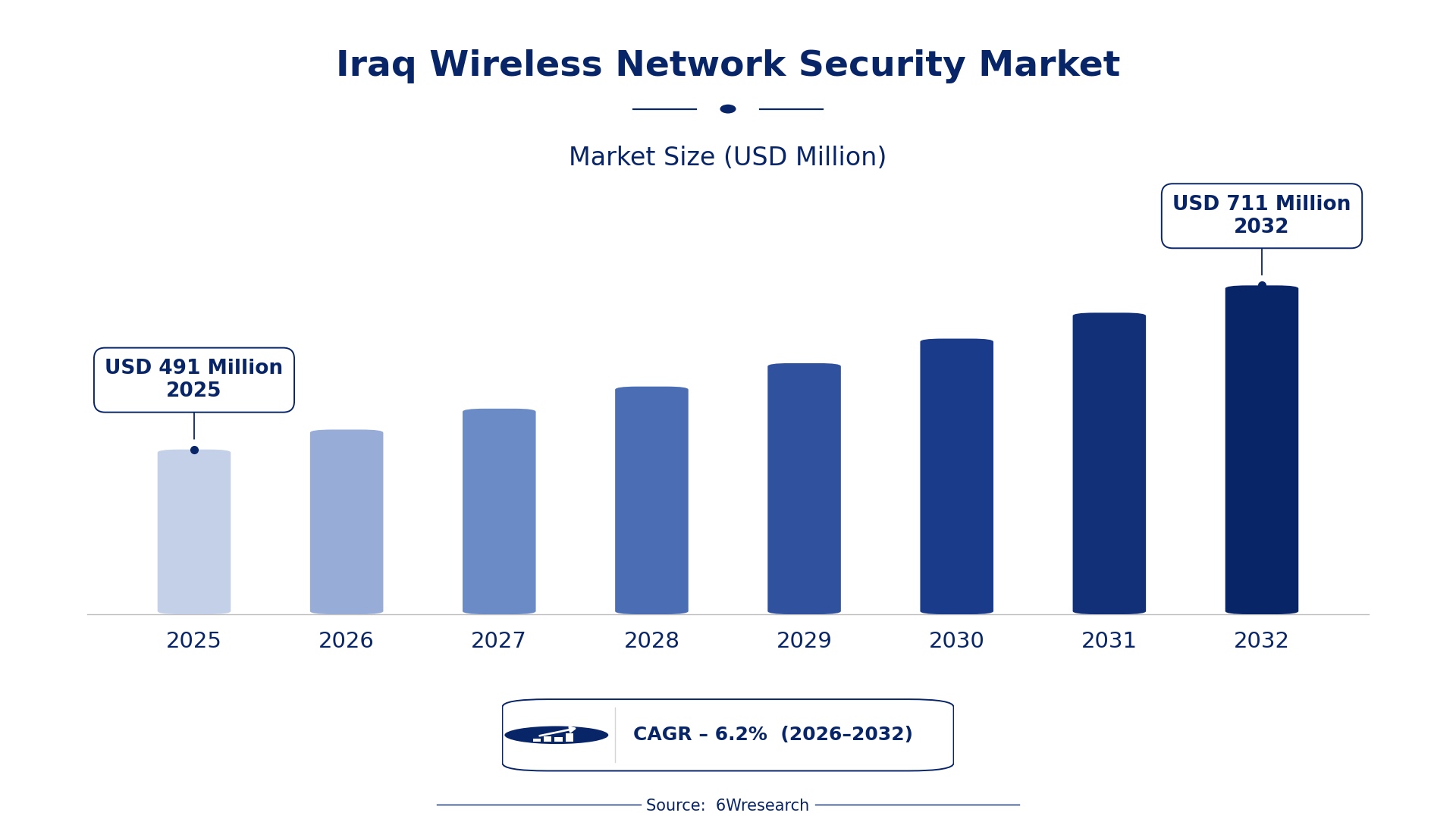
The Iraq Wireless Network Security Market was estimated at USD 491 Million in 2025 and is projected to reach USD 711 Million by 2032, growing at a CAGR of 6.2% from 2026 to 2032.
Iraq Wireless Network Security Market Synopsis
In Iraq, the demand for wireless network security has reached a critical juncture. As the nation integrates digital solutions across various sectors, safeguarding these wireless communications is no longer optional; it's essential. The vulnerabilities inherent in wireless networks have become focal points for both government and private entities striving to mitigate cyber threats.
The market offers an array of security solutions, including encryption, intrusion detection, and authentication systems. This breadth of offerings reflects the ongoing challenges organizations face, including unauthorized access and potential data breaches. The accelerating shift toward BYOD (Bring Your Own Device) policies further intensifies the need for effective wireless security measures.
Iraq Wireless Network Security Market Year-wise Growth Rate and Key Drivers
This graph illustrates the annual growth rates of the Iraq Wireless Network Security Market from 2021 to 2032, highlighting a steady upward trajectory and projected expansion over the forecast period.
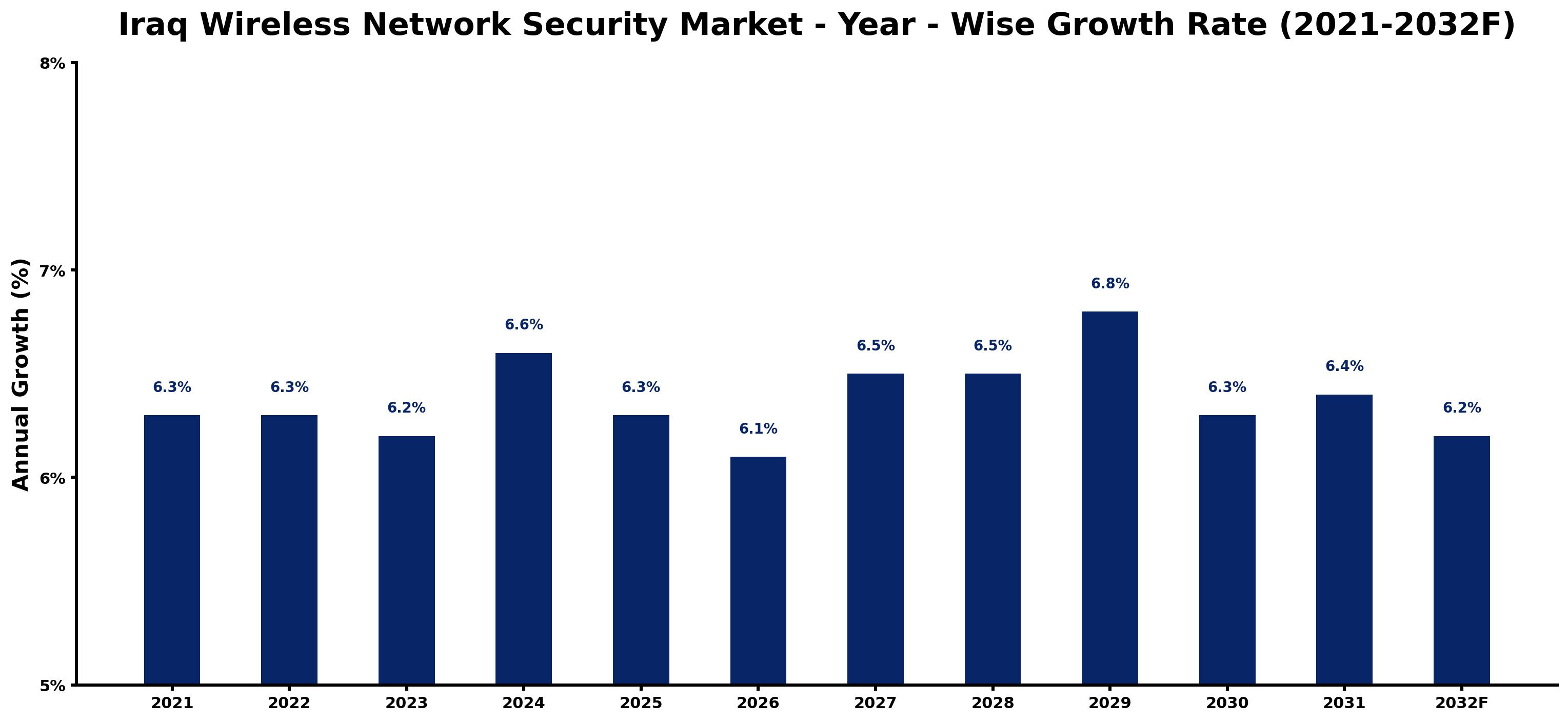
The table below presents the year‑wise growth rates along with the key drivers influencing the market
| Year | Growth Rate | Major Drivers |
| 2021 | 6.3% | Increased cyber threats targeting government institutions. |
| 2022 | 6.3% | Government initiatives enhancing cybersecurity regulations for businesses. |
| 2023 | 6.2% | Growth in mobile internet usage driving security investments. |
| 2024 | 6.6% | Adoption of remote work models increases demand for security. |
| 2025 | 6.3% | Regulatory body mandates stronger encryption for telecom systems. |
| 2026 | 6.1% | Rising online transactions spurring fraud prevention measures. |
| 2027 | 6.5% | Awareness campaigns on cybersecurity risks boosting market growth. |
| 2028 | 6.5% | Partnerships between local ISPs and security firms enhancing services. |
| 2029 | 6.8% | International aid supporting infrastructure for improved network security. |
| 2030 | 6.3% | Increased investment in IoT devices driving security solutions. |
| 2031 | 6.4% | Youth demographics push demand for mobile security solutions. |
| 2032 | 6.2% | Emerging tech hubs fostering innovation in cybersecurity services. |
Note: Market size estimations and growth projections presented in this report are based on 6Wresearch's proprietary forecasting methodology, utilizing the latest available industry data, government publications, and primary research inputs.
Iraq Wireless Network Security Market Key Takeaways
Below are some of the specific key takeaways from the market, including:
- Growing adoption of wireless technologies is directly correlating with increased cybersecurity threats.
- Technological advancements like WPA3 are expanding the options available for securing wireless communications.
- The government is actively working on regulations that promote cybersecurity best practices across sectors.
- BYOD policies are becoming commonplace, leading to a heightened focus on security solutions tailored for mobile devices.
- Infrastructure limitations remain a challenge, impacting the speed of adopting advanced security technologies.
Evaluation of Restraints in Iraq Wireless Network Security Market
Despite the growing awareness and need for wireless network security, several limitations hinder market advancement. Infrastructure challenges across Iraq mean that many organizations lack access to sophisticated security technologies. There's also a significant skills gap in cybersecurity expertise, which hampers effective implementation of security measures. on top of that, ongoing concerns regarding data privacy and compliance with international standards add layers of complexity that may deter investment in essential security solutions.
Iraq Wireless Network Security Market Trends
Several trends are shaping the Iraq Wireless Network Security Market as stakeholders respond to emerging threats. The incorporation of artificial intelligence and machine learning in security protocols is on the rise, enhancing the ability to detect and respond to threats in real-time. Simultaneously, the increasing integration of Internet of Things (IoT) devices within enterprise networks is necessitating specialized security measures to safeguard against unique vulnerabilities. Additionally, remote work policies are driving demand for solutions that secure connections across various environments.
Iraq Wireless Network Security Market Opportunities
There exists a fertile ground for investment and development in the Iraq Wireless Network Security Market. The government’s push for a modernized digital infrastructure can be seen as an invitation for technology providers to step in. Opportunities abound in sectors such as finance, healthcare, and education, where robust wireless security is crucial to protect sensitive data. The need for localized cybersecurity education programs also presents avenues for businesses focused on workforce training, further strengthening the market ecosystem.
Government Initiatives in the Iraq Wireless Network Security Market
The Iraqi government recognizes the critical need for cybersecurity, especially as the nation’s reliance on digital technologies escalates. Through various initiatives, the government aims to bolster the security posture of wireless networks and promote compliance with international standards. This proactive approach is essential for fostering a secure environment that can attract both local and foreign investments.
- A national cybersecurity framework was launched in 2025, establishing guidelines for best practices in wireless security.
- Ongoing initiatives focus on enhancing awareness around cybersecurity threats, targeting both public and private sectors.
- A public-private partnership is currently underway to improve the infrastructure supporting wireless network security across the country.
- Planned funding is expected to support the development of specialized training programs in cybersecurity by 2027.
- A regulatory body is set to implement mandatory compliance checks for organizations handling sensitive data, expected to be operational by late 2026.
Future Insights of the Iraq Wireless Network Security Market
From 2026 to 2032, the Iraq Wireless Network Security Market is expected to evolve significantly as both technological advancements and regulatory measures shape its trajectory. With the continued proliferation of wireless networks, organizations will need to invest not just in technology, but also in talent to manage these systems effectively. As cybersecurity threats become increasingly sophisticated, the market is likely to see a shift toward more integrated solutions that combine hardware and software for comprehensive security coverage.
Iraq Wireless Network Security Market Latest Developments
In the last year, the Iraq Wireless Network Security Market has witnessed various noteworthy developments that signal growth and innovation. Enterprises and governmental bodies are responding to escalating cybersecurity concerns with proactive measures and new partnerships to enhance security frameworks.
- A major technology vendor launched a new suite of wireless security solutions in early 2025, designed to meet local market needs.
- In Q2 2025, a leading regional operator began upgrading its network infrastructure to include advanced encryption technologies.
- A collaboration between local tech companies and academic institutions was initiated in mid-2025 to develop cybersecurity training programs.
- Anticipated in late 2026, a new cybersecurity task force will be established to address critical vulnerabilities in wireless networks.
Iraq Wireless Network Security Market - Key Attractiveness of the Report
- 10 Years of Market Numbers
- Historical Data Starting from 2022 to 2025
- Base Year: 2025
- Forecast Data until 2032
- Key Performance Indicators Impacting the Market
- Major Upcoming Developments and Projects
Key Highlights of the Report:
- Iraq Wireless Network Security Market Outlook
- Market Size of Iraq Wireless Network Security Market, 2025
- Forecast of Iraq Wireless Network Security Market, 2032
- Historical Data and Forecast of Iraq Wireless Network Security Revenues & Volume for the Period 2022-2032F
- Iraq Wireless Network Security Market Trend Evolution
- Iraq Wireless Network Security Market Drivers and Challenges
- Iraq Wireless Network Security Price Trends
- Iraq Wireless Network Security Porter's Five Forces
- Iraq Wireless Network Security Industry Life Cycle
- Historical Data and Forecast of Iraq Wireless Network Security Market Revenues & Volume By Solutions for the Period 2022-2032F
- Historical Data and Forecast of Iraq Wireless Network Security Market Revenues & Volume By Firewall for the Period 2022-2032F
- Historical Data and Forecast of Iraq Wireless Network Security Market Revenues & Volume By IPS/IDS for the Period 2022-2032F
- Historical Data and Forecast of Iraq Wireless Network Security Market Revenues & Volume By Encryption for the Period 2022-2032F
- Historical Data and Forecast of Iraq Wireless Network Security Market Revenues & Volume By I&AM for the Period 2022-2032F
- Historical Data and Forecast of Iraq Wireless Network Security Market Revenues & Volume By UTM for the Period 2022-2032F
- Historical Data and Forecast of Iraq Wireless Network Security Market Revenues & Volume By Services for the Period 2022-2032F
- Historical Data and Forecast of Iraq Wireless Network Security Market Revenues & Volume By Security Operations for the Period 2022-2032F
- Historical Data and Forecast of Iraq Wireless Network Security Market Revenues & Volume By Consulting for the Period 2022-2032F
- Historical Data and Forecast of Iraq Wireless Network Security Market Revenues & Volume By Managed Security Services for the Period 2022-2032F
- Iraq Wireless Network Security Import Export Trade Statistics
- Market Opportunity Assessment By Solutions
- Market Opportunity Assessment By Services
- Iraq Wireless Network Security Top Companies Market Share
- Iraq Wireless Network Security Competitive Benchmarking By Technical and Operational Parameters
- Iraq Wireless Network Security Company Profiles
- Iraq Wireless Network Security Key Strategic Recommendations






































