Ireland Tobacco Market Size (2020-2030)
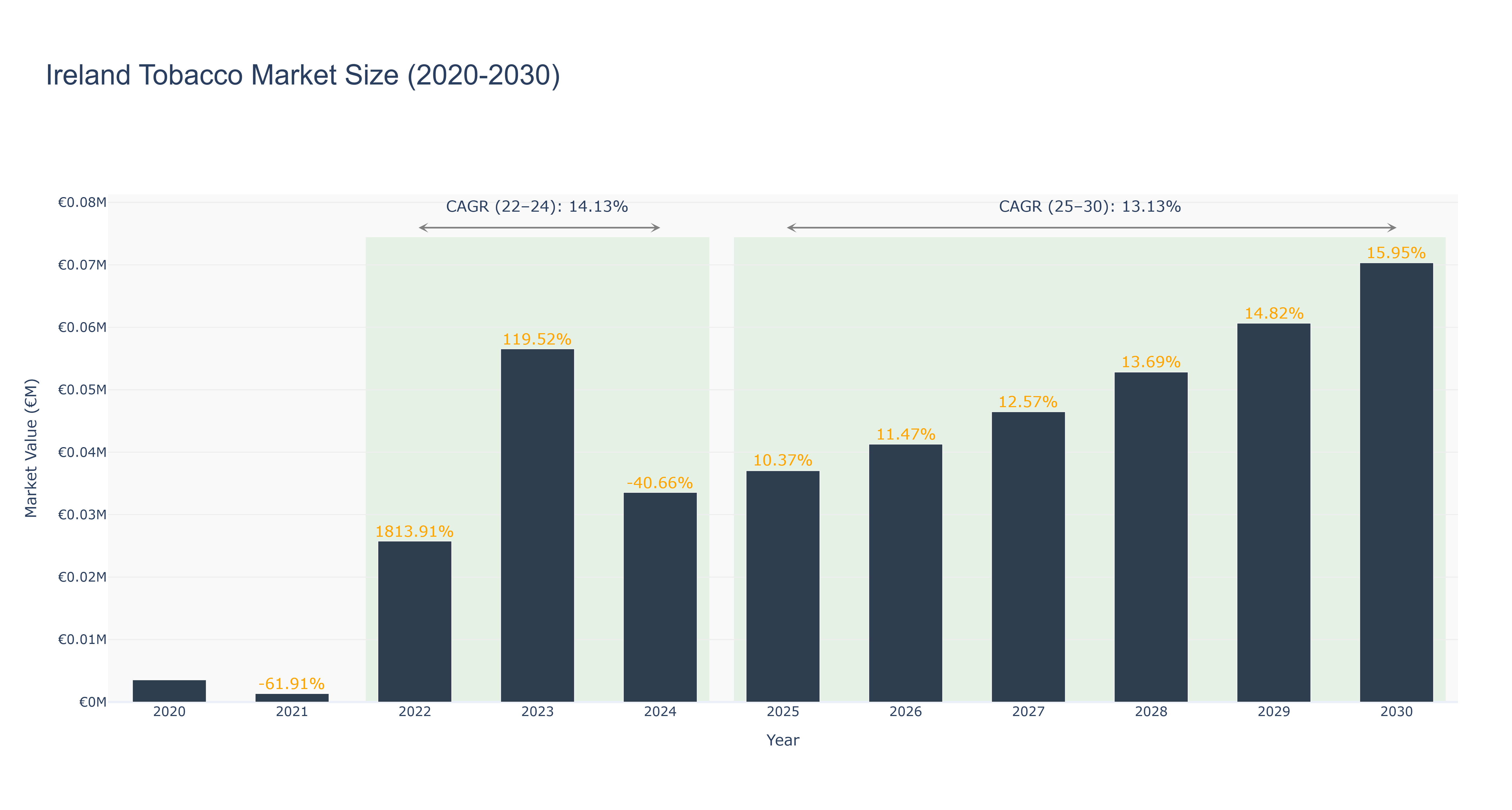
The Ireland Tobacco Market has exhibited a volatile trajectory over the past few years, with significant fluctuations in market size. Following a peak market size of €56.54 thousand in 2023, the actual market size declined to €33.55 thousand in 2024, reflecting a -40.66% growth rate. Notably, from 2022 to 2024, the market experienced a remarkable CAGR of 14.13%, driven by a resurgence in consumer demand and strategic marketing initiatives. Looking ahead, the forecasted period from 2025 to 2030 anticipates a more stable growth trajectory, with a projected CAGR of 13.13%. Market sizes are expected to reach €70.32 thousand by 2030, as the industry adapts to regulatory changes and evolving consumer preferences. Factors such as innovation in product offerings and a focus on sustainability are likely to shape the market's future, positioning it for gradual recovery and growth amidst ongoing challenges.
Ireland Tobacco Market: Production & Trade Performance (2019-2025)
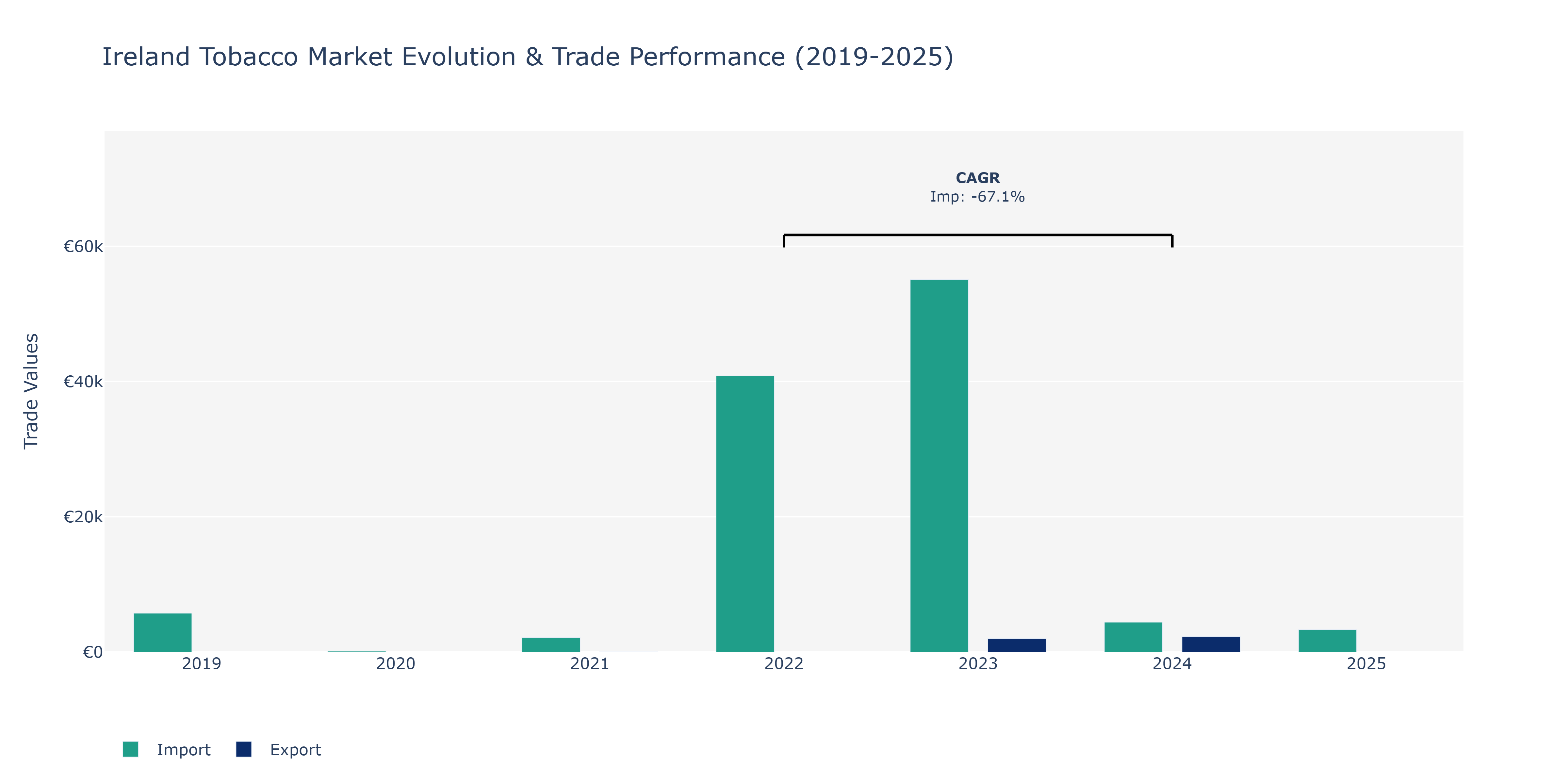
The Ireland Tobacco Market saw notable fluctuations in both Exports and Imports during the period under review. In 2019, Imports stood at €5.75 thousand, significantly higher than subsequent years. However, in 2020, Imports dropped to €138, marking a substantial decline. The market rebounded in 2021, with Exports amounting to €29 and Imports increasing to €2.13 thousand, indicating a recovery phase. The peak in Imports was observed in 2023, reaching €55.06 thousand, driven by increased demand or regulatory changes. Conversely, Exports peaked in 2024 at €2.3 thousand, showcasing potential growth opportunities for local tobacco producers tapping into international markets. The significant negative CAGR of -67.09% in Imports from 2022 to 2024 suggests potential disruptions in the supply chain, possibly influenced by trade policies or shifts in consumer preferences. These fluctuations emphasize the market's sensitivity to various internal and external factors, necessitating strategic adaptations by industry players to navigate uncertainties effectively.
Key Highlights of the Report:
- Ireland Tobacco Market Outlook
- Market Size of Ireland Tobacco Market, 2024
- Forecast of Ireland Tobacco Market, 2031
- Historical Data and Forecast of Ireland Tobacco Revenues & Volume for the Period 2021-2031
- Ireland Tobacco Market Trend Evolution
- Ireland Tobacco Market Drivers and Challenges
- Ireland Tobacco Price Trends
- Ireland Tobacco Porter`s Five Forces
- Ireland Tobacco Industry Life Cycle
- Historical Data and Forecast of Ireland Tobacco Market Revenues & Volume By Product for the Period 2021-2031
- Historical Data and Forecast of Ireland Tobacco Market Revenues & Volume By Smokeless for the Period 2021-2031
- Historical Data and Forecast of Ireland Tobacco Market Revenues & Volume By Cigarettes for the Period 2021-2031
- Historical Data and Forecast of Ireland Tobacco Market Revenues & Volume By Cigar & Cigarillos for the Period 2021-2031
- Historical Data and Forecast of Ireland Tobacco Market Revenues & Volume By Next Generation Products for the Period 2021-2031
- Historical Data and Forecast of Ireland Tobacco Market Revenues & Volume By Waterpipes for the Period 2021-2031
- Historical Data and Forecast of Ireland Tobacco Market Revenues & Volume By Distribution Channel for the Period 2021-2031
- Historical Data and Forecast of Ireland Tobacco Market Revenues & Volume By Offline for the Period 2021-2031
- Historical Data and Forecast of Ireland Tobacco Market Revenues & Volume By Online for the Period 2021-2031
- Ireland Tobacco Import Export Trade Statistics
- Market Opportunity Assessment By Product
- Market Opportunity Assessment By Distribution Channel
- Ireland Tobacco Top Companies Market Share
- Ireland Tobacco Competitive Benchmarking By Technical and Operational Parameters
- Ireland Tobacco Company Profiles
- Ireland Tobacco Key Strategic Recommendations






































