Israel Forklift Market Growth Rate Analysis (2025 - 2031)
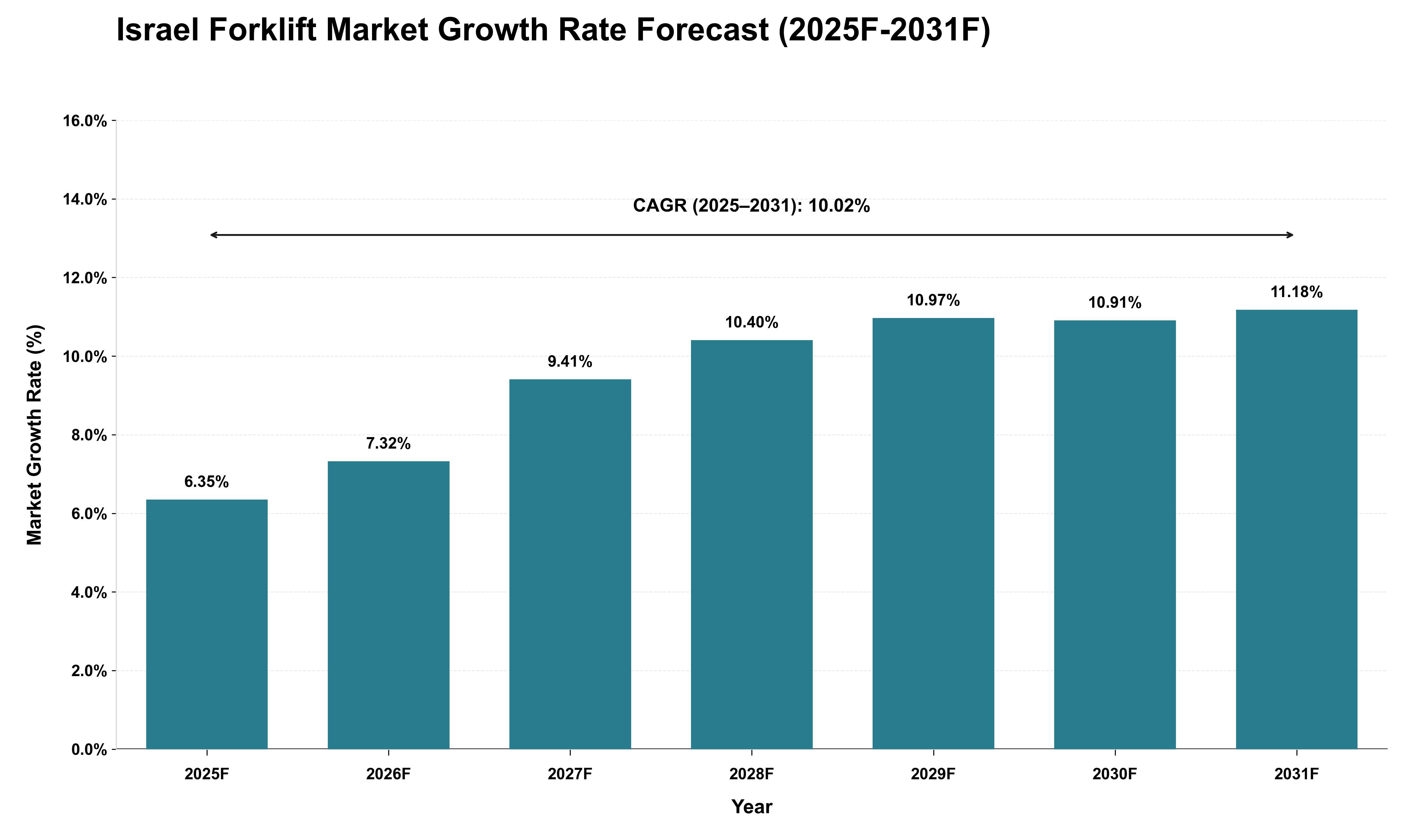
The Israel forklift market will experience significant growth driven by evolving end-use demand across various sectors, particularly logistics, construction, and manufacturing. As urbanization accelerates and e-commerce expands, the need for efficient material handling solutions will intensify, propelling the market's compound annual growth rate (CAGR) of 10.02% from 2025 to 2031. The annual growth rates will reflect this trend, with a notable increase to 11.18% by 2031. Import dependencies may influence pricing and availability of advanced technologies in forklifts, as global supply chains adapt to shifting trade dynamics. Additionally, cyclical trends in construction and industrial activity will further stimulate demand for forklifts as businesses invest in automation and efficiency enhancements. This confluence of factors will position the Israeli forklift market for robust expansion throughout the forecast period.
Key Highlights of the Report:
- Israel Forklift Market Outlook
- Market Size of Israel Forklift Market, 2024
- Forecast of Israel Forklift Market, 2031
- Historical Data and Forecast of Israel Forklift Revenues & Volume for the Period 2021-2031
- Israel Forklift Market Trend Evolution
- Israel Forklift Market Drivers and Challenges
- Israel Forklift Price Trends
- Israel Forklift Porter`s Five Forces
- Israel Forklift Industry Life Cycle
- Historical Data and Forecast of Israel Forklift Market Revenues & Volume By Class for the Period 2021-2031
- Historical Data and Forecast of Israel Forklift Market Revenues & Volume By Class 1 for the Period 2021-2031
- Historical Data and Forecast of Israel Forklift Market Revenues & Volume By 2 for the Period 2021-2031
- Historical Data and Forecast of Israel Forklift Market Revenues & Volume By 3 for the Period 2021-2031
- Historical Data and Forecast of Israel Forklift Market Revenues & Volume By 4/5 for the Period 2021-2031
- Historical Data and Forecast of Israel Forklift Market Revenues & Volume By Propulsion for the Period 2021-2031
- Historical Data and Forecast of Israel Forklift Market Revenues & Volume By Electric for the Period 2021-2031
- Historical Data and Forecast of Israel Forklift Market Revenues & Volume By ICE for the Period 2021-2031
- Historical Data and Forecast of Israel Forklift Market Revenues & Volume By Battery Type for the Period 2021-2031
- Historical Data and Forecast of Israel Forklift Market Revenues & Volume By Li-Ion for the Period 2021-2031
- Historical Data and Forecast of Israel Forklift Market Revenues & Volume By Lead Acid for the Period 2021-2031
- Israel Forklift Import Export Trade Statistics
- Market Opportunity Assessment By Class
- Market Opportunity Assessment By Propulsion
- Market Opportunity Assessment By Battery Type
- Israel Forklift Top Companies Market Share
- Israel Forklift Competitive Benchmarking By Technical and Operational Parameters
- Israel Forklift Company Profiles
- Israel Forklift Key Strategic Recommendations






































