Israel Perfume Market Growth Rate Analysis (2025 - 2031)
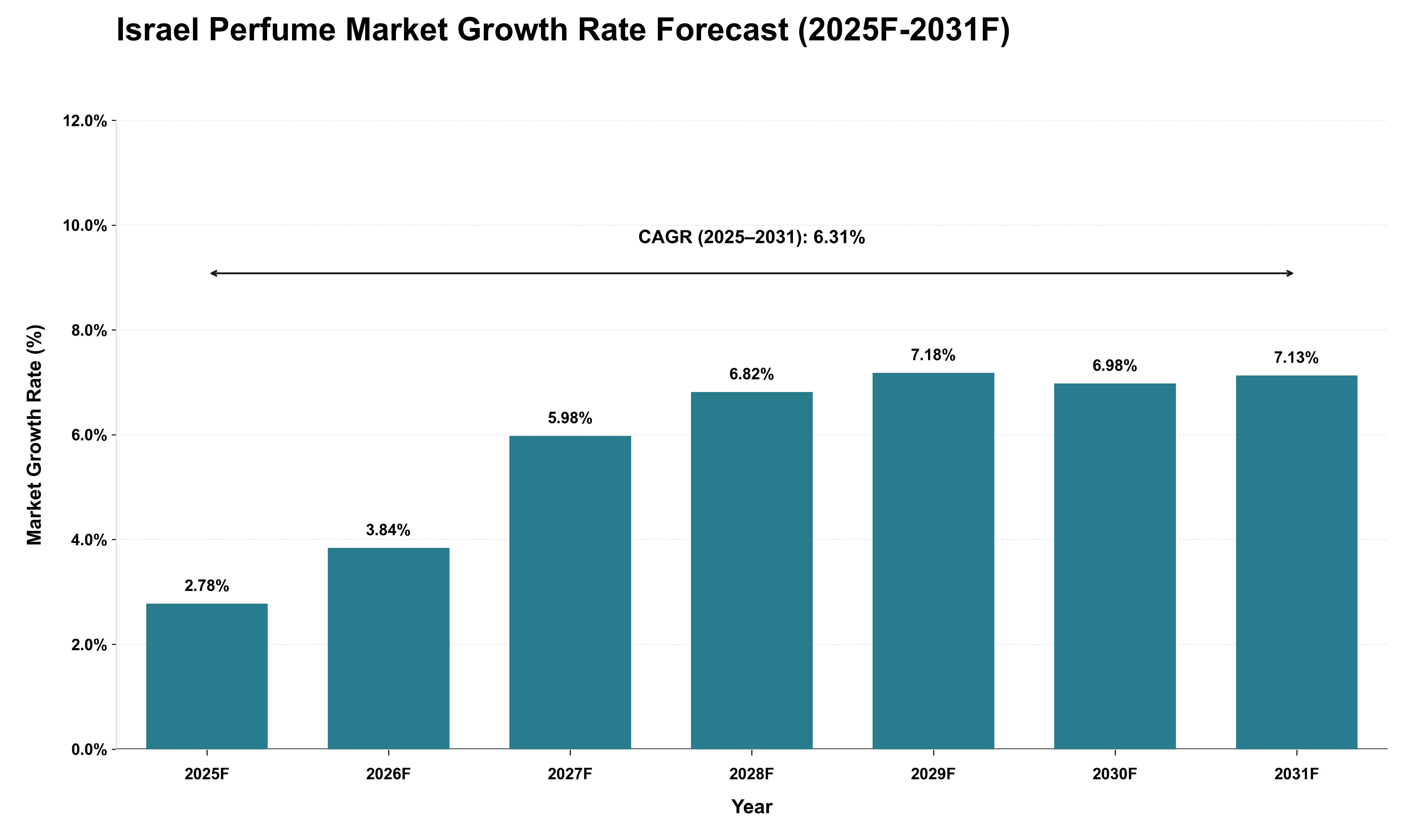
The Israel perfume market is poised for robust growth from 2025 onward, driven by a competitive landscape characterized by increasing consumer preferences for premium and niche fragrances. The forecasted CAGR of 6.31% will reflect a gradual acceleration in annual growth rates, peaking at 7.18% in 2029, as brands innovate and diversify their offerings to capture evolving consumer tastes. This trend will be supported by rising disposable incomes and a growing inclination towards luxury goods, which will enhance import dependencies on high-quality fragrance ingredients and packaging materials. Additionally, cyclical trends in the beauty sector will likely influence purchasing behaviors, with seasonal promotions and holiday sales amplifying demand during peak periods. As companies adapt to these dynamics, they will strategically position themselves to leverage market opportunities while navigating potential supply chain challenges inherent in the global perfume industry.
Key Highlights of the Report:
- Israel Perfume Market Outlook
- Market Size of Israel Perfume Market, 2025
- Forecast of Israel Perfume Market, 2032
- Historical Data and Forecast of Israel Perfume Revenues & Volume for the Period 2022 - 2032
- Israel Perfume Market Trend Evolution
- Israel Perfume Market Drivers and Challenges
- Israel Perfume Price Trends
- Israel Perfume Porter's Five Forces
- Israel Perfume Industry Life Cycle
- Historical Data and Forecast of Israel Perfume Market Revenues & Volume By Perfume Type for the Period 2022 - 2032
- Historical Data and Forecast of Israel Perfume Market Revenues & Volume By Premium Perfume Products for the Period 2022 - 2032
- Historical Data and Forecast of Israel Perfume Market Revenues & Volume By Mass Perfume Products for the Period 2022 - 2032
- Historical Data and Forecast of Israel Perfume Market Revenues & Volume By Category for the Period 2022 - 2032
- Historical Data and Forecast of Israel Perfume Market Revenues & Volume By Female Fragrances for the Period 2022 - 2032
- Historical Data and Forecast of Israel Perfume Market Revenues & Volume By Male Fragrances for the Period 2022 - 2032
- Historical Data and Forecast of Israel Perfume Market Revenues & Volume By Unisex Fragrances for the Period 2022 - 2032
- Israel Perfume Import Export Trade Statistics
- Market Opportunity Assessment By Perfume Type
- Market Opportunity Assessment By Category
- Israel Perfume Top Companies Market Share
- Israel Perfume Competitive Benchmarking By Technical and Operational Parameters
- Israel Perfume Company Profiles
- Israel Perfume Key Strategic Recommendations






































