Israel Table Olives Market Top 5 Importing Countries and Market Competition (HHI) Analysis
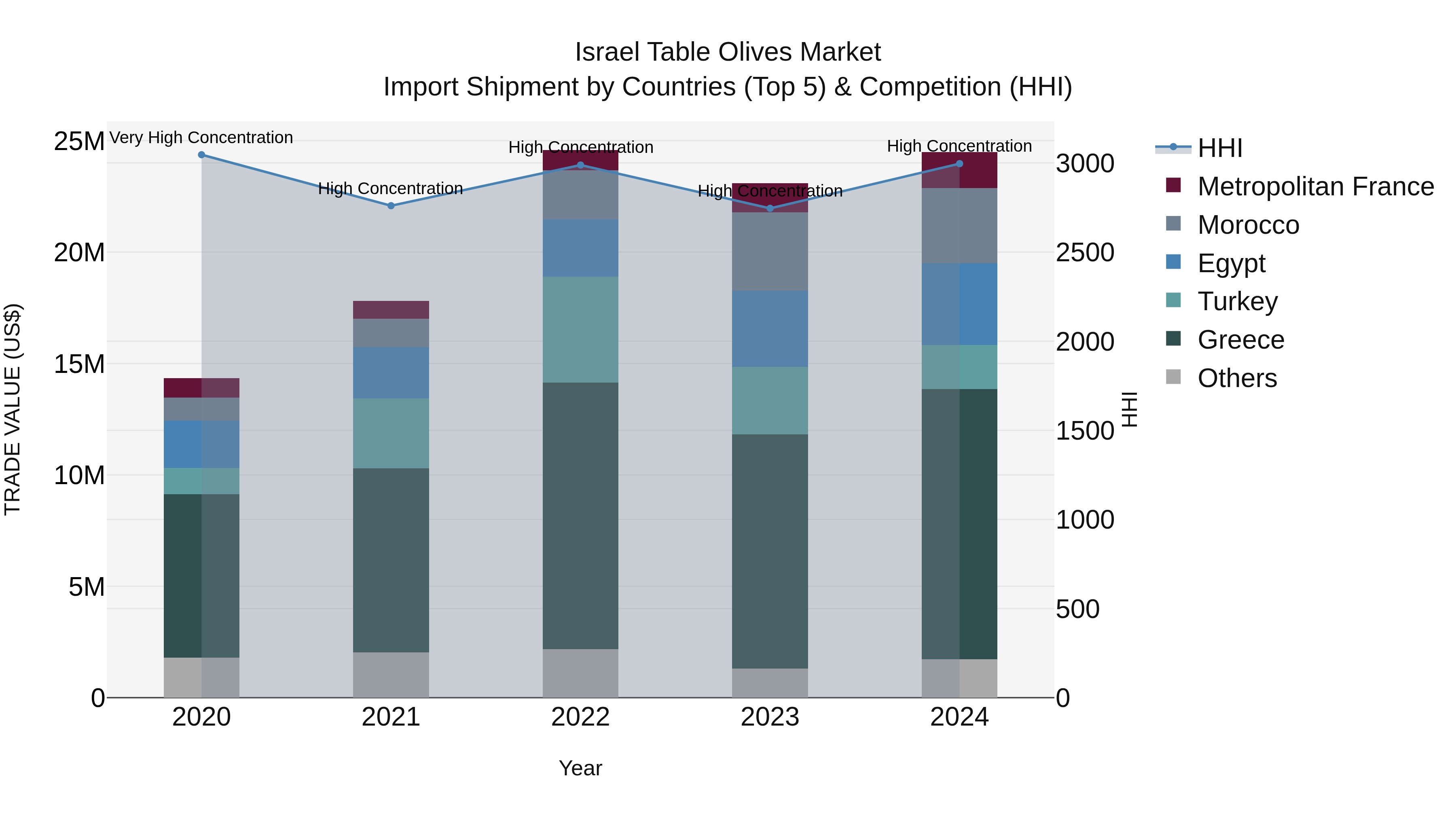
Israel`s table olives import market in 2024 continued to show a high level of concentration, with top exporting countries being Greece, Egypt, Morocco, Turkey, and Metropolitan France. The market displayed strong growth dynamics, with a notable Compound Annual Growth Rate (CAGR) of 14.31% from 2020 to 2024. The growth momentum was sustained in 2024, with a growth rate of 6.1% compared to the previous year. This data indicates a robust and competitive market for table olives in Israel, driven by consistent imports from key supplier countries.
Israel Table Olives Market Synopsis
The Israel table olives market is characterized by a growing demand for high-quality olives, both domestically and for export. Israeli consumers have a strong preference for olives as a staple in their diet, leading to a consistent market for table olives. The market is also influenced by the country`s Mediterranean climate, which is favorable for olive cultivation. In recent years, there has been an increasing trend towards organic and gourmet olives, driven by health-conscious consumers seeking premium products. Major players in the market include local producers as well as international brands. The industry is expected to continue growing as consumers become more aware of the health benefits and culinary versatility of olives, presenting opportunities for innovation and market expansion.
Israel Table Olives Market Trends
The Israel Table Olives Market is experiencing a growing trend towards healthier eating habits, leading to increased consumption of olives as a nutritious snack or ingredient in various dishes. Consumers are also showing a preference for high-quality, organic, and locally sourced table olives, creating opportunities for producers to cater to this demand. Additionally, there is a rising interest in unique flavors and varieties of table olives, driving innovation in product offerings. The market also benefits from the country`s strong agricultural sector and advanced farming techniques, ensuring a steady supply of high-quality olives. Overall, the Israel Table Olives Market presents opportunities for producers to capitalize on the health and taste preferences of consumers by offering diverse, premium products in line with current market trends.
Israel Table Olives Market Challenges
In the Israel Table Olives Market, some challenges include increasing competition from imported olives, fluctuating weather conditions affecting olive production, and the limited availability of suitable land for olive cultivation. The market is also impacted by changing consumer preferences towards healthier and more exotic food options, which can affect the demand for table olives. Additionally, strict regulations and quality standards in the industry pose challenges for olive producers in terms of compliance and certification. To remain competitive, players in the Israel Table Olives Market must focus on product innovation, sustainable farming practices, and effective marketing strategies to differentiate their offerings and meet evolving consumer demands.
Israel Table Olives Market Investment Opportunities
The Israel Table Olives Market is primarily driven by factors such as increasing health consciousness among consumers, growing demand for natural and organic products, and rising awareness about the health benefits of olives. Additionally, changing dietary preferences towards Mediterranean cuisine, which often includes olives as a staple ingredient, are fueling the market growth. The convenience factor of table olives as a ready-to-eat, flavorful snack or ingredient in various dishes also contributes to their popularity. Furthermore, innovations in processing and packaging technologies, as well as expanding distribution channels both domestically and internationally, are key drivers shaping the market landscape for table olives in Israel.
Israel Table Olives Market Government Polices
The Israeli government has implemented various policies to support and regulate the Table Olives Market. These include providing financial incentives and subsidies to olive growers, promoting sustainable agricultural practices, ensuring food safety standards are met through inspections and certifications, and facilitating exports through trade agreements and market access initiatives. Additionally, there are regulations in place to protect consumers from fraudulent labeling and promote transparency in the supply chain. The government also supports research and development efforts to improve olive cultivation techniques and increase productivity. Overall, these policies aim to enhance the competitiveness of the Israeli Table Olives Market both domestically and internationally while ensuring quality and sustainability in the industry.
Israel Table Olives Market Future Outlook
The Israel Table Olives Market is poised for steady growth in the coming years, driven by increasing consumer awareness of the health benefits associated with olives and the growing popularity of Mediterranean cuisine. The market is expected to see a rise in demand for premium and organic table olives as consumers prioritize quality and sustainability. Additionally, the expanding foodservice industry in Israel is likely to boost the consumption of table olives in restaurants and cafes. With a focus on product innovation and marketing strategies to attract a younger demographic, the market is projected to experience moderate but consistent growth. Overall, the Israel Table Olives Market is anticipated to show resilience and adaptability to changing consumer preferences, positioning it for a positive outlook in the future.
Key Highlights of the Report:
- Israel Table Olives Market Outlook
- Market Size of Israel Table Olives Market, 2024
- Forecast of Israel Table Olives Market, 2031
- Historical Data and Forecast of Israel Table Olives Revenues & Volume for the Period 2021- 2031
- Israel Table Olives Market Trend Evolution
- Israel Table Olives Market Drivers and Challenges
- Israel Table Olives Price Trends
- Israel Table Olives Porter's Five Forces
- Israel Table Olives Industry Life Cycle
- Historical Data and Forecast of Israel Table Olives Market Revenues & Volume By Type for the Period 2021- 2031
- Historical Data and Forecast of Israel Table Olives Market Revenues & Volume By Black Olive for the Period 2021- 2031
- Historical Data and Forecast of Israel Table Olives Market Revenues & Volume By Green Olive for the Period 2021- 2031
- Historical Data and Forecast of Israel Table Olives Market Revenues & Volume By Application for the Period 2021- 2031
- Historical Data and Forecast of Israel Table Olives Market Revenues & Volume By Online Store for the Period 2021- 2031
- Historical Data and Forecast of Israel Table Olives Market Revenues & Volume By Supermarket for the Period 2021- 2031
- Historical Data and Forecast of Israel Table Olives Market Revenues & Volume By Convenience Store for the Period 2021- 2031
- Historical Data and Forecast of Israel Table Olives Market Revenues & Volume By Other for the Period 2021- 2031
- Israel Table Olives Import Export Trade Statistics
- Market Opportunity Assessment By Type
- Market Opportunity Assessment By Application
- Israel Table Olives Top Companies Market Share
- Israel Table Olives Competitive Benchmarking By Technical and Operational Parameters
- Israel Table Olives Company Profiles
- Israel Table Olives Key Strategic Recommendations






































