Zambia Table Olives Market: Top 5 Importing Countries and Market Competition (HHI) Analysis
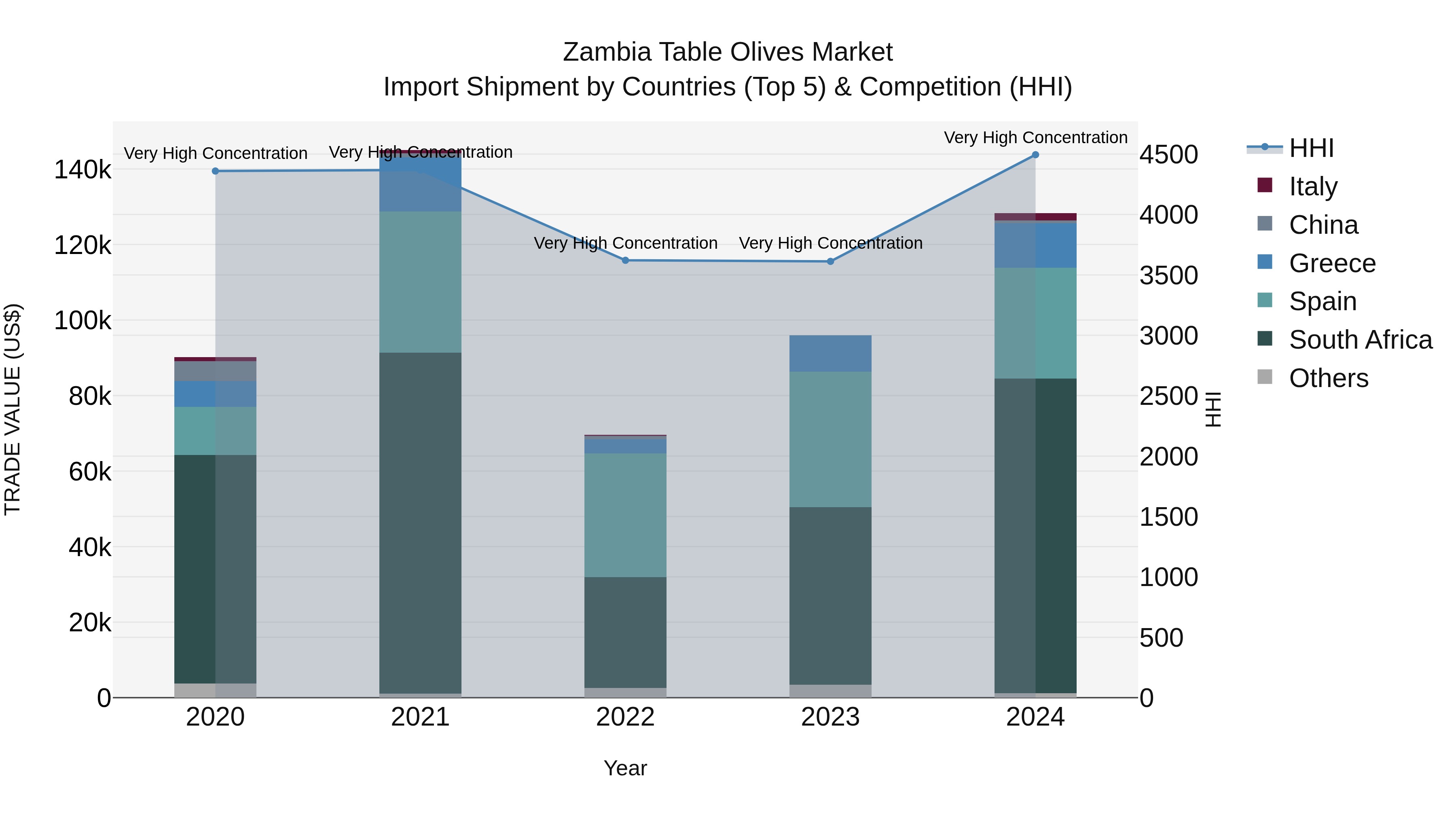
In 2024, Zambia`s table olives import market continued to demonstrate high concentration, with South Africa, Spain, Greece, Italy, and China leading the way. The Herfindahl-Hirschman Index (HHI) remained at elevated levels, indicating significant market dominance by these top exporting countries. The impressive Compound Annual Growth Rate (CAGR) of 9.22% from 2020 to 2024 showcases a consistently expanding market. Moreover, the remarkable growth rate of 33.64% from 2023 to 2024 highlights the increasing demand for table olives in Zambia, making it a lucrative market for olive exporters to target.
Zambia Table Olives Market Synopsis
The Zambia table olives market is a niche segment within the overall food industry, with a growing consumer interest in healthy and Mediterranean-inspired foods. The market primarily caters to urban areas and higher-income consumers who seek premium-quality olives for salads, snacks, and cooking. Local production of table olives is limited, leading to a reliance on imports primarily from Mediterranean countries. Zambia`s increasing exposure to international cuisines and rising health consciousness among consumers are driving the demand for table olives. Market players often focus on promoting the health benefits and versatility of olives to expand their consumer base. The market is expected to experience steady growth as more consumers incorporate olives into their diets for their taste and nutritional value.
Zambia Table Olives Market Trends
The Zambia Table Olives Market is experiencing a growing demand due to the increasing awareness of the health benefits associated with olives. Consumers are seeking healthier food options, driving the demand for table olives as a nutritious and flavorful addition to their diet. The market is also benefiting from the rising popularity of Mediterranean cuisine in Zambia, where olives are a staple ingredient. There are opportunities for market players to introduce innovative product variations, such as flavored olives or convenient snack packs, to cater to the evolving preferences of consumers. Additionally, expanding distribution channels and enhancing marketing strategies to educate consumers about the various uses and benefits of table olives could further drive market growth in Zambia.
Zambia Table Olives Market Challenges
In the Zambia Table Olives Market, some challenges that are commonly faced include limited awareness and consumption of table olives among consumers, high production costs due to factors such as climate conditions and lack of advanced agricultural technologies, inconsistent quality and availability of table olives in the market, as well as the competition from imported table olives. Additionally, inadequate infrastructure and distribution networks in certain regions of Zambia may also hinder the growth of the table olives market. Overcoming these challenges would require efforts to increase consumer education and promotion of table olives, investment in modern agricultural practices and technologies, improvement in quality control measures, and the development of efficient supply chains to ensure consistent availability of locally produced table olives.
Zambia Table Olives Market Investment Opportunities
The Zambia Table Olives Market is primarily driven by increasing consumer awareness about the health benefits of olives, including their high antioxidant content and potential to improve heart health. Additionally, the growing trend towards healthier eating habits and Mediterranean cuisine adoption in Zambia is boosting the demand for table olives. The rise in disposable income and changing consumer preferences towards premium and gourmet food products are also driving the market growth. Furthermore, the expanding retail sector and online platforms providing easy access to a variety of table olive products are contributing to market expansion. Overall, factors such as health consciousness, changing dietary preferences, and convenient availability are the key drivers propelling the growth of the Zambia Table Olives Market.
Zambia Table Olives Market Government Polices
Government policies related to the Zambia Table Olives Market are focused on promoting agricultural development, increasing food security, and supporting small-scale farmers. The government has implemented various policies to enhance the competitiveness of the agriculture sector, including providing subsidies, loans, and technical assistance to farmers. Additionally, there are regulations in place to ensure food safety and quality standards are met, particularly for products like table olives. The government also supports initiatives to increase local production and reduce dependency on imports, in line with the country`s broader economic development goals. Overall, the government`s policies aim to stimulate growth in the table olives market, create employment opportunities, and improve the livelihoods of farmers in Zambia.
Zambia Table Olives Market Future Outlook
The future outlook for the Zambia Table Olives Market appears promising, with increasing consumer awareness of the health benefits associated with olives driving demand. As the country continues to urbanize and incomes rise, there is a growing trend towards healthier eating habits, which is expected to boost the consumption of table olives. Additionally, the government`s initiatives to support agriculture and improve infrastructure are likely to enhance production capabilities and facilitate market growth. With Zambia`s favorable climate for olive cultivation and the potential for exports to neighboring countries, the table olives market is poised for expansion in the coming years, presenting opportunities for both domestic producers and investors looking to capitalize on this growing sector.
Key Highlights of the Report:
- Zambia Table Olives Market Outlook
- Market Size of Zambia Table Olives Market, 2024
- Forecast of Zambia Table Olives Market, 2031
- Historical Data and Forecast of Zambia Table Olives Revenues & Volume for the Period 2021- 2031
- Zambia Table Olives Market Trend Evolution
- Zambia Table Olives Market Drivers and Challenges
- Zambia Table Olives Price Trends
- Zambia Table Olives Porter's Five Forces
- Zambia Table Olives Industry Life Cycle
- Historical Data and Forecast of Zambia Table Olives Market Revenues & Volume By Type for the Period 2021- 2031
- Historical Data and Forecast of Zambia Table Olives Market Revenues & Volume By Black Olive for the Period 2021- 2031
- Historical Data and Forecast of Zambia Table Olives Market Revenues & Volume By Green Olive for the Period 2021- 2031
- Historical Data and Forecast of Zambia Table Olives Market Revenues & Volume By Application for the Period 2021- 2031
- Historical Data and Forecast of Zambia Table Olives Market Revenues & Volume By Online Store for the Period 2021- 2031
- Historical Data and Forecast of Zambia Table Olives Market Revenues & Volume By Supermarket for the Period 2021- 2031
- Historical Data and Forecast of Zambia Table Olives Market Revenues & Volume By Convenience Store for the Period 2021- 2031
- Historical Data and Forecast of Zambia Table Olives Market Revenues & Volume By Other for the Period 2021- 2031
- Zambia Table Olives Import Export Trade Statistics
- Market Opportunity Assessment By Type
- Market Opportunity Assessment By Application
- Zambia Table Olives Top Companies Market Share
- Zambia Table Olives Competitive Benchmarking By Technical and Operational Parameters
- Zambia Table Olives Company Profiles
- Zambia Table Olives Key Strategic Recommendations






































