Serbia Table Olives Market: Import Trend Analysis
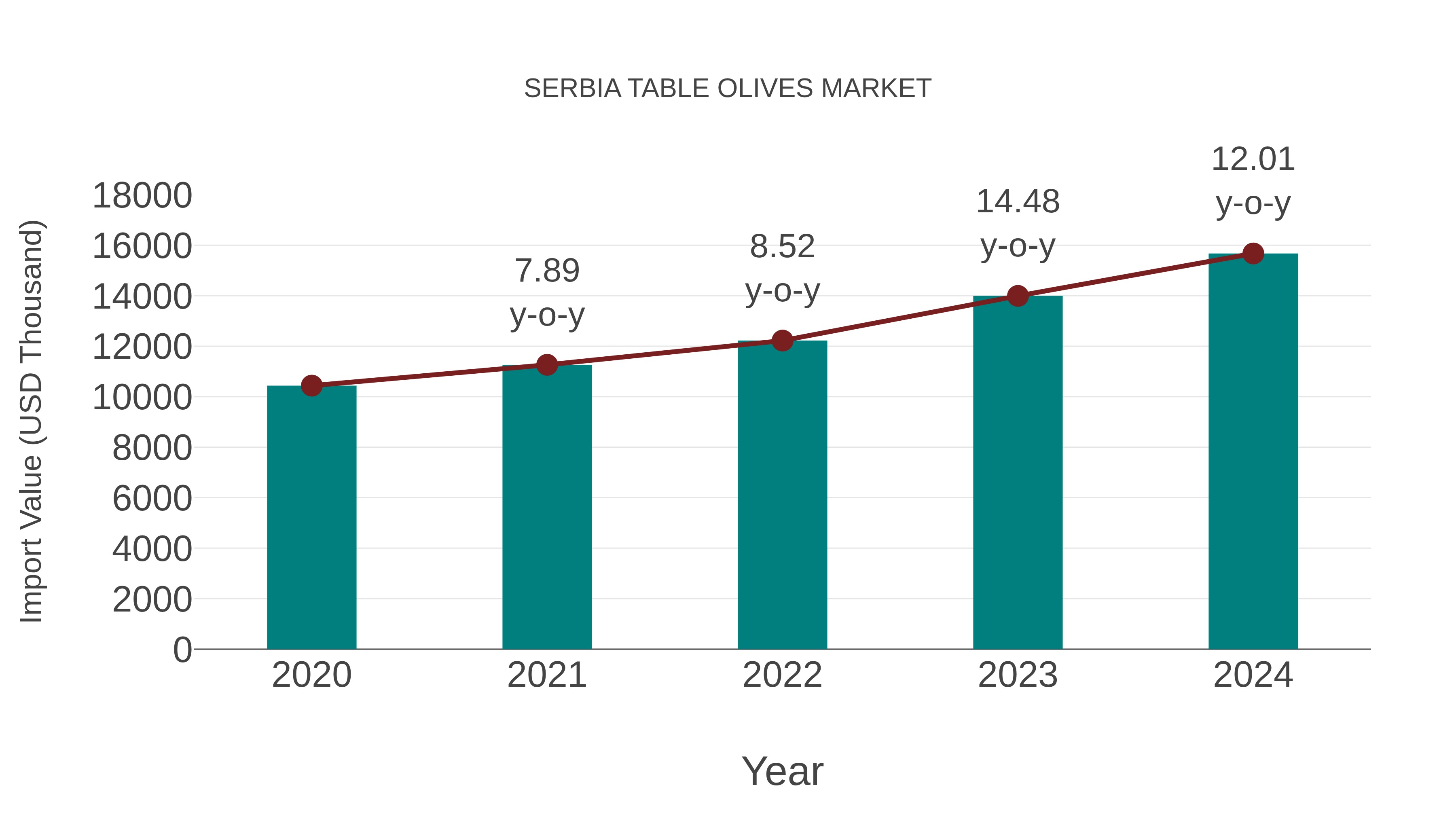
Serbia`s table olives market witnessed a positive import trend, with a growth rate of 12.01% from 2023 to 2024 and a compound annual growth rate (CAGR) of 10.69% from 2020 to 2024. This increase could be attributed to shifting consumer preferences towards healthier food options, driving demand for imported table olives.
Serbia Table Olives Market Synopsis
The Serbia Table Olives Market is witnessing steady growth driven by increasing consumer preference for healthy and natural food products. Traditional varieties like Kalamata and green olives are popular among consumers for their unique flavors and textures. The market is characterized by a mix of domestic production and imports, with local producers focusing on high-quality, sustainable practices to meet the growing demand. Key market players are investing in product innovation, packaging, and marketing strategies to attract a wider consumer base. The rising trend of Mediterranean diet adoption and the growing awareness of the health benefits of olives are expected to further drive market growth in the coming years. Overall, the Serbia Table Olives Market presents opportunities for both local producers and international brands to expand their presence and offerings.
Serbia Table Olives Market Trends
The Serbia Table Olives Market is experiencing growth driven by increasing consumer awareness of the health benefits associated with olives, such as being a good source of healthy fats and antioxidants. There is a rising demand for premium and organic table olives, reflecting a shift towards healthier and more sustainable food choices among consumers. The market also benefits from the growing popularity of Mediterranean cuisine and the increasing presence of international food trends in Serbia. Opportunities lie in product innovation, such as introducing new flavors and packaging formats to cater to changing consumer preferences. Additionally, expanding exports to tap into the global demand for table olives presents a promising avenue for market players to capitalize on the country`s rich olive-growing tradition and agricultural expertise.
Serbia Table Olives Market Challenges
In the Serbia Table Olives Market, there are several challenges faced by producers and distributors. One significant challenge is the competition from imported table olives, which often come from countries with lower production costs, leading to price competition. Another challenge is the lack of modernization and investment in technology within the local industry, resulting in lower efficiency and quality compared to international standards. Additionally, fluctuations in weather conditions and agricultural diseases can impact olive yields, affecting overall production and supply. There is also a need for better marketing strategies and promotion of Serbian table olives to increase domestic consumption and expand into international markets. Overall, addressing these challenges will be crucial for the growth and sustainability of the Serbia Table Olives Market.
Serbia Table Olives Market Investment Opportunities
The Serbia Table Olives Market is mainly driven by factors such as increasing consumer awareness about the health benefits of olives, rising demand for healthy and natural food products, and growing popularity of Mediterranean cuisine in the region. Additionally, the expanding retail sector and the availability of a wide variety of table olives in different flavors and packaging formats are also contributing to the market growth. Furthermore, the emphasis on organic and sustainable farming practices is attracting environmentally-conscious consumers towards table olives. Government initiatives to promote olive cultivation and production are further fueling the market expansion. Overall, these factors are driving the Serbia Table Olives Market towards steady growth and sustainable development.
Serbia Table Olives Market Government Polices
The Serbia Table Olives Market is impacted by government policies that aim to promote agricultural sustainability and ensure food safety standards. The Serbian government provides support to olive producers through subsidies, grants, and technical assistance programs to improve production efficiency and quality. Regulations are in place to monitor pesticide use, labeling requirements, and compliance with European Union standards for export purposes. Additionally, trade agreements and tariffs play a role in shaping the competitiveness of the market. Overall, government policies in Serbia are focused on fostering a competitive and sustainable table olives industry that meets international quality standards and enhances market opportunities for domestic producers.
Serbia Table Olives Market Future Outlook
The future outlook for the Serbia Table Olives Market appears promising, with steady growth expected in the coming years. Factors contributing to this positive outlook include increasing consumer preference for healthy and natural food products, which has led to a growing demand for table olives. Additionally, Serbia`s favorable climate conditions for olive cultivation and the government`s support for the agriculture sector are likely to boost production levels. The export potential of Serbian table olives is also significant, with opportunities to tap into international markets. As a result, market players in the country are anticipated to invest in modernizing production techniques and expanding their product offerings to cater to the evolving consumer preferences, driving further growth in the Serbia Table Olives Market.
Key Highlights of the Report:
- Serbia Table Olives Market Outlook
- Market Size of Serbia Table Olives Market, 2025
- Forecast of Serbia Table Olives Market, 2032
- Historical Data and Forecast of Serbia Table Olives Revenues & Volume for the Period 2022 - 2032F
- Serbia Table Olives Market Trend Evolution
- Serbia Table Olives Market Drivers and Challenges
- Serbia Table Olives Price Trends
- Serbia Table Olives Porter's Five Forces
- Serbia Table Olives Industry Life Cycle
- Historical Data and Forecast of Serbia Table Olives Market Revenues & Volume By Type for the Period 2022 - 2032F
- Historical Data and Forecast of Serbia Table Olives Market Revenues & Volume By Black Olive for the Period 2022 - 2032F
- Historical Data and Forecast of Serbia Table Olives Market Revenues & Volume By Green Olive for the Period 2022 - 2032F
- Historical Data and Forecast of Serbia Table Olives Market Revenues & Volume By Application for the Period 2022 - 2032F
- Historical Data and Forecast of Serbia Table Olives Market Revenues & Volume By Online Store for the Period 2022 - 2032F
- Historical Data and Forecast of Serbia Table Olives Market Revenues & Volume By Supermarket for the Period 2022 - 2032F
- Historical Data and Forecast of Serbia Table Olives Market Revenues & Volume By Convenience Store for the Period 2022 - 2032F
- Historical Data and Forecast of Serbia Table Olives Market Revenues & Volume By Other for the Period 2022 - 2032F
- Serbia Table Olives Import Export Trade Statistics
- Market Opportunity Assessment By Type
- Market Opportunity Assessment By Application
- Serbia Table Olives Top Companies Market Share
- Serbia Table Olives Competitive Benchmarking By Technical and Operational Parameters
- Serbia Table Olives Company Profiles
- Serbia Table Olives Key Strategic Recommendations






































